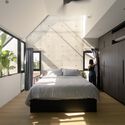
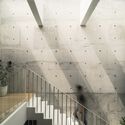
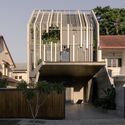
SOM Designs Singapore’s Tallest Tower

© | Design Mirage

SOM has designed what will be ’s tallest tower upon its completion in 2016. Positioned as a premier quality business and lifestyle hub, the 290-meter, 1.7-million-gross-square-foot Tanjong Pagar Centre will provide a mix of uses, comprising office, residential, retail and hospitality, in the historic Tanjong Pagar central business district. The development will be a significant contribution to the evolving skyline of and will become a landmark destination, serving as a gateway to the future waterfront city.

PARKROYAL on Pickering / WOHA

© Patrick Bingham-Hall

Architects: WOHA
Location: ,
Project Team: Wong Mun Summ, Richard Hassell, Donovan Soon, Sim Choon Heok, Toh Hua Jack, Bernard Lee, Amber Dar Wagh, Mappaudang Ridwan Saleh, Evelyn Ng, John Paul Gonzalez, Josephine Isip, Goh Kai Shien, Luu Dieu Khanh, Tan Szue Hann, Alen Low, Pham Sing Yeong, Vanessa Ong, Novita Johana, Andre Kumar Alexander
Area: 29,811 sqm
Year: 2013
Photographs: Patrick Bingham-Hall

Cairnhill Road Conservation Terrace House / RichardHO Architects

© Vineyard Production

Architects: RichardHO Architects
Location: ,
Structural Engineer: J S Tan & Associates
M&E Engineer: Wistec Engineers & Associates
Quantity Surveyor: Faithful & Gould
Main Contractor: THL Building Construction Pte Ltd
Interior Contractor: West Point Interiors
Year: 2010
Photographs: Vineyard Production

World Architecture Festival 2013: Submit your works!

Once again we have partnered with the World Architecture Festival, the world’s largest festival (with live awards) for the global architecture community, to be held in October in Singapore.

The format of the event is unique as the professionals of the participating firms present to, and receive live feedback and commendation from, the WAF’s jury, which this year includes architects such as such as William Alsop, Sir Peter Cook, Sou Fujimoto, Dietmar Eberle, Jeanne Gang, Marcio Kogan, and , among many others. It will be a live architecture performance, where you will debate, learn and be inspired.

The also includes a seminar and keynotes with renowned international architects  (full list TBA). In these and other activities, you will be able to exchange ideas with over 2000 architects representing more than 65 countries, as well as broaden your horizons and your contacts.

Another interesting aspect of the WAF is the location. Held in Singapore at the Marina Bay Sands, the WAF positions itself in the center of the Southeast Asia, a region with unprecedented growth, where opportunities are constantly opening for architects.

Entries are open until May 24th. You can find more info about the award categories and how to enter here.

Remember to use code ‘ARCH’ for a 10% discount in your entry.

Ten Points for Liveable Cities: Lessons from Singapore

© Flickr User Chooyutshing

As urban populations expand, people are migrating to city centers in search of economic opportunities, which promise social mobility and access to education, health resources, and jobs.  Nations once considered in the “third world” are making leaps to accommodate growing populations with thoughtful considerations in designing these new urban capitals.  Population trends have shifted considerably and have contributed to some of the densest urban never before seen in history.  The rise in the classification of as “mega-cities” and the problems that such high population densities face speak to the fact that our cities have reached a saturation point that needs to addressing.

, an island nation in the Asian Pacific, is the third densest country in the world. Last year the Center for Livable Cities and the Urban Land Institute participated in a summit of leading planners and policy makers to discuss the steps that Singapore was taking in its development in response to its growing urban populations.  The result of the conference was a list of ten points that contribute to making Singapore a livable high dense city.

Follow us after the break for more on the 10 Points for Singapore.

Equation Exhibition / Grimshaw Architects

Courtesy of

Taking place February 20-March 15, Grimshaw Architects will be holding their first staged in Asia, titled ‘Equation’. The will explore how the natural environment provides inspiration for innovative architectural projects around the world. These projects adopt biomimicry for greater efficiency, acknowledge the importance of connecting building users to nature and work to harness natural systems which ensure that buildings conserve and replenish natural resources. Located at the Urban Redevelopment Authority in Singapore, this marks the sixth major of work from Grimshaw which continues on from this tradition. More information after the break.

Art Stage Singapore Installation & Exhibition / WY-TO Architects

© Frank Pinckers

Inspired by the textile industry of Southeast Asia, Yann Follain, co-founder of WY-TO Architects, has designed a Floating Skeleton at Art Stage to greet the fair’s visitors. The wire-framed floating structure will act as a gateway to Asia’s global art fair. The over-sized loom theme follows through into the new VIP area – The Whirl. Follain has deliberately used lines (representing thread), color, light and textures to represent the diverse and differentiating cultural influences on the established textile industry of Southeast Asia. More images and architects’ description after the break.

Reading Spaces, Spaces for Reading: A look at Singapore’s Culture of Reading

Central Library at dawn. Photo © Jason Wee

This article comes to us courtesy of author Jason Weean artist, curator, and writer who directs Grey Projects in Singapore. It originally appeared in the Perspectives section of the Guggenheim UBS MAP Global Art Initiative Online Platform on January 14th, 2013.

In Singapore, between the freshly designated arts and museum district in Bras Basah and that bastion of colonial hospitality known as the Raffles Hotel, sits a remarkable work of architecture, the Central Library. Designed by Malaysian architect Ken Yeang, the building reflects sensitivities to the island’s tropical weather and its people’s reading habits; its most frequently accessed collections are housed directly below the ground-level entrance, enabling easy navigation and minimal loss of cool air. The Library is a strong example of what Yeang calls “eco-design,” reflecting his conception of built space as a species of living system that interacts dynamically with its environment to form a single ecology.

Yeang’s ecological innovation resides in his consideration of close relationships between urbanism and natural conditions, but it is no stretch to see how his thinking might also be applied to other, cultural, conditions. Such a “cultural ecology” seems appropriate for a library site that neighbors a complex known to Mandarin readers as “Book City.” This mixed development is rife with small bookstores, harried print shops, and cheap stationers—as well as with restaurants and public housing. And it is home to Basheer Graphic Books, Singapore’s single best store for arts and design publications.

Thinking of culture as an ecology might help us to understand the ways in which a culture of reading is positioned in Singapore. Bearing the Central Library’s location in mind, we can see how the “space” of reading is positioned between Singapore’s aspiration toward the status of culture-savvy global city (with its attendant venues for contemporary art), and its oft-told history as a city prized by empires for a strategic geography that also constrained it.

Singapore’s National Library, by Ken Yeang. © Flickr User CC License iambents

Examining reading habits in Singapore, the numbers seem impressive. In a city of over five million people, two million are members of the national network of public libraries, which issue more than thirty-six million loans each year. The libraries’ annual book sale weekend, when three hundred thousand books are made available for sale at US$1.50 each or less, is the bibliophile’s version of a Black Friday shopping event, with comparable crowds and lines. The Singapore Writers Festival, currently helmed by a poet, has grown from a biennial event into an annual one. Its last edition featured writers Michael Cunningham, Pico Iyer, and Cyril Wong, and attracted over 16,000 visitors. While the number of book publishers and bookstores has declined, the Singapore Book Publishers Association notes that operating revenue is up.

What the numbers belie is the fact that self-assessment books are dominant among the titles published in Singapore. This is symptomatic of a national anxiety that education has become a test-driven competitive sport, with bespectacled children acting as players—Singaporean children have among the highest incidences of myopia in the world—and hopeful parents as stressed-out coaches evaluating the annual report books that rank each student’s place from the age of seven. English, seen as the language of financial success, is used in the books most frequently accessed at the libraries, though materials are also available in Tamil, Malay, and Mandarin.

More crucially, publishing and reading in Singapore take place within a unique set of operating principles accumulated over years of legislative development, bureaucratic caution, and literary selection. Take journalism, for example. Despite the number of prominent lawsuits against journalists and news publications pursued over the years, the issue with publishing journalism in Singapore is not the rule of law (which is robustly defended) but the rule of vague law. As journalism professor Cherian George describes it, this consists of “vaguely worded” restrictions that operate without judicial review. As George points out, “the executive can revoke or deny a publishing permit at any time and is under no legal obligation to give any reasons.” Literary publications in Singapore depend on a combination of ingredients for success, among them shrewd manuscript selection and grant money. But such money is disbursed with a caveat to avoid promoting values contrary to public interest, which could restrict anything from criticisms of the death penalty to gay poetry. Books that might otherwise generate strong buzz, even healthy controversy, are unlikely to find grant support—which in turn affects publishers’ financial calculus. No wonder local writing can seem less engaging, with the reading public preferring imported over indigenous literature.

One consequence of this is a winnowed sense of history, in which the globally recognized narrative of Singapore as a postcolonial prodigy marked by outsized successes becomes both the country’s raison d’être and its primary source of limitation. The terms of its geography begin to structure the flow of established history with which Singaporeans are familiar: the country’s size and economic achievement give cause to a vulnerability to perceived military and ideological threats, its unique makeup of immigrant populations leads to a wariness of debate about race and religion in public life. Consequently, the history of Singapore’s early years of independence occludes contributions by the government’s socialist participants and other antagonists, and recent episodes in which religion entangled with the state become gaps in history, with little accessible information.

Vincent Cheng, ” a former seminarian whose social justice work led to his detention.” Photo: Vincent Cheng

Readers interested in a 1987 Marxist conspiracy might find, for example, that publications from that period by alleged mastermind Tan Wah Piow are unavailable at the library or elsewhere. As recently as two years ago, the Library barred Vincent Cheng, a former seminarian whose social justice work led to his detention amid accusations of leading the conspiracy, from speaking at a forum organized by a university historical society. Art publications are not spared: in 2007, state authorities intervened to remove the title essay from the catalogue for Raised, an art festival thematically focused on migrant labor (disclosure: I was the author of that essay).

The spaces for reading are changing, though not only via the usual digital suspects. New independent bookstores have opened and thrived. These include Littered with Books on Duxton Hill, the picture-book store Woods in the Books, and BooksActually, the latter also a publisher responsible for more than a dozen new titles by Singapore authors in the past year. Select Books, now under new ownership and located in the arts and museum district, remains the go-to store for scholarly and heterodox accounts of Southeast Asian history. Further, Ethos Books publisher Fong Hoe Fang has taken the brave step of backing books without grant support, even distributing them by hand. Encouragingly, his book That We May Dream Again and lawyer and ex-detainee Teo Soh Lung’s affecting memoir Beyond the Blue Gate are available at the Central Library.

Cover of Teo So Lung’s Beyond the Blue Gate: Recollections of a Political Prisoner (Malaysia: Strategic Information and Research Development Centre, 2010). Photo: Fong Hoe Fang

Artists—readers and self-publishers in their own right—are also changing the ecology. Artist Cheong Kah Kit has lead efforts to increase the Library’s contemporary art book holdings, an increasingly urgent resource in a city bristling with new contemporary venues. A short walk away from the Library at his Aliwal Street studio, celebrated performance artist Lee Wen has established the Independent Archive and Resource Center to collect catalogues, recordings, and other publications related to historical art practice. Among his many invaluable books and documents is the 1994 newsprint report that precipitated events leading to the de facto decade-long ban on performance art in Singapore. With more spaces of this kind functioning as resources for readers, we may yet see a thickening of the cultural ecology. And with a denser enmeshment of spaces, readers, and the multifarious other constituents of a curious, literate, public, the Central Library may become a little less central, while art and history may be a little more so.

Article via the Perspectives section of the Guggenheim UBS MAP Global Art Initiative Online Platform

Cooled Conservatories at Gardens by the Bay / Wilkinson Eyre Architects

Courtesy of Wilkinson Eyre Architects

Architects: Wilkinson Eyre Architects
Location: Gardens by the Bay,
Masterplanners & Landscape Architects:
Client: National Parks Board (NParks), Singapore
Structural Engineers: Atelier One
Area: 20,000 sqm
Year: 2012
Photographs: Courtesy of Wilkinson Eyre Architects

Lucky Shophouse / CHANG Architects

© Invy & Eric Ng

Architects: CHANG Architects
Location:
Structural Engineer: City-Tech Associates
Landscape : Greenscape Pte Ltd
Year: 2012
Photographs: Invy & Eric Ng , Albert Lim K.S.

Singapore’s Asian Civilisations Museum to Construct Modern Addition

Addition / GreenhiLi Consultants via ArtInfo

’s Asian Civilisations Museum (ACM) is moving forward with its next phase of development and will soon construct a distinct new addition. The new S$5.5 million wing, designed by GreenhiLi Consultants, will be a stark contrast to the 19th-century, neoclassic original structure, as it features a modern structure clad in titanium that will float weightlessly above a glass encased atrium.

This atrium will continue up, filling the interstitial spaces between the old and new structure, while connecting the galleries on all three levels and revealing parts of the interior gallery to street-level pedestrians.

Evolution of a Retail Streetscape: DP Architects on Orchard Road

Courtesy of Images Publishing

-based has played a significant role in shaping Orchard Road’s present form. Since the practice’s establishment in 1967, it has designed, retrofitted and reworked nearly thirty projects on Orchard Road, oftentimes reinterpreting the same building several times over a period spanning two or three decades. These projects cumulatively represent over one million square metres of mixed-use commercial space – a rare example of the comprehensive, long-term influence of a single design firm on an urban centre.

Berrima House / Park + Associates

© Derek Swalwell

Architects: Park + Associates
Location: Berrima Road,
Principal Architect: Lim Koon Park
Project Team: Christina Thean, Veerawat Chankitisakul
Area: 749 sqm
Photographs: Derek Swalwell

Sentosa House / Nicholas Burns

© Patrick Bingham-Hall

Architects: Nicholas Burns
Location: Sentosa Island,
Year: 2012
Photographs: Patrick Bingham-Hall

Bukit Panjang Hawker Center International Competition Entry / Materium

Courtesy of

The Bukit Panjang Hawker Center proposal by Materium, which was announced as one of the finalists in the international competition, manifests and promotes the food culture of . Composed of a unique program, the project is a humble social and communal space despite the cosmopolitan nature of the society. Its unassuming nature allows people from all walks of life to enjoy their meal in their most relaxed and comfortable state. Simple, casual and informal: being relaxed allows one to be social. More images and architects’ description after the break.

A Guide to 21st Century Singapore Architecture / Patrick Bingham-Hall

A Guide to 21st Century Singapore Architecture documents every significant project built since 2000, and presents a comprehensive survey of public and commercial buildings, transport and infrastructure projects, apartments and condominiums, and private houses.The text analyses the ongoing search for an appropriate and sustainable architecture for a tropical city, and examines the contribution of well-known international architects working in .

Büro Ole Scheeren unveils ‘DUO’ towers in Singapore

DUO by © Buro-OS

Beijing-based Büro Ole Scheeren has released plans for a mixed-use, high-rise development in the modern metropolis of . Titled ‘DUO’, the twin towers are not intended to be conceived as autonomous objects, but defined by the spaces they create around them. Their curved facades engages the city and frames a “new civic nucleus” at its base, while featuring premium offices, a five-star hotel, 660 high-end residential units and signature retail space.

DUO is lead by German-born architect Ole Scheeren, whose best known for his work with OMA on Beijing’s CCTV headquarters and has recently turned heads with the popular floating Archipelago Cinemas. The project is expected for completion by 2017, with construction planned to break ground next year.

More images and the architects’ description after the break.

Archifest Zero Waste Pavilion / WOW Architects

© Aaron Pocock

Architects: WOW Architects
Location:
Architect In Charge: James Tan
Design Team: Fernando Velho, Prabhu Sugumar, Christopher Lee Liang Neng, Yvonne Yung
Year: 2012
Photographs: Aaron Pocock, C3M Studio

First Commercial Vertical Farm opens in Singapore

It is projected that by the year 2050, nearly 80% of the earth’s population will reside in urban centers. With fears of overcrowding and land scarcity, the need to evolve our agriculture is one of the primary challenges we face in the 21st century.

A solution? Vertical farming. The innovative concept, which was first pioneered by Columbia University professor Dickson Despommier, is a promising solution that many of the world’s most populated cities are starting to consider. As of now, the land-scarce Republic of is leading the way with the opening of the world’s first commercial , featuring 3.65-hectares of stacked vegetables in the northwestern district of Lim Chu Kang.

Continue reading to learn more…

Video: Gardens by the Bay / Grant Associates

Grant Associates shared with us their just released short film of a walk round Gardens by the Bay in , which recently received the World Building of the Year Award at the World Architecture Festival. One of the largest garden projects of its kind in the world, Andrew Grant, director of UK landscape architects Grant Associates, walks around Gardens by the Bay in Singapore, reflecting on the ideas and inspirations behind the the design of the spectacular Supertrees, Cooled Conservatories and Themed Gardens. The project is an integral part of Singapore’s “City in a Garden” vision, designed to raise the profile of the city globally whilst showcasing the best of horticulture and garden artistry.


The Pool Shophouse / FARM

© Jeremy San

Architects: FARM
Location: ,
Design Team: Kurjanto Slamet, Tiah Nan Chyuan, Lee Hui Lian
Project Year: 2012
Photographs: Jeremy San