The Royal Institute of British Architects (RIBA)'s Future Trends Survey for September showed that, for yet another month, confidence is high among UK architects, with the workload index up fractionally to +29 from +28 in August. Again, this positive figure was spread right across the country, with the most optimistic reports coming from Northern Ireland and the North of England, reporting workload index figures of +80 and +46 respectively - promising figures considering that these two areas were "slowest to show signs of recovery" after the recession, according to the RIBA.
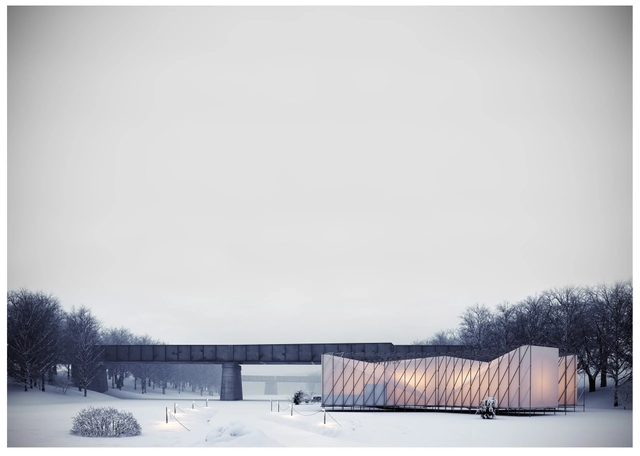
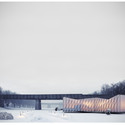
UK architects OS31 have recently won a competition to design RAW:almond, “the first ever outdoor dining restaurant on a frozen body of water.” The temporary restaurant has set up for business in Winnipeg, Manitoba, Canada for the last two years, and for 2015 the organizers held an international open competition for the winning design. This year’s design establishes itself as an expressive frame that appears to float across the ice like a frozen jetty. Learn more about the winning proposal after the break.
Have you ever had the urge to squeeze a lemon on the dome of St. Peters Basilica? Or perhaps, crack a beer with Kohn Pedersen Fox’s “bottle opener”? New York-based designer Nicholas Blechman has put into illustration what we’ve all been thinking, landmark architecture as the food-related items they resemble. Check out Blechman’s “Gastro-Architecture” series here on the New York Times and preview a couple of our favorites, after the break.
Update 23/10/2015: In the 12 months since Gehry's outburst, the event has been used as the jumping off point for countless articles both criticizing and defending current architecture. But has Gehry's finger inspired any change in architecture or its discourse? We would love to know what our readers think - let us know in the comments.
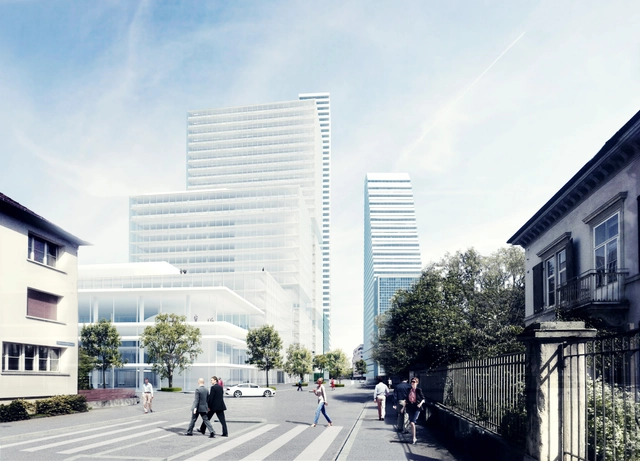
Herzog & de Meuron has unveiled plans for the modernization of the Roche pharmaceutical company’s Basel headquarters. With the first tower already under construction, the overall vision is to consolidate and update all existing facilities, including a historic Otto R. Salvisberg-designed office building, as well as construct a new, four-tower research center and 205-meter tall office tower by 2022.
"The planned consolidation of the existing industrial site will eliminate the need to build over green zones", emphasizes Jürg Erismann, Head of the Basel/Kaiseraugst Site. "Instead, Roche will be making more efficient use of those parts of the site that have already been developed but cannot be expanded.”
Studio Gang Architects has released designs for a 14-story residential tower in the Miami Design District. Anchored by ground floor retail and topped with a resident lounge and swimming pool, the tower will, as the architects describe, “demonstrate Studio Gang’s principle of exo-spatial high-rise design in which the inside extends to the outside in a dynamic spatial arrangement.”
Each of the building’s 76 residential units will frame panoramic views of Biscayne Bay and surrounding Buena Vista neighborhood with Studio Gang’s contemporary reinterpretation of a “Florida Room.”
Studio Gang has broke ground on the new home for Chicago’s beloved Writers’ Theatre. Situated on the sloped Tudor Court site of the Glencoe Woman’s Library Club, the glass encased timber structure will be a theatrical spectacle, as the main performance space's second story catwalk is designed to peer through the transparent facade.
“Our process has been built around the creative team dialogue with Writers Theatre, its audiences, and the community, and we could not be more excited to celebrate this milestone today while looking forward to the ideas that will soon become a built reality in 2016,” said Jeanne Gang. “The design of Writers Theatre’s first purpose-built theatre reinforces their important mission and vision to maximize the feeling of intimacy between actors and audience within the park-like setting of downtown Glencoe.”
New renderings and more information from the architect, after the break.
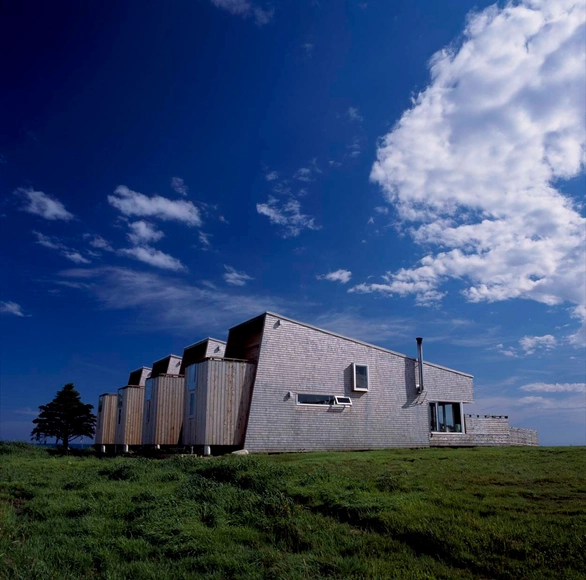
Brian MacKay-Lyons is the founding partner of MacKay-Lyons Sweetapple Architects, a professor at Dalhousie University and the founder of Ghost Lab - the now legendary 2-week summer design/build program that took place on his family farm in Nova Scotia from 1994 to 2011. While relentlessly local, Brian's work has been recognized internationally with more than 100 awards, 300 publications and 100 exhibitions. In 2012, the American Institute of Architects recognized the collective work and influence of Ghost with an Institute Honor Award for Architecture.
On August 22nd, 2014 Brian hopped off his tractor and wiped the diesel fuel off his hands to discuss architectural education with Keith and Marie Zawistowski, co-founders of the design/buildLAB at Virginia Tech and partners of OnSite Architecture. Here is an excerpt from their conversation, which was originally published on Inform:
Keith Zawistowski: Your contributions to the discipline of architecture have been both in practice and in education. In 1994, you founded Ghost, an international laboratory that influenced all generations of architects with its simplicity and this affirmation of timeless architectural values of place and craft. It was a pretty bold move and it seems for us like it was a direct reaction to your discontentment with academia and the way architects were being educated. Do you still feel that strongly about the state of architecture education and the profession?
MCHAP was established by the Illinois Institute of Technology (IIT) in Chicago to recognize the best built works in the Americas. As Kenneth Frampton noted when the finalists were announced in Santiago, Chile, the MCHAP Awards are the first time that an architectural prize has been approached, not in a trans-atlantic, horizontal manner, but rather vertically across the Americas.
Although initially the jury intended to select one work to be honored for the 2000-2013 period, they felt that both projects represented “an uncommon expressive display of structure,” and divided the 13-year period into two parts. Siza’s Iberê Camargo Foundation was selected as the 2000-2008 winner, while Herzog & de Meuron's mixed-use parking garage was selected for the 2009-2013 period. The two winning projects were selected from a total of seven finalists by jury members Jorge Francisco Liernur, Sarah Whiting, Wiel Arets, Dominique Perrault, and Kenneth Frampton.
Learn more about the winning projects after the break.
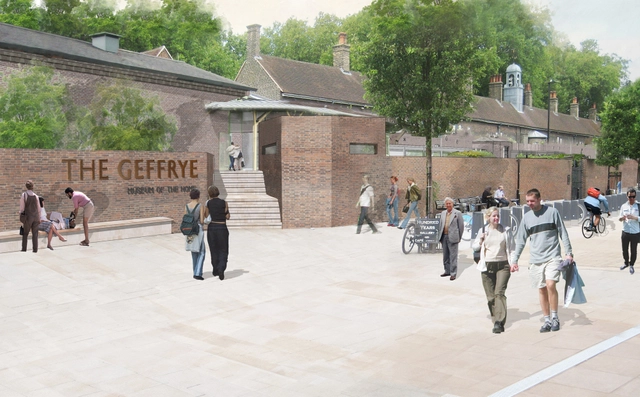
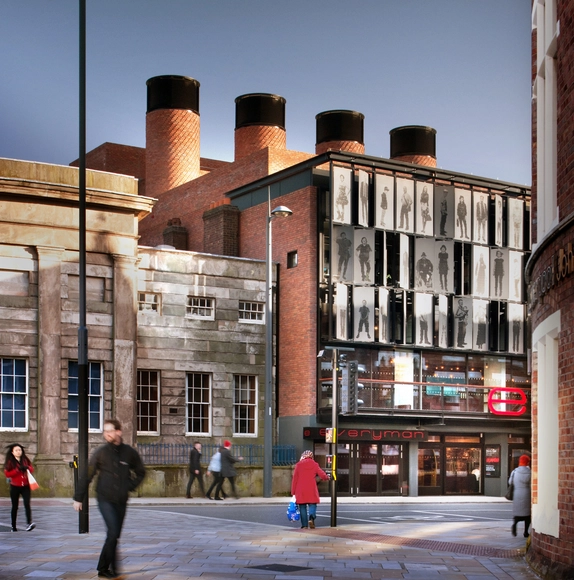
Wright & Wright Architects has revealed their designs for the Geffrye Museum in East London, a £15 million redesign that will increase the museum's total space by almost 40% through "unlocking" previously unused areas of the museum's 18th century almshouses. The design replaces a scheme by David Chipperfield Architects, which last year failed to secure planning permission in part because of the hugely controversial proposal to demolish the former Marquis of Lansdown Pub that occupies the corner of the site.
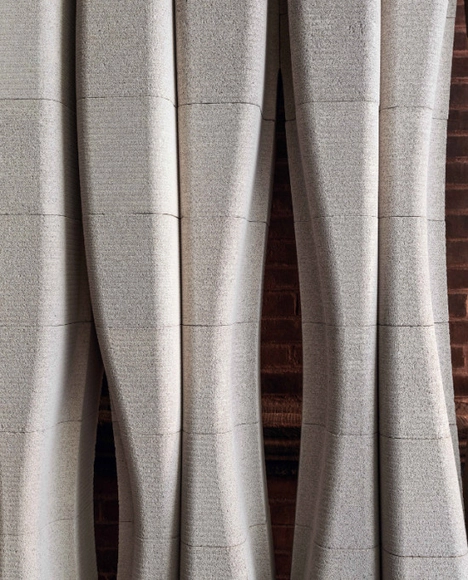
Students from the Pratt Institute have created a wall of concrete blockwork... but not like any you've seen before. Challenged by their tutors Lawrence Blough and Ezra Ardolino to produce something highly customized from something highly standardized - the 8-by-8-by-24-inch AAC brick - the students used Rhino software and a CNC miller to create a 96-block screen wall composed of 20 different block profiles. “The earlier stuff I’d done was trying to use as much off-the-shelf material as I could,” said Blough. “Here we decided to really push it, and to take on more of the ideas of mass customization." Find out more about the project at the Architect's Newspaper Fabrikator Blog.
The American Institute of Architecture (AIA) has indicated a “heightened level of demand for design services” throughout the US. As the latest Architecture Billings Index (ABI) reports, all regions and project sectors have shown positive conditions and the September score was 55.2, up from a mark of 53.0 in August. The new projects inquiry index was 64.8, following a mark of 62.6 the previous month.
“Strong demand for apartment buildings and condominiums has been one of the main drivers in helping to keep the design and construction market afloat in recent years,” said AIA Chief Economist Kermit Baker, Hon. AIA, PhD. “There continues to be a healthy market for those types of design projects, but the recently resurgent Institutional sector is leading to broader growth for the entire construction industry.”
A breakdown of regional highlights, after the break.
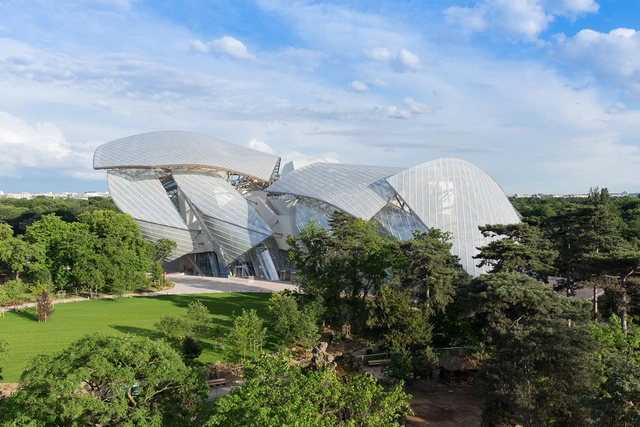
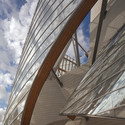
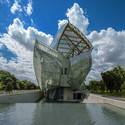
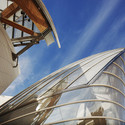
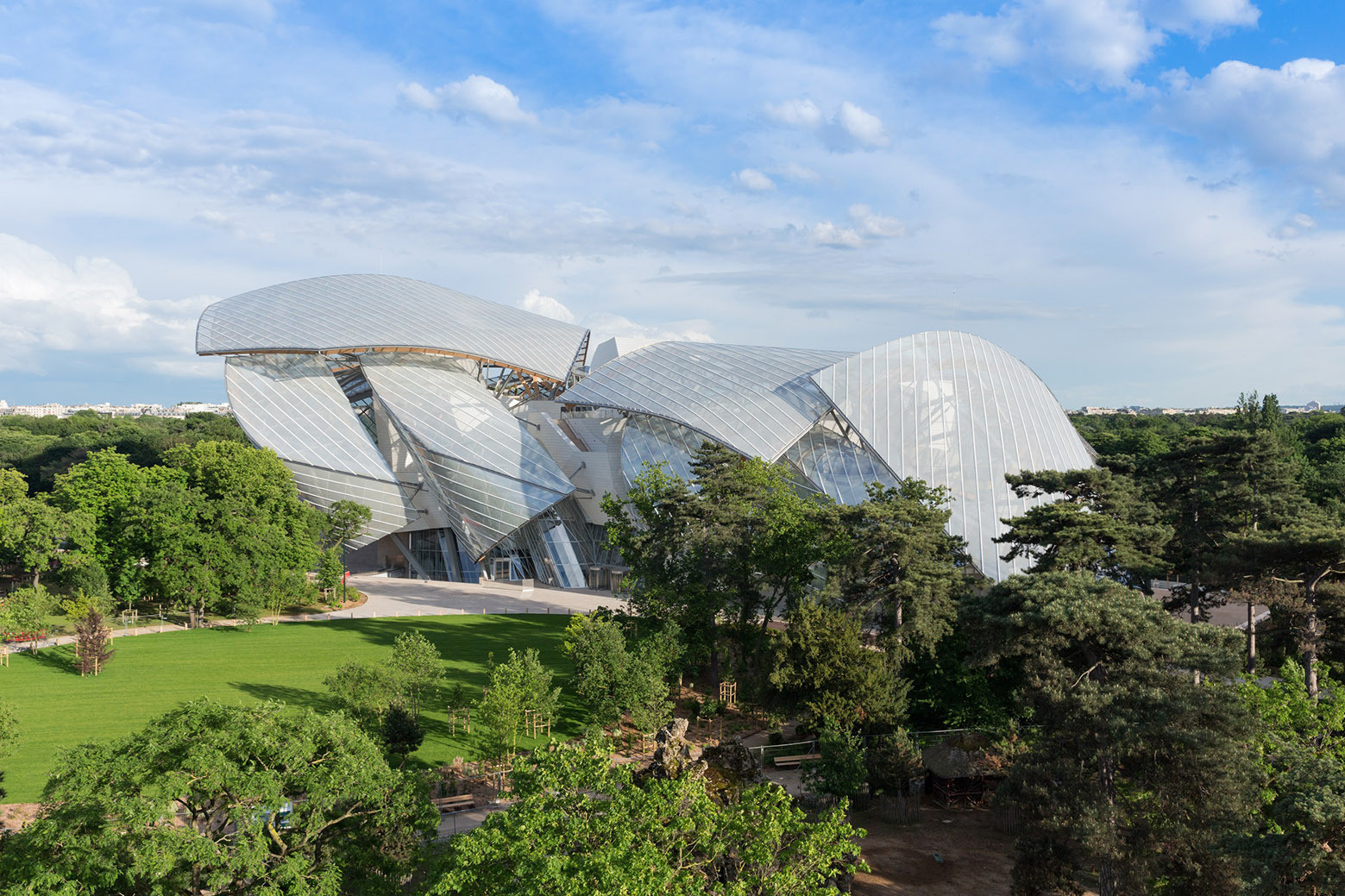
The people behind Frank Gehry'sFondation Louis Vuitton (FLV) in Paris, which is set to officially open on the 27th October 2014, recently invited a band of architecture critics to take a look around and pen their thoughts. Gehry's bold approach to architectural form, most evident in buildings like the Guggenheim Museum in Bilbao and the Walt Disney Concert Hall in LA, matches the foundation's aim to "promote and support contemporary and artistic creation" in France. According to their website, they in particular embody "a passion for artistic freedom." How, then, has the enormous sailed structure, challenged by local opposition from the outset, settled into its Parisian parkland surroundings?
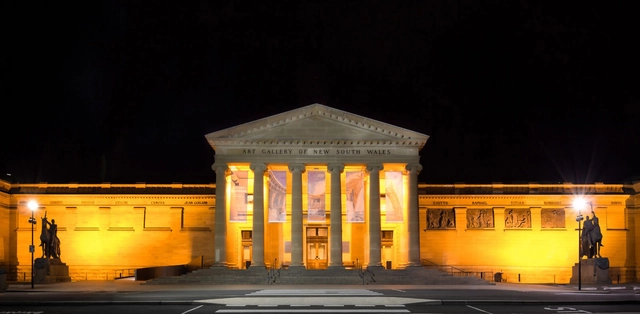
Art Gallery of NSW. Image Courtesy of Flickr CC User Jason Starr
Twelve local and international practices have been invited to participate in a two-stage competition for the “Sydney Modern Project,” a $450 million expansion of the Art Gallery of New South Wales (NSW). Five practices from the shortlist, which also includes SANAA, Tod Williams and Billie Tsien, and Herzog & de Meuron, will move on to produce conceptual designs in the competition’s final round.
“The Sydney Modern vision for expansion and transformation is much more than just a building project,” stated gallery director Dr. Michael Brand. “Through this invited competition the Gallery is seeking ideas that will create an architecturally ambitious, intelligent, sensitive, sustainable and highly functional design. Our site overlooking Sydney Harbor will inspire each of the invited architectural practices, all of whom have extraordinary design skills.”
How much do you love invoicing? I imagine, about as much as you love cleaning the mouldy food out of the back of your refrigerator. Or possibly your annual trip to the dentist. Or maybe as much as your neighbor's dog who likes to run around in circles yapping excitedly for seven straight hours.
On invoicing days, you will usually find me in the kitchen, condiments spread everywhere, frantically trying to discern exactly what that lump of amorphous green goo stuck at the bottom of the vegetable crisper once was.
As an architect, you’re writing invoices all the time, for huge amounts of money. You’ve probably had enough late-paying clients or miscalculated fees to understand how important it is to stay on top of invoicing and make sure you haven’t missed off a zero or moved a decimal point in the total. But pulling all the data together, giving the client the information they want, and making sure you’ve calculated it all correctly can take hours. Hours you’d rather spend on other tasks, like actually working in the studio.
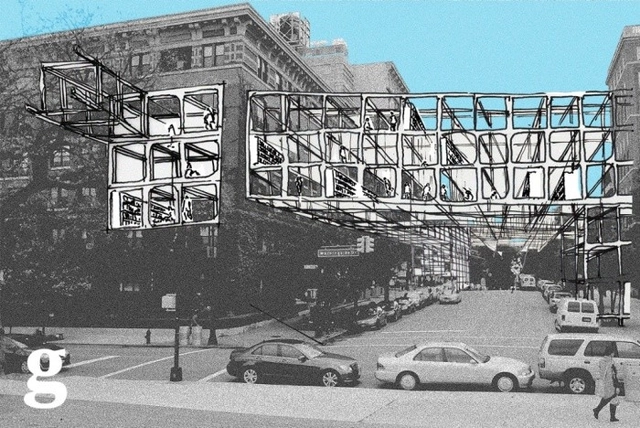
Barack Obama still has two years left in his presidency, but speculative planning for his Presidential Library has already begun for each of the four possible final locations. Just as the election of President Obama broke down historical precedents for who could hold office, could the design of his dedication library represent an architectural shift from previous libraries? This article by Lilah Raptopoulos from The Guardian presents four unofficial visions for the design of the new library, each of them from award-winning architects. Their bold design sketches expand our perceptions of what a presidential library could be, and explore new ways in which these libraries could serve their communities. See all four designs and read the full article from The Guardian entitled, “Obama's presidential library: four radical visions of the future from top architects.”
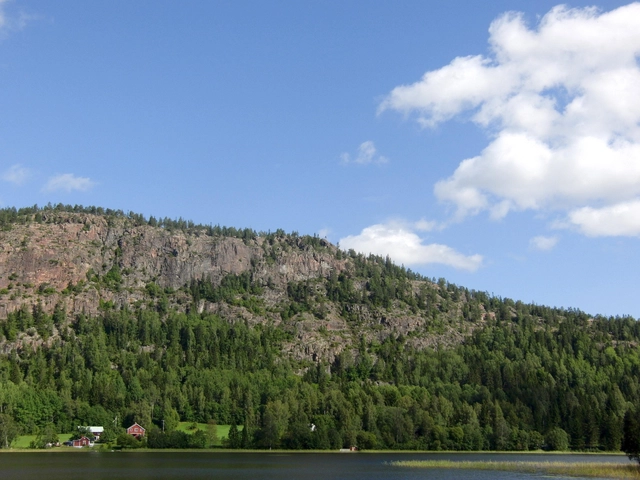
Competition Site. Image Courtesy of Combo Competitions
Combo Competitions' latest ideas challenge, entitled Hello Nature!,centres on a site located in northern Sweden at the foot of a mountain (Omneberget), sat within an area called the High Coast (Höga Kusten) - which is also a UNESCO World Heritage Site. This competition is looking for "structures that celebrate nature", which also involve elements of "both education and recreation, or - if you prefer - business and pleasure." The wider question the competition poses is whether or not architecture can encourage involvement with nature. Previous Combo Competitions have included the London Cinema Challenge and Faith! A Place of Worship in London, both of which attracted a number of high quality proposals.
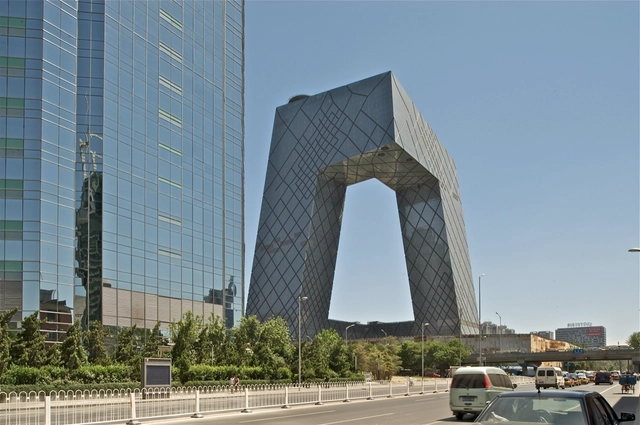
The President of the People's Republic of China, Xi Jinping, has reportedly called for an end to the "weird buildings" being built in China, and particularly in the nation's capital, Beijing. In a two hour speech at a literary symposium in Beijing last week, Mr Xi expressed his views that art should serve the people and be morally inspiring, identifying architectural projects such as OMA's CCTV Headquarters as the kind of building that should no longer be constructed in Beijing.
With China's construction boom being one of the most talked about features of today's architecture scene - and many a Western practice relying on their extravagant projects to prop up their studios - the Chinese leader's comments have the potential to affect the landscape of architectural practice worldwide. But what is behind these sentiments? Read on after the break to find out.
Aeropuerto Internacional Jorge Chávez. Image Courtesy of LAP
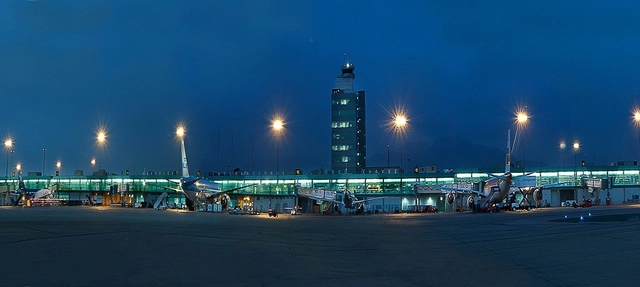
Grimshaw has landed a $950 million expansion project for the Jorge Chávez International Airport in Lima, Peru. As reported by the Architect’s Journal, Grimshaw will work with ARCADIS, CH2MHill and Ramboll to design a seven million square meter scheme that will include a new air traffic control tower and second terminal for the international airport. Designs are set to be revealed in 2015.
Cabinet of Curiosities / Donna van Milligen Bielke. Image Courtesy of Prix de Rome
The Dutch Minister of Education, Culture and Science Jet Bussemaker has awarded architect Donna van Milligen Bielke the €40,000 Prix de Rome Architecture 2014. A 2012 graduate from the Amsterdam Academy of Architecture, Van Milligen Bielke won the prize for her “radical and poetic intervention” - Cabinet of Curiosities - for the Hoogstraat in Rotterdam.
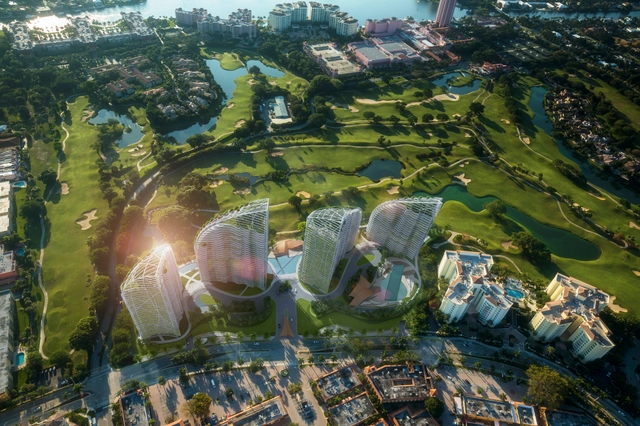
Daniel Libeskind has teamed up with locally-based GS4 Studios to propose a four-tower, luxury condominium project for downtown Boca Raton, Florida. North of Miami, the “Mizner on the Green” development will add 500 residential units and a two-acre public park directly adjacent to the Boca Raton Resort and Club golf course.
Jumeirah Nanjing. Image Courtesy of Jumeirah Group
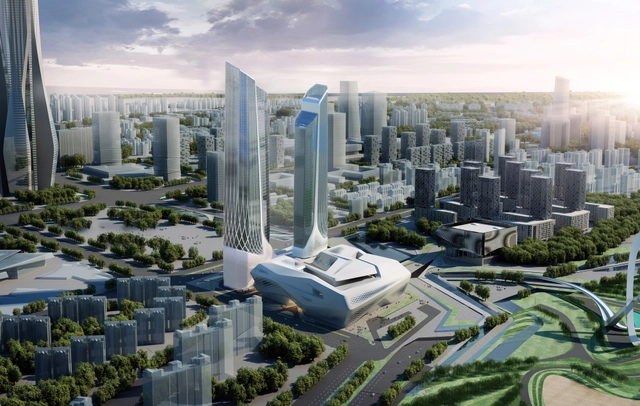
Zaha Hadid and Norman Foster have been tapped to design two luxury hotels for the Jumeirah Group's newest properties in China: Jumeirah Wuhan and Jumeirah Nanjing. Both properties will be adjacent to existing business districts and will provide luxury suites, specialty restaurants, executive club lounges, business centers, spas and more.
New Settlement Community Campus; NYC (2012) / Dattner Architects and Edelman Sultan Knox Wood
Judith Edelman, FAIA, an American architect and feminist who hoped to rid architecture of its “gentleman’s club” status, has passed away at 91. Starting her career in an era when hiring “girls” wasn’t the norm, Edelman’s work to elevate women in architecture has paved the way for many of today’s leading architects; She was the first woman ever elected to the executive committee of the AIA’s New York chapter and she helped co-found the Alliance of Women in Architecture in 1972. Edelman’s built work, also highly admired, ranged from affordable housing to schools and health clinics, mostly in the New York City area. You can read Edelman’s obituary here.









Hufton___Crow.jpg?1413917075 "1111 Lincoln Road. Miami Beach, Florida, USA.. Image © Hufton + Crow / Courtesy of MCHAP")
_Erica_Overmeer.jpg?1413917133 "1111 Lincoln Road. Miami Beach, Florida, USA.. Image © Erica Overmeer / Courtesy of MCHAP")
Erica_Overmeer.jpg?1413916984 "1111 Lincoln Road. Miami Beach, Florida, USA.. Image © Erica Overmeer / Courtesy of MCHAP")