As founder of Robert A.M. Stern Architects and former Dean of the Yale School of Architecture, Robert A.M. Stern is a self-proclaimed modern traditionalist – and no, in his eyes, that is not an oxymoron. When asked about the seeming contradiction in a PBS documentary, he replies by musing, "Can one speak the local languages of architecture in a fresh way?"
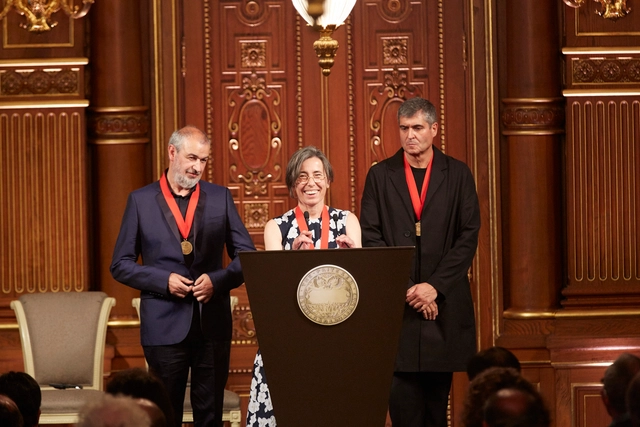
Your majesties, the Emperor and Empress of Japan; Deputy Prime Minister Taro Aso; your excellencies ambassadors and ministers; Tom and Margot Pritzker and members of the Pritzker family; ladies and gentlemen.
Emotions, happiness, pride, humility, respect, responsibility, admiration for those who have gone before us and for those who will receive this award in the future: there is an infinite mixture of many overlapping feelings that we are experiencing now, but the strongest sensation is one of gratitude: To the Pritzker Family, who for years have been generously supporting and bringing attention to architecture, and we ask that they continue to do this.
https://www.archdaily.com/871902/rcr-arquitectes-rafael-aranda-carme-pigem-ramon-vilalta-pritzker-prize-acceptance-speechRafael Aranda, Carme Pigem, and Ramon Vilalta
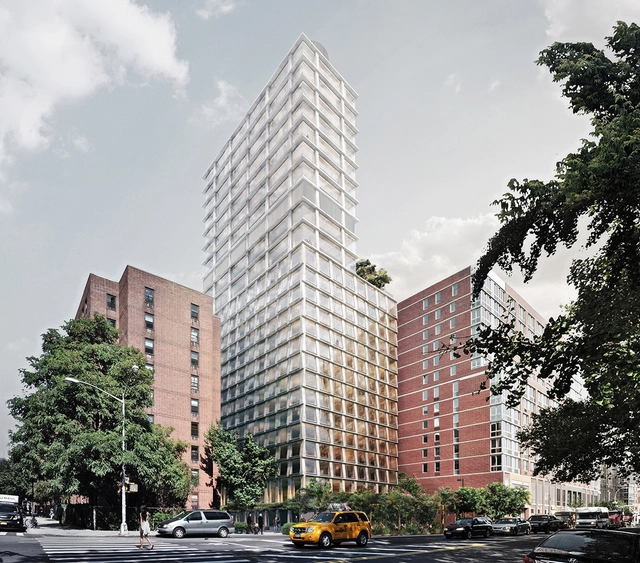
Herzog & de Meuron have completed construction of their latest project, a high-rise luxury residential skyscraper on 56 Leonard Street, New York City. Conceived as a stack of individual houses resembling a Jenga tower, the building is the tallest in its Tribeca neighborhood. With its tall and slender silhouette, 56 Leonard Street is the latest in a series of contemporary skyscrapers punctuating Manhattan’s skyline.
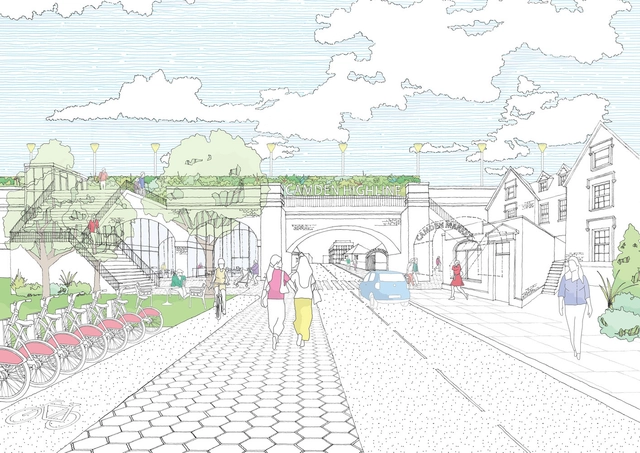
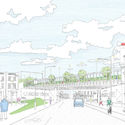
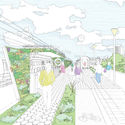
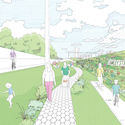
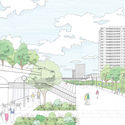
The New York High Line is set to receive a new British sibling, in the form the CamdenHigh Line – a conversion of the defunct railway line connecting Camden Town and King’s Cross, into an elevated public space and commuting route. The invited competition for the project was won by London-based practices Studio Weave and Architecture 00, whose proposal is one of three international designs that have followed the success of the High Line in New York, with the other two situated in Bangkok and Mexico City.
“We think the re-use of this railway line for the Camden High Line outweighs the benefits and costs of leaving it vacant,” said Simon Pitkeathley, Chief Executive at Camden Town Unlimited. “This new transport link can reduce overcrowding and journey times on the existing, cycling and pedestrian routes nearby like Regent’s Canal.”
The World Architecture Festival (WAF) has announced four internationally recognized names as members of the Super Jury that will judge the awards program at the 2017 Festival in Berlin this November. After the selection of winners from across 31 categories on the first two days of the event, category winners will present to the Super Jury, who will decided the winners of the World Landscape, Future Project and Completed Building of the Year Awards.
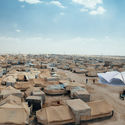
Over the past two years alone, more than a million people have fled the Syrian conflict to take refuge in Europe, strenuously testing the continent’s ability to respond to a large-scale humanitarian crisis. With the Syrian Refugee Crisis still unresolved, and temporary refugee camps now firmly established on the frontiers of Europe, architects and designers are devoting energy to improving the living conditions of those in camps fleeing war and persecution.
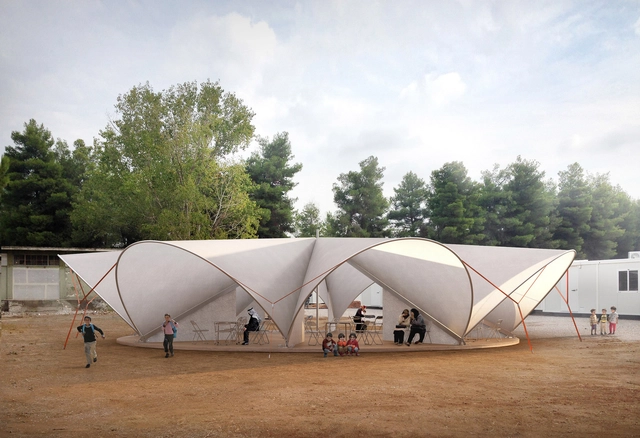
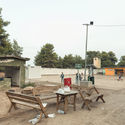
One emerging example of humanitarian architecture is Maidan Tent, a proposed social hub to be erected at a refugee camp in Ritsona, Greece. Led by two young architects, Bonaventura Visconti di Modrone and Leo Bettini Oberkalmsteiner, and with the support of the UN International Organization for Migration, Maidan Tent will allow refugees to benefit from indoor public space – a communal area to counteract the psychological trauma induced by war, persecution, and forced migration.
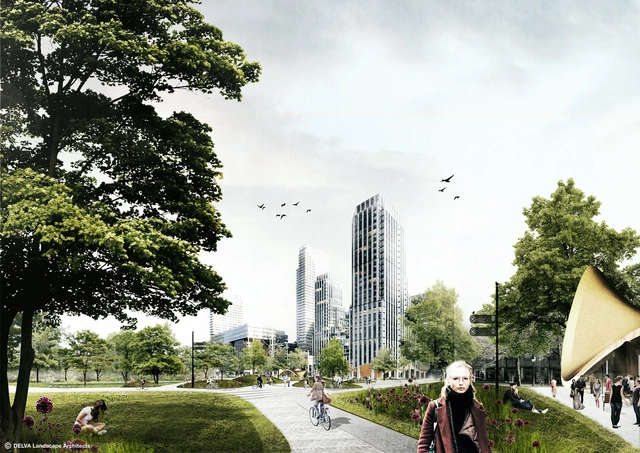
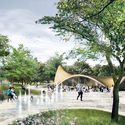
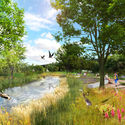
Serving as a new gateway to the city through the connection of various green spaces and public programs, The Green Entrance is DELVA Landscape Architects’masterplan for a historic district of The Hague. Given The Hague’s future inner-city densification, which involves the creation of 50,000 new houses, the Dutch firm’s aim is to aid these developments through sustainable and green urban strategies, manifested “through an integral approach between landscape design, cultural heritage, mobility, programming and technology.”
Commenting on the project’s primary function, the architects state: “’The Green Entrance’ connects areas that have been isolated over the years. It starts in the spacious and open ‘City Hall' that connects to the train station and continues to the ‘Koningin Julianaplein’. No narrow doors or gates, but a wide view over the green and lively surrounding public space.”
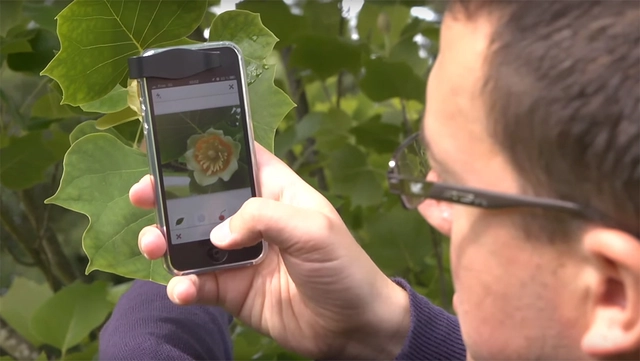
You've probably used or heard of the app Shazam, used by millions of people to identify songs and song lyrics. A team of researchers from Cirad, IRA, Inria / IRD and Tela Botanica Network - had the idea of developing a similar application, but instead of identifying songs, the application identifies plant species.
Pl@ntNet is a new tool that helps identify plants using pictures. Collecting data from a large social network that constantly uploads images and information about plant species, Pl@ntNet has a visualization software that recognizes the plant photographed and links it to its plant library.
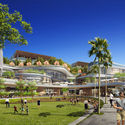
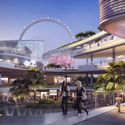
New York-based firm Laguarda.Low are set to transform the Bao’an district in Shenzhen, China with a 128-acre large-scale waterfront masterplan. Located 13 miles west of Shenzhen city center, and less than an hour’s drive from Hong Kong, OCT Bao’an will encompass dynamic spaces for business, retail, and entertainment. Designed in collaboration with landscape firm SWA, the Laguarda.Low scheme integrates nature, recreation, and culture in a new urban setting, a vision which was awarded first place in an international competition.
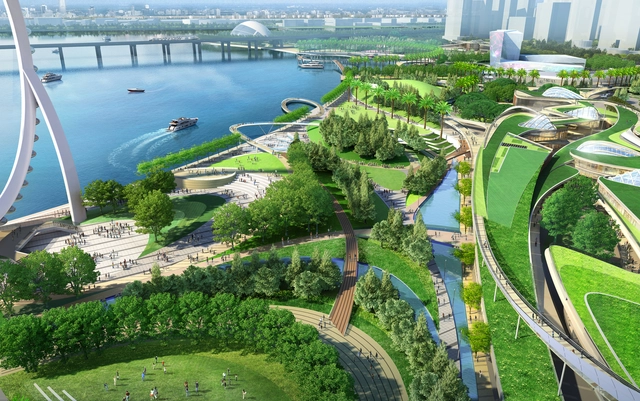
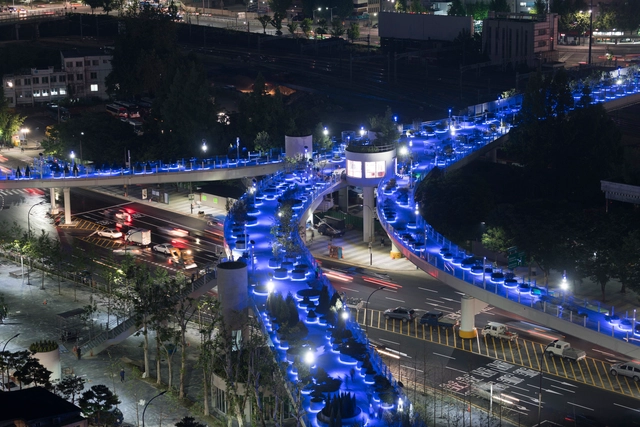
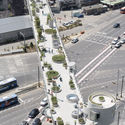
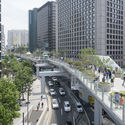
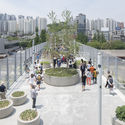
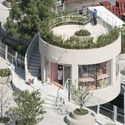
Today the Mayor of Seoul opened the Skygarden, a 983-meter elevated walkway designed by MVRDV which utilizes a formerly abandoned highway in the center of the South Korean capital. Located in Seoul's Central Station district, the 16-meter-high linear park features a living catalog of Korea's indigenous plants, featuring over 24,000 individual plants from 228 species and sub-species. The Skygarden is known in Korean as Seoullo 7017, a name which references the Korean for "Seoul Street," and the 1970 and 2017, the years in which the structure was originally built and subsequently transformed.
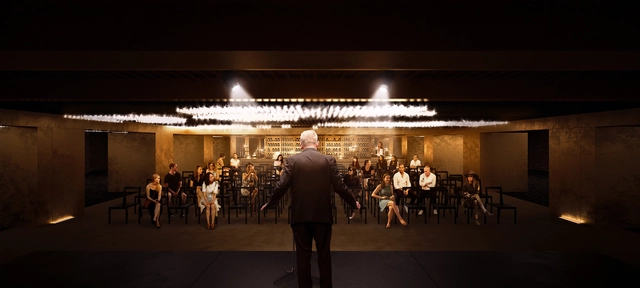
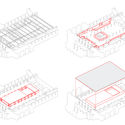
A competition for the interior renovation of the Alte Oper, one of the world’s most prominent opera houses in Frankfurt, has been won by German firm Buero Wagner, selected ahead of heavyweight runner-up Zaha Hadid Architects. The scope included the conversion of one of the building’s multipurpose foyers into a central social space, to be activated by the 450,000 annual visitors that attend the Alter Oper’s 400-plus concerts.
Earlier this year, the Global Seed Vault in Svalbard was flooded after record high temperatures over the winter caused some of the permafrost surrounding the vault to melt, reports The Guardian. The building's entrance tunnel was flooded and then froze to create conditions "like a glacier" for those trying to enter. Fortunately, the vault itself was not breached, meaning no harm came to the building's precious contents. However, the incident has raised questions about whether the building will be able to fulfill its purpose in the long term.
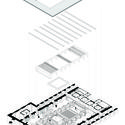
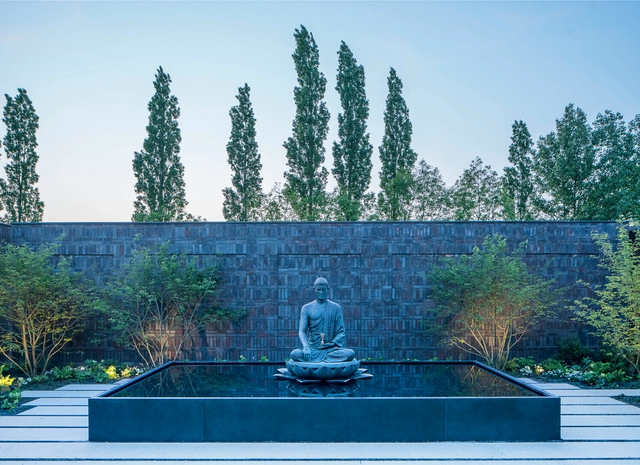
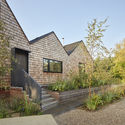
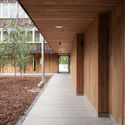
The Royal Institute of British Architects (RIBA) has announced 17 winning projects in the 2017 RIBA East Awards. Topped by Walters & Cohen Architects' Vajrasana Buddhist Retreat Centre in Suffolk which won the RIBA East Building of the Year Award, these 17 regional winners will go on to compete in RIBA's national awards, with the best in the national awards ultimately going forward to compete for the Stirling Prize.
"It was just fabulous to see the diversity and exceptional quality of buildings around the region," said RIBA East Regional Director Louise Todd. "The jury had a really difficult task in selecting the winners, which says a lot for the strength of the shortlist and the creativity of the architects involved."
In 1990, China, then a country with a population of just over 1.1 billion inhabitants, had only three metro systems—located in Beijing, Hong Kong and Tianjin. Fast forward a mere 27 years later and the number of urban transit systems has grown more than ten-fold.
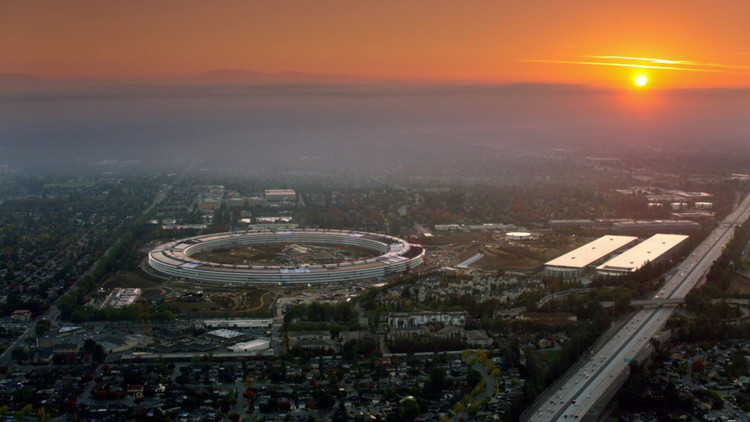
“It’s a pretty amazing building. It’s a little like a spaceship landed” - Steve Jobs
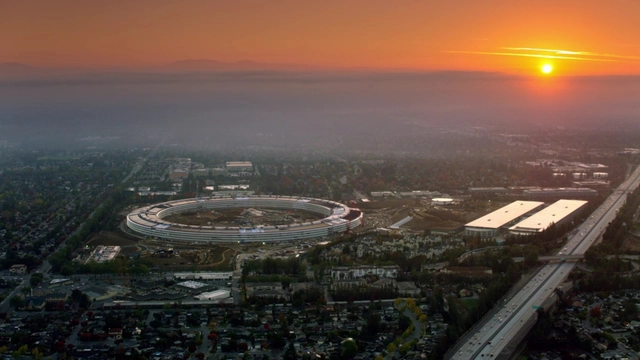
WIRED has published an in-depth article exclusively detailing Apple’s new headquarters that has now opened in Cupertino, California. Coined as the “One Last Thing” Steve Jobs had envisioned prior to his death in 2011, journalist Steven Levy takes the reader through a step-by-step tour of the new Apple Park campus guided by design spearhead Jonathan Ive and head of facilities Dan Whisenunt. Designed in collaboration with Foster + Partners, the sprawling 75 acres hosts facilities ranging from a 100,000 square foot Wellness Center, a hilltop theater, a 755-foot entrance tunnel (tiled Apple white of course) and immense 4-storey glass doors that open up the Ring’s equally giant café to the elements.
Located in Tokyo's Sumida Ward, in which Sumida Hokusai (Katsushika Hokusai) was born and spent the majority of his life, this museum—completed in November 2016 to designs by Kazuyo Sejima—is a temple to the Japanese artist's work, including the likes of The Great Wave off Kanagawa and Red Fuji. Sejima, who was awarded the Pritzker Prize in 2010, is commonly known as one-half of SANAA (alongside Ryue Nishizawa). This project, while seeking to celebrate Hokusai's work, has also been designed as a cultural beacon. In this photoset, photographer Laurian Ghinitoiu has turned his lens to the new cultural landmark.
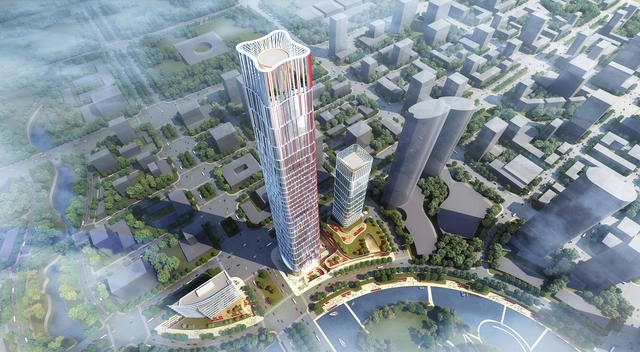
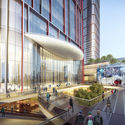
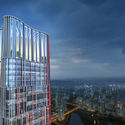
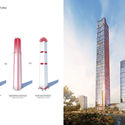
Goettsch Partners has been announced as the winners of an international competition for the design of the new Optics Valley Center complex in Wuhan, China. Being developed by prominent developer Greenland Group, the project will consist of 3.4 million square feet (315,000 square meters) of mixed-use space across three buildings, including a landmark 1,312-foot-tall (400-meter-tall) office tower that will “symbolize the future vision of Wuhan as the perfect balance between modern development and the environment.”
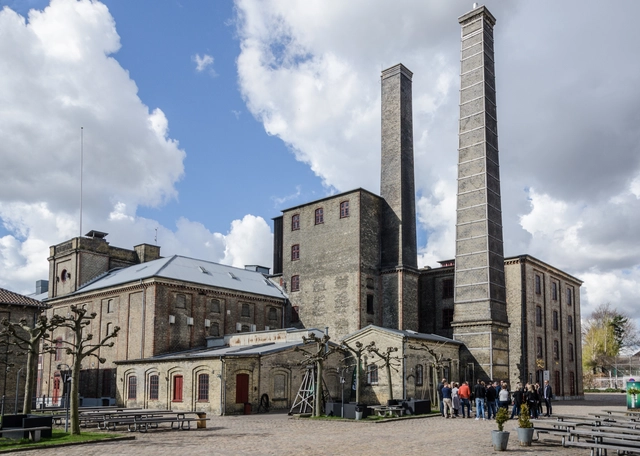
Schmidt Hammer Lassen Architects, in collaboration with Holscher Nordberg Architects, has been selected to lead a 120,000-square-foot (36,000-square-meter) redevelopment of the new Carlsberg City district in Copenhagen. Located on the former site of the famous Carlsberg Brewery, the project will incorporate the area’s historic industrial elements in creating a new sustainable city district with inviting open spaces, public transportation, and a series of context-sensitive new buildings, including a 262-foot-tall (80-meter-tall) residential tower.
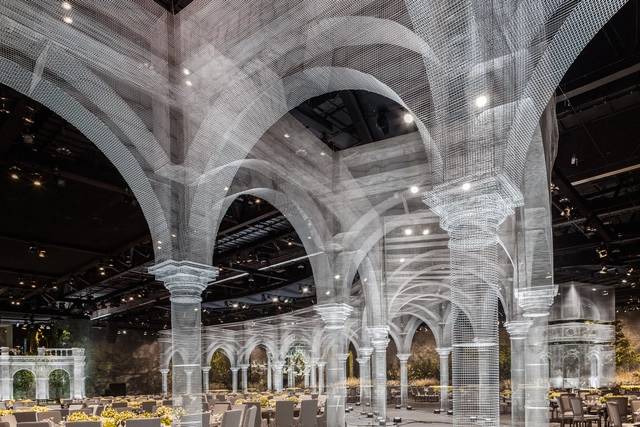
Commissioned for a large-scale event in the Emirate of Abu Dhabi, Edoardo Tresoldiin collaboration withDesign Lab Experiencehave constructed a vast indoor "piazza" of architectural fragments. Accommodating a 7000sqm event space, each "Classical" element is built entirely from wire mesh and comprises domes, arches, colonnades, columns, and imitations of sacred spaces (namely Italian basilicas). Together they create a translucent and ephemeral sequence of indoor rooms – all layered by a strikingly contemporary aesthetic.
https://www.archdaily.com/871641/edoardo-tresoldi-wire-mesh-installation-features-architectural-fragments-constructed-at-1-1AD Editorial Team
New renderings of Herzog & de Meuron’supcoming luxury hotel have been released, showing the 28-storey tower’s updated interiors at its location at 215 Chrystie Street in Manhattan’s Bowery District. Constructed of raw concrete, the 370 rooms are capped with eleven open-plan luxury residences and is set to open to the public in June.
“To introduce a sense of scale and to further foster the expression of each individual floor, each column is slightly inclined,” explained Jacques Herzog with the announcement of the project back in 2014. “The prominent corner of the building facing Chrystie Street is where the two geometries of the inclined columns meet. Rather than giving one direction priority, the two directions are braided together. The result is a sculptural corner column that becomes the visual anchor for the entire building.”
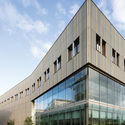
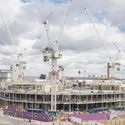
The Herzog & de Meuron-designed global corporate headquarters for pharmaceutical company AstraZeneca has topped out in Cambridge, UK, as the building pushes forward to a series of opening dates beginning in 2018. Developed alongside AstraZeneca researchers and executive architect/lead consultant BDP, the scheme consists of a ring-shaped volume containing a series of open laboratories and transparent glass walls intended to foster the company’s principle of collaboration across disciplines.
In the seventh episode of GSAPP Conversations Amale Andraos speaks with Hilary Sample, an academic and co-founder of MOS Architects alongside her partner Michael Meredith. They discuss the lasting influence of ORDOS 100—a collection of villas built in Inner Mongolia by emerging and renowned practices—on the firm’s thinking, the role of representation, and how Sample's practice pursues an inclusive way of working and thinking – while maintaining a purposefully small office.
https://www.archdaily.com/871524/gsapp-conversations-podcast-hilary-sample-mos-architects-on-the-benefits-of-maintaining-a-purposefully-small-officeAD Editorial Team
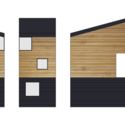
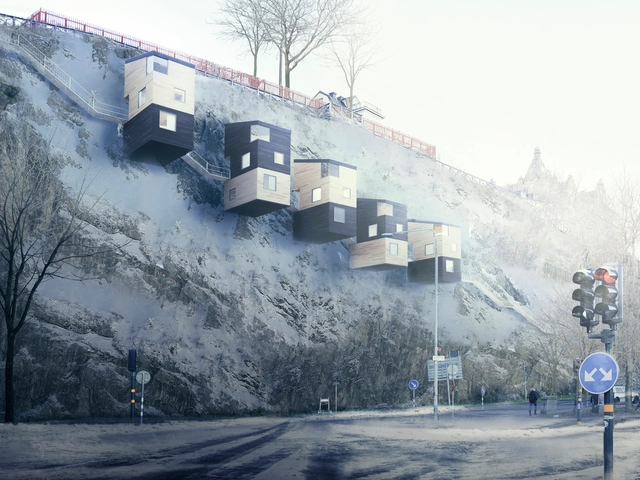
Nestinbox takes inspiration from birdhouses to provide an innovative solution to tackle housing crises. Image Courtesy of Manofactory
In major cities around the world, buildable land is at a premium. At the same time, a continued trend of urban migration has led to a shortage of houses, inspiring a wealth of innovative solutions from architects and designers. Swedish firm Manofactory have literally taken housing solutions to a new level, questioning why we need to build at ground level at all.
Many animals, including birds, build their nests in trees, under roof tiles or in rock crevices above the ground. Humans already build simple nesting boxes for birds to live in, causing Manofactory to question why we can’t build nesting boxes for ourselves – a simple house with several rooms, windows, and climate protection. Pointing to the numerous cliff walls in cities across northern Scandinavia and elsewhere, Manofactory have designed the Nestinbox – a small wooden house with a steel structure to be mounted on sheer cliff faces.

















.jpg?1494811811&format=webp&width=640&height=580)
.jpg?1494811608 "© Laurian Ghinitoiu")
.jpg?1494811764 "© Laurian Ghinitoiu")
.jpg?1494811990 "© Laurian Ghinitoiu")
.jpg?1494811979 "© Laurian Ghinitoiu")
.jpg?1494811811)



.jpg?1495045916&format=webp&width=640&height=580)
.jpg?1495045929 "© Herzog & de Meuron. Courtesy of Astrazeneca")
.jpg?1495045904 "© Herzog & de Meuron. Courtesy of Astrazeneca")
.jpg?1495045916)




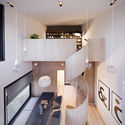
.jpg?1494766952 "The facade is clad in horizontal timber to reduce perceived building height. Image Courtesy of Manofactory")