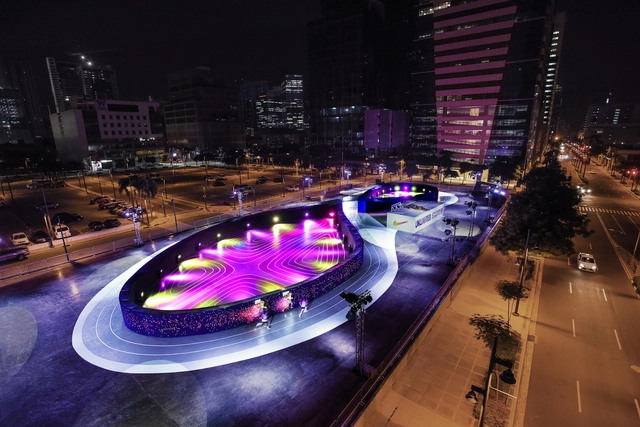
NIKE has created a new experimental lab for running aficionados: the world’s first full-sized LEDracing track. Built as a pop-up in Manila, Philippines, the "Unlimited Stadium" coincided with the launch of their new LunarEpic running shoe. The 200m long figure-8 course follows the imprint of the running shoe, scaled up to a 100ft long footprint lighting up the heart of Manila.
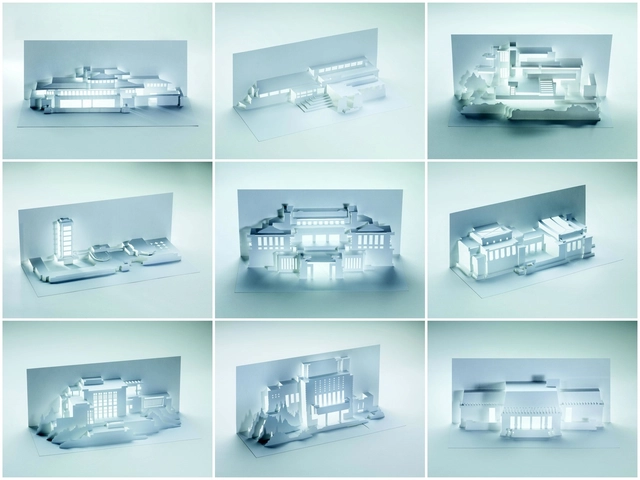
Created by paper engineer and artist Marc Hagan-Guirey, the book contains templates for creating 14 Wright-designed structures using the Japanese art of kirigami. The book leads you through the assembly of each model, which providing photographs, drawings and information for each building, including favorites like Fallingwater and the Solomon R. Guggenheim Museum in New York.
The multi-disciplinary team 'Wasser Hannover', Cityförster and the Chinese Academy for Urban Planning and Design (CAUPD) have been selected as the first prize winners in one of three initial competitions to design the new seat of government for the Chinese capital of Beijing. Part of a planned merging of Beijing with the surrounding cities of Tianjin and Hebei, the new government district will be located in Tongzhou, an existing district southeast of the city center.
The winning scheme follows a 'landscape-planning-based' concept that is organized through a holistic water and open-space system, responding to the ecological and technical needs of the government.
https://www.archdaily.com/873475/cityforster-to-lead-design-of-new-beijing-government-districtAD Editorial Team
Social media is one of the most critical elements for a successful marketing strategy. For architecture firms, the bounty of online platforms supporting visual content can allow ideas, commissions, and buildings to reach millions of architecture lovers around the world with a single click.
Since its launch in 2004, Facebook has proven to be an enduring platform for sharing architectural ideas, with even ArchDaily taking the decision in February to make Facebook a primary avenue for reader comments. Below, we have rounded up the 20 architecture firms worldwide with the most Facebook followers, demonstrating how a well-maintained, engaging presence on social media can allow architectural ideas to be spread to millions of enthusiasts. Are you following all of them?
https://www.archdaily.com/872815/the-20-most-popular-architecture-offices-on-facebookNiall Patrick Walsh
Videos
Courtesy of Flickr User Will Brown, licensed under CC BY 2.0
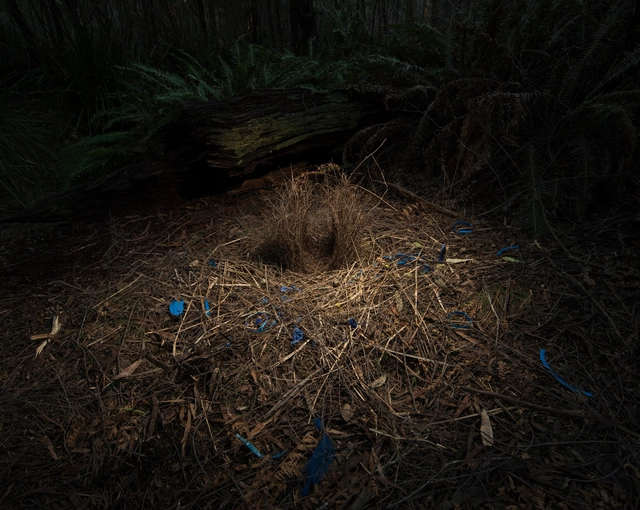
Think your decked-out bachelor pad is the slickest on the block? Think again. That reputation now resides in the carefully constructed abode of the bowerbird, which transforms the art of building into the art of seduction. Native to Australia and New Guinea, the bowerbird dedicates months to construct elaborate woven nests, known as bowers, as a means of attracting mates in one of nature’s most unique courting rituals.
https://www.archdaily.com/873098/power-to-the-bower-a-birds-architectural-method-of-seductionOsman Bari
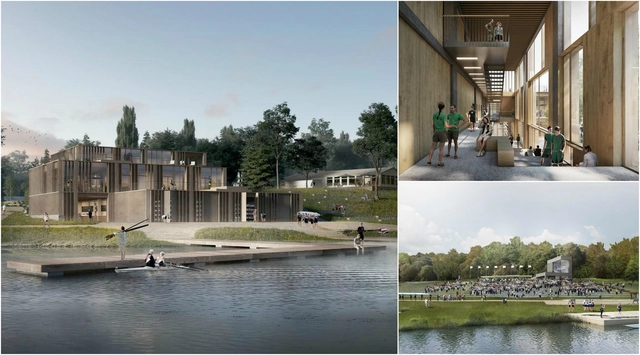
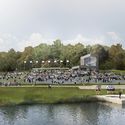
Denmark-based AART architects have been selected to design the country’s national rowing stadium, seeing off strong competition from prominent firms such as BIG and Kengo Kuma. Situated upon Bagsværd Lake on the outskirts of Copenhagen, the scheme seeks to allow the sporting elite and broader public to form a close interaction with picturesque natural surroundings.
There's a creepy transformation taking over our cities, says architecture critic Justin Davidson. From Houston, Texas to Guangzhou, China, shiny towers of concrete and steel covered with glass are cropping up like an invasive species.
“That person sitting right next to you might have the most idiosyncratic inner life, but you don’t have a clue because we’re all wearing the same expression. That is the kind of creepy transformation that is taking over cities.”
Shiny, bland and homogenous. These characteristics are increasingly encapsulating the nature and identity of our cities through the use of glass as a dominant building material, says Pulitzer Prize-winning critic Justin Davidson. In this TED Talk, Davidson stresses the importance of the use of a varied palette of materials that evoke texture, color, roughness, and shadow, in order to create architecture of individuality and character to define and populate the world’s cities. The rapid growth of glassy skylines, which express a disdain for communal urban interaction, can be curbed through a combination of new and old building and material techniques, creating architecture that absorbs history and memory as a reflection of the diverse society it lives in.
https://www.archdaily.com/873289/ted-talk-justin-davidson-on-the-pitfalls-of-glass-skylinesOsman Bari
150 years ago this month saw the birth of one of the most regarded, studied, influential architects of the twentieth century - American architect Frank Lloyd Wright. With a career spanning over seventy years, Wright developed his own distinct style of 'organic architecture', a new residential model of 'prairie house', as well as iconic schemes such as the Guggenheim in New York, and Fallingwater in Pennsylvania.
More than an architect, Wright was a social critic and visionary, just as well-known for his personal life as he is for his architectural contributions. The various stages of Wright's career can be narrated in tandem with biographical episodes, as exemplified in the book "Lives built, Biographies of architects" by authors Anatxu Zabalbeascoa and Javier Rodríguez Marcos. In celebration of Wright's birthday and life, we have compiled a list of biographical details to give you an insight into the man behind some of the twentieth century's most enduring pieces of architecture.
This is what we discovered.
https://www.archdaily.com/873273/26-things-you-didnt-know-about-frank-lloyd-wrightPola Mora
The team known as MADE BY HOLLAND has been selected to transform the palace and gardens of Soestdijk, a 17th century country estate and former residence of the Dutch royal family, into a forum for innovation and entrepreneurship, where large-scale exhibitions and events can be held for a wide range of audiences.
The V&A Museum of Design Dundee has released new drone footage as the Kengo Kuma-designed project races toward its 2018 opening. At this stage, huge cast stone panels, weighing between 1.5 and 2.5 tonnes each, are being fixed in place on the curving exterior walls. Once complete, a total of 2,466 panels will wrap around the museum’s facade, the design of which has been inspired by the natural seaside terrain of Scotland’s northeastern coast.
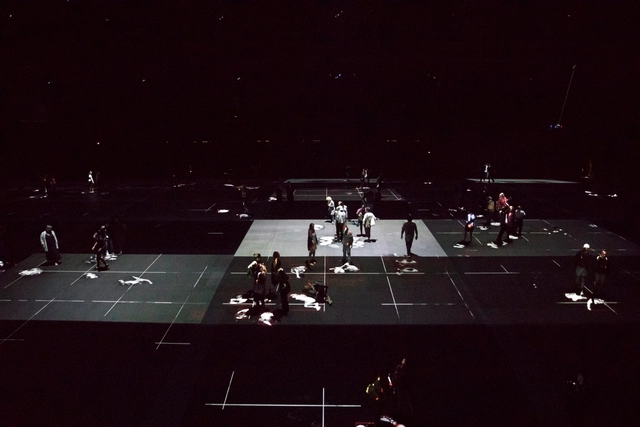
The latest collaboration between architects Jacques Herzog and Pierre de Meuron and artist Ai Weiwei may be called Hansel & Gretel, but it brings to mind just as much another literary classic: George Orwell’s 1984.
The immersive, site-specific installation, located within the expansive Wade Thompson Drill Hall at New York’s Park Avenue Armory, places visitors in a darkness-cloaked environment, where your every move is tracked and monitored by motion sensors, image captures and a team of surveillance drones. The work is a not-so-subtle interpretation of the expanding role of surveillance in modern-day society and the changing dynamics between the public and private realms.
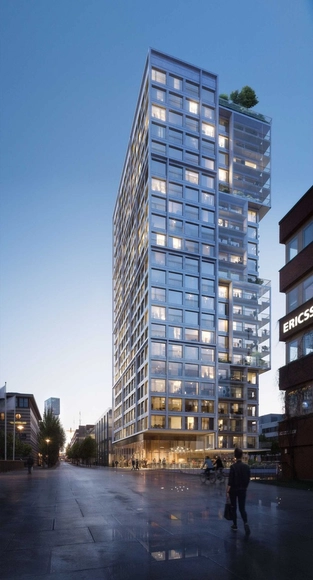
C.F. Møller has been selected as the winners of a competition to design a community-focused highrise in the Stockholm neighborhood of Kista, a district known as the city’s tech hub that is in need of attractive, contemporary living options. Known as Geysir, the 15,000-square-meter building will provide 220 new units of varying size, as well as 2,000 square meters of retail space, helping to develop the urban quarter.
The Curry Stone Design Prize has selected 11 honorees as part of June’s Social Design Circle, whose work responds to the question: Can Design Reclaim Public Space? From NGOs to design collectives across the globe, each winner addresses notions of usage, organization, and amenities within the realm of public space, and is featured on the prize’s website. In addition to a new circle of monthly winners, the prize hosts a weekly podcast, Social Design Insights, complimenting the featured work and expanding on the monthly themes with leading practitioners in social design.
Here are the 11 members of June’s Social Design Circle:
https://www.archdaily.com/872871/curry-stone-design-prize-celebrates-11-practitioners-for-valuable-approaches-to-public-spaceOsman Bari
Located in central Shanghai, this multifunctional arts and culture complex is part of the Bund Finance Centre – a joint project between London-based practices Heatherwick Studio and Foster+Partners. Sitting between the old town and the new financial district, this new space combines exhibition and events spaces with a performance venue inspired, according to the architects, "by the open stages of traditional Chinese theatres." Of most visual interest is the building's mechanical "moving veil," captured here by photographer Laurian Ghinitoiu.
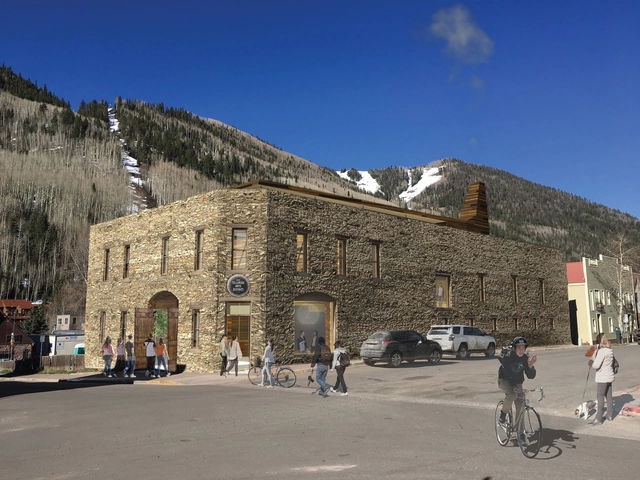
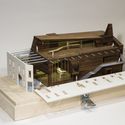
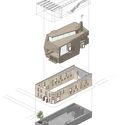
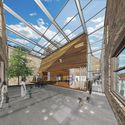
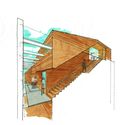
LTL Architects (Lewis.Tsurumaki.Lewis) has been selected as the winner of the Telluride Transfer Warehouse competition, beating out finalist entries from NADAAA and Gluckman Tang. The competition sought schemes for the adaptive reuse and transformation of the National Historic Landmark-listed warehouse in Telluride, Colorado into “an architectural and cultural landmark that provides contemporary, public art space that deepens and expands the cultural life of Telluride.”
At a meeting convened today at the Biennale's headquarters at Ca’ Giustinian in Venice, Italy, Grafton Architects—Yvonne Farrell and Shelley McNamara—revealed the theme and outline for the 2018 Venice Architecture Biennale, which they have titled Freespace. According to the Directors, the forthcoming Biennale will celebrate "generosity and thoughtfulness," and "a desire to engage."
We believe that everyone has the right to benefit from architecture. The role of architecture is to give shelter to our bodies, but also to lift our spirits. A beautiful wall forming a street edge gives pleasure to the passer-by, even if they never go inside.
Freespace will "reveal diversity, specificity, and continuity in architecture. Together," they proposed, "we can reveal the capacity of architecture to connect with history, time, place, and people. These qualities sustain the fundamental capacity of architecture to nurture and support a meaningful impact between people and place." In their closing statement, Farrell and McNamara chose to quote an Ancient Greek proverb: a society grows great when old men plant trees whose shade they know they will never sit in.
At Apple's Worldwide Developers Conference (WWDC) today, the US-based tech giant announced the latest slate of performance updates to their software and hardware products. Targeting software developers and other high-end users, the event was highlighted by the announcement of significant upgrades to their computer’s graphics and processing capabilities—or in architect’s terms—the components required to work on projects like creating content within a VR experience or real-time 3D rendering.
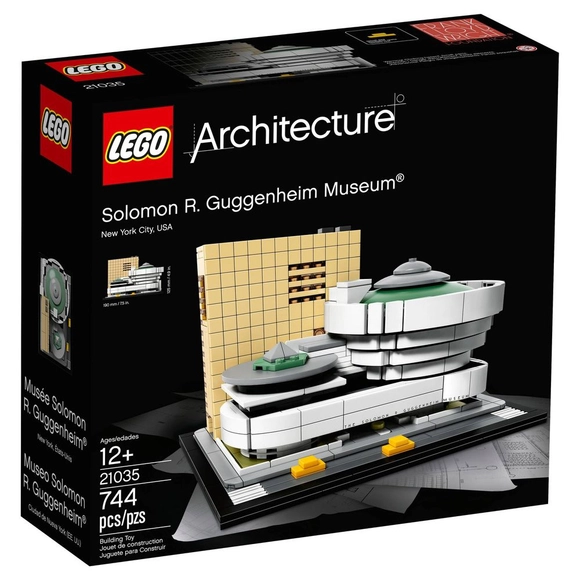
The 744-piece set features a new rendition of the building made from the classic plastic blocks, following a 208-piece interpretation released in 2009. The new set provides a much more realistic portrayal of the Wright's original building as well as the 10-story limestone tower added by Gwathmey Siegel & Associates Architects in 1992 (based on Wright's original sketches).
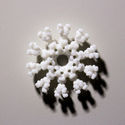
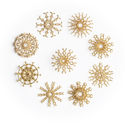
Brazil-based architects Estudio Guto Requena, working with digital product studio D3, has launched an app that collects emotions to create a unique piece of jewelry. That, and some 3D-printed craftsmanship direct from the design you generate via their new app. Coined the Aura Pendant, the final product is an intricately woven golden pendant that can be gifted to yourself or a loved one.
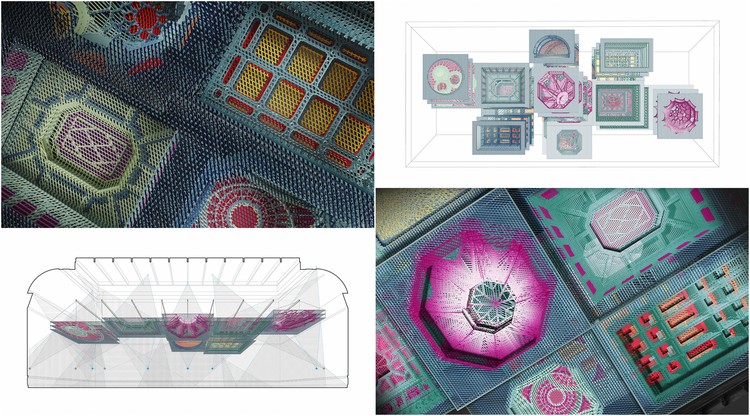
Art is not confined to gallery walls. The concept of art displayed on ceilings stretches back to the Renaissance, perhaps most notably the Sistine Chapel ceiling by Michelangelo. The Renaissance tradition of Trompel’oeil ceilings went further, using an illusionary depth of perspective to depict a volume which doesn’t exist; be it a dome that was never built or an attic filled with angels.
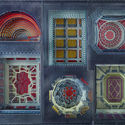
Four hundred years later, New York and Los Angeles-based architecture firm FreelandBuck has elevated the concept with its upcoming installation ‘Parallax Gap’, which has been selected by the Renwick Gallery of the Smithsonian American Art Museum as the winning entry in a competition entitled ‘ABOVE the Renwick’. From July 2017 to February 2018, the 2,500sqft canopy will be suspended from the ceiling of the Renwick’s largest room, the Bettie Rubenstein Grand Salon, depicting an abstract catalog of American architectural icons.
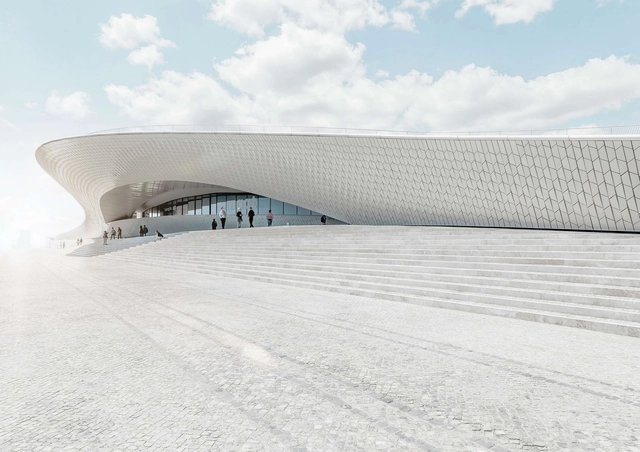
After a study of Madrid’s exuberantly geometric architecture, Digital Designer and Creative Director Joel Filipe continues his formal exploration in a series of photos of the MAAT by AL_A that celebrates the delicate impression of its undulating white tile facade against the bright Lisbon sky. Situated on the Tagus River, architect Amanda Levete creates a reunion between the river and the city with MAAT’s walkable rooftop terrace that draws visitors from the nearby streets of Belem, and with the promenade which steps down to meet the water. The roof provides a gathering space during the day and a place to screen films at night. The low-lying gentle arch of the building allows for a clever play of shadows and light, along with a nod to rippling water.
On a tree-lined avenue in Singapore, fittingly named Orchard Road, Apple has opened its first Flagship store in the city-state, highlighting its role as a global center for creativity and innovation. Designed by Fosters + Partners, in collaboration with the design team at Apple, the Orchard Road Flagship seeks to create a new social focus by working in tandem with nature, blurring the boundaries between inside and out.
https://www.archdaily.com/872749/apple-opens-its-first-flagship-store-in-singaporeNiall Patrick Walsh
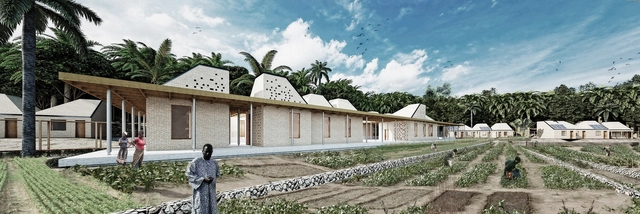
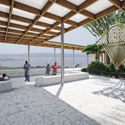
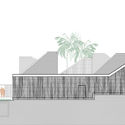
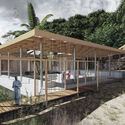
With a modular composition inspired by traditional sub-Saharan African building typologies, MASA Studio’s safe lodging proposal for Tanzanian cancer victims has been selected as the winner of the Hostels for Hope competition, which called for solutions to issues of health and safety in regards to the rehabilitation of cancer victims away from home in rural Africa. Organized by Pink Ribbon Red Ribbon, an international foundation combatting women’s cancers, the competition responds to the unfortunate decision that thousands of Tanzanian women have to make every year – to travel great lengths for unaffordable treatment and lodging, or to remain at home unable to fight the disease.





















.jpg?1496649420 "© Laurian Ghinitoiu")
.jpg?1496649355 "© Laurian Ghinitoiu")
.jpg?1496649434 "© Laurian Ghinitoiu")
.jpg?1496649213 "© Laurian Ghinitoiu")
.jpg?1496649193)













_Nigel_Young_l_Foster___Partners_2317_FP619882.jpg?1496385984&format=webp&width=640&height=580)
_Nigel_Young_l_Foster___Partners_2317_FP619882.jpg?1496385984 "Courtesy of Nigel Young l Foster + Partners")
_Nigel_Young_l_Foster___Partners_2317_FP619883.jpg?1496385944 "Courtesy of Nigel Young l Foster + Partners")
_Nigel_Young_l_Foster___Partners_2317_FP619884.jpg?1496386049 "Courtesy of Nigel Young l Foster + Partners")
_Nigel_Young_l_Foster___Partners_2317_FP619885.jpg?1496386156 "Courtesy of Nigel Young l Foster + Partners")
_Nigel_Young_l_Foster___Partners_2317_FP619882.jpg?1496385984)