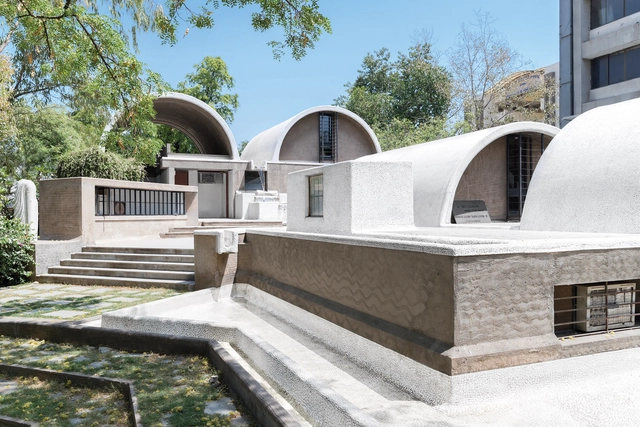
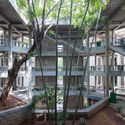
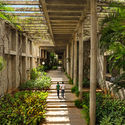
Wrightwood 659, a private institution located in Chicago’s Lincoln Park neighborhood, will host the first U.S. Exhibition of Indian architect, urbanist, and 2018 Pritzker Prize winner Balkrishna Doshi. Running from September 9 till December 12, 2020, the retrospective entitled Balkrishna Doshi: Architecture for the People, is the first display devoted to the works of the laureate, outside of Asia.
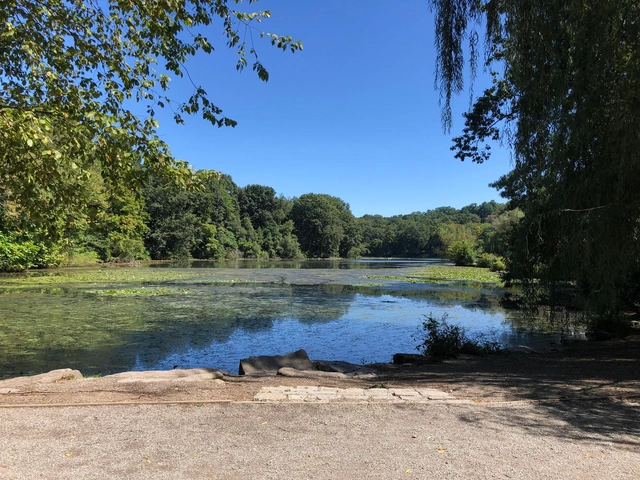
NYC Green Relief & Recovery Fund has selected 62 grant recipients to support funding in parks and open spaces across New York City. The effort was made to support a coalition of national, family, and community foundations. As the first round of funding, the grants range from $5,000 to $120,000 to support essential maintenance, stewardship, public programming, and management of parks and open spaces across the five boroughs.
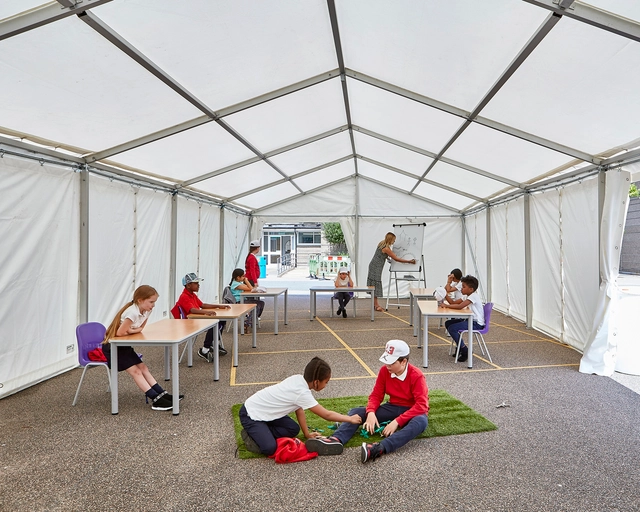
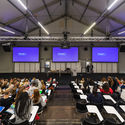
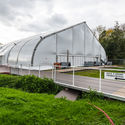
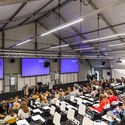
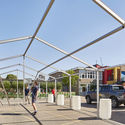
Curl la Tourelle Head Architecture has built the first socially distanced tent, a pop-up school proposal in London. Located at Manorfield Primary School in Tower Hamlets, the project aims to maximize social distancing measures among students and teachers, during this post COVID-19 period.
Videos
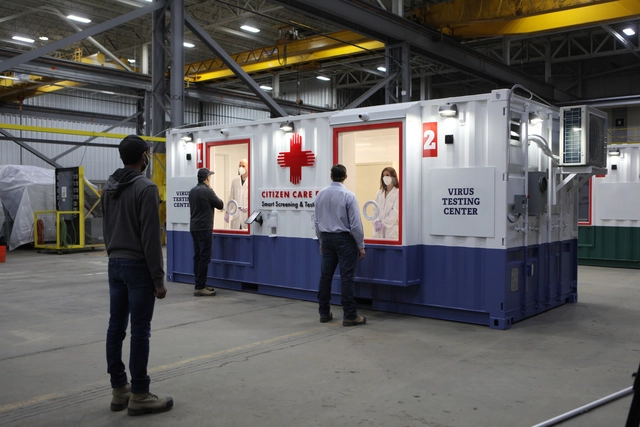
The Citizen Care Pod is designed to deliver testing and screening outside of the pod in accordance with physical distancing best practices.. Image Courtesy of the Citizen Care Pod
The Citizen Care Pod is a new initiative for COVID-19 smart screening and testing, combining intelligent technology with a modular design. Led by the Citizen Care Pods Corporation, the multi-disciplinary team, consisting of Toronto based WZMH Architects, PCL Construction, Insight Enterprises, and Microsoft, collaborated to bring the project from concept to reality in less than a month.
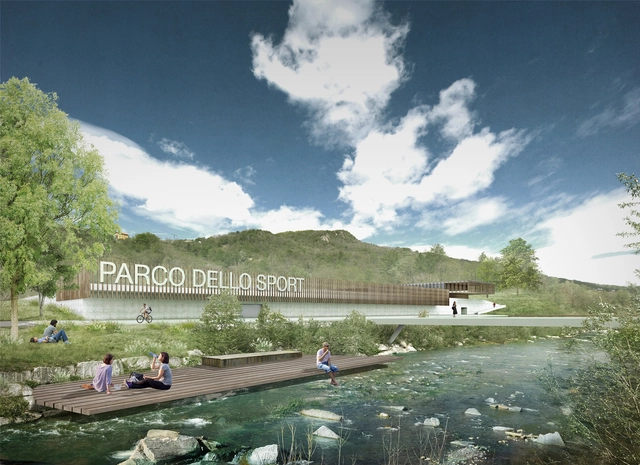
Focusing on the future of public space, and centering their approach on wellbeing and sport as drivers of sustainability, economic and social development, the Lugano Municipal Council in Switzerlandhas given the go-ahead for the planning of the new Pole of Sports and Events (PSE). Designed by LAND, the project dictates the direction for public spaces in the post-pandemic era.
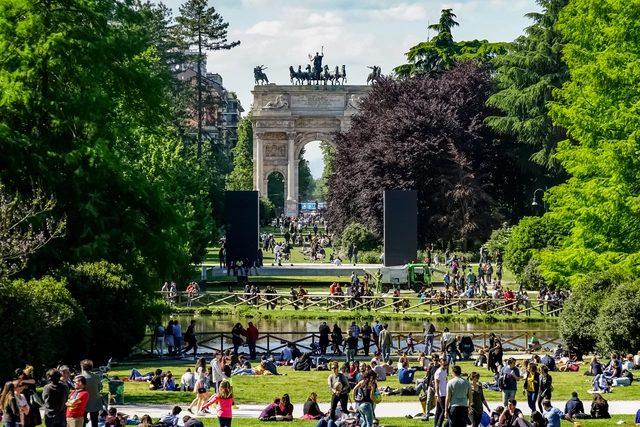
Porta Sempione triumphal arch in Sempione Park in Milan. Image via Shutterstock/ By NYC Russ
Systematica has just released a case study on access to green areas and the public realm in the city of Milan. Focusing on the availability of these gathering spaces for residents, the research, particularly relevant in this time of the pandemic, also highlights open and not crowded public spaces, convenient for a safe social life.
A new webcast and podcast series, Design Disruption, has been launched by architectural writer Sam Lubell and social entrepreneur Prathima Manohar. In a partnership with ArchDaily, the first episode today at 11 am (EST) on ArchDaily, YouTube and Facebook. This episode explores high density housing with guests Moshe Safdie, founder of Safdie Architects, and Ma Yansong, founder of MAD architects. The goal of the series is to provide an international perspective on disruptive issues with guests from different continents.
MAAT, the museum of art, architecture, and technology in Lisbon, Portugal has officially reopened its doors on June 10, unveiling to the public the new projects originally scheduled to launch before the Covid-19 lockdown, such as Beeline, an architecture intervention by SO – IL. Transforming the museum into a landscape of encounters and conversations, this exhibition also generates a temporary second entrance to the gallery space.
Exterior rendering of Menokin’s “The Glass House Project". Image Courtesy of Machado Silvetti
Menokin Foundation has begun construction on its “Glass House Project”, a new initiative in the preservation of historic landmarks. Protecting what remains from the 1769 house, the intervention will replace missing walls, floors, and sections of the roof with glass. Designed by Machado Silvetti, in collaboration with glass engineer Eckersley O’Callaghan, and landscape designer Reed Hilderbrand, the project will be developed in phases, to be completed in 2023.
The 14th Annual San Francisco Design Week (SFDW) is returning this year as a virtual design festival. The all-online program kicks off June 15-25 with the theme “Intentional Distortions." Over 150 participating Bay Area and West Coast design firms are joining the event with original ideas and creative solutions to help businesses survive in a post-pandemic world.
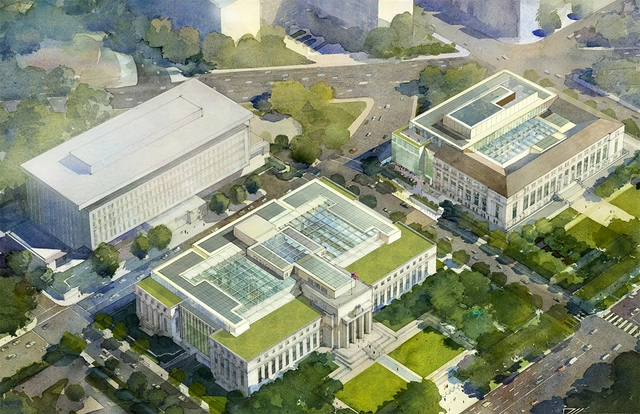
The $42-million project proposes a mixture of glass infill and additions. The courtyards of both the Eccles Building (left) and the FRB-East Building (right) would also be enclosed with glass. In May, Fortus presented certain "refinements" in response to feedback form the Commission of Fine Arts.(Fortus/Public Record)
Paul Philippe Cret’s 1937 building for the Federal Reserve Board (FRB)—the Marriner S. Eccles Building—stands as a prime example of neoclassical civic architecture along Washington D.C.’s Constitution Avenue. But the white marble building may have prompted new proposed guidelines around federal architecture, if conversations swirling in meetings of the Commission of Fine Arts are any indication. Plans to renovate and expand the FRB complex—the Eccles Building is joined by the FRB-East Building, designed in 1933 as the US Public Health Service by Cret’s fellow Frenchman Jules Henri de Sibour—are currently under review at the National Capital Planning Commission (NCPC) and the Commission of Fine Arts (CFA).
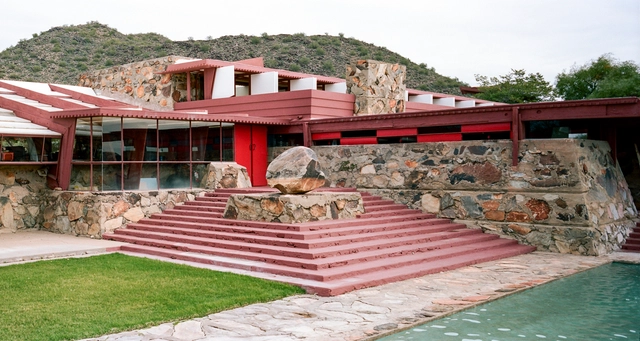
The Architect's Newspaperhas learned that the college formerly known as the School of Architecture at Taliesin will change its name and move summer classes to Cosanti and Arcosanti, with plans to try to make Cosanti its permanent home.
The move comes after a protracted back-and-forth with the Frank Lloyd Wright Foundation that spilled out into public view earlier in January when the school announced it would be closing after 88 years. After an outpouring of support from alumni and funding commitments, the school reversed its vote to close at the beginning of March but will need to vacate both Taliesin campuses—West in Scottsdale Arizona and East in Spring Green, Wisconsin—and can no longer use the Frank Lloyd Wright or Taliesin name, though it will retain its accreditation and students. The last time the school changed its name was in 2017 after it split from the foundation as part of the accreditation process, and after July 31 of this year, any remaining association will be formally severed.
Warchée is an organization that has the purpose of integrating women into the construction field. Born from the observation that in a rapidly urbanizing world, particularly in the Middle East, women are still excluded from certain professions, the NGO, founded by Anastasia Elrouss, aims to create an all-inclusive and evolving world.
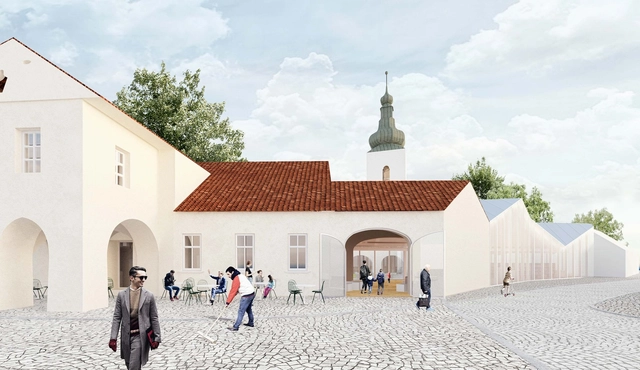
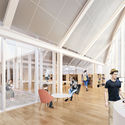
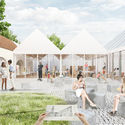
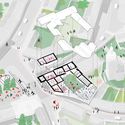
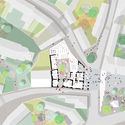
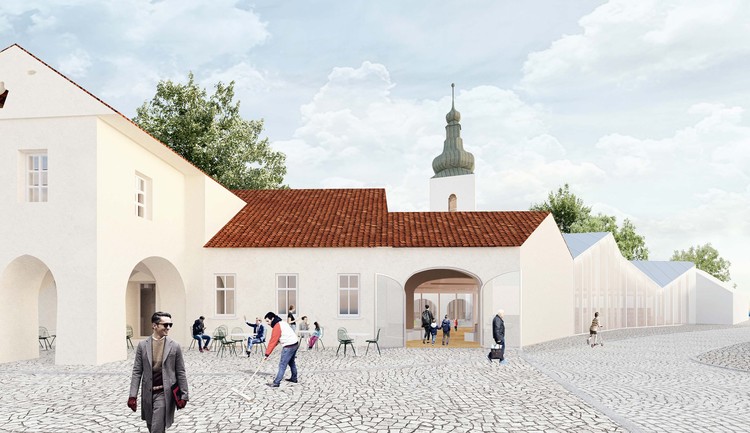
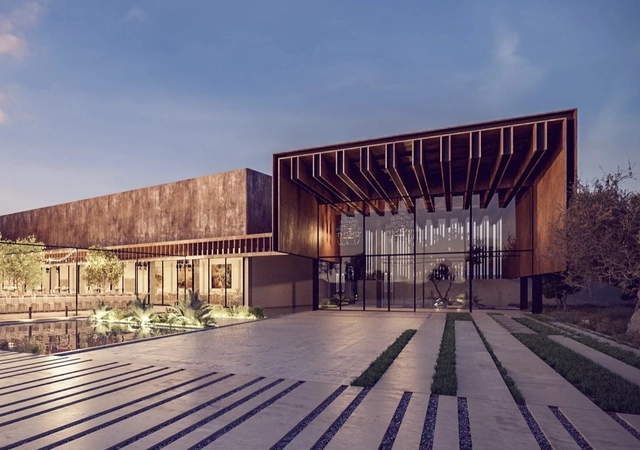
Two young designed practices, Gruppa and Anagram A-U, have designed a new cultural center for the city of Modřice in Czechia. With offices based in The Netherlands, Barcelona and Athens, the team participated in the national competition to imagine a new space for gathering and assembly.
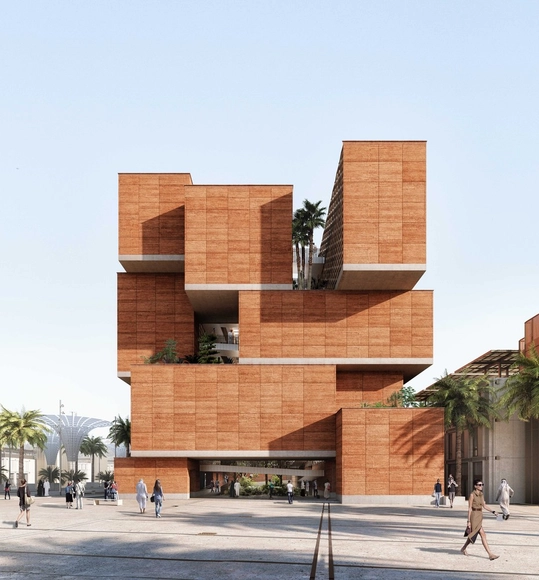
OUALALOU + CHOI has designed the MoroccoPavilion at the 2020 Expo in Dubai, showcasing traditional Moroccan design and construction techniques. The pavilion brings “rammed earth construction to new heights”.
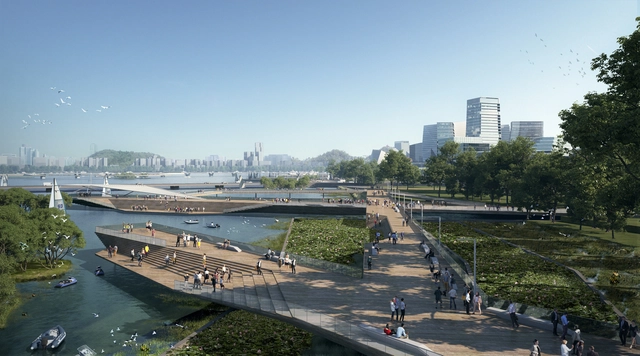
NBBJ has imagined a two million square meter “Net City” master plan in Shenzhen for Tencent, one of the largest internet companies in China and the owner of messaging app WeChat.The size of Midtown Manhattan, the new project will be among China’s first interconnected districts with office buildings, residential areas, public entertainment venues, parks, and a waterfront.
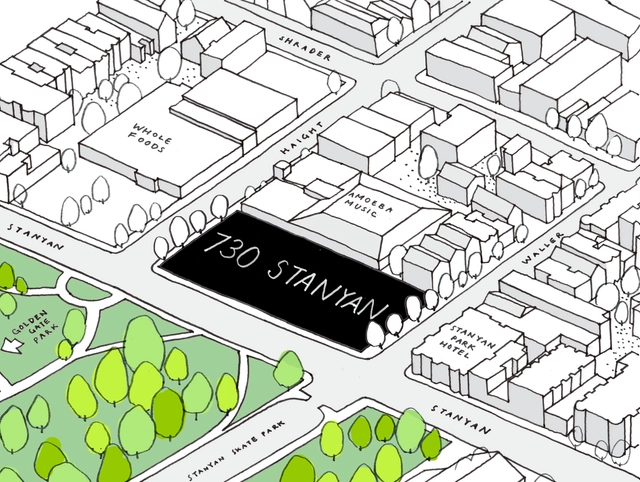
OMA / Jason Long and Y.A. Studio have been selected to design an 150 unit affordable housing project in San Francisco's historic Haight Ashbury neighborhood. Dubbed 730 Stanyan, the project aims to provide a high-quality living environment for families and seniors. The housing will be situated at the entry to Golden Gate Park and aspires to address the city’s desperate need for permanent housing options.
The American Institute of Architects (AIA) has released 3D models for retail stores and office spaces to help reopen safely during the pandemic. The Design strategies use an architectural, engineering and administrative framework based upon recent public health information. They also provide cost effective options that can be implemented immediately.
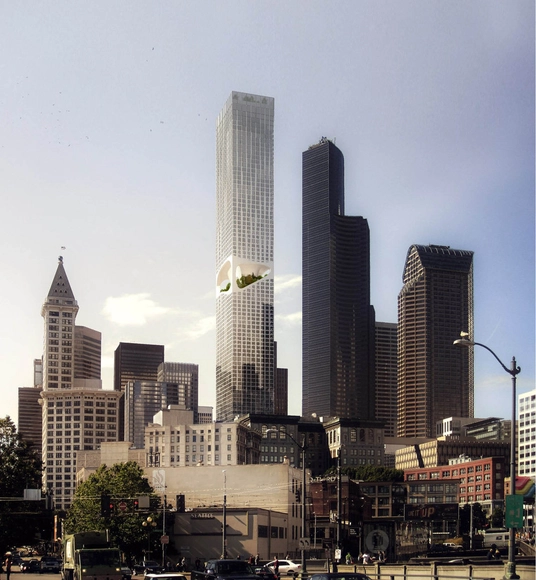
ODA released images of its 1,185’ mixed-use tower in downtown Seattle. Showcasing a novelty in high-rise design, the project underlines the value and importance of outdoor space. Carving out a void in the middle of the tower, the design creates a shared outdoor amenity space with impressive views to Mt. Rainier.
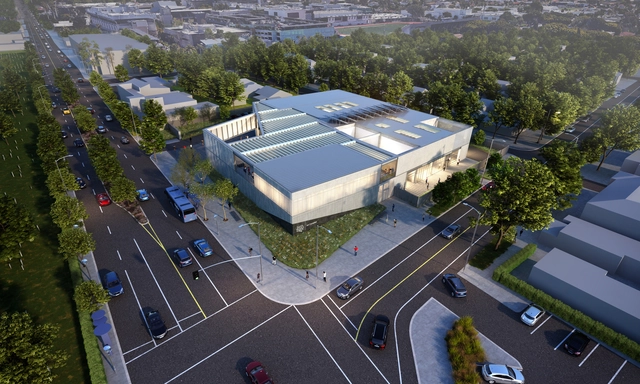
Grimshaw has just revealed initial concepts of the new 21,000 square-foot arts complex for Santa Monica College (SMC) in Santa Monica, California. Scheduled for completion in 2024, the building is planned as a “factory of creativity”, replacing an existing surface car park and serving as a new western gateway for the college.
The parking house, entitled Parking House + Konditaget Lüders, has just won the international design award Danish Design Award 2020 in the category of “Liveable Cities”. Designed by JAJA Architects, the intervention refurbished the roof of a parking house into living urban space with sports and play equipment.
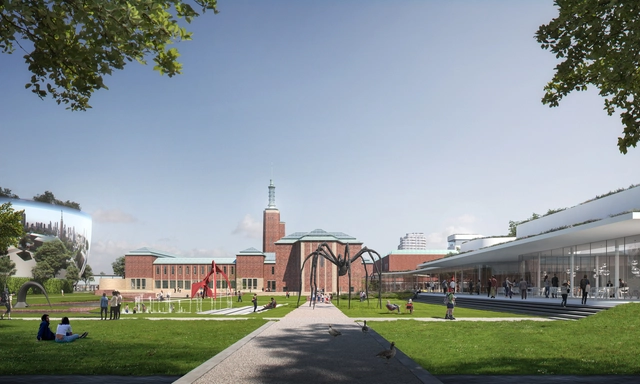
Dutch design practice Mecanoo has unveiled a proposal for a new wing of the Museum Boijmans Van Beuningen. Taking aim at the structure's back of house and organization, the project is made to create clear circulation and connections throughout. In addition, the project is part of a larger renovation of the existing Museum Garden as it bring together the wings of the architects Van der Steur and Bodon as part of the collection.
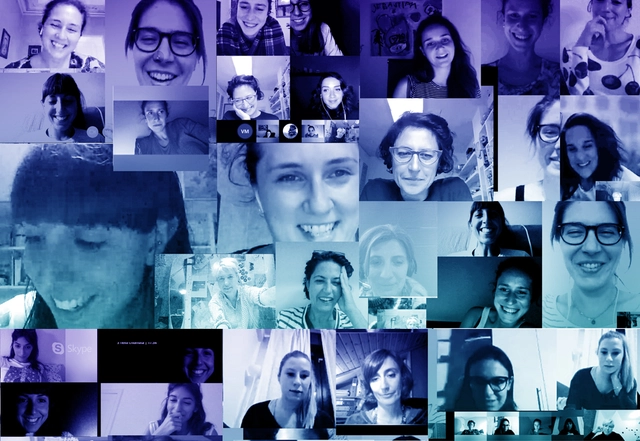
Rebelarchitette has created a new tool that aims to detox architecture from inequalities, an interactive public world map showcasing 732 outstanding women architects from all over the world.















.jpg?1592209486&format=webp&width=640&height=580)
.jpg?1592209476 "© Iwan Baan")
.jpg?1592209513 "© Iwan Baan")
.jpg?1592209536 "© Iwan Baan")
.jpg?1592209452 "© Iwan Baan")
.jpg?1592209486)
.jpg?1592208513&format=webp&width=640&height=580)