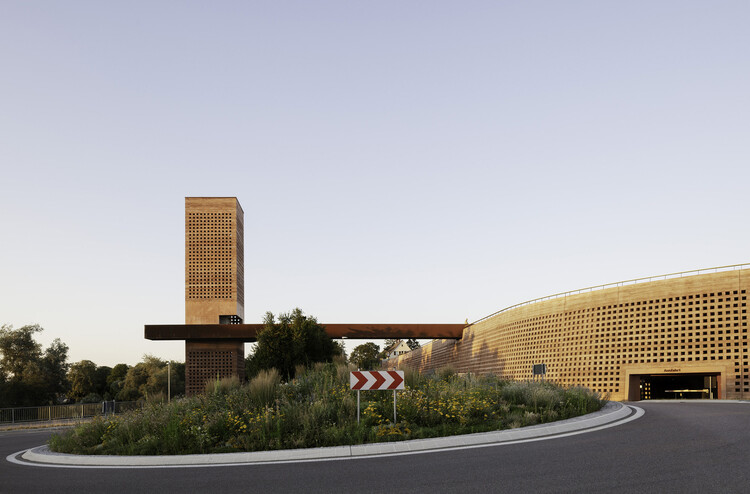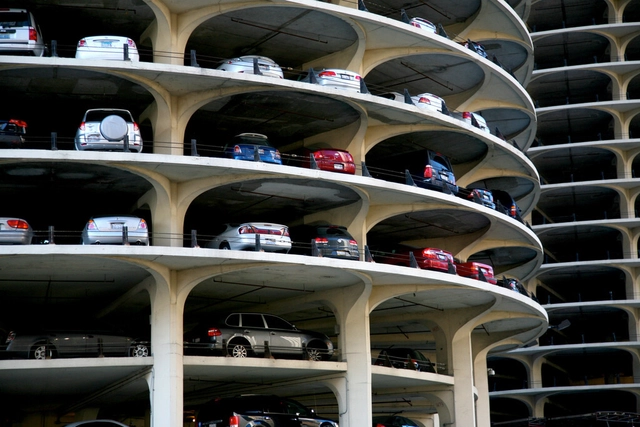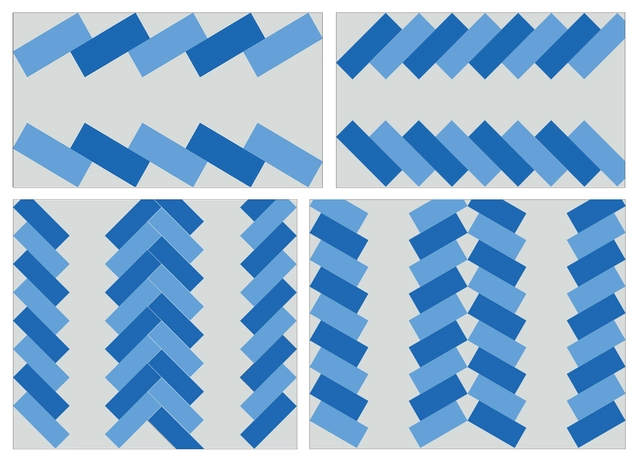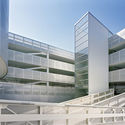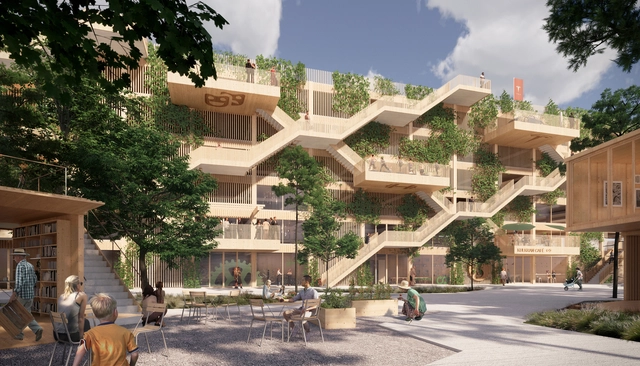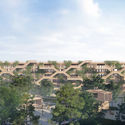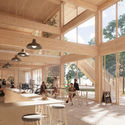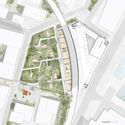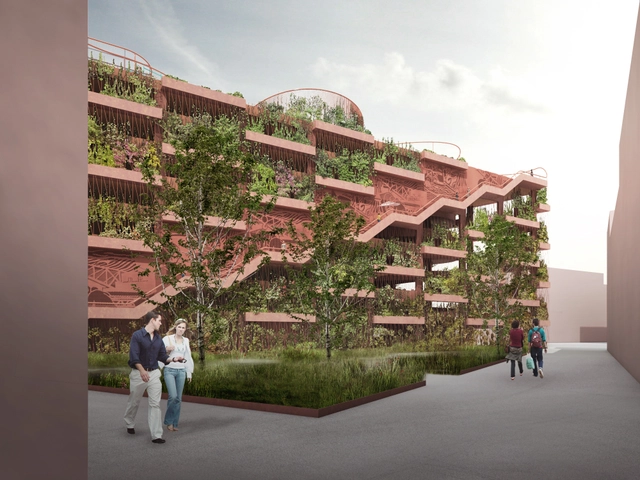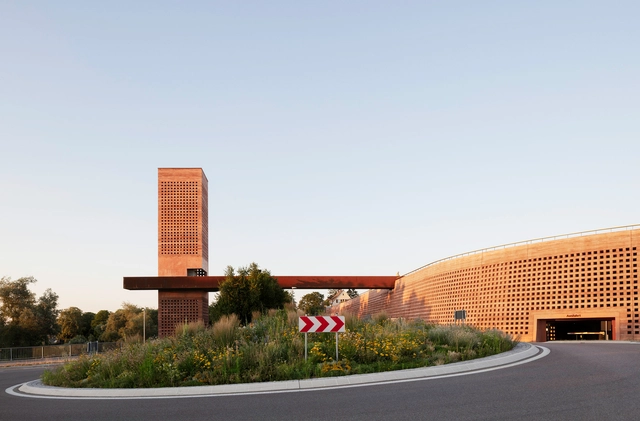
Areal am Kronenrain / MONO Architekten. Image Courtesy of Gregor Schmidt
Marginalized in architectural discourse and often dismissed as purely functional, parking garages remain among the most ubiquitous structures in the urban landscape. Designed to accommodate the needs of private vehicles, they occupy central locations, shape skylines, and consume considerable resources, yet rarely receive the same attention — or architectural care — as cultural institutions, schools, or housing. Despite their prevalence, these buildings tend to fade into the background of daily life, treated as infrastructural necessities rather than as design opportunities.
This is beginning to change. As urban mobility undergoes profound transformations — from the decline of car ownership to the rise of electric vehicles and shared transport systems — the role of parking infrastructure is being redefined. Architects and planners are reimagining garages as adaptable frameworks that integrate public space, ecological functions, and mixed-use programs. These new approaches challenge the perception of parking as a residual typology and instead position it as a civic structure with the potential to support more inclusive, flexible, and sustainable urban models.
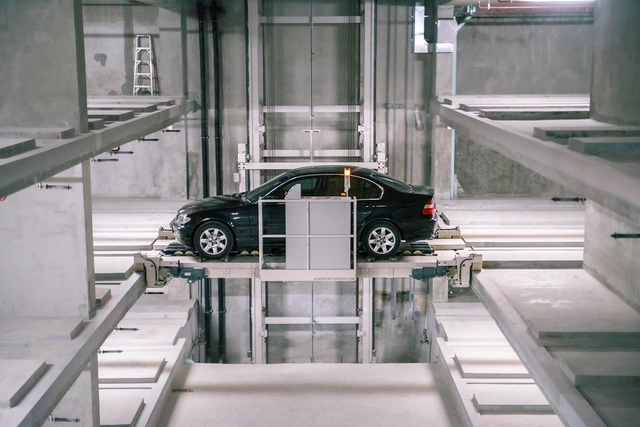
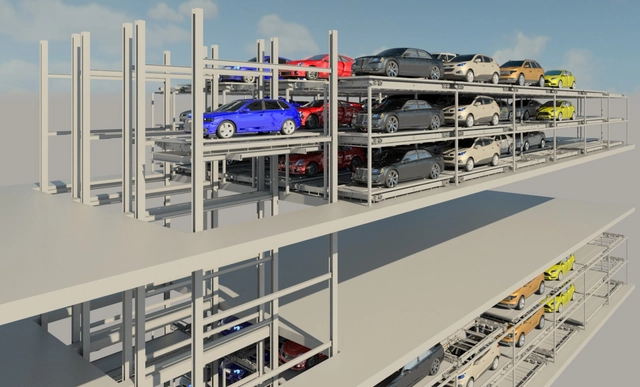
In the world of urbanization, space is becoming a scarce commodity. Cities are bursting at the seams, with limited space for both private and public development. This creates a need for a shift towards more efficient urban planning that would combine aesthetic design with high functionality. MPSystem robotic parking offers the perfect solution by combining function and architectural design freedom.
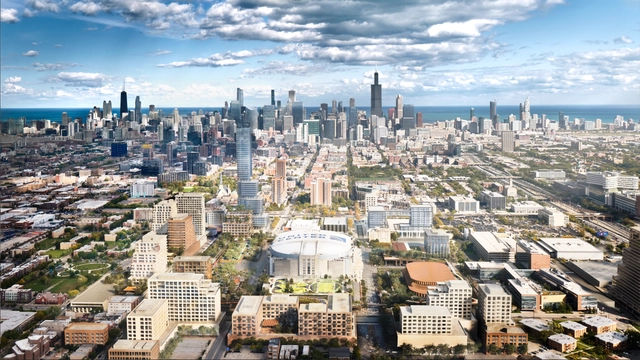
The United Center arena in Chicago, designed by HOK Sport (now Populous), Marmon Mok, and W.E. Simpson Company, was built between 1992 and 1994. With a capacity of over 20,000 seats for sports and general events, it includes more than 6,000 parking spaces in lots surrounding the arena. These parking lots span approximately 55 acres (over 22 hectares) in Chicago's West Side (1901 W. Madison Street). A new master plan, named the 1901 Project, aims to transform this space into a mixed-use neighborhood. Led by design collective RIOS, with contributions from landscape architecture studio Field Operations, this long-term, multi-phase project aims to connect neighborhoods by creating new public spaces and infrastructure on a metropolitan scale. The proposal recently received approval from the Chicago Plan Commission.
For every car that drives on the road, we need to find a place to put it- but are parking garages the answer? Parking garages are often seen as the antithesis of people-friendly urban planning. Large gray boxes are used solely to store cars that make temporary visits and seem like a poor use of space, especially in cities where land comes at a premium. Because of these garages, urban cores have quickly been transformed into parking districts, where vehicle storage dominates the aesthetic of a business district. Building codes only contribute to the problem, where the number of spaces is passed down as a mandate, even spreading out into suburban areas. Parking garages are everywhere- flanking shopping malls, connecting to residential towers, and surrounding sporting venues.
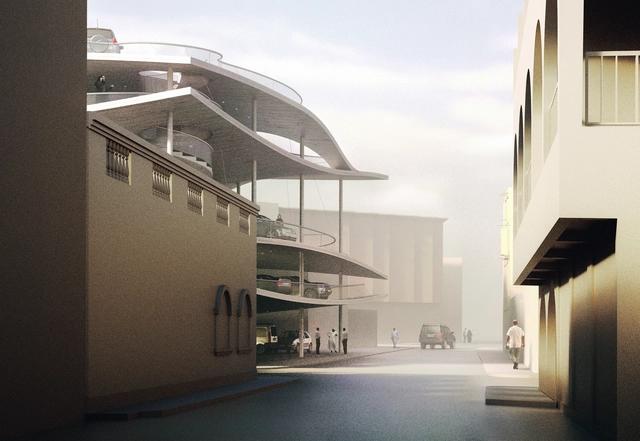
Since 2002, the historic city of Muharraq, the third-largest in Bahrain, has been the protagonist of a comprehensive preservation and development project meant to highlight its pearling history and improve the urban environment. Building on Muharraq’s legacy are several new structures designed by world-renowned architects to create the framework for the city’s revival, among which are four multistorey car parks designed by Christian Kerez and set to be completed this year. The structures envisioned not as car storage but as public spaces feature curved slabs that create a continuous transition from one level to the other while shaping a constantly changing spatial experience.
In theory, parking spaces serve only one function: park a car safely until it is used again, and in terms of design, car garages are flexible and straightforward, requiring minimal design interventions. However, parking spaces nowadays are no longer considered one-function buildings. The emptier the space, the more potential it has to integrate additional functions. Architects and urban planners have redefined traditional parking lots, adding recreational and commercial facilities to the structure. Instead of a typical structured grid plan with yellow and white markings on the floor, we are now seeing inviting structures that incorporate green facades and rooftop playgrounds, car washes, cafeterias, and work/study zones.
Space-saving fully automate parking solutions buy U-tron. 50% reduced parking footprint and superior user experience. Image Courtesy of U-tron Parking
As ride-sharing services grow and personal ownership of automobiles declines, office building owners and developers are re-thinking the value of parking structures, and their capacity and ability to convert. As part of the total transformation of One Post Office Square (OPOS), located in the heart of Boston's financial district and designed by Gensler, a new automated parking garage will optimize the use of valuable leasable space, enhance the user experience and create long term flexibility.
The parking house, entitled Parking House + Konditaget Lüders, has just won the international design award Danish Design Award 2020 in the category of “Liveable Cities”. Designed by JAJA Architects, the intervention refurbished the roof of a parking house into living urban space with sports and play equipment.
Open Platform (OP) and JAJA Architects, together with Rama Studio and Søren Jensen Engineers, have won the open competition for a new parking house in Aarhus. In line with Denmark’s vision of becoming climate neutral by 2050, the structure will be the country’s first wooden parking house.
Videos
Located at the old harborfront of Arhus, Denmark, DOKK1 designed by Schmidt Hammer Lassen architects houses not only Scandinavia’s largest library but also Europe’s largest public robotic parking system. Photograph by Adam Mork.
Saving space, reducing costs and a pleasant user experience – parking doesn’t get much better than this.
Cityscapes around the world are changing, architects face the constant challenge of integrating parking space into new or existing real estate in densely built-up urban environments. While there is a growing ambition to replace cars as a prime mobility tool, we’re far from realizing this goal. Most downtown revitalizations today require structured parking. Where space is tight, access ramp or radius of a conventional parking garage may be hard to fit. Because robotic parking systems require neither these nor access for pedestrians, they can place up to 60% more cars in the same space – increasing the RoI on parking spaces Alternatively, the same number of cars can be parked in 60% of the space of a conventional parking garage, creating significant cost savings in the construction phase. In either case, the user experience in robotic parking systems – brightly lit entrance areas, safe vehicle retrieval processes and reduced car fumes as the search for parking is effectively eliminated – is second to none.
https://www.archdaily.com/909192/how-robotic-parking-systems-enable-urban-architectureSponsored Post
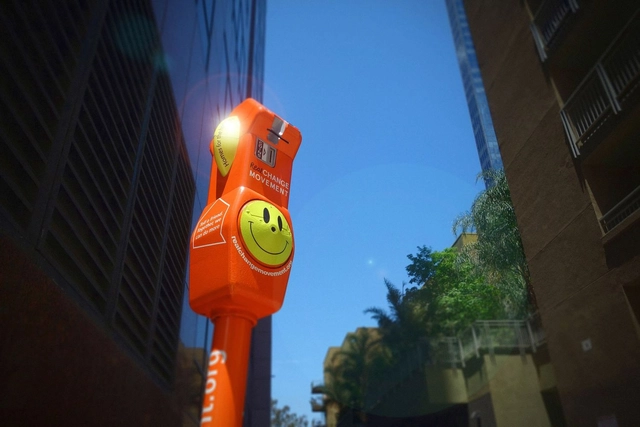
The Downtown Los Angeles meters will resemble those installed in Pasadena. Image via Curbed LA
Homelessness is a pressing issue faced by many cities across the globe. But, could the logistics of parking potentially assist in alleviating this epidemic by supporting community-based initiatives?
In Los Angeles County, where an estimated 58,000 people are homeless, city and county officials recently released six meters designed in collaboration between community advocacy organization the Flintridge Centre and the office of City Council member Jose Huizar to collect charitable contributions as opposed to parking fairs.
As Earth’s population continues to grow, so does car traffic and issues related to climate change. It has been estimated about 30% of urban roadway congestion are drivers searching for a place to park. Car culture puts the pressure on cities to build more parking garages, which usually win out over green parks. Meanwhile, climate change continues to challenge cities to handle a great deal of stormwater. The 2017 Atlantic hurricane season is proof of this - as of Monday, 13 named storms have formed in the Atlantic ocean, costing 210 lives and counting.
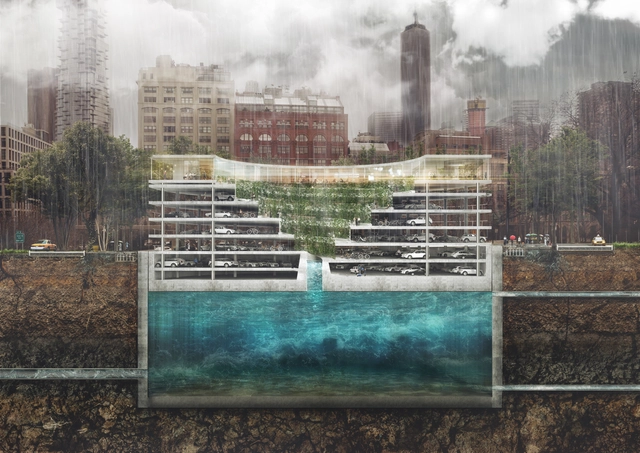
THIRD NATURE, a Danish architecture firm, designed a solution for the modern-day urban issues of flooding, parking and lacking green spaces with their project, POP-UP. A stacked green space, car park, and water reservoir, from top to bottom respectively, POP-UP uses Archimedes’ principle to store water and create floating space to store cars.
The next time you're cursing the price of a city parking meter, think instead about the high cost of free, off-street parking in terms of the urban environment. Urbanists these days agree that cities are at their best when they are walkable—designed for people instead of cars—but the reasons for the car-centric design of cities in the US are complex. In this video, Will Chilton and Paul Mackie of Mobility Lab describe all the problems inherent with parking in US cities and how it got to be this way: namely, off-street parking requirements, or mandatory parking minimums.
Most people know that US cities are dominated by parking, with roughly 8 parking spots per car throughout the country, but this video will give you all the information you need to win any debate about the impacts of mandatory off-street parking. Describe with confidence why cities love mandatory minimums for developers, extoll the virtues of correctly-priced parking meters, and impress your friends and colleagues with your knowledge of the other ways you pay every day for "free" parking.
“Who would’ve thought a parking garage could be so interesting?”
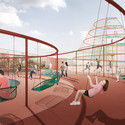
In this video aired by the Louisiana Channel, Kathrin Susanna Gimmel and Jan Yoshiyuki Tanaka, both co-founders of Copenhagen-based firm JAJA Architects, explain the ideology behind the “Park ‘n’ Play” parking garage. Bright red, atop the 24-meter high car park, sits a playground which, in combination with a rooftop garden, provides a unique public setting offering sought after views of the Copenhagen harbor. Watch the video for more insight into JAJA’s design methodology and how the playground helps redefine roles of public space and usage while integrating into a historical urban identity.
https://www.archdaily.com/804825/watch-how-jaja-co-founders-of-park-n-play-are-redefining-public-spaceOsman Bari
Most residential projects must include parking spaces, but only few cases are notably innovative. Your vehicle's resting place can be more than just a required space; it may even become the backbone of the design itself.
The integration of parking, interior spaces and facades can deliver extremely intriguing and unique results.
Here we present 8 cases in which the humble parking space has assumed a main role in the design, while integrating new functions such as exhibition spaces, or structural features and versatile technology.
Asked to design an interactive facade for an existing parking structure at the new Eskenazi Hospital in Indianapolis, Urbana principle Rob Ley had a conundrum to deal with: "With Indianapolis’ really extreme weather patterns, we gave a lot of thought to: how can we make something that’s interactive but won’t be broken in a year?” he told the Architect's Newspaper. “Unfortunately, the history of kinetic facades teaches us that that they can become a maintenance nightmare."
His solution came from turning the question on its head - how could they design and fabricate a static facade that appears to change when the viewer moves? The resulting design appears highly complex, while in fact using aluminum fins bent at just three different angles. Find out more about the challenges of fabricating this facade, and inserting it into an existing structure, through the video above or at the Architect's Newspaper Fabrikator blog.
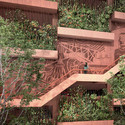
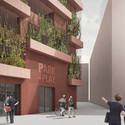
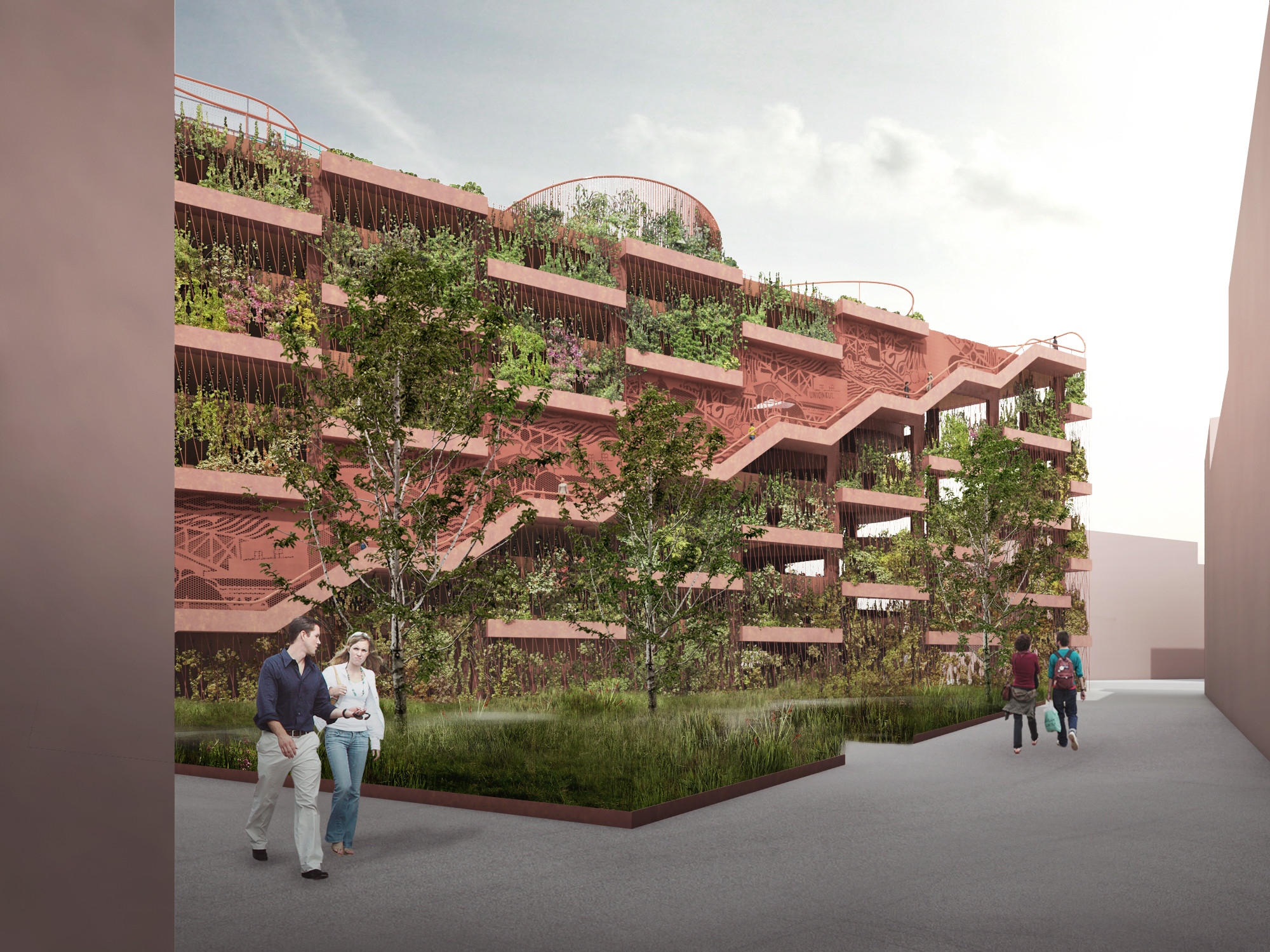
With the intention of creating a beautiful public space from what is usually a one-function building, JAJA architects are redefining what a parking deck can be. Their recent competition entry for a parking garage in the city of Nordhavn, Copenhagen is an inviting structure that incorporates green facades and a rooftop playground, making full use of its placement in an up-and-coming urban neighborhood. Read all about the aptly named “Park ‘N’ Play”, after the break.
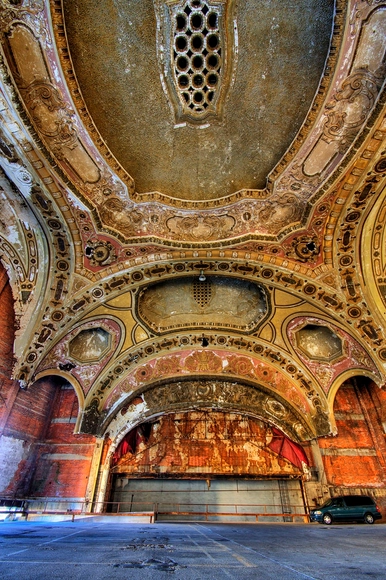
Originally posted on the Huffington Post's Home Section as "How a Historic Movie Palace Became America's Most Unusual Parking Garage," this article tells of both the history and the possible future of the Michigan Theater - once one of Detroit's most opulent nights out, but now a crumbling (albeit oddly magnificent) parking garage. Emblematic of the city's rapid decline, it turns out the recently-purchased Michigan Theater may also be a symbol of the city's regeneration.
An inventor's workshop. A movie palace. A rock club. A car park. A skate park. The backdrop for Eminem videos. Now it's one of America's strangest parking garages, but a peek inside the Michigan Theatre reveals why it's remained a landmark -- and has a unique story that explains a lot about the importance of preserving cities' historic architecture.
The former theater is attached to the Michigan Building, a partially occupied office tower, and might look familiar to some who have sought out urban decay photos. There's something radically visceral about cars parked in the garage under the crumbling but ornately decorated ceilings of the site that in its heyday hosted legends like the Marx Brothers, Frank Sinatra, Louis Armstrong and Doris Day.
Read more on the theater's unusual, inspiring story after the break