Populous has unveiled its design for the Cleveland Clinic Global Peak Performance Center, a 210,000-square-foot facility slanted to become the world’s largest training center. Created through a collaboration between the Cleveland Cavaliers, Cleveland Clinic, and Bedrock Real Estate, the venue will be located along the Cuyahoga River in downtown Cleveland. Pending approval, the groundbreaking is expected to happen before the end of 2024.
Nassau County International Cricket Stadium / Populous. Image Courtesy of Populous
Designed by the sports and entertainment-focused architecture office Populous, the Nassau County International Cricket Stadium will be located in Eisenhower Park, 30 miles east of Manhattan, and is planned to host eight matches during the ICC Men’s T20 World Cup 2024. The stadium, having a capacity of 34,000 seats with additional VIP and hospitality units, is scheduled to be completed within 3 months. The accelerated process is made possible by the modular system, typically employed in other sports such as Formula 1, Golf, and the Olympic Games.
Populous, along with the Board of Directors of the Qiddiya Investment Company, has unveiled the design for the Prince Mohammed Bin Salman Stadium, a new multi-use venue to contribute to the offerings of Qiddiya City, a new district dedicated to sports and entertainment near Riyadh, Saudi Arabia. Located atop the 200m-high Tuwaiq cliff, the stadium, featuring a vast array of integrated technologies and innovative systems, is anticipated to host some of the country’s biggest sports, entertainment, and cultural events.
MSG Sphere London. Image Courtesy of The Madison Square Garden Company
Madison Square Garden Entertainment (MSG), the developer behind the recently opened The Sphere at the Venetian Resort in Las Vegas, has announced that plans for a similar project in London have been withdrawn for lack of support from London’s planning officials, as reported by The Guardian. The plans were initially announced in 2018, with planning permission filed in March 2019. The 300ft-tall structure, having a capacity of 21,000 seats, was to be located in Stratford, east London. In November 2023, following a combination of unfavorable comments in planning officer reports and opposition from residents, London’s mayor Sadiq Khan withdrew his initial support.
"Populous - Qiddiya Esports Arena - Gaming & Esports District . Image Courtesy of Populous
Populous has unveiled the design of the Qiddiya City EsportsArena, a new facility aimed to become the focal point for Qiddiya City, a planned entertainment and tourism megaproject in Riyadh, Saudi Arabia. Featuring the largest total area of video screens of any esports arena, along with immersive 4D technologies, the new arena strives to become the central attraction in the ‘world’s first mixed-use gaming and esports district.’
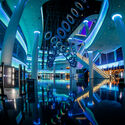
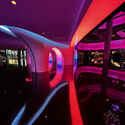
The Sphere at the Venetian Resort, previously known as the MSG Sphere, opened to the public with a series of concerts headlined by Irish rock band U2 on September 29, 2023, in Las Vegas. Designed by stadium specialist architecture office Populous, the project was first announced in 2018. Measuring 34 meters in height and 157 meters in width, the venue, whose building costs rose to $2.3 billion, is labeled the world's largest spherical structure, with its exterior clad in a high-resolution LED screen. The project, located east of the Las Vegas Strip and connected to the Venetian resort complex, is designed to host various events, including music, film events, and even some sports. To reveal the complete experience of this venue, new interior images showcase the intricate details and immersive atmosphere within.
London’s architectural history is a rich tapestry that weaves together styles of various periods and influences. In the post-war era, the city experienced a surge in modern architecture, becoming a canvas for experimentation. New stylistic movements saw their expression crystalized through buildings such as Richard Rogers’ Lloyd’s Building, one of the most representative examples of High-Tech architecture, or the Barbican Estate, a large-scale housing estate that became the iconic structure for Brutalist architecture.
London’s contemporary architectural landscape continues to evolve, in part through the works of internationally-recognized architects such as Norman Foster, Zaha Hadid, and Thomas Heatherwick. This varied blend of styles, and ways of expression reflects the city’s ability to embrace architectural movements of global significance. As a center for innovation, London continues to attract established and emerging architects who shape its skyline and contribute to its international architectural discourse, with each new building offering a glimpse into the ever-changing nature of London’s urban fabric.
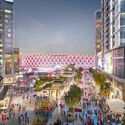
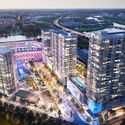
US-based architecture firm Populous has unveiled the design of a new multipurpose stadium in Indianapolis, US, planned to serve as the new home for the Indy Eleven professional soccer team. The 20,000-seat arena is situated in the center of the Eleven Park neighborhood development, set to transform the city’s southwest quadrant by introducing office spaces, residential units, retail spaces, parking garages, and amenities such as restaurants, a hotel, and green spaces.
Since the 2018 FIFA Congress picked the United States, Mexico, and Canada to host the 2026 World Cup—officially known as the United bid—, the three North American countries have been working to deliver the next edition of the most prestigious football tournament in the globe.
https://www.archdaily.com/993287/explore-the-full-list-of-football-stadiums-for-the-2026-fifa-world-cup-in-united-states-mexico-and-canadaArchDaily Team
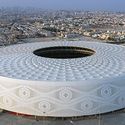
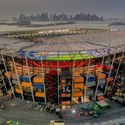
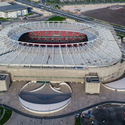
After years of preparation, the 2022 World Cup, one of the most anticipated global events of this year, was finally launched. The quadrennial international men's football championship is being held for the first time in an Arab country, Qatar, from the 21st of November to the 18th of December 2022. Ever since FIFA announced that Qatar will host the 2022 World Cup back in 2010, preparations for a total of 8 stadiums have been in full force, especially since it will be held in a country with critical climate conditions.
Architecture firm Populous has been chosen as the architect for a new multi-use, climate-neutral event arena in Munich, Germany. The structure aims to create a unique experience; a "compact, efficient, and visually stunning" venue that will be instantly recognizable and reflective of the character and culture of the Bavarian metropolitan area, serving as a new landmark. The 20,000 capacity venue draws upon Bavarian heritage through a support structure that pays homage to the lozenge shape used in the Bavarian state flag.
US office Populous has disclosed its involvement in the design to erect a new 65,000-seat stadium for Liga MX soccer club Tigres UANL, in the state of Nuevo León, Mexico. As communicated on its website, the plans for the stadium, whose delivery is scheduled for 2025, were announced at a press conference on January 14, 2022, with the presence of the Governor of Nuevo León, Samuel García, together with representatives of the club, Populous, UANL, Sports Synergy, and Ball Game.
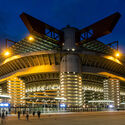
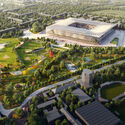
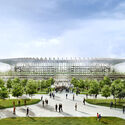
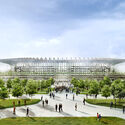
Football clubs AC Milan and FC Internazionale Milano will have a new home stadium designed by architecture practice Populous. “The Cathedral” takes inspiration from the city’s architectural landmarks -the Duomo di Milano and the Galleria Vittorio Emanuele – while incorporating technological and material innovation to create a carbon-neutral structure. The project, which replaces the Giuseppe Meazza Stadium, also known as San Siro, is set to revitalize a key urban area of Milan into a district dedicated to sports and leisure.
Comparing revenues from the previous year, Architectural Record lines up annually a list of the Top 300 U.S. Firms. Based on the 2019 data, Gensler tops again the selection, for the ninth year in a row, and Perkins and Will takes the second position. Third, fourth and fifth places were presented for Engineering Architecture firms HDR, Jacobs, and AECOM. Other companies in the top 10 include HKS and Skidmore, Owings & Merrill.
Architecture practice Populous has announced plans for a $50 million esports and entertainment venue in Philadelphia, Pennsylvania. Dubbed Fusion Arena, the project will be the home of the Philadelphia Fusion esports franchise as the largest esports venue in the western hemisphere. Seating up to 3,500 guests, the project will host a variety of live entertainment programming and events. The arena was made to be the first of its kind for next-generation consumers.
1. Rungrado 1st of May Stadium / Pyongyang, North Korea. Image via Viktoria Gaman / Shutterstock.com
In 776 BC, the Olympic Games of antiquity were hosted at the Olympia stadium in Peloponnese, Greece, an arena widely believed to be the world’s oldest stadium. The elongated U-shaped track and stand had a capacity of up to 45,000 people.
Temple Island Development. Image Courtesy of Zaha Hadid Architects
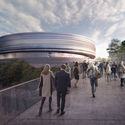
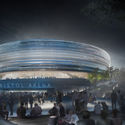
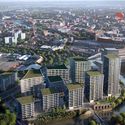
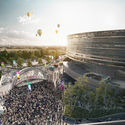
The Bristol Arena site faces yet another turn of events, as Zaha Hadid Architects and property investor Legal & General have released plans for a large housing development next to Temples Meads Station. The site is one of two proposed locations for the Bristol Arena, a project on hold for more than 15 years as Bristol City Council continues to debate its location. The proposal by Zaha Hadid Architects would include office blocks, a 345 room hotel, conference center and over 500 homes.




























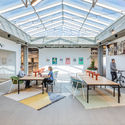

_Garrett_Rowland_Courtesy_of_Gensler_02.jpg?1598951304 "Reebok Headquarters / Gensler. Image © Garrett Rowland")