Infrastructure has long defined the backbone of cities by linking people, landscapes, and economies through systems that often go unnoticed until they fail. Today, as global challenges demand more adaptive and human-centered responses, architects are rethinking what infrastructure can be: not just a framework for movement and utility, but a catalyst for ecological restoration, cultural continuity, and civic imagination. The following unbuilt projects, submitted by the ArchDaily community, explore this expanded role of infrastructure, where airports, bridges, industrial parks, and pedestrian networks become architectural expressions of connection and care.
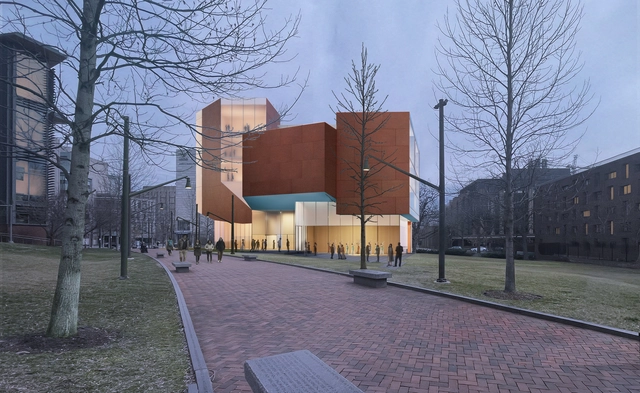
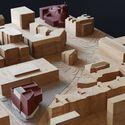
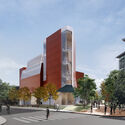
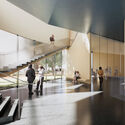
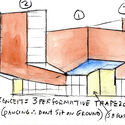
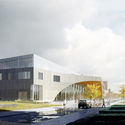
The University of Pennsylvania has unveiled Steven Holl Architects’ design for its new Student Performing Arts Center. The 37,300-square-foot building is set to offer dedicated and flexible spaces for over 70 student performing arts groups on campus, including dance, theater arts, a cappella groups, and musical ensembles. The proposal was informed by a study completed in 2019 by Penn’s University Life, which concluded that additional performance and rehearsal space was needed to meet current and future demand. The project is set to begin construction in 2024, with anticipated occupancy starting in winter 2027.
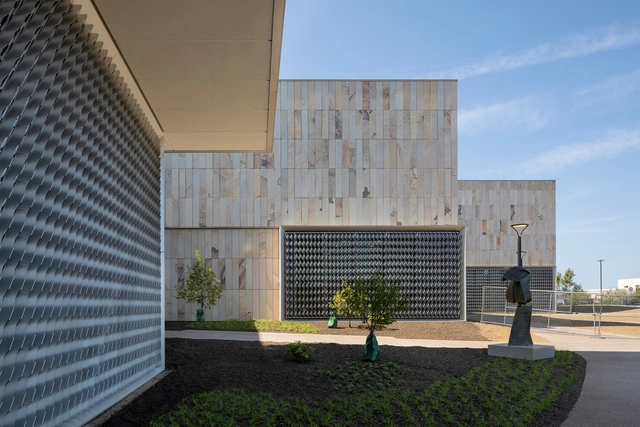
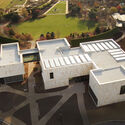
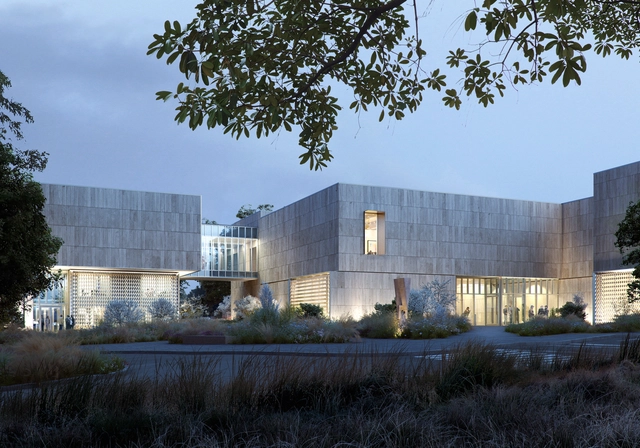
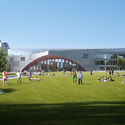
The construction of the new building of Palmer Museum has begun. Located at Penn State, USA, and scheduled to open in the spring of 2024, the new 6600 square meters complex will expand nearly double the space of the current gallery to host the growing collection of more than 10,000 pieces. The design features a series of pavilions, educational areas, and courtyards to boost accessibility to the art collections for students, staff, and the public. The construction aligns with the 50th anniversary of the museum along with a multitude of events, including the exhibition of Allied Works' pieces of the design process for the new Palmer Museum.
The Pennsylvania chapter of the American Institute of Architects has announced the recipients of the 2020 Architectural Excellence Awards. The November broadcast debuted honors in five programs including the Design Awards, inaugural Committee on the Environment (COTE) Awards, Special Awards, and Student Awards. More than 80 awards and recognitions were presented to firms and individuals across Pennsylvania for excellence in design, contributions to the profession of architecture, and commitment to the quality of the built environment.
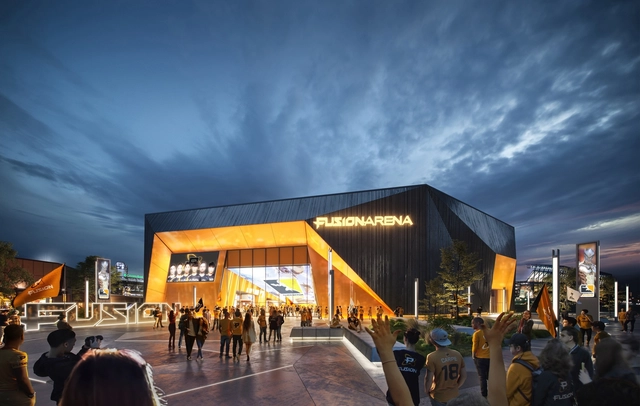
Architecture practice Populous has announced plans for a $50 million esports and entertainment venue in Philadelphia, Pennsylvania. Dubbed Fusion Arena, the project will be the home of the Philadelphia Fusion esports franchise as the largest esports venue in the western hemisphere. Seating up to 3,500 guests, the project will host a variety of live entertainment programming and events. The arena was made to be the first of its kind for next-generation consumers.
Past recipients of the award have included Bjarke Ingels, Norman Foster, Peter Bohlin, Daniel Libeskind, Robert A.M. Stern, Rafael Viñoly and César Pelli.
https://www.archdaily.com/892460/david-adjaye-honored-with-2018-louis-kahn-memorial-awardNiall Patrick Walsh
Sixteen years after the tragic events of 9/11, the final major element of the Flight 93 National Memorial has been revealed.
Located in rural in Shanksville, Pennsylvania, the memorial commemorates the 40 passengers who sacrificed their own lives to wrest control away from the hijackers of United Flight 93, preventing the plane from hitting its intended target of the United States Capitol Building.
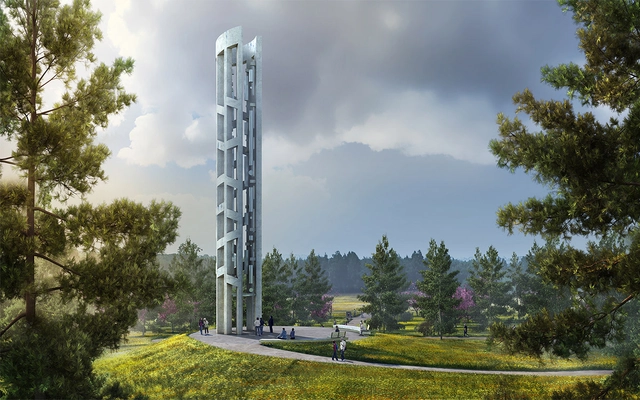
In 2009, Paul Murdoch Architects, in collaboration with Nelson Byrd Woltz Landscape Architects and Arup Engineering, was selected to design the national memorial at the crash site. Employing a reverent masterplan that traced the airplane’s final movements, the architects designed a series of reflective elements as a solemn reminder of the day’s events. All of these elements have since been completed, with the exception of the plan’s most sensory landmark, the 93-foot-tall “Tower of Voices.”
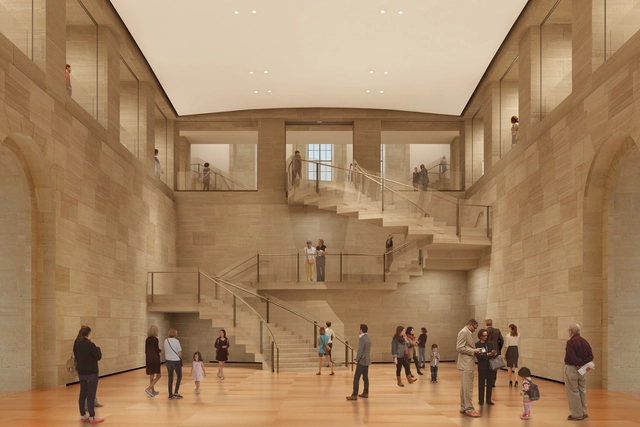
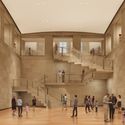
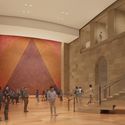
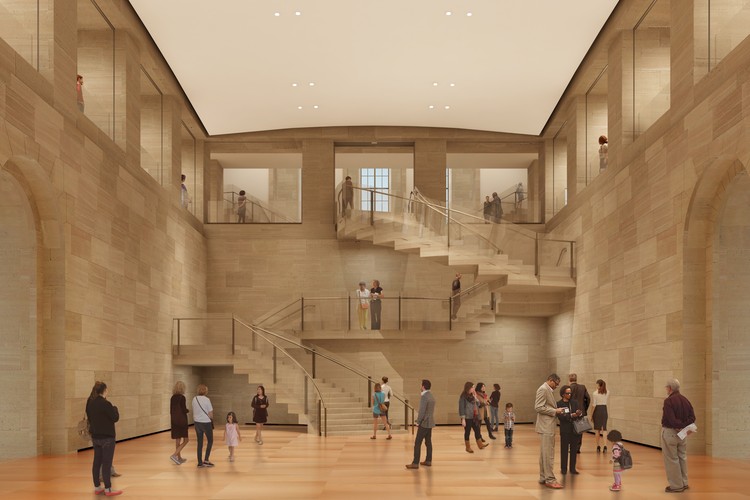
AFTER: The Forum, looking west and up to Lenfest Hall. The Forum extends from Level A to Level C and will be one of the most highly trafficked and recognizable areas created during the Core Project. This stunning space will serve as a venue for performances and events, as well as a welcoming spot for visitors to socialize or orient themselves. Architectural rendering by Gehry Partners, LLP and KX-L. Photo courtesy Philadelphia Museum of Art.
The Philadelphia Museum of Art has broken ground on the Core Project, a $196 million transformation of its main building led by Frank Gehry. In total, the renovation will add a total of 90,000 square feet to the museum, including 67,000 square feet of new public space, 11,500 square feet of gallery space for the museum’s American Art collection, and another 11,500 square feet of contemporary art display space.
As suggested by its name, The Core Project will focus on the heart of the museum; the main circulation of the building will be completely reorganized and museum infrastructure will receive much-needed upgrades, improving access to the community and enhancing the visitor experience.
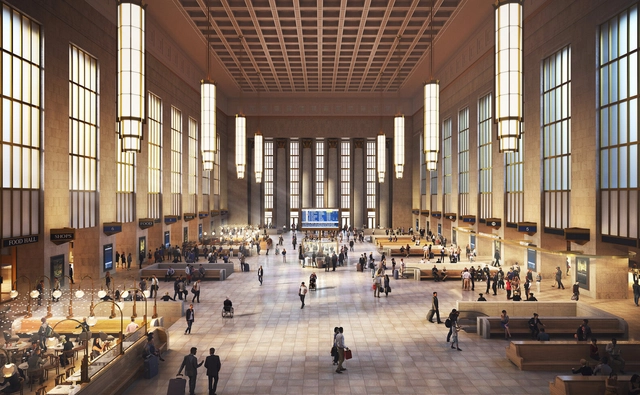
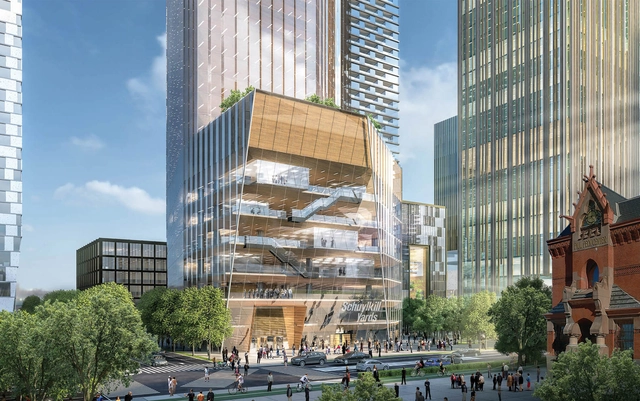
New renderings and information have been revealed for SHoP and West 8’s Schuylkill Yards masterplan envisioned for University City in Philadelphia. Announced last March, the project comprises 14 new buildings on a 14-acre site off the Schuylkill River and around 30th Street Station, the country’s third busiest Amtrak station.
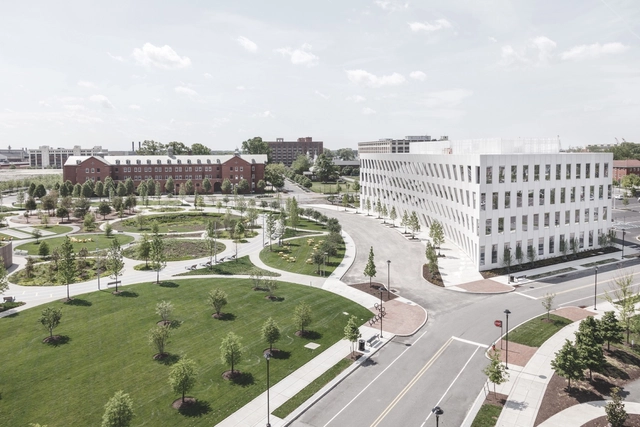
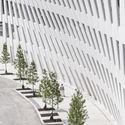
BIG has completed their second building on U.S. soil, a 92,000-square-foot office building at 1200 Intrepid Avenue in Philadelphia, Pennsylvania that also marks the firm’s first realized office building design. Located within the revitalized Philadelphia Navy Yard master plan (designed by Robert Stern), the four-story building features a bowing, double-curved facade and a supersized “periscope” inspired by the historic battleships docked a few blocks away.
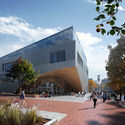
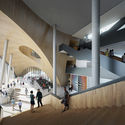
Temple University’s new library designed by Snøhetta, in collaboration with Stantec, is now under construction after a groundbreaking ceremony in April. The 21,000 square meter (225,000 square foot) building is adjacent to what will become a future campus quadrangle that is currently occupied by other buildings slated for demolition. The library sits at the intersection of two major pedestrian pathways, Polett Walk and Liacouras Walk, attesting to the University’s hope that the facility will be a new social and academic heart for 37,800 students.
Working with Drexel University and master developer Brandywine Realty Trust, SHoP and West 8 will transform 14-acres of existing underutilized land with 6.5-acres of public open space to create a collaborative mixed-use neighborhood in Philadelphia’s University City submarket. Schuylkill Yards will feature a mix of 24/7 entrepreneurial spaces, educational facilities and research laboratories, corporate offices, residential and retail spaces, hospitality and cultural venues, as well as a robust public realm network that connects the existing neighborhoods with the adjacent Amtrak 30th Street Station.
Situated next to the third-busiest passenger rail station in the country, Schuylkill Yards will be connected to Philadelphia’s international airport and major cities along the Northeast corridor, making it a major innovation hub on the East Coast.
Frederick Steiner. Image Courtesy of University of Texas at Austin
Frederick Steiner has been named the new dean of the University of Pennsylvania School of Design (Penn Design). Effective July 1, the appointment comes after Steiner announced his departure from the School of Architecture at the University of Texas at Austin, which, according to The Texas Tribune, was partially due to the school's new gun law that will allow students to carry concealed firearms.
Update: In addition to the previous announcement of Neri Oxman and Kevin Spacey as keynote speakers, the AIA has now announced Rem Koolhaas as the headline speaker for day three of this year's convention in Philadelphia. Koolhaas' speech will be titled "Delirious Philadelphia," a playful twist on his seminal book Delirious New York. The following article was originally published on February 11th.
Louis Kahn's Richards Medical Research Laboratory at the University of Pennsylvania, once deemed "the most consequential building constructed in the United States" since World War II by MoMA, has been notoriously hated by its users; scientists claim the building lacks privacy, has too much exposure to sunlight and is not suitable for lab experiments. Thus, the University's architect has just completed a full renovation of Richards' four brick towers, converting them into offices and computer labs for researchers, while, as Philly.com reports, restoring the structure to its original essence.
"The renovation has pared Kahn's spaces down to their essence, restoring a Zenlike calm, and revealing the muscular concrete structure that made the design such a revelation in the early 1960s, when International Style glass towers were all the rage," says Philly.com. Read the complete article here.
The Cultural Landscape Foundation recently launched its newest documentary as part of the ongoing Oral History series, this time focusing on the ideas and career of Laurie Olin, a recipient of the National Medal of the Arts and one of the greatest landscape architects of our time. Olin's influential work as a practitioner, educator and author over the past forty years has helped to guide the future of landscape architecture and shape urban life around the world.