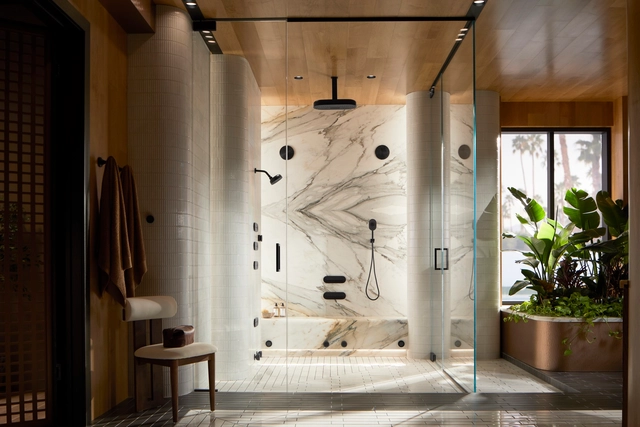
Anthem+™ - Shower environment. Image Courtesy of Kohler
Incorporating technology into architecture has transformed the way we design and experience environments across various scales, spanning from urban development to interior settings. Today, the concept of "smart spaces" embodies the fusion of innovation and design to enhance well-being and quality of life in our daily activities. This is achieved through seamless technological integration, encompassing a range of functions and systems via software, digital tools, and everyday devices like smartphones. As a result, activities like showering are experiencing significant advancements, evolving into a digital multi-sensory experience that offer personalized control over environmental factors, enhancing relaxation and well-being. These innovations enhance the interaction between technology, design, and users, fostering new ways to engage with spaces and subtly enriching our routine activities.
https://www.archdaily.com/1023948/creating-a-multi-sensory-digital-shower-experience-for-well-being-relaxation-and-controlEnrique Tovar
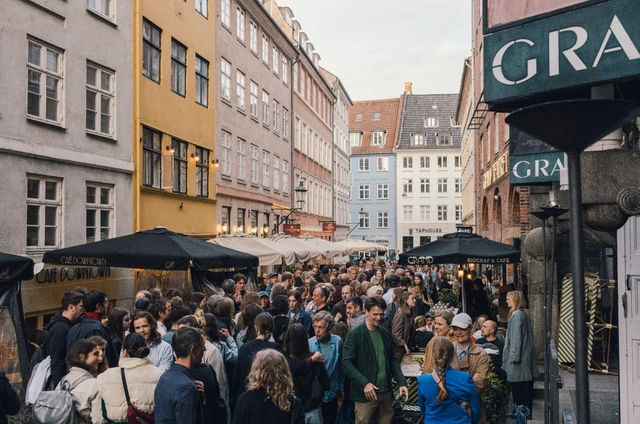
The inaugural Copenhagen Architecture Biennial, set to take place from September 18 to October 19, 2025, has announced its first curatorial theme, "Slow Down." Organized by CAFx, the biennial builds upon the foundation of the annual Copenhagen Architecture Festival, established in 2014, evolving into a larger international platform aimed at deepening engagement with architectural issues. This transition marks a shift in focus toward more comprehensive and long-term dialogue around the built environment's role in shaping society and addressing contemporary challenges.
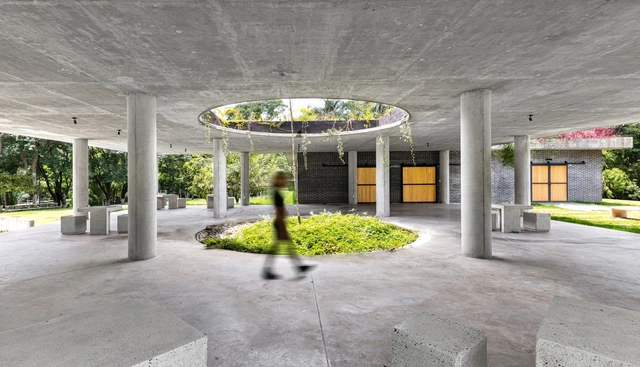
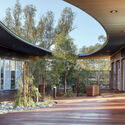
Community Development Center in Tapachula / Laboratorio de Acupuntura Urbana. Image
How do community centers emerge? Why do they often represent a need for the appropriation and development of society? In the pursuit of improving the quality of life in the most vulnerable communities, community centers present themselves as an alternative capable of providing healthcare, educational, cultural, and recreational services, along with spaces that contribute to the present and future development of communities. In Mexico, numerous community centers are created and supported by government institutions, civil foundations, or private companies, as well as co-management initiatives that aim to integrate children, youth, adults, and older adults into spaces for gathering, socializing, and recreation, where they can engage in activities from learning to developing individual and collective skills.
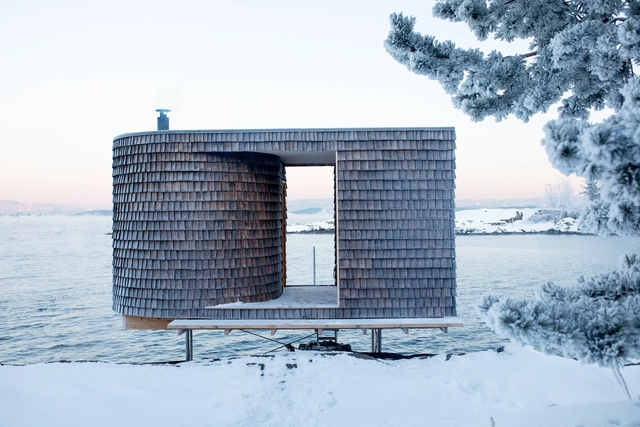
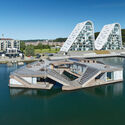
How does floating architecture relate to nature? How are wellness spaces connected to natural environments? Living in spaces around water continues to be one of the greatest interests and attractions for a large portion of the global population. Beyond the fact that designing on water requires consideration of various structural, economic, construction, material, and technological variables, understanding the region's climate aspects—such as rainfall, currents, winds, temperatures, and more—is essential for creating architectures that coexist with the natural world and do not cause severe damage to ecosystems.
Over-providing traditionally implies offering more than is necessary, often carrying a negative connotation due to the potential for excess and waste. However, could there be scenarios within the built environment where over-providing proves advantageous? The question critically examines how overprovisioning might enhance a building's flexibility and adaptability to diverse and evolving conditions.
The underlying assumption of accurately providing what is needed for a building is that stakeholders—including owners, architects, and designers—can accurately predict and cater to a structure's current and future needs. This assumption, however, is challenging to realize, as societal, economic, and cultural shifts frequently occur in unpredictable ways. In this context, over-providing emerges as a counterintuitive yet potentially beneficial strategy. As buildings and structures inevitably transform, those designed with inherent adaptability reduce the need for costly renovations or complete rebuilds.
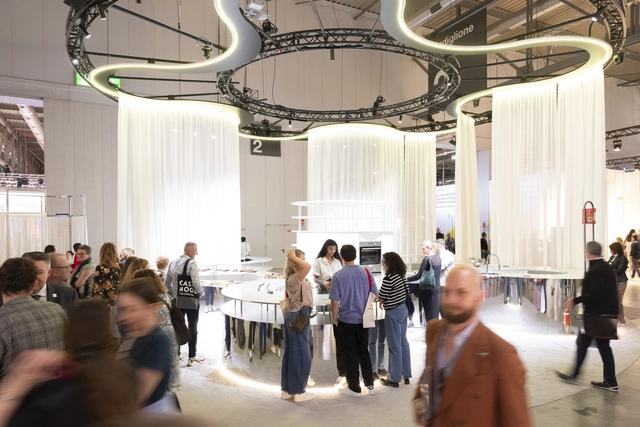
Designing for the human experience has been at the forefront of architect's intentions and motivations behind their work. While traditional processes prove beneficial, the industry is peering over boundaries to find opportunities for collaboration with other design and non-design fields. New approaches have emerged with collaborations between architects and service designers, or even psychologists, to create more human-centric spaces. A new intersection captures the attention of practitioners, especially with a recent installation at Salone de Mobile neuroarchitecture. ArchDaily breaks down the scope and potential for this new field with Federica Sanchez, architect and neuroscience researcher at Italian firm Lombardini22, responsible for revamping the Salone.
Acorn Glade Passive House. Image Courtesy of Tom Bassett-Dilley Architects
When addressing the world's broader problems—such as the climate emergency, energy crisis, and housing shortage—, we often seek sweeping, grand solutions that could tackle them all at once. As alluring as these ideas may be, they eventually run into the thousands of complexities and interconnections our world presents. But what if we sought more decentralized and domestic solutions? Chicago-based firm Tom Bassett-Dilley Architects has been pursuing just this, focusing on sustainable design, carbon-free and energy-efficient projects for residences, historical buildings, institutions, and commercial projects. In their Manifesto: The New American Dwelling, they argue that the single-family home, once the great American dream, needs to be redefined to emphasize minimalism, efficiency, health, connection with nature, durability, and personal kindness, moving away from wasteful, artificial, and toxic practices. We spoke with Tom Bassett-Dilley, FAIA, CPHC, LFA, and founder of the firm, about some aspects of their work.
While hybrid working and flexible hours represent the most obvious ways to improve work/life balance for many, because of the missed social interactions and the lack of space or functionality at unproductive home workspaces, the majority of 16-24-year-olds are the only age group who prefer to work from the office.
While not entirely dependent on one another, the relationship between architecture and mental well-being is an important topic, as designers and architects can contribute to creating a more enjoyable environment for everyone. From strategies to enhance mental health in shared workspaces to the ways in which architecture can contribute to preventing cognitive decline, understanding the potential impact of environmental neurosciences and the ways they apply to architecture is an essential skill for our profession.
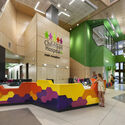
Silent and endless hallways, white and cold rooms, an impersonal and distant atmosphere: this is a deeply ingrained image in our cultural conception of hospital environments. The whiteness of these spaces, attempting to reinforce the necessary notions of sterility and cleanliness, may also evoke a sense of discomfort and anxiety for patients and their families.
The importance of humanizing hospital, clinic, and office projects is an increasingly discussed and relevant topic in healthcare, extending far beyond the aesthetics of these buildings. It is necessary to create welcoming environments that promote the well-being of patients, families, and professionals, recognizing that architecture can play a fundamental role in the recovery and comfort of these individuals during moments of vulnerability.
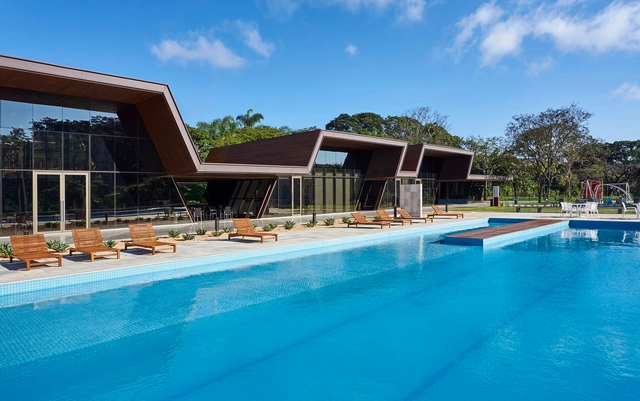
With the approach of summer in the southern hemisphere — promising to be one of the most intense on record amidst a year already considered one of the hottest in history — the search for places that offer moments of relaxation, freshness, and fun intensifies. As the high temperatures of summer draw near, the relevance and demand for facilities like clubs, with their outdoor leisure areas, pools, and green spaces, stand out significantly. These places become true havens, providing the opportunity to escape the heat and a range of other activities and benefits for their users.
Although considered common practice today, the concept of hand hygiene was not initially deeply ingrained in society. It wasn't until 1847 when the Hungarian physician Ignaz Semmelweis, supported by scientific evidence, proposed that hand washing was a hygienic measure with a direct impact on people's health. From this point on, the rest is history. Hand hygiene has become a widespread practice, ranging from washing to drying, accompanied by various accessories that play specific roles in the process.
In contemporary environments, especially in the context of collective well-being, public restrooms have become a focal point. This shift in focus is, in part, a response to the post-pandemic emphasis on hygiene and the role of restroom accessories in these settings. Among the accessories available, hand dryers have garnered significant importance, even transcending their primary function. In light of this, Mediclinics has innovated by introducing a new hand dryer concept that places a strong emphasis on enhancing the user experience while offering innovative restroom equipment with a distinctive U-shaped design.
https://www.archdaily.com/1009500/hands-in-to-hands-through-a-new-generation-of-hygienic-and-aesthetic-hand-dryersEnrique Tovar
Nowadays, we spend over 90% of our time indoors, and it is becoming increasingly evident that architecture has a profound influence on our brains and bodies. The interest in comprehending how the environment affects human well-being is on the rise, with a growing number of new studies on this subject emerging each year. Moreover, architecture firms are increasingly enlisting the expertise of researchers and human experience design consultants to explore and optimize these effects.
Recent statistics suggest that if someone lives until they are 80, around 72 of those years will be spent inside buildings. This makes sense if we bear in mind that, when not at home, humans are working, learning or engaging in fun activities mostly in enclosed, built settings. Contemplating current events, however, this number is expected to grow. In an increasingly chaotic and uncertain world, marked by the ongoing effects of climate change and the global pandemic, the desire to stay indoors in a protected, controlled and peaceful environment is stronger than ever. Architects face an important challenge: to create comfortable, productive and healthy interiors with well-regulated parameters, considering factors like indoor air quality, daylighting and biophilic features from the initial stages of design. Of course, this involves choosing materials sensitively and accordingly, whether it be by avoiding certain health-harming components or by integrating non-toxic products that soothe and promote wellness.
The world's recent shift towards prioritizing wellness has influenced people to seek healthier lifestyles by understanding the body and the mind collectively. External factors such as the geographic location, the environment, the community, financial status, and the relationships with friends and family have all shown to have considerable impacts on an individual's health. However, it became evident that ensuring physical and mental health was not limited to having access to medical facilities and professional treatments, but was also determined by several factors related to the quality of the built environment.
Architects have a choice to design better and consequently, help people make better choices. So what is considered a good interior design, and what are the factors that make any interior space a good one? In this interior focus, we will explore this "good" side of design, looking at how architects ensured the needs of users by acknowledging accessibility, demographic diversity, economy, and the environment, regardless of aesthetic.