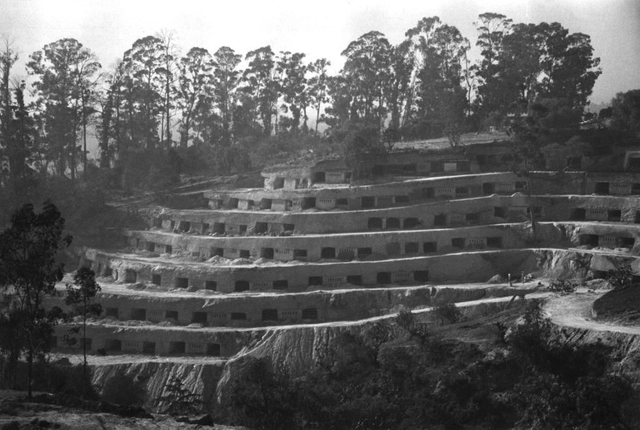
Mexican architect Carlos Lazo's Cuevas Civilizadas project in Mexico City. Image Courtesy of The Isamu Noguchi Foundation and Garden Museum
Contemporary architecture's approach to space is fairly linear: enveloping a specified volume within some form of material construct. But if we take a look at humanity's first intentional dwellings, it becomes clear that they were much less premeditated.
Rather than manmade areas to be furnished with pride, our earliest homes were naturally occurring cave lairs that offered hunter-gatherers temporary protection from the elements and potential predators. It wasn't until the appearance of agriculture that our ancestors took permanent, built residences. To this day, troglodytism — or cave living — continues to be connected to ideas of societal disassociation and a hermetic desire to exist outside of orthodox architectural norms. And yet, from Northern China to Western France and Central Turkey, hundreds of millions of people still choose to spend their lives at least partially underground.
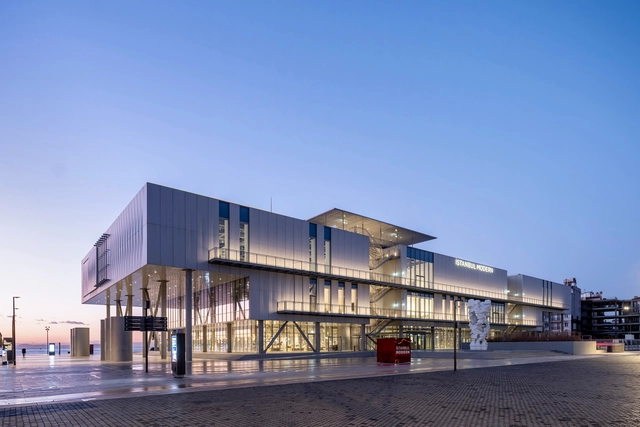
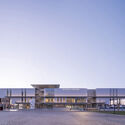
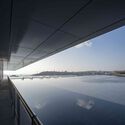
Designed by Renzo Piano Building Workshop, a new building for Istanbul Modern, Türkiye’s first museum of modern and contemporary art, will open to the public on May 4th, 2023. The official opening ceremony of the museum is set to take place at a later date. The museum, measuring over 10,500 square meters, is located on the Karaköy waterfront, a historic district at the intersection of the Bosphorus and Golden Horn. The new building offers spaces for temporary exhibitions, interdisciplinary educational programs, film screenings, and an extensive art collection.
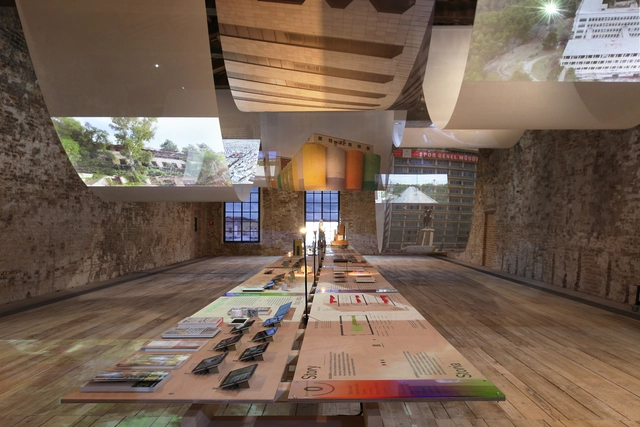
Sevince Bayrak and Oral Göktaş, founders of the Istanbul-based studio SO? Architecture and Ideas, were selected as curators for the Pavilion of Türkiye in the 18th International Architecture Exhibition, La Biennale di Venezia 2023, with an exhibition project titled Ghost Stories: Carrier Bag Theory of Architecture. The installation questions the accepted perceptions of unused buildings in order to discover more hopeful proposals for the future. The exhibition will be open from May 20th until November 26th, 2023, under the coordination of the Istanbul Foundation for Culture and Arts (İKSV). The project team consists of Aysima Akın, Kevser Reyyan Doğan, Merve Akdoğan and the research team includes Taylan Tosun, Doğu Tonkur, Hatice Bahar Çoklar Berke Şevketoğlu, Duygu Sayğı.
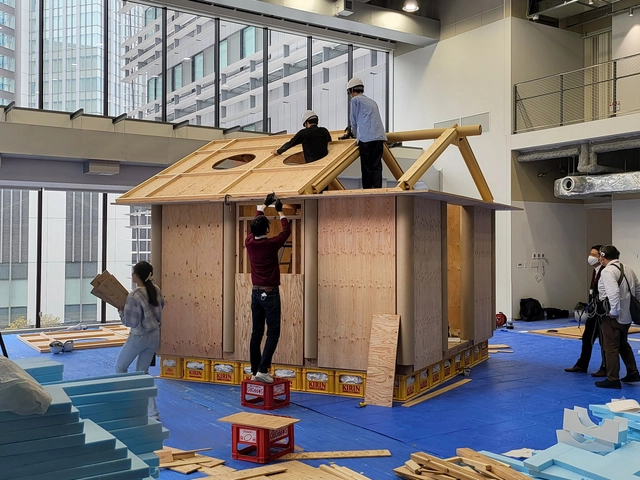
Shigeru Ban Architects, in collaboration with Voluntary Architects’ Network, has developed an improved version of the temporary housing developed to help those affected by the recent Turkey-Syria earthquake. The new prototype represents an upgrade of the paper tube system deployed in northwestern Turkey after the 1999 earthquake. This new version takes into consideration matters of efficiency and the need to minimize construction time on site.
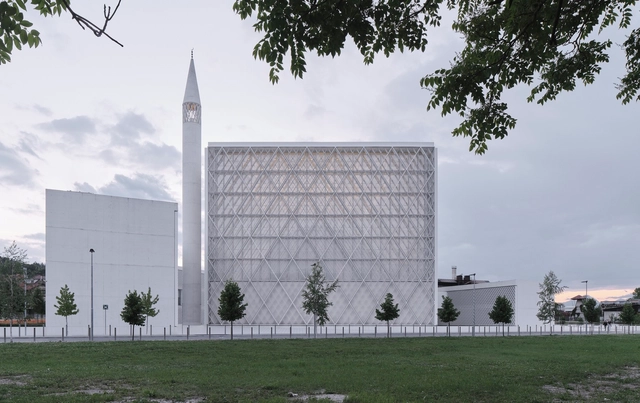
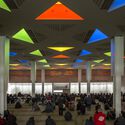
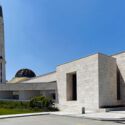
Under the theme of "Mosque: a cross-cultural building", the 4th cycle of the Abdullatif Alfozan Award for Mosque Architecture (2020-2023) has announced its 5 winning projects hailing from Australia, Turkey, Serbia, Slovenia, and Mozambique. The award ceremony took place at the Riyadh National Museum on March 5th, 2023, followed by a 2-day architectural seminar in which the architects explained the design process behind their winning projects.
Looking into mosques between the past, present, and future, the selection took into account each project's contextuality, privacy, its religious and architectural significance, and contribution to the community. Over 200 mosque were submitted from across the world, narrowed down to a shortlist of 22 projects. The five winning mosques, however, were commended for looking beyond common mosque typologies, as they explored the importance of feeling within a religious space, their value as "urban communication tools", and how their architectural languages are re-establishing the values of the religion.
When lockdowns first hit and retailers were forced to shut up shop, many took to the digital high street instead, with those investing hardest and quickest in their online personas invariably winning the battle for our bookmarks. As the world opened again, some kept both their physical and digital presence in a hybrid model, while others chose to remove themselves from bricks and mortar altogether.
As we become more accustomed to using both models together, it’s clear that physical retail spaces can offer sensorial experiences that the digital simply can not – yet. These four projects buck the online retail trend and encourage consumers – and therefore other retailers, too – to move back into the physical, by turning the act of shopping into an exciting, invigorating, or relaxing luxury pastime, rather than a chore.
Korean Museum of Urbanism and Architecture | South Korea. Image Courtesy of Atelier of spatial matters
This week's curated selection of Best Unbuilt Architecture highlights cultural centers by the ArchDaily community. From a spiral- gallery symbolizing the Jinju culture in South Korea, a building devoted to Irish culture to a gallery to serve as a cultural incubator for Indonesia, this round-up of unbuilt projects showcases how architects, community, and institutions team up to promote culture, arts, history, and reflection.
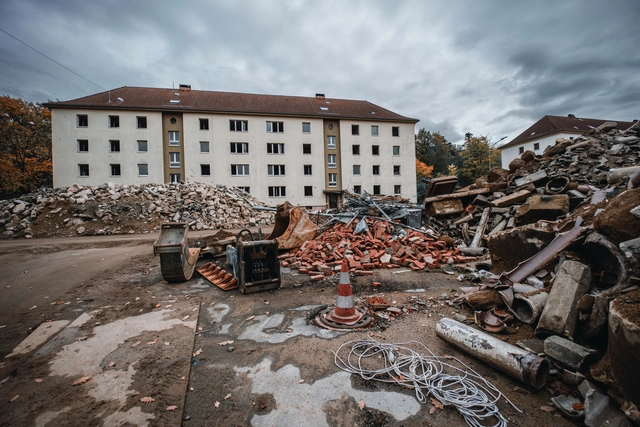
A major 7.8 magnitude earthquake hit central Turkey and north-west Syria this Monday, February 6, with a second 7.4 magnitude quake reported a few hours later in the same region, according to reports from the Guardian. Among the most affected areas is Gaziantep, located 150 miles from the border with Syria and 50 miles from the earthquake’s epicenter in Kahramanmaraş. Tremors were felt as far away as Lebanon, Greece, Israel, and the island of Cyprus. Authorities are still assessing the number of victims, as local and international rescue teams have been deployed to search for survivors. Early estimates report that over 1,700 buildings have collapsed or have been critically damaged, as confirmed by Turkey's Vice President Fuat Oktay.
Tu Casa by Lutolli Architects + Partners. Image Courtesy of Lutolli Architects + Partners
Architects play an important role in creating healthy, functional and aesthetically pleasing environments. Interior design represents a natural continuation of the same prerogative, and its importance has been accentuated in recent years, from the lockdown forcing many people to remain indoors for extended periods of time, to the rise of remote work. The task of the interior designer is not decorating spaces, but planning for an effective use of space, understanding the needs of the user and highlighting the intrinsic qualities of a space. Acoustics, lighting, material properties and proportions all play a role in achieving a coherent and enjoyable interior space.
This week’s curated selection of Best Unbuilt Architecture highlights interior design projects submitted by the ArchDaily community. From a pastel-colored library in Turkey to a renovated symphony hall in San Diego, US, this selection of unbuilt projects showcases how architects design interior spaces by integrating textures, materials, light, and color in well-proportioned spaces. The article includes projects from Turkey, US, Switzerland, Indonesia, UK, and Denmark.
The International Organization of Migration (IOM) and the Qatar Red Crescent are set to receive 27 tents designed by Zaha Hadid Architects (ZHA) to serve and support displaced populations. The donation is made by the Education Above All (EAA) Foundation, the Supreme Committee for Delivery & Legacy, and its human and social legacy program, Generation Amazing Foundation. The news was announced during the opening of a ZHA-EAA tent inside the FIFA Fan Festival in Doha, and it represents part of the country’s effort to ensure that the World Cup has a positive lasting effect after the closing of the tournament.
Organized by the Abdullatif Alfozan Award for Mosque Architecture and the College of Architecture at Kuwait University, the 3rd International Conference on Mosque Architecture was held in Kuwait on 14-16 November 2022. Under the theme of “Mosque: a cross cultural building,” 101 architects participated in this year’s edition, showcasing their state-of-the-art designs and how they reimagined religious buildings in a more contemporary context, taking into account the importance of community, privacy, its religious significance, and the environment.
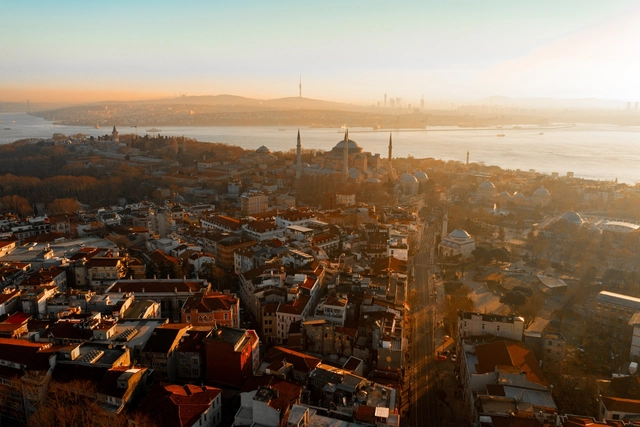
Byzantium, Constantinople and now Istanbul, the many names this city has had over the centuries are proof of the central role it has played throughout history. Founded by Greek settlers in the 7th century, the city served as an imperial capital for a cumulated period of over 1600 years. During the Roman/Byzantine, it played a crucial role in the advancement of Christianity before its transformation into an Islamic center and becoming the sear of the Ottoman Caliphate. Today, Istanbul is a vibrant city with a rich cultural scene and multiple historical layers to be discovered.
Straddling the Bosphorus strait, the city lies in both Europe and Asia, integrating architectural masterpieces that reflect the meeting of European and Asian cultures over the centuries. As the largest city in Turkey with a population of over 15 million residents, Istanbul also serves as the country’s economic, cultural, and historic center. Istanbul is the 15th largest city and the eighth most visited city in the world. The city is also home to several UNESCO World Heritage Sites.
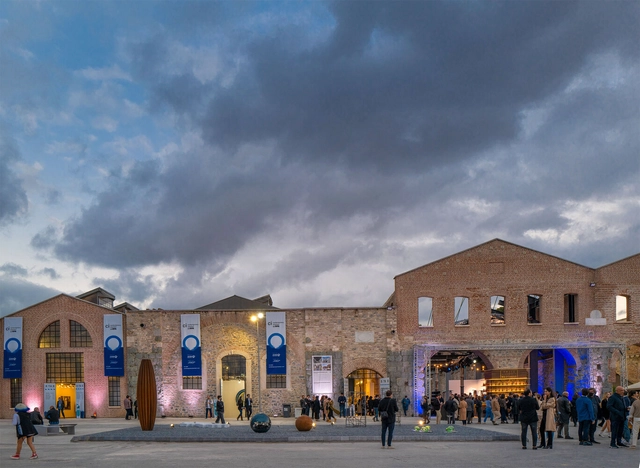
Tersane Istanbul. Image Courtesy of Contemporary Istanbul
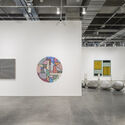
In September 2022, Istanbul highlights the best names in contemporary art and architecture from Turkey and the world at the 17th Istanbul Biennial organized by the Istanbul Foundation for Culture and Arts and at the Contemporary Istanbul art fair. From September 17 to 22, 2022 The Contemporary Istanbul will gather sixty-five galleries, and art initiatives from 22 countries in Tersane Istanbul, a 600-years historic landmark renovated by the award-winning firm Tabanlioglu Architects. Opening the same day until November 20, the Istanbul Biennial will be held in multiple venues around the historic city. For this edition, the visitors will experience the “sense of our times” by contemplating present-day life and the richly layered past.
During the week-long event, ArchDaily had the chance to speak with Alper Derinboğaz, architect and founder of Istanbul-based Salon Alper Derinboğaz, selected among ArchDaily's 2020 Young Practices, to discuss the firm's responsibility towards the environment, seeing architecture as part of the Earth within Geospace's framework, challenges facing the new generations of architects and their access to information, and experimenting with the Metaverse.
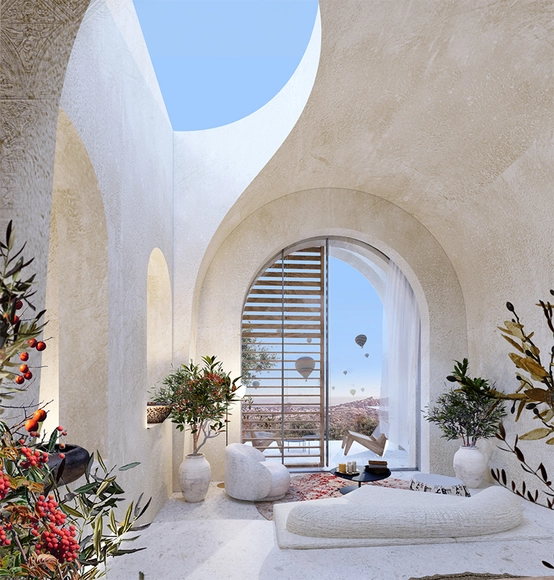
Cappadocia Spa Hotel by GAD ARCHITECTURE. Image Courtesy of GAD ARCHITECTURE
Offering short-term accommodation to travelers, hotels represent one of the main elements supporting the hospitality sector. They often aim to create a serene environment, isolated from the bustle of city life, yet representative of the local identity. Boutique hotels represent a rising sub-sector of hospitality design. These are small hotels typically between 10 and 100 rooms with carefully chosen interior design, providing a memorable experience to their guests. From historic renovations to contemporary ground-up hotels, hotel projects represent a great opportunity for architects to create unique environments centered around leisure and relaxation.
This week’s curated selection of Best Unbuilt Architecture highlights projects submitted by the ArchDaily community. Located in the forests of Portugal, on the shore of the Greek island of Crete, or in the deserts of Egypt, this round-up of unbuilt projects showcases how architects respond to local conditions in order to create designs that cater to the needs of tourists and travelers.
The Aga Khan Award for Architecture (AKAA) has announced its 20 shortlisted projects for the 2022 award cycle. Competing for the US$ 1 million prize, one of the largest rewards in architecture, the 20 architectural developments located in 16 different countries, were selected by a Master Jury from a pool of 463 projects nominated for the 15th Award Cycle (2020-2022). The jury, among which are Anne Lacaton, Francis Kéré, Nader Tehrani, and Amale Andraos, will meet again this summer to examine the on-site reviews and determine the final recipients of the Award.
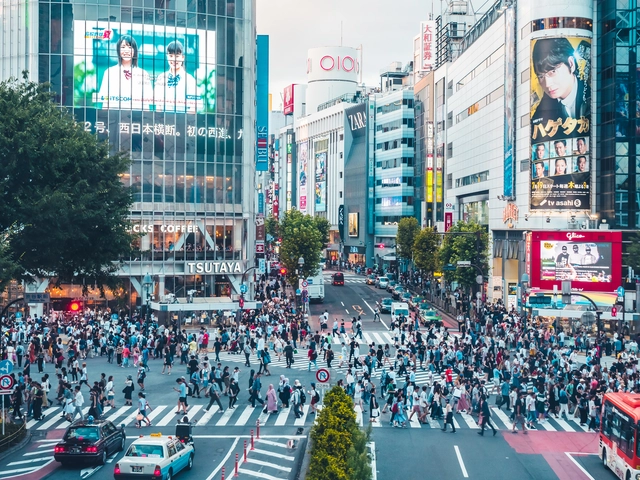
Half of the world’s population now lives in cities, according to UN-Habitat’s latest reports. While this number is set to increase to two-thirds by 2050, urban challenges are growing exponentially, making it more crucial than ever, to transform our cities. Annually, the world population review assesses the growth of cities and the number of residents living in metropolitan areas, to understand global evolution trends. In 2022, the list of the top 20 most populated countries remained similar to the 2021 edition, with a slight change in numbers and positions. Tokyo kept its status as the world’s largest city, with 37 million inhabitants, while Delhi and Shanghai, followed in second and third positions.
Comparing the results to the 2021 edition, the only decrease that can be seen in the top 20, involves both Japanese cities, Tokyo and Osaka. The rest of the list had, on average, a growth of 1.8% in the total of people residing in metropolitan areas. In fact, African cities Kinshasa in the Democratic Republic of Congo and Lagos in Nigeria gathered the highest rates, with respectively a 4.39% and a 3.54% increase in residents in 1 year. The largest city in the American continent is still Sao Paulo in Brazil, followed closely by Mexico City and Buenos Aires in Argentina, further down the table. In Europe, Istanbul is the most populous, with more than 14.5 million residents.
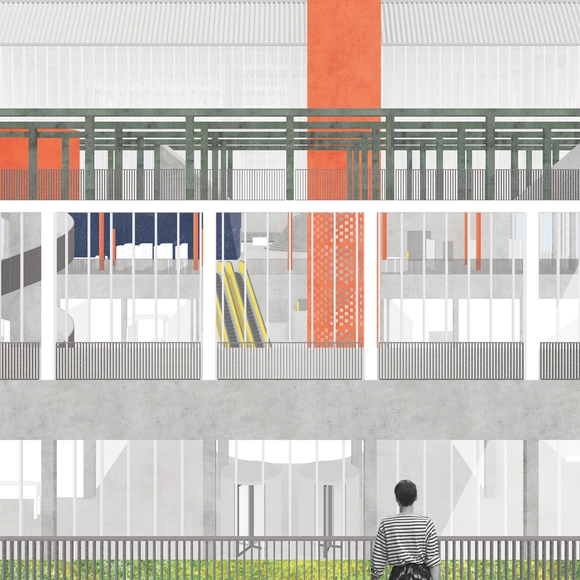
This week's curated selection of Best Unbuilt Architecture highlights different competition-winning designs and honorable mentions submitted by the ArchDaily Community. From large scale urban developments to small interventions and installations, this article highlights a selection of projects that have taken part of international and/or national competitions, and have received recognition from their juries.
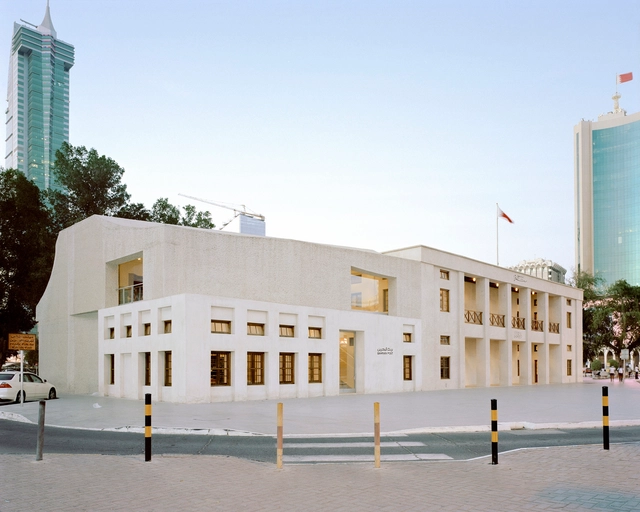
From a metro station refurbishment that highlights the colors of Belgrade, to a memorial park on the coast of Miami, the award-winning entries are designed by young architects who have reimagined cultural, commercial, and urban projects, and provided innovative solutions that cater to the city and community. This round up also includes projects in Pakistan, Czech Republic, Germany, Vietnam, and Turkey.





























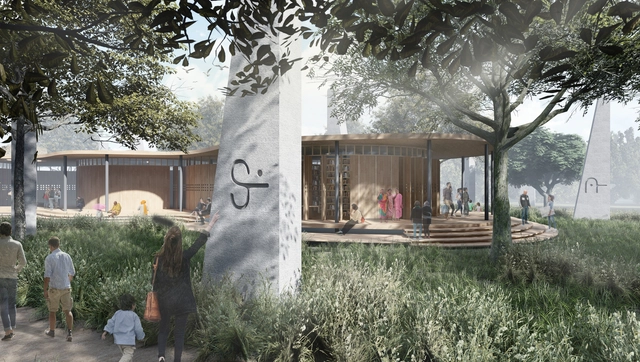
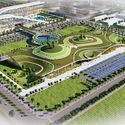
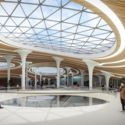
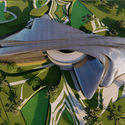
.jpg?1652355731 "Memorial Park by Tatiana Ivanova, Mikhail Skisov. Image Courtesy of Tatiana Ivanova, Mikhail Skisov")
