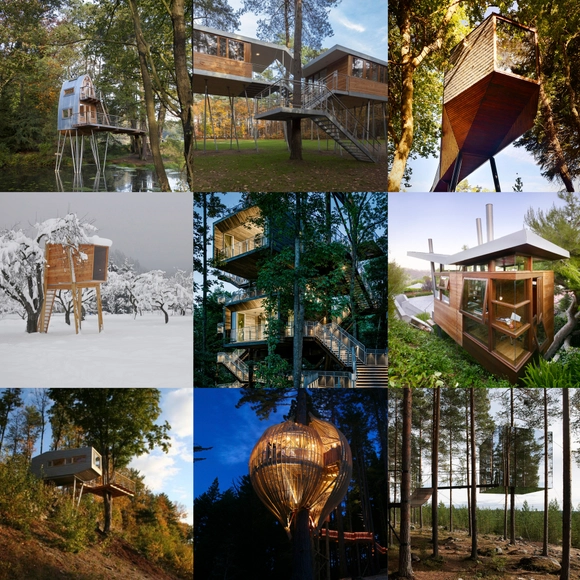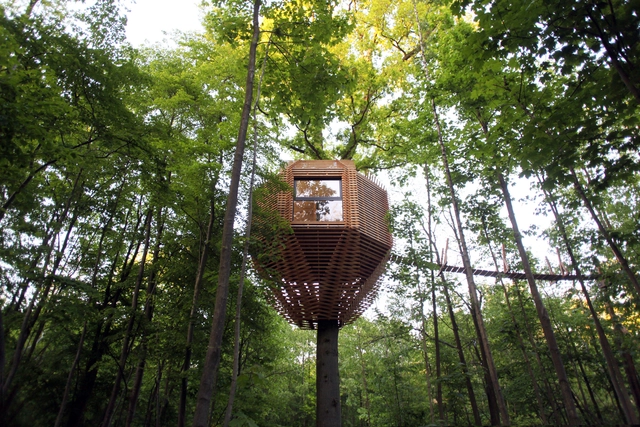
Despite their whimsical appearance, treehouses offer a unique platform for structural innovations and design explorations. Traditional treehouses rely on the trunks of trees for structural support, but, in order to ease the load supported by the tree, contemporary projects often introduce additional systems, such as stilts to maintain the image while offering additional support. One of the key advantages of elevating them in this way is the reduced environmental footprint. Treehouses can be designed to leave the forest floor untouched, preserving small-scale ecosystems. By freeing up the ground below, they minimize disruptions to native flora and fauna, allowing nature to thrive undisturbed. Similarly, many architects use the local topography to create seamless connections, incorporating ramps, stairs, or bridges that integrate with the landscape. These solutions not only improve accessibility but also enhance the overall experience creating an architectural promenade that moves between the treehouse and its surroundings.
"This sensitivity to the environment is reflected not only in the structural design but also in the careful selection of materials. The use of natural materials like wood, also helps the structure blend with its environment. Some designers have gone further by employing alternative materials such as mirrored panels to reflect the surrounding forest and mask the treehouse's presence entirely, demonstrating that the choice of material can contribute to creating a project that feels like an extension of its setting rather than an imposition on it. This collection highlights notable examples from Sweden, Denmark, Indonesia, and France, showcasing their diverse approaches.
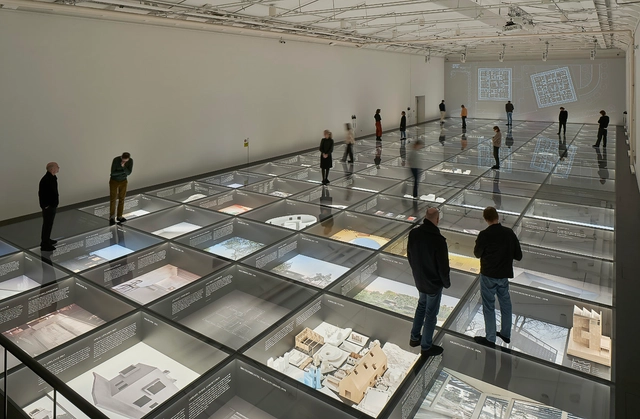
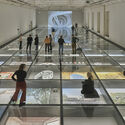
The Swedish architecture firm Tham & Videgård exhibits a broad selection of projects celebrating over twenty years in practice at the ArkDes—Centre for Architecture and Design in Stockholm, Sweden. For the first time, the studio’s work is being presented in its entirety, displaying in detail acclaimed buildings like the winning proposal for the Denfert art center in Paris and the 150-meter-tall +One Tower for the Swedish Exhibition in Gothenburg. From November 2022 to August 27, 2023, On: Architecture offers visitors a full-scale spatial experience involving models, new photography, and films – all set within a glass ground showroom.
Videos
The Lakehouse. Image Courtesy of Next Step Group and Snøhetta
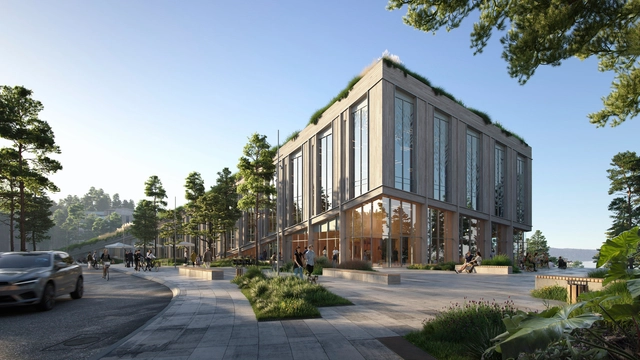
Construction broke ground on the Wendelstrand residential development that will transform an old quarry outside Gothenburg into an environmentally friendly and socially sustainable neighbourhood. Developed by Next Step Group and designed by Snøhetta and White Arkitekter, together with Tham & Videgård, Andreas Martin-Löf Architects and Liljewall, the project will feature 1000 homes of various typologies and a series of amenities. The first stage of the development debuts with the Snøhetta-designed Lakehouse, a communal building that blends with the landscape.
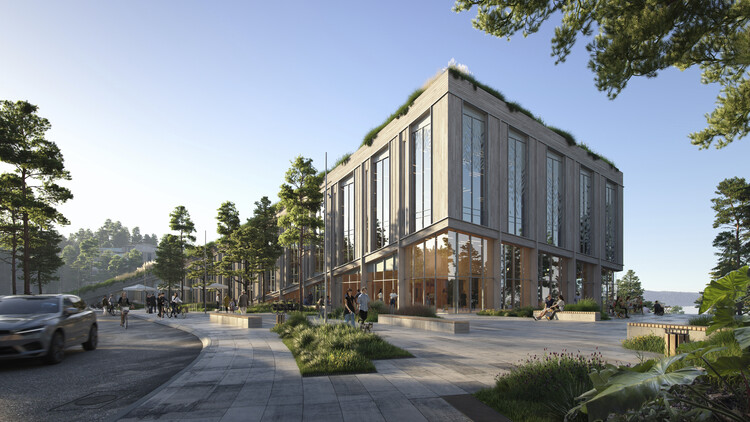
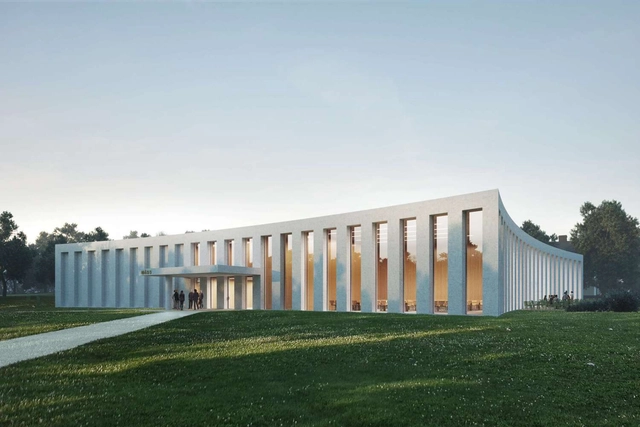
Swedish practice Tham & Videgård Arkitekter has won a competition to design a new cadet mess building for the Karlberg Military Academy in Stockholm. Establishing a dialogue with the historical context and the 17th-century park, the project is conceived as a clean square volume with concave facades that embrace the surroundings. Through its rhythm and proportion, the design echoes the classical architecture of the nearby palace, showcasing a rigorous aesthetic that establishes a timeless image.
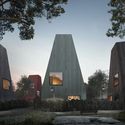
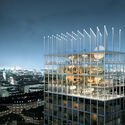
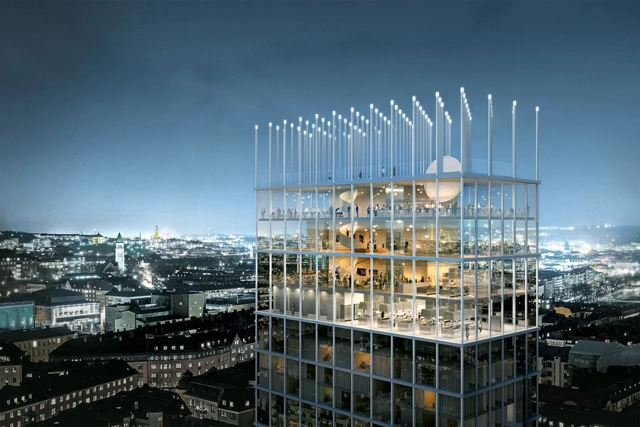
Architectural firm Tham & Videgård won the international competition to elaborate a new addition for the Swedish Exhibition and Congress Centre in Gothenburg. The selected proposal puts in place a new hotel tower and a main entrance for the venue.
Vertical Village II. Image Courtesy of Tham & Videgård Arkitekter
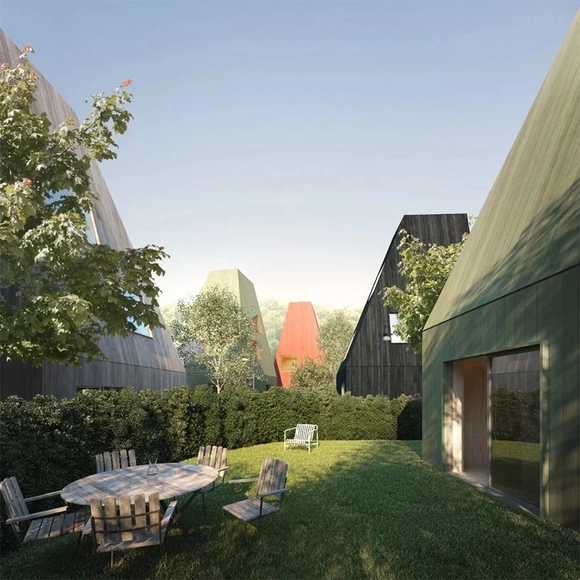
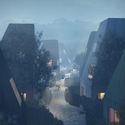
Swedish practice Tham & Videgård Arkitekter designed a series of colored timber homes for Gothenburg, Sweden. Part of a larger site development along Landvetter Lake, the project was imagined as a "vertical village" that rethinks the row house typology. A series of compact, three-level homes include private gardens around tall hedges and rounded plots. The solid timber design reimagines the firm's original proposal for a site in Stockholm.
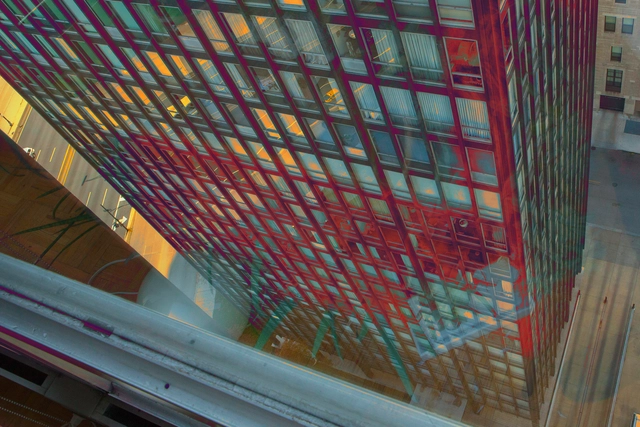
Their challenge was in considering the forms and ways that their selection "might extrapolate out from the cropped photographic frame into a spatial and lifestyle construction across a larger, horizontal site" – in this case, a field of plinths, the size and positioning of which is a direct reference to the footprint of Mies van der Rohe's 1947 plan for the IIT Campus in Chicago.
https://www.archdaily.com/880306/in-horizontal-city-24-architects-reconsider-architectural-interiors-at-2017-chicago-architecture-biennialAD Editorial Team
James Welling, 8183, 2016 from the series Chicago, 2016-2017, Courtesy the Artist and David Zwirner, New York and London. Image Courtesy of Chicago Architecture Biennial
The Chicago Architecture Biennial has announced the list of participants invited to contribute to the event’s second edition, which will be held from September 16 to January 7, 2018 in Chicago. More than 100 architecture firms and artists have been selected by 2017 artistic directors Sharon Johnston and Mark Lee, founders of Los Angeles–based Johnston Marklee, to design exhibitions that will be displayed at the Chicago Cultural Center and throughout the city.
“Our goal for the 2017 Chicago Architecture Biennial is to continue to build on the themes and ideas presented in the first edition,” explained Johnston and Lee. “We hope to examine, through the work of the chosen participants, the continuous engagement with questions of history and architecture as an evolutionary practice.”
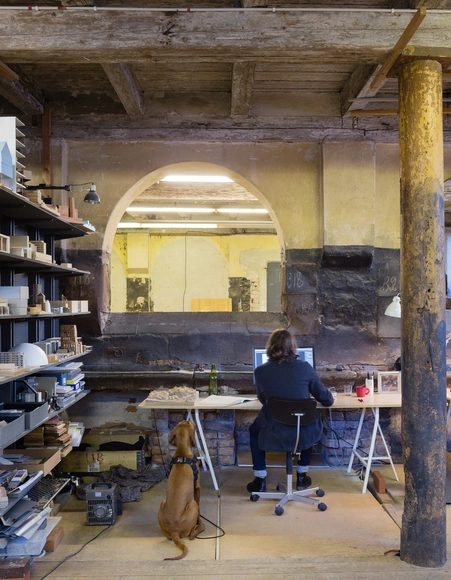
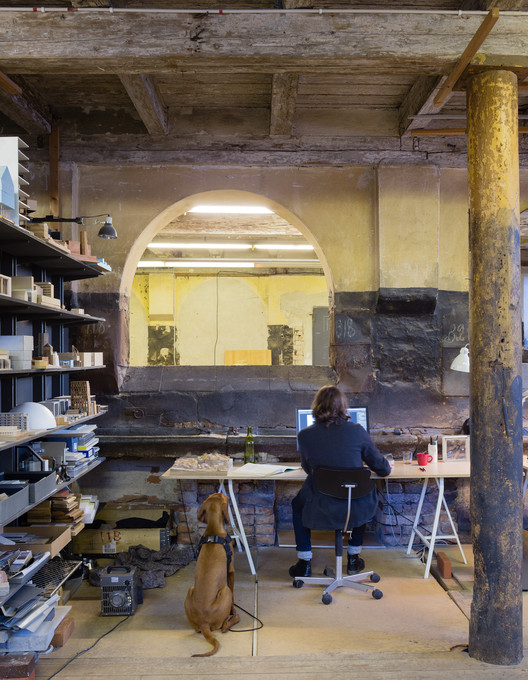
Architectural photographer Marc Goodwinhas recently completed "the ultra-marathon of photoshoots:" twenty-eight architectural offices in twenty-eight days, spread across four capital cities – Oslo, Stockholm, Copenhagen, and Helsinki. His aim was to understand what sort of spaces architects in the Nordic countries operate in, and how they differ between each respective country. From former boathouses to stables and coal deposits, Goodwin has captured some of the most unique working environments the profession has to offer.
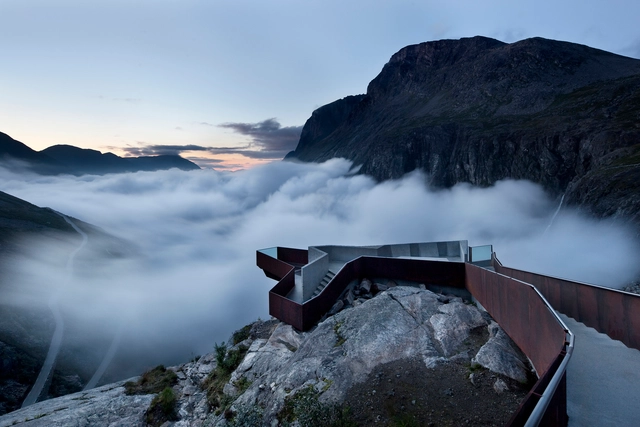
RRA's National Tourist Route in Trollstigen is among nine selected projects which will be displayed in-depth. Image via rra
The Swedish Centre for Architecture and Design (ArkDes) have revealed that In Therapy: Nordic Countries Face to Face—the exhibition for the Nordic Pavilion at the 2016 Venice Biennale, curated by David Basulto—will partly comprise "a contemporary survey of Nordic architecture." 300 projects, drawn from over 500 submissions to a recent open call, will be complemented by an in-depth study of nine projects completed post-2008 by practices including Tham & Videgård, Reiulf Ramstad Arkitekter, and Lahdelma & Mahlamäki.
"Just as Sverre Fehn’s pavilion is a crystallisation of Nordic architecture—embodying a precise and fluid articulation of structure, light, and nature—the nine we have chosen to focus in on as particularly representative of the contemporary scene have a similar gravitas and complexity – but with their own distinct identities" says Basulto, who has made the selection alongside James Taylor-Foster, Assistant Curator.
https://www.archdaily.com/782330/nine-projects-from-finland-norway-sweden-to-be-highlighted-in-in-therapy-the-nordic-contribution-to-the-2016-venice-biennaleAD Editorial Team
Last week, ArchDaily unveiled the 14 winners of this year’s Building of the Year award. Selected by ArchDaily readers from a pool of over 3,000 candidates, these 14 projects represent the best designs published by ArchDaily in the past year, as determined by an unbiased network of 55,000 voters who took part - each of them a judge in one of the world's most democratic architecture awards.
Representing a diverse field of architects, locations and project types, each design has a very different story about how it came into being, how its design responds to its context, how it fits into an architect's oeuvre, or what it says about the direction which architecture is traveling in. But despite the many different types of story represented, each of the stories behind the Building of the Year winners is a fascinating architectural tale. Here are those 14 stories.
After two weeks of nominations and voting, we are pleased to present the winners of the 2016 ArchDaily Building of the Year Awards. As a peer-based, crowdsourced architecture award, the results shown here represent the collective intelligence of 55,000 voters, filtering the best architecture from over 3,000 projects featured on ArchDaily during the past year.
By publishing them on ArchDaily, these exemplary buildings have helped us to impart inspiration and knowledge to architects around the world, furthering our mission. So to everyone who participated by either nominating or voting for a shortlisted project, thank you for being a part of this amazing process, where the voices of architects from all over the world unite to form one strong, intelligent, forward-thinking message.
And of course, congratulations to all the winners!
https://www.archdaily.com/781768/winners-of-the-2016-building-of-the-year-awardsAD Editorial Team
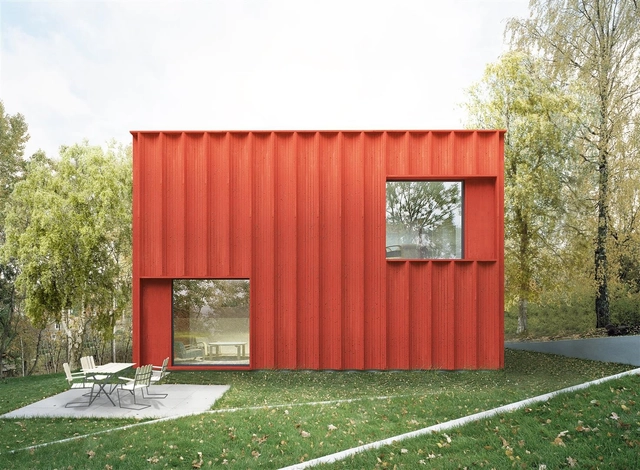
Tham & Videgård Arkitekter has designed a home with the help of two million Swedes. Made possible by big data, the Swedish office analyzed 200 million clicks and 86,000 properties on Hemnet properties to design "Sweden’s statistically most sought after home." The result, the Hemnet Home - a "new typehouse for everyone by everyone."
The word “treehouse” can conjure up fond childhood memories for many. As a kid, the idea of a house floating above the ground is an endless source of wonder-- and that wonder never truly goes away! Countless designers have experimented with the idea of suspending their architecture among the trees, and a large number of those projects have made their way onto our site. See nine of our favorites, after the break.
Tham & Videgård Arkitekter received first prize for the competition to design the Bergman Center, a foundation and a meeting place with focus on Ingmar Bergman’s oeuvre and on Fårö as his artistic base. You can see more images and architect’s description after the break.