Courtesy of ir Richard Rogers and Graham Stirk of Rogers Stirk Harbour + Partners
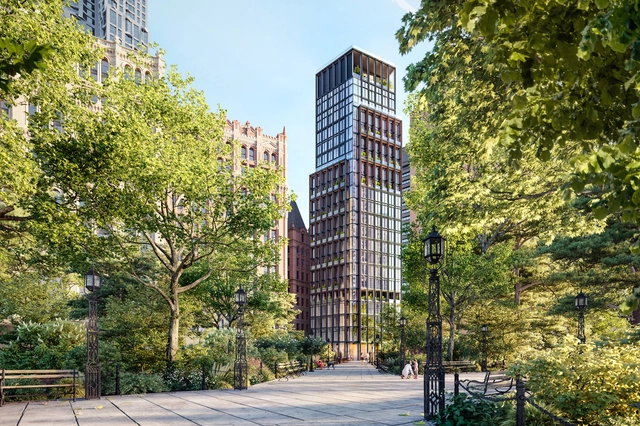
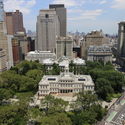
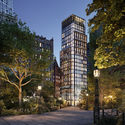
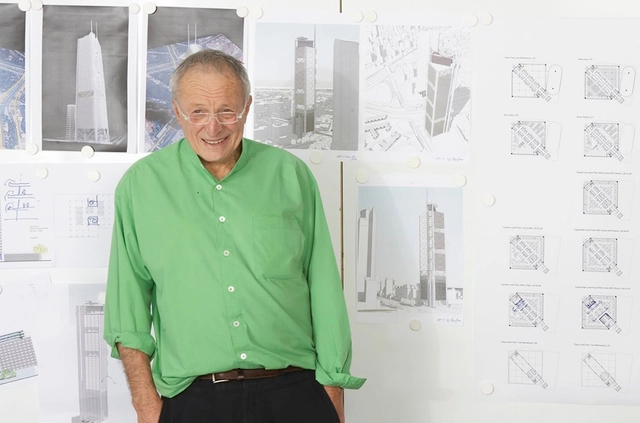
Rogers Stirk Harbour + Partners have unveiled images of their latest venture, No. 33 Park Row in New York City. Located across the street from City Hall Park in Downtown Manhattan, the project, nearing completion and set to officially launch in the spring of 2021, is the city’s first residential project designed by Sir Richard Rogers and Graham Stirk of Rogers Stirk Harbour + Partners.
This year, architecture’s highest honor, the Pritzker Prize, has been granted to Grafton Architects, a Dublin-based architectural firm mainly ran by female partners Yvonne Farrell and Shelley McNamara. For the first time ever in its 42-year history, due to the constraints set by Covid-19 global pandemic, the organizers of the Pritzker Prize decided to use Livestream the award ceremony. Having reached the end of 2020, ArchDaily has summed up what current and previous Pritzker Prize winners have accomplished during this turbulent year.
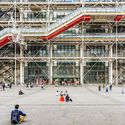
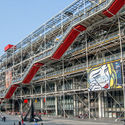
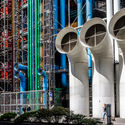
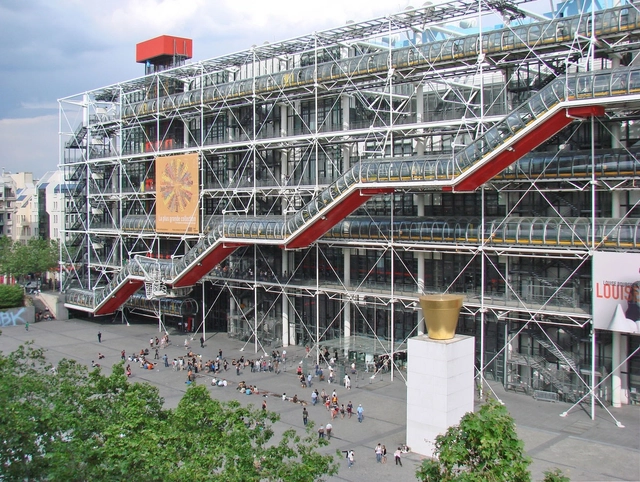
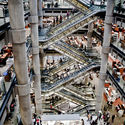
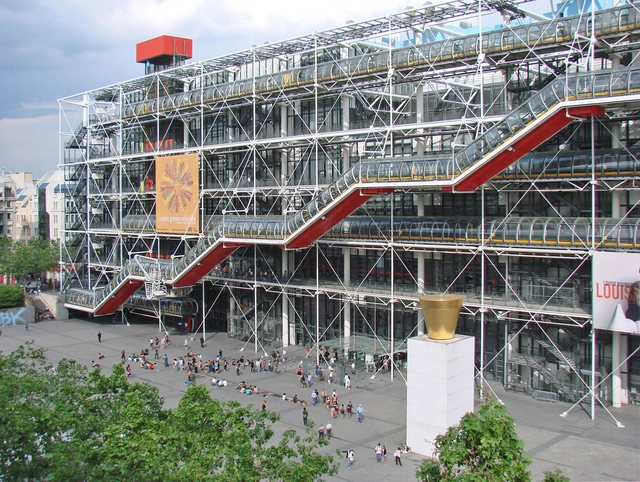
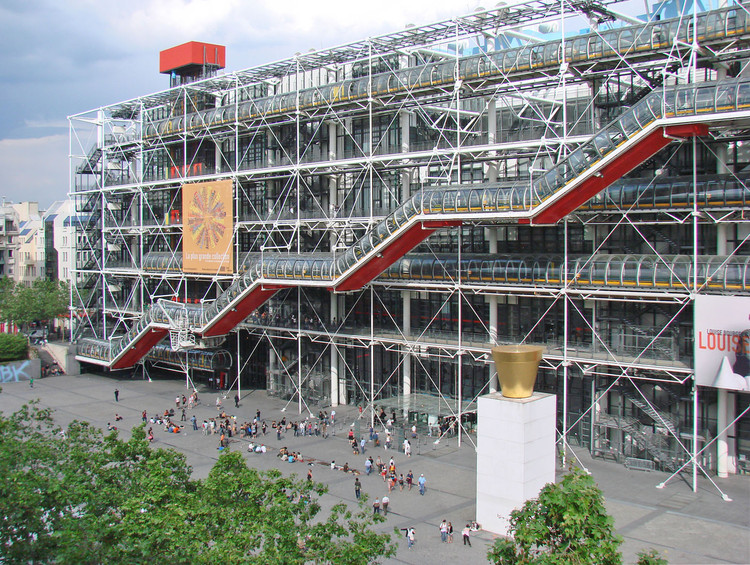
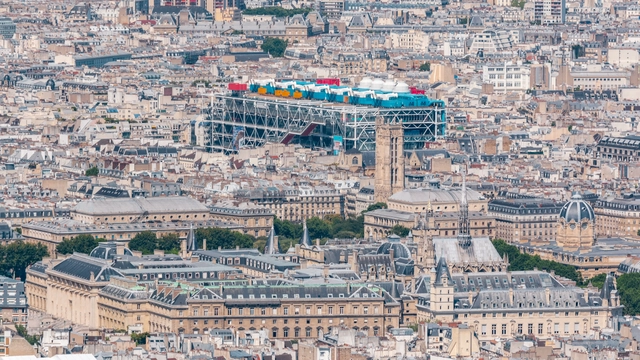
Richard Rogers has retired from Rogers Stirk Harbour + Partners after founding the practice 43 years ago. As one of Britain’s greatest living architects, he is known for iconic, hi-tech architecture, including the Lloyd’s building in London and the Pompidou Centre in Paris. The Pritzker Prize-winner has become one of the world's most distinct architects, utilizing bright colors and structural elements to create a style that is both recognizable and adaptable.
As one of the leading architects of the British High-Tech movement, Pritzker Prize-winner Richard Rogers stands out as one of the most innovative and distinctive architects of a generation. Rogers made his name in the 1970s and '80s, with buildings such as the Centre Georges Pompidou in Paris and the Headquarters for Lloyd's Bank in London. To this day his work plays with similar motifs, utilizing bright colors and structural elements to create a style that is recognizable, yet also highly adaptable.
The Architecture Academy podcast is a new architecture and design podcast which has a focus on ideas and education. The team believes that through education and better conversations they can improve how people design their buildings and cities. The Architecture Academy has just completed their first series of podcasts with conversations with world experts on topics such as beauty, happiness, education, sustainability, vernacular architecture and housing.
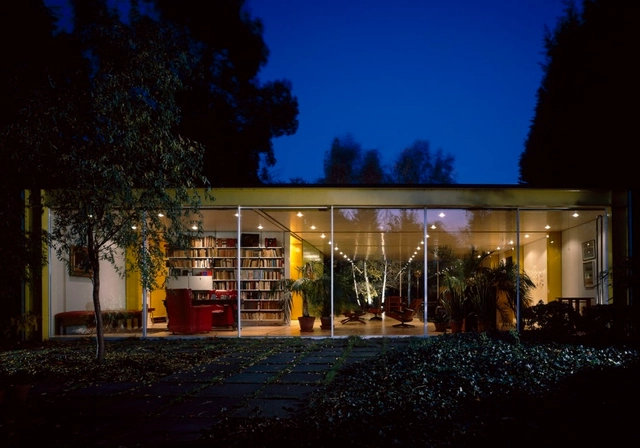
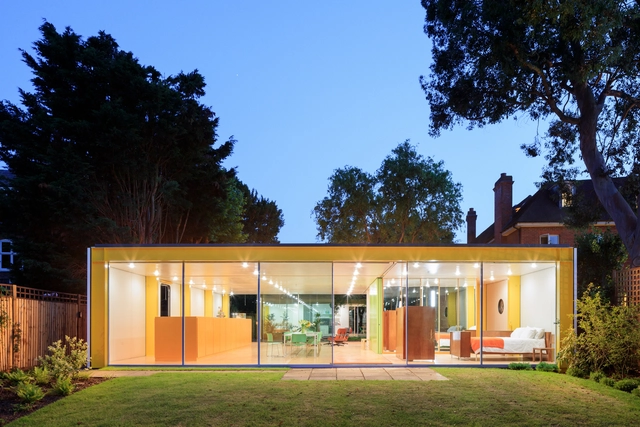
Harvard University Graduate School of Design has announced the 2020 Richard Rogers Fellowship cycle. Open to accomplished practitioners and scholars working in fields related to the built environment, the research-focused residency program is based in London at the Wimbledon House, designed by Lord Richard Rogers in the late 1960s. Fellows have researched a diverse series of topics, including examinations of public and affordable housing; how food and cooking transform cities; and citizen-driven urban regeneration initiatives, among others.
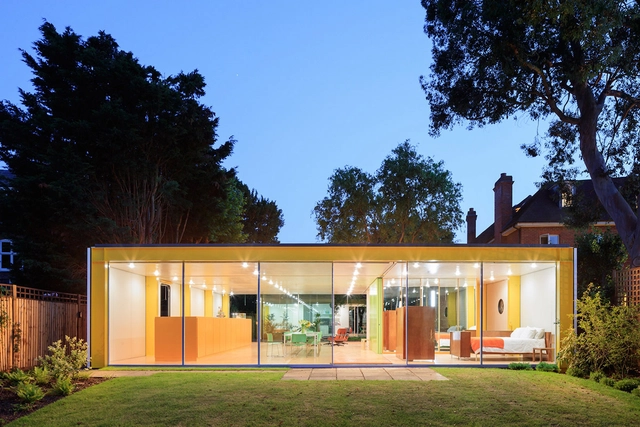
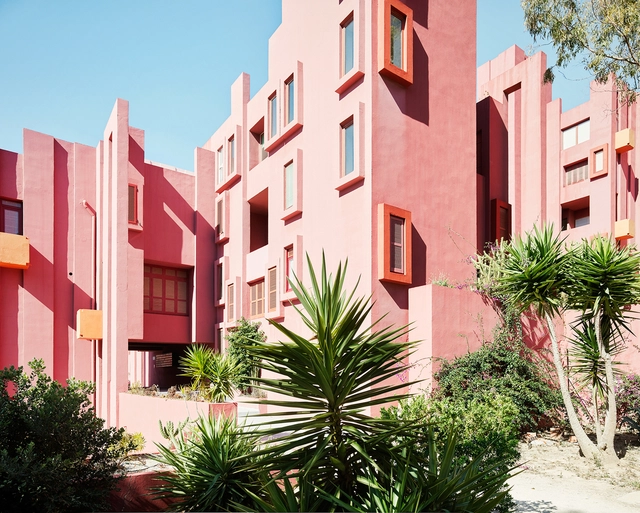
Some architects love color, some are unmoved by it, some hate it, and some love to dismiss it as too whimsical or non-serious for architecture. In an essay on the subject, Timothy Brittain-Catlin mentions the “innate puritanism among clients of architecture,” architects and their “embarrassment of confronting color,” and how “Modernism tried to ‘educate out’ bright colors.” So, while the debate on color in architecture is far from being a new one, it is not finished, and probably never will be.
In today’s world where the exhausted stereotype of the no-nonsense architect clad in black still persists, and while we quietly mull over the strange pull of the Cosmic Latte, there are some architects who haven’t been afraid of using broad swathes of color in their work at all. Read on for a list of 7 such exemplary architects both from the past and the present.
https://www.archdaily.com/881169/7-architects-who-werent-afraid-to-use-colorZoya Gul Hasan
There are at least as many definitions of architecture as there are architects or people who comment on the practice of it. While some embrace it as art, others defend architecture’s seminal social responsibility as its most definitive attribute. To begin a sentence with “Architecture is” is a bold step into treacherous territory. And yet, many of us have uttered — or at least thought— “Architecture is…” while we’ve toiled away on an important project, or reflected on why we’ve chosen this professional path.
Most days, architecture is a tough practice; on others, it is wonderfully satisfying. Perhaps, though, most importantly, architecture is accommodating and inherently open to possibility.
This collection of statements illustrates the changing breadth of architecture’s significance; we may define it differently when talking among peers, or adjust our statements for outsiders.
Honoring “an individual or pair of architects whose significant body of work has had a lasting influence on the theory and practice of architecture,” the AIA Gold Medal is often considered the highest honor awarded in the United States for architecture.
Below, we have rounded up the 30 most influential architects in London, complete with examples of the architectural works which have put them on the city and world map.
Harvard University Graduate School of Design has announced the 2019 Richard Rogers Fellowship cycle. Open to accomplished practitioners and scholars working in fields related to the built environment, the research-focused residency program is based in London at the Wimbledon House, designed by Lord Richard Rogers in the late 1960s. Fellows have researched a diverse series of topics, including examinations of public and affordable housing; how food and cooking transform cities; and citizen-driven urban regeneration initiatives, among others.
Nike has announced that it will release a special edition of its Air Max 1 range, inspired by the iconic Centre Georges Pompidou in Paris. The special edition pays tribute to the Richard Rogers and Renzo Piano-designed structure, which is credited by designer Tinker Hatfield as the inspiration behind his original Air Max 1 range.
Two upcoming editions of the Air Max 1 will honor the building, with colored tubes appearing along the seams and lines of the fabric, as well as the sole. A large P logo on the translucent sole offers a further tribute to the controversial structure, opened in 1977.
Manuel N. Zornoza grew up in Alicante, Spain and, following studies in Madrid (UAX) and London (the AA), relocated to China in 2010 to avoid the economic crisis stifling architectural work in his home country. Over the last eight years, the young architect’s small but thriving studio has built more than a dozen projects, from shops, to factory space conversions, to a traditional Chinese hutong - all in China. But that’s not to say Zornoza’s left his roots behind. He now also maintains a small practice in Madrid, which handles projects in both China and Spain.
This interview was conducted on a bullet train ride from Beijing to Tianjin, where we ventured in search of the recent architecture that has brought so much media attention to this emerging metropolis.
Anzac Station. Image Courtesy of Metro Tunnel, via HASSELL, RSHP, Weston Williamson
VA Australia’s Minister for Transport has unveiled designs for five new underground metro stations in the city of Melbourne, designed by a collaborative team comprising HASSELL, Rogers Stirk Harbour + Partners, and Weston Williamson. Scheduled to open in 2025, the new stations will “combine functionality, space and natural light with the latest in public transport infrastructure design.”
The new stations, named North Melbourne, Parkville, State Liberty, Town Hall and Anzac, will each draw on an individual surrounding character to inform their architectural style. The schemes will also include public amenities such as parks, bicycle facilities, and community plazas.
Harvard Graduate School of Design (GSD) has announced the six recipients of their 2018 Richard Rogers Fellowship program. Inspired by Lord Richard Rogers’ “commitment to cross-disciplinary investigation and engagement,” the Fellowship established last year to support individuals “whose research will be enhanced by access to London’s extraordinary institutions, libraries, practices, professionals, and other unique resources.”
The six winners will be given the opportunity to live and research at the Wimbledon House in London, which was designed by Rogers for his parents in the late 1960s. In 2015, Rogers gifted the home to Harvard for Fellowship use. This year’s winners will receive a three-month residency as well as travel expenses to London and $10,000 cash.
In an exclusive half-hour interview with Graham Stirk, partner at Richard Rogers' London-based practice RSHP (Rogers Stirk Harbour + Partners), Monocle's Tom Edwards dives into discussing the complexity of some of the practice’s recent projects. Stirk is best known for designing some of the firm's iconic London buildings, such as the Leadenhall Building (or “Cheesegrater”) and the more controversial NEO Bankside.
https://www.archdaily.com/884080/graham-stirk-on-his-career-of-iconic-designs-as-part-of-rogers-stirk-harbour-plus-partnersAD Editorial Team
Centre Pompidou (1970s). Image via Rogers Stirk Harbour + Partners
The following is an extract from A Place for All People, a new semi-autobiographical manifesto by Lord Rogers. It is a mosaic of life, projects and ideas for a better society, ranging backwards and forwards over a long and creative life, integrating relationships, projects, stories, collaborations and polemics, with case studies, drawings and photographs.
https://www.archdaily.com/881986/richard-rogers-architecture-is-a-place-for-all-people-bookBaron Rogers of Riverside