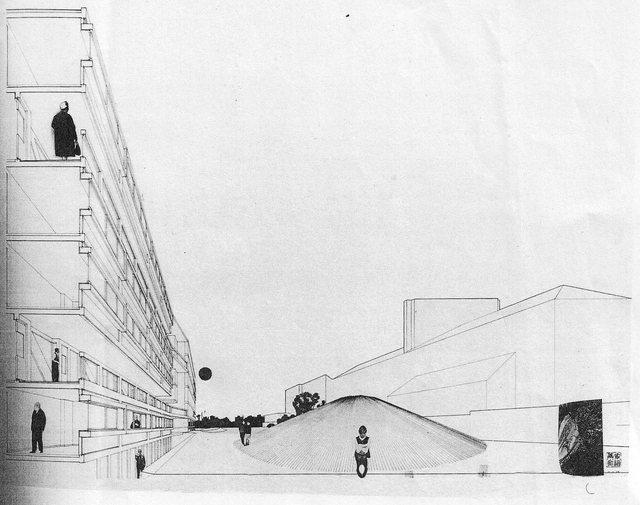
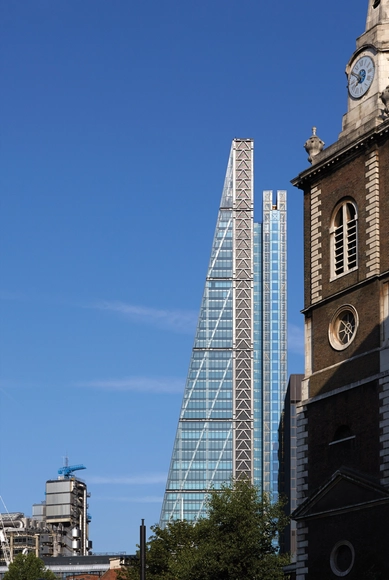
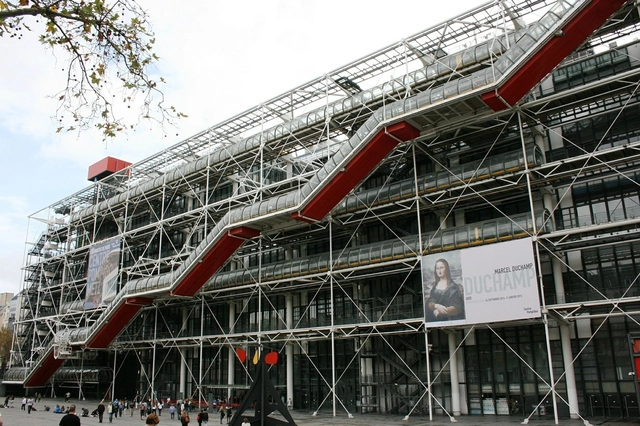
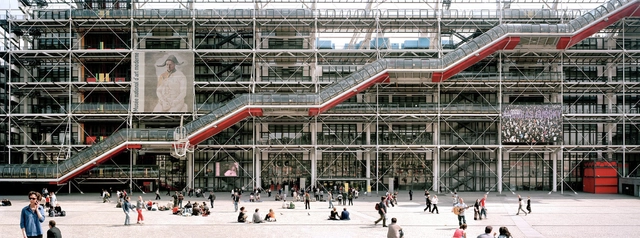
Centre Pompidou (1970s). Image via Rogers Stirk Harbour + Partners
The following is an extract from A Place for All People, a new semi-autobiographical manifesto by Lord Rogers. It is a mosaic of life, projects and ideas for a better society, ranging backwards and forwards over a long and creative life, integrating relationships, projects, stories, collaborations and polemics, with case studies, drawings and photographs.
https://www.archdaily.com/881986/richard-rogers-architecture-is-a-place-for-all-people-bookBaron Rogers of Riverside
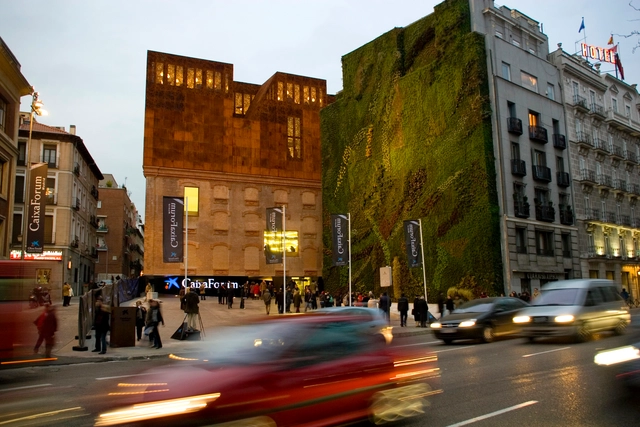
Madrid is unfathomable. If the city itself is immense, it´s examples of interesting architecture are overwhelming. For over a half a century, Madrid has been an experimental laboratory for modern and contemporary architecture in Spain. With numerous examples of innovative and experimental architecture, as well as many failures, few of which are valued and recognized. This selection seeks to show archetypal examples of architecture that have transcended time; it does not intend to be an exhaustive list of the city´s architectural works. Many will think that the list lacks important buildings and personally, I couldn´t agree more. That is perhaps the beauty of Madrid: there is a diversity of opinion, there are thousands of sites to see, the city surprises you with every step you take.
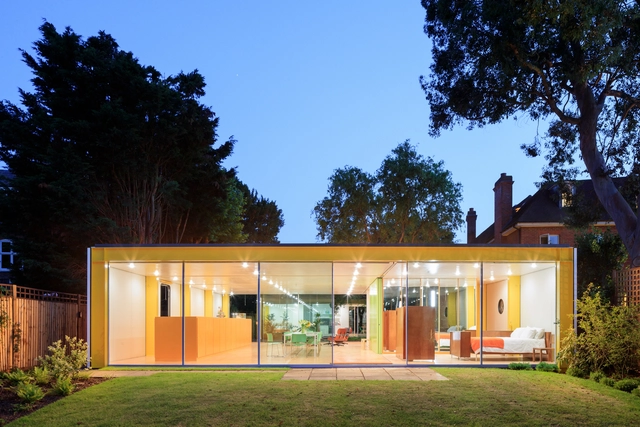
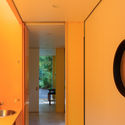
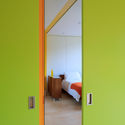
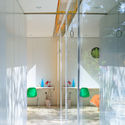
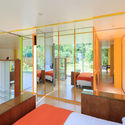
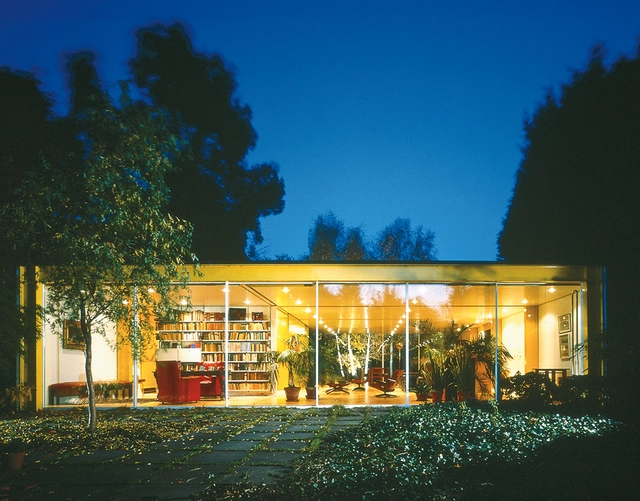
Following extensive renovations led by Philip Gumuchdjian and landscape architect Todd Longstaffe-Gowan, 'Wimbledon House'—formerly known as the Rogers House or '22 Parkside'—has reopened as the Harvard GSD's primary residence and London venue for the Richard Rogers Fellowship.
Fellows will be based at the Grade II listed Wimbledon House designed by Richard Rogers. Image Courtesy of Harvard Graduate School of Design
The Harvard University Graduate School of Design in Massachusetts has announced the winners of the Richard Rogers Fellowship 2017. Launched in October 2016, the Fellowship seeks to act as an international platform assembling experts and practitioners from a broad range of disciplines, using the built environment to positively impact on the quality of human life. The six inaugural Fellows, selected from 200 applicants worldwide, will undertake three months of research at the Wimbledon House, a Grade II listed residence in Londongifted to the School by world-renowned British architect Richard Rogers.
https://www.archdaily.com/805645/richard-rogers-fellowship-2017-winners-announcedNiall Patrick Walsh
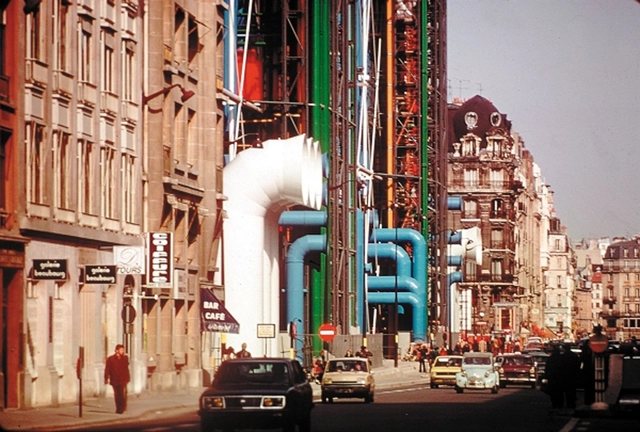
Reviled by Parisians for its shocking inside-out appearance when it first opened in 1977, the Centre Pompidou has reached its 40th birthday, and as a gift, is set to receive to 2-year, $110 million renovation that will preserve the unique structure for years to come.
Harvard Graduate School of Design (GSD) is pleased to announce a research residency at the Wimbledon House, a modern masterpiece designed by world-renowned British architect Richard Rogers. Open to accomplished professionals and scholars working in any field related to the built environment, the Richard Rogers Fellowship is dedicated to advancing research on a wide range of issues—social, economic, technological, political, environmental—that are critical to shaping the contemporary city.
Images by Hélène Binet, Sylvain Deleu, John Offenbach, Luke Hayes, Claire Byrne, Iwan Baan, Neil MacWilliams, George Rex, NAARO, and Laurian Ghinitoiu
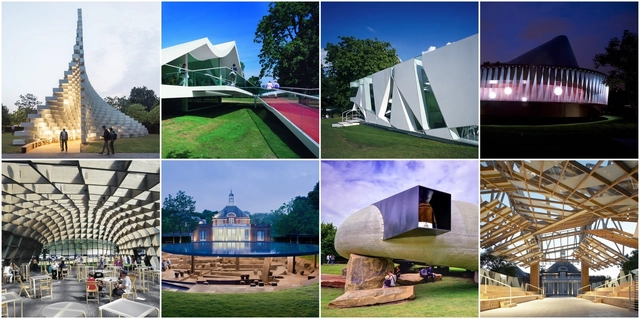
The Serpentine Galleries has announced a new process for the selection of architects for its successful Summer Serpentine Pavilion program.
For the event’s first 16 years, the annual commissions were selected by program founder and former Serpentine Galleries director Julia Peyton-Jones, who left her position earlier this year to pursue independent contemporary art and architecture projects. Replacing her are the Serpentine Galleries new CEO Yana Peel and Artistic Director Hans Ulrich Obrist, who will lead an advisory board featuring architects Richard Rogers and David Adjaye.
The Royal Institute of British Archtects (RIBA) has announced the launch of its new global architecture award for the world’s best new building, called the RIBA International Prize. Open to any qualified registered architect around the world, the new prize will be awarded to a building that “demonstrates innovative and visionary design whilst making a distinct contribution to its users and to its physical context.”
The Urban Land Institute (ULI) has selected Richard Rogers as the 2015 recipient of the J.C. Nichols Prize for Visionaries in Urban Development. The Institute’s highest honor, the award "recognizes a person or a person representing an institution who has demonstrated a longtime commitment to the creation of communities that reflect the highest standards of design and development."
Rogers was selected as the prize's 16th recipient for "his career-long focus on creating sustainable communities that thrive by providing a high quality of life for all citizens."
Pompidou Centre, Paris / Richard Rogers and Renzo Piano. Image via incollect
London-based practice Rogers Stirk Harbour + Partners (RSHP) have announced the elevation of five associates to partner level while Mike Davies CBE, who has worked alongside Lord Rogers for more than forty years, will be reducing his roles. Davies has been involved in some of the practice's most significant projects including the Pompidou Centre in Paris, Lloyd's of London, the Millennium Dome, and Terminal 5 at London's Heathrow Airport. As a Chevalier de la Légion d’Honneur, Davies is currently the project director for Grand Paris, the masterplan for Greater Paris 2025 which was commissioned by former President Nicolas Sarkozy. According to RSHP, Davies "will remain employed in a part-time role."
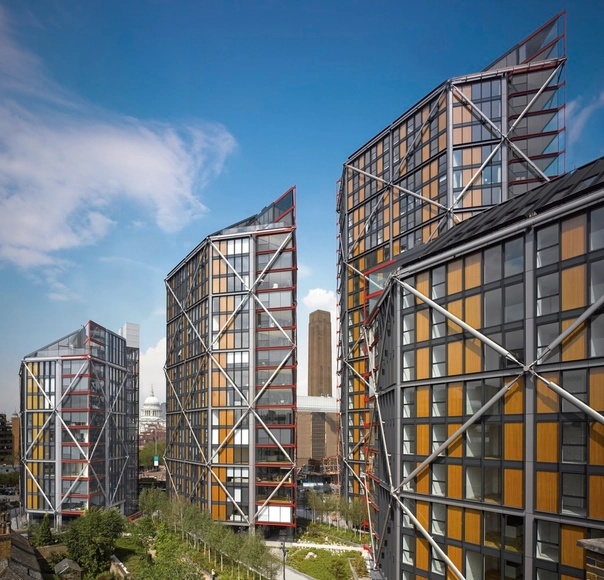
A group known as Architects for Social Housing (ASH) is gaining attention after stating its intention to hold a protest at the RIBA Stirling Prize Award ceremony tomorrow evening. Their protest is directed at the shortlisting of NEO Bankside, the Rogers Stirk Harbour + Partners-designed luxury apartment complex on London's south bank, which they say "has not only broken every planning requirement for social housing in Southwark, but in doing so has set a very dangerous precedent for the mechanics of social cleansing in London."
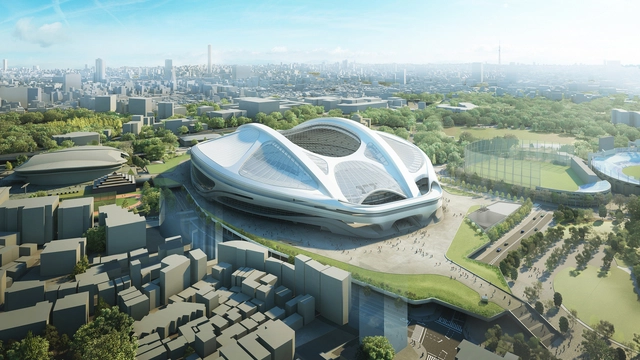
Now, British architect Richard Rogers, who served on the jury that selected ZHA's stadium design, has joined the conversation claiming Japan has "lost their nerve" and warning that their decision to "start over from zero" will harm Japan's "reputation as a promoter of world-class architectural design."
The Royal Institute of British Architects (RIBA) have revealed the six projects that will compete for the 2015 Stirling Prize, the award for the building which has made the greatest contribution to British architecture over the past year. Following a rigourous system of regional awards (all of which you can see on ArchDaily), the shortlist has been picked from a handful of nationally award-winning projects.
Rogers Stirk Harbour + Partners, having previously won the prize in 2006 for the Barajas Airport in Madrid and in 2009 for the Maggie’s Centre at Charing Cross Hospital, has been nominated four times before. They are joined by Allford Hall Monaghan Morris (AHMM), Niall McLaughlin Architects, and Heneghan Peng Architects, who have each made the shortlist before. This is the first year that McInnes Usher McKnight Architects (MUMA) and Reiach and Hall Architects have been shortlisted. The winning project will be announced on the 15th October 2015 at a ceremony in London.
See this year's full shortlist and read extracts from the judges' citations after the break.
The 15th edition of the "Days of Architecture" is almost here! This festival will take place from 25 September 2015 to 24 October 2015, in the Upper Rhine Valley. Punctuated by nearly 200 events, the festival aims to bring the architecture to the largest population.
The "Days of Architecture" will start with an opening night on the 25th of September 2015, in the Zénith of Strasbourg. During this opening night, we will have the honor to welcome the architect Richard Rogers (Pritzker Prize 2007) and his associate, Ivan Harbour, for a conference. Currently, more than 600 people have already registered for this conference!
When it was announced in 2012 that London's Robin Hood Gardens – Alison and Peter Smithson's world-famous Brutalist housing estate – was to be demolished, there was outrage among the architectural community. Since then, many have called for the profession to act in order to protect "one of Britain’s most important post-war housing projects," which led to a fresh bid to save the scheme in March of this year. Richard Rogers, Simon Smithson (a partner at RSHP and son of Alison and Peter Smithson), and academic Dirk van den Heuvel have now called upon members of the public to voice their concerns to the UK Ministry for Culture, Media and Sport, before the end of the week:
"Previous efforts in 2009 to have the building listed failed, but the case has now been re-opened and we understand that the new Minister for Sport, Tourism and Heritage will be reviewing the arguments at the end of this week [w/c 15th June 2015]."
The Washington DC International Spy Museum is seeking permission to relocate to a new $100 million building designed by Richard Rogers at L’Enfant Plaza. Contingent on approval from the Commission of Fine Arts, as the Washington Business Journal reports, the new 100,000-square-foot, six-story proposed museum would be sited on an open area adjacent to the L'Enfant Plaza hotel.
“I think everyone in the city knows that’s somewhat of a dead area right now,” said Spy Museum Chief Operating Officer Tamara Christian to WBJ. “When we came to Penn Quarter, it was somewhat of a dead area. Now it’s completely energized, and we’re really hoping that we’ll be able to be a catalyst to energize L’Enfant.”
The Architects' Journal have reported that London based practice Rogers Stirk Harbour + Partners (RSHP), headed by Richard Rogers, has refined its in-house structure "as the practice continues to implement its long-term succession plan." The practice, who will move into their new home on level fourteen of the Leadenhall Building following its completion last year, will operate one studio led by Richard Rogers alongside partner Simon Smithson; another by Graham Stirk with partner Richard Paul; and a third headed by Ivan Harbour.




.jpg?1487076478&format=webp&width=640&height=580)

_Philip_Vile.jpg?1450856752&format=webp&width=640&height=580)
_Alan_Williams_4.jpg?1436984252&format=webp&width=640&height=580)
_Edmund_Sumner_2.jpg?1436983825 "NEO Bankside, SE1 (London) / Rogers Stirk Harbour + Partners. Image © Edmund Sumner")
_Hufton___Crow_3.jpg?1436984036 "University of Greenwich Stockwell Street Building, SE10 (London) / Heneghan Peng. Image © Hufton + Crow")
_Hufton___Crow_11.jpg?1436984174 "University of Greenwich Stockwell Street Building, SE10 (London) / Heneghan Peng. Image © Hufton + Crow")
_David_Grandorge_3.jpg?1436983553 "Maggie’s Lanarkshire / Reiach and Hall Architects. Image © David Grandorge")
_Alan_Williams_4.jpg?1436984252)