


-
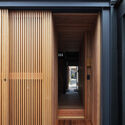
Architects: atelier Luke
- Year: 2018
-
Professionals: Matsuhiko Construction
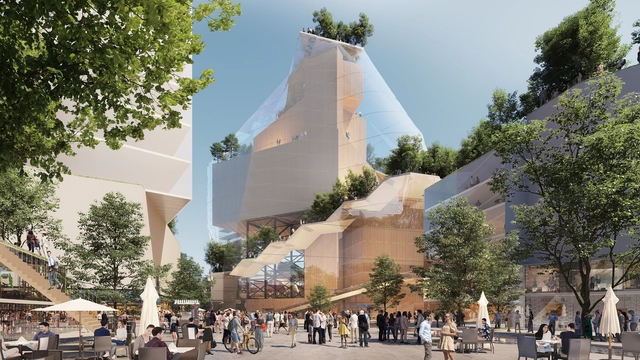
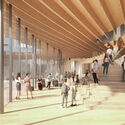
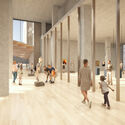
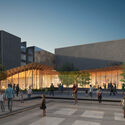
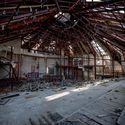
Reflecting on the future of shopping centres and addressing their decline in visitors, MVRDV's Heuvelkwartier design proposes converting Eindhoven's Heuvel shopping venue into a green cultural quarter. The project brings together retail, culture and recreation, expanding the existing buildings while transforming the roofs into a park. The proposal also expands the Muziekgebouw with a stacked cultural building encased in a "glass mountain", creating a new landmark for Heuvel.
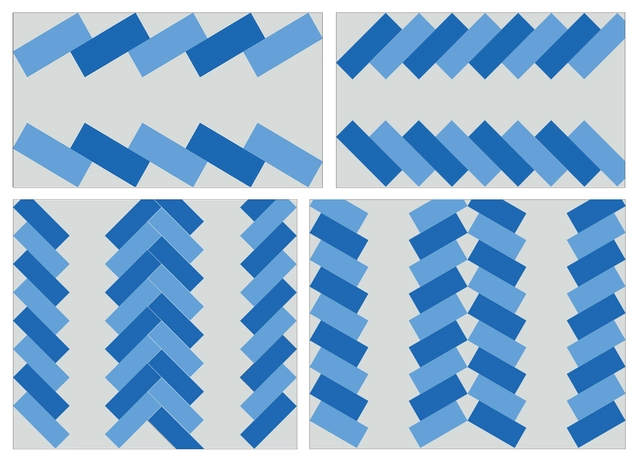
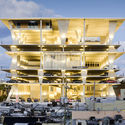
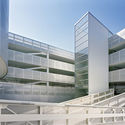
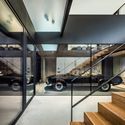
In theory, parking spaces serve only one function: park a car safely until it is used again, and in terms of design, car garages are flexible and straightforward, requiring minimal design interventions. However, parking spaces nowadays are no longer considered one-function buildings. The emptier the space, the more potential it has to integrate additional functions. Architects and urban planners have redefined traditional parking lots, adding recreational and commercial facilities to the structure. Instead of a typical structured grid plan with yellow and white markings on the floor, we are now seeing inviting structures that incorporate green facades and rooftop playgrounds, car washes, cafeterias, and work/study zones.
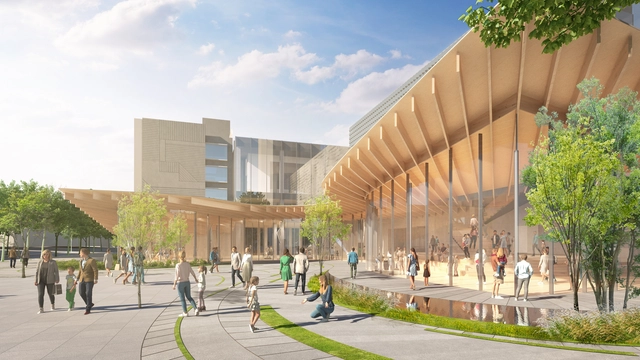
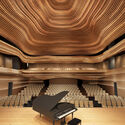
Kengo Kuma and Associates, together with Bekim Ramku and OUD+ Architects, has recently been awarded first prize in the competition to redesign the Gërmia building into a concert hall and will lead the conversion of Prishtina’s architectural icon into a cultural landmark for Kosovo. The proposal preserves the existing structures and articulates the program within and around the modernist buildings. The design envisions a canopy weaving together the different volumes and creating a new layer of public space.
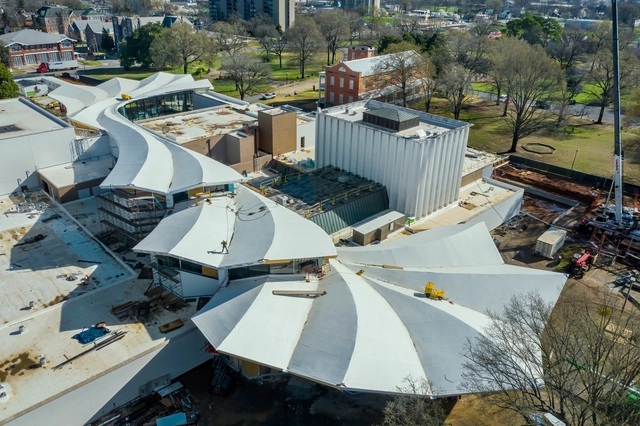
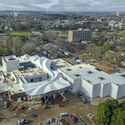
Designed by Studio Gang architects, together with landscape design firm SCAPE and Polk Stanley Wilcox Architects, Arkansas Museum of Fine Arts (AMFA) reaches an important construction milestone with the recent completion of its signature new roof. Spanning the entire length of the project and connecting the various buildings, both renovated and new, the folded plate concrete roof establishes the museum’s new architectural identity as the leading cultural institution for the state of Arkansas.
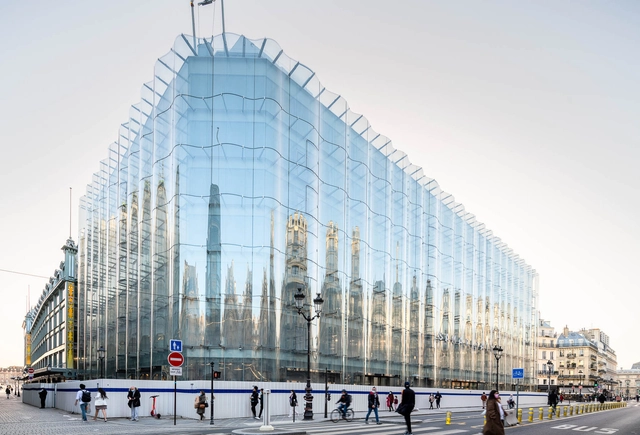
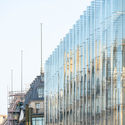
After surpassing many hurdles, SANAA's renovation of La Samaritaine Department Store is set to open its doors to the public. The redesign of the Parisian retail institution reinstates its historical value while bringing a contemporary contribution to its architecture.
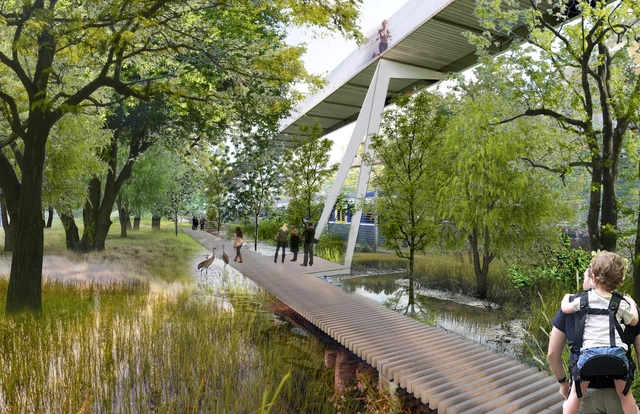
Led by OUTCOMIST, an international design team including Diller Scofidio + Renfro, PLP Architecture, CRA - Carlo Ratti Associati, and Arup won the competition to revitalize the Porta Romana Railway Area, transforming the industrial site into a diverse green neighborhood in Milan. Rehabilitating a disused railway yard into a connective tissue that links the southeast area of the city to the center, the development will generate a rich biodiverse public space, including a large urban park.
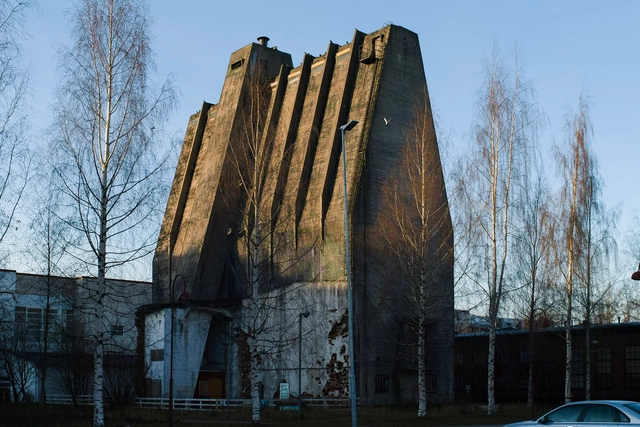
Skene Catling de la Peña and Factum Foundation are transforming Alvar Aalto’s iconic wood chip Silo into a research Centre promoting architectural preservation and re-use. The AALTOSIILO, a cathedral-like concrete structure “will become a point of focus for digitizing and communicating the importance of the industrial architecture of the north and – in turn - the impact industry has had on the environment”.
.jpg?1613644686&format=webp&width=640&height=580)
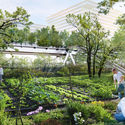
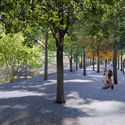
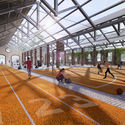
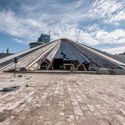
Construction has begun on MVRDV’s project for the Pyramid of Tirana in Albania, as of February 4th, 2021. Rehabilitating what was once a communist monument, the proposal transforms the brutalist structure into a new hub for Tirana's cultural life. Preserving the concrete shell, the intervention will open the atrium and the surroundings, while a small village of cafes, studios, workshops, and classrooms will permeate the site.
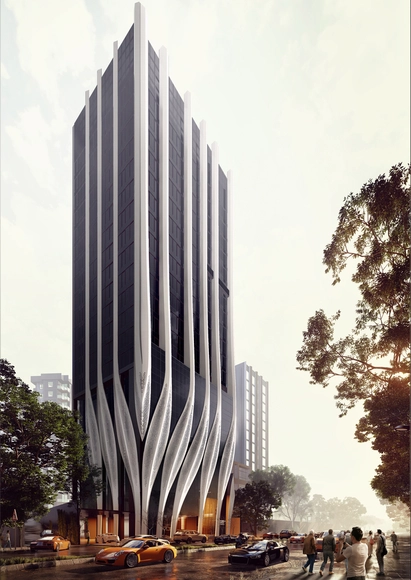
In the dense urban fabric of India’s Mumbai, Studio Symbiosis upgraded the ID Origins Headquarters into a new visual marker of the city, using organic strokes to merge old and new into one revitalized project. The HQ has been under construction since October 2019 and is a historic landmark for the company, as it was where the owners first initiated their business in the 1980s. The 18,750 sqm project was awarded the WA World Architecture Community Awards for its unique design approach.
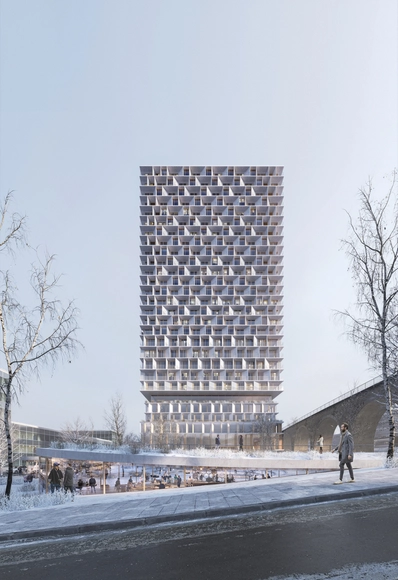
3XN and IttenBrechbühl have been selected to design Tilia Tower, an 85-meter-tall mixed-use wooden building that includes apartments, retail, and a hotel. Located in Lausanne, Switzerland, the project also encompasses the transformation and renovation of two existing buildings, as well as the implementation of new public spaces, bringing vitality to the neighborhood.


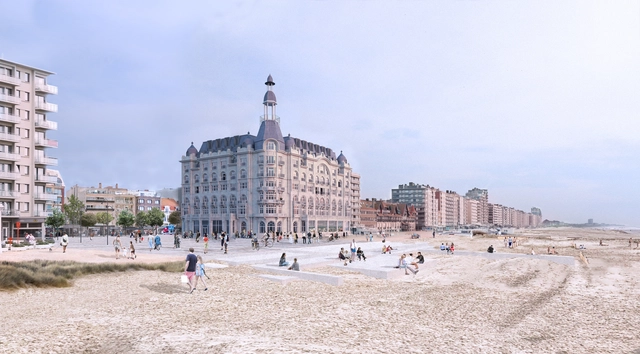
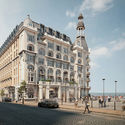
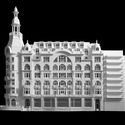
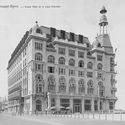
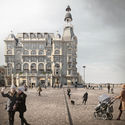
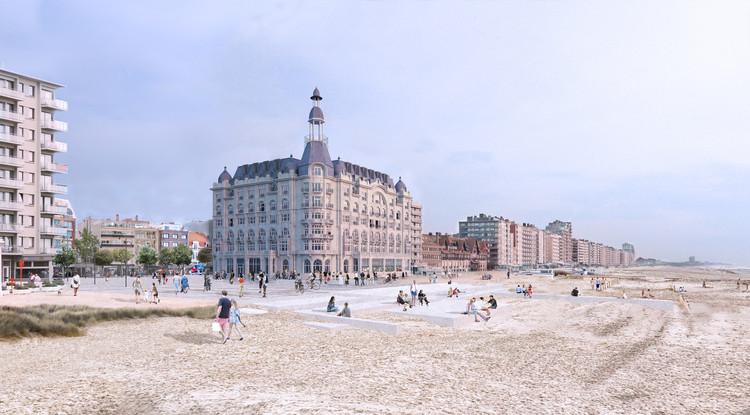
David Chipperfield Architects has unveiled his restoration plans for the Grand Hotel in Nieuwpoort, Belgium. Started in 2019, the project converts the structure into a residential building, while seeking to reinstate its landmark status. Becoming “The Grand residential building”, the architecture will also take on an extension that underlines a “sensitive understanding of heritage value and entails reinterpretation and invention as well as restoration”.
.jpg?1611093603&format=webp&width=640&height=580)
Almost 6 months ago, on August 4th, 2020, the city of Beirut was shaken by one of the biggest non-nuclear blasts in history. Leaving the northern side of the capital in ruins, the explosion damaged around 40,000 buildings. New contemporary structures completed recently by local international architects are now facing reconstruction dilemmas, raising existential questions such as: How should reconstruction efforts of “new” damaged buildings look like? Should architects rebuild them as they were before the blast, erasing what has happened or should they leave scars and portray new realities?
In order to explore ideas and highlight different perspectives, ArchDaily had the chance to sit with three architects whose buildings were impacted by the blast. Bernard Khoury, Paul Kaloustian, and Lina Ghotmeh talked about their projects and their vision of the reconstruction of Beirut with ArchDaily's Managing Editor, Christele Harrouk, alongside Architectural Photographer Laurian Ghinitoiu, who documented in a featured photo series the extent of the destruction.
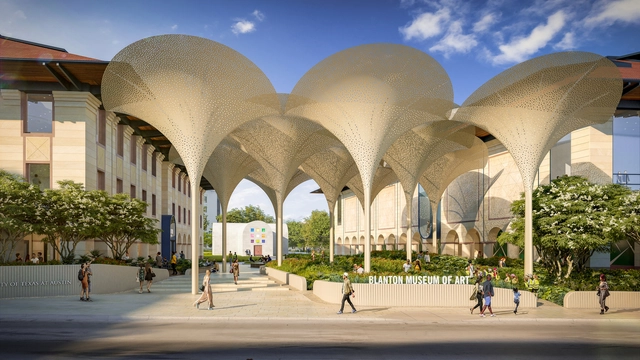
Transforming the typical artistic experience, Snøhetta proposed a design to renovate the Blanton Museum of Art at The University of Texas at Austin. The comprehensive grounds remodeling seeks to “unify and revitalize the museum campus, […] through architectural and landscape improvements”. Construction is scheduled to begin in early 2021 and conclude by late 2022.
.jpg?1609838112&format=webp&width=640&height=580)
As reported in The Times of India, the board of governors for the Indian Institute of Management, in Ahmedabad, India has canceled the proposal to demolish Louis Kahn’s buildings on campus and replacing them with new structures, after a worldwide pushback from the international architecture community.
.jpg?1609149520&format=webp&width=640&height=580)
The board of the Indian Institute of Management in Ahmedabad (IIMA) has announced that the dormitories, built by Louis Kahn and part of the overall campus design, will be demolished and replaced. In fact, the administration plans to “bring down at least 14 of 18 dorms which were built between 1968 and 1978" for showing "problems of leakages from the roof, dampness in walls, leakages in toilet walls, slabs, etc.”, according to the Indian Express.
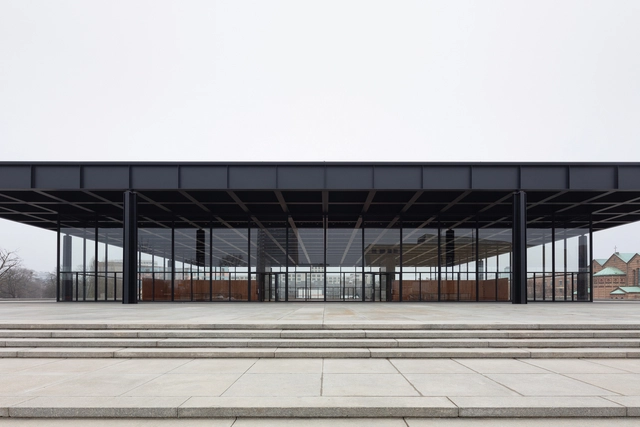
Renovation works of Mies van der Rohe’s Neue Nationalgalerie in Berlin are in their final phase. Overseen by David Chipperfield Architects, the restoration was much needed after almost 40 years. Set to reopen in the summer of 2021, the concrete, steel, and glass landmark, dedicated to culture and the fine arts, is in fact Mies van der Rohe’s only work in Germany after World War II.










.jpg?1613644756 "Courtesy of MVRDV")
.jpg?1613644713 "Courtesy of MVRDV")
.jpg?1613644686)


.jpg?1611093772 "© Laurian Ghinitoiu")
.jpg?1611093604 "© Laurian Ghinitoiu")
.jpg?1611093961 "© Laurian Ghinitoiu")
.jpg?1611093888 "© Laurian Ghinitoiu")
.jpg?1611093603)


.jpg?1609149607 "Courtesy of Wikimedia Commons")
.jpg?1609149611 "© Laurian Ghinitoiu")
.jpg?1609149614 "© Laurian Ghinitoiu")
.jpg?1609149520)