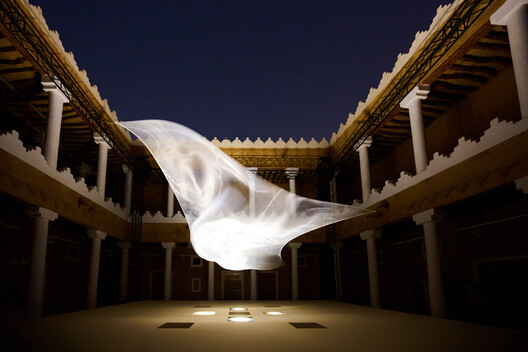
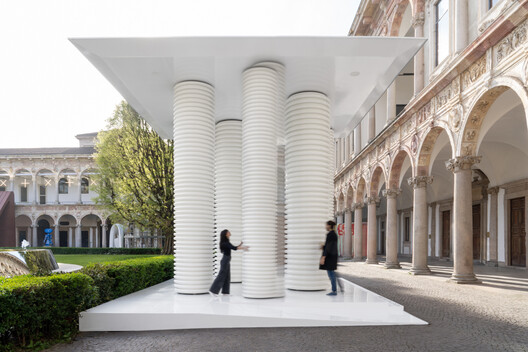
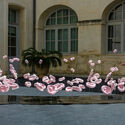
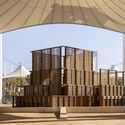
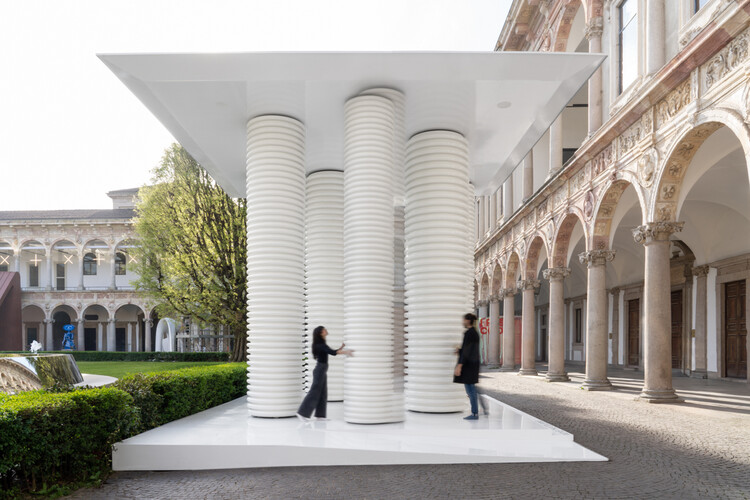
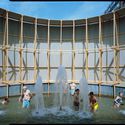
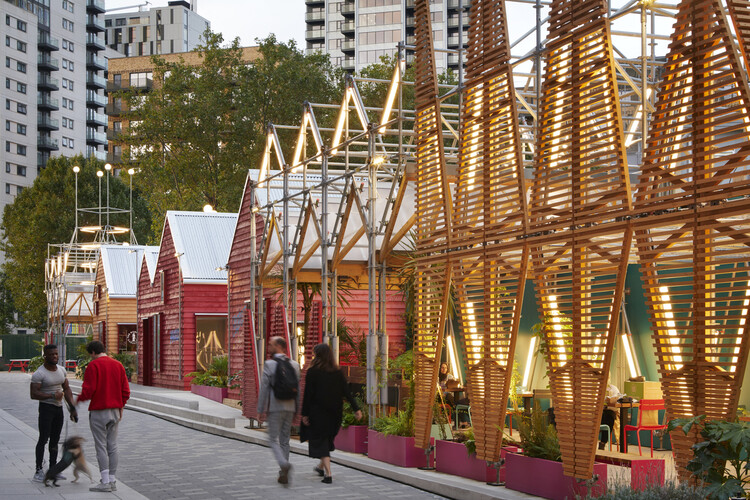
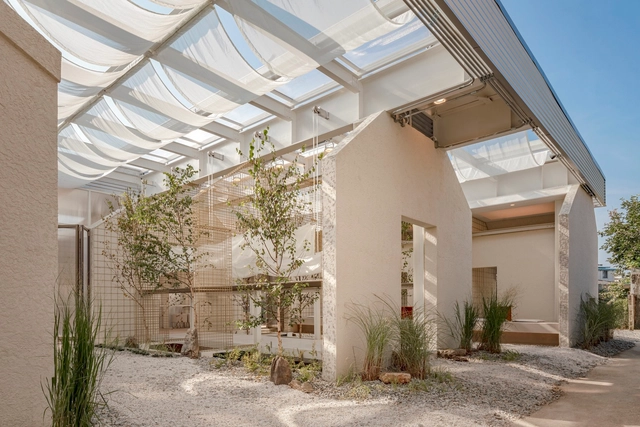
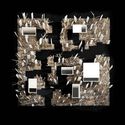
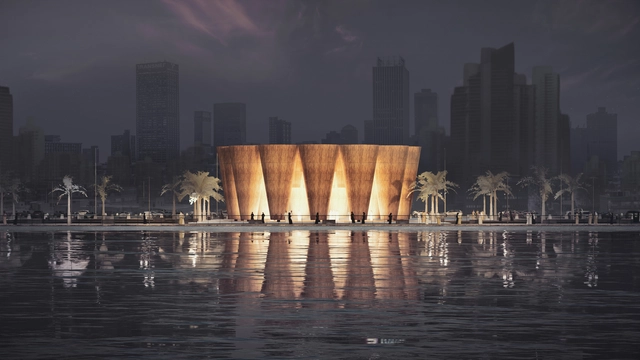
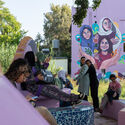
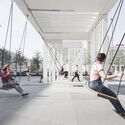
Liminal Air Space-Time by Shinji Ohmaki, Noor Riyadh 2025. Image Courtesy of Noor Riyadh
Noor Riyadh 2025 brought large-scale light installations to public sites across the Saudi Arabian capital, temporarily transforming transit hubs, historic districts, and significant landmarks into illuminated urban environments. From November 20 to December 6, 2025, Riyadh became a citywide gallery of light, motion, and shifting perception. The festival's fifth edition featured 60 artworks by 59 artists from 24 countries, including more than 35 new commissions, responding to the theme "In the Blink of an Eye." Through light as both medium and concept, the installations reinterpreted the capital's rapidly evolving architectural landscape and reflected how perception shifts in spaces shaped by heritage and ambitious urban development.
This past year marked a period of introspection for architecture. As 2025 unfolded, the discipline, confronted with evolving environmental and social realities, entered a broader turning point in how it understands its role and how users engage with it. Throughout the year, exhibitions shifted focus away from buildings as isolated objects toward a broader understanding of relationships between ecology, equity, everyday life, and collective imaginaries. Across institutions and cities, they operated less as showcases and more as discursive platforms: places where architecture was not only presented, but also imagined, questioned, and collectively redefined.
While exhibitions have long functioned as sites of discourse, politics, and community, this role became more explicit in 2025. As Carlo Ratti noted in an ArchDaily interview during the pre-opening of the Venice Architecture Biennale 2025, exhibitions today can "hybridize the way that people come together," an ambition that echoed across cities and institutions as exhibitions evolved into spaces for debate, experimentation, and collective reflection. Exhibitions are places where architects and designers meet, where conversations unfold openly with the public, and where ideas emerge through spontaneous exchanges among passersby. Exhibitions became spaces where architectural discourse extended beyond professional circles, opening conversations to broader publics through everyday encounters, shared experiences, and informal exchanges.
Specificity has re-emerged as a central language in architectural discourse. In an increasingly globalized field, where projects often follow familiar models regardless of context, architects are now turning toward approaches rooted in the particularities of each site. This renewed attention to context reflects broader social, climatic, and political pressures: cities are facing extreme heat, ecological challenges, shifting demographics, and new forms of collective life that demand responses grounded in their immediate conditions.
Situated architecture describes this shift. It refers to design approaches in which form, program, and materiality emerge from the specific environment that produces them: its microclimates, cultural structures, and everyday rituals. Rather than beginning with universal templates, these practices start with observation, prototyping, and direct engagement with local dynamics. This logic is visible in the climatic and material experiments of TAKK in Spain, such as Portable Garden and 10k House, which operate as lightweight prototypes tuned to thermal and ecological gradients; in Studio Ossidiana's Art Pavilion M, shaped by layered soils and ecological cycles in the Netherlands; in Izaskun Chinchilla's reinterpretations of vernacular objects and her later experiments with 100 Sillas and 3 Salones Urbanos; in the narrative-driven domestic spaces explored by Common Accounts; and in Raumlabor's urban interventions that respond directly to the specificities of post-industrial Berlin.
What does optimism feel like in cities that can no longer rely on perfection as their ultimate ambition? Across the world, urban environments bear the weight of overlapping pressures: climate volatility, spatial inequality, political fragmentation, public distrust, and chronic infrastructural disinvestment. These realities render the idea of an ideal city increasingly detached from lived experience. Yet the hope for building better systems persists. While utopian visions may seem like an escape from the growing complexities of the modern world, the greater challenge for contemporary city-making is to confront those complexities rather than avoid them.
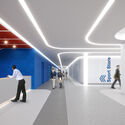
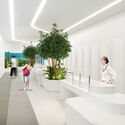
In public restroom design, innovation goes far beyond aesthetics—it transforms the entire user experience. One of the most exciting trends today is integrating all functional elements—hand dryers, faucets, soap dispensers, and paper dispensers—behind the mirror.
This approach creates a cleaner, minimalist look while optimizing space and enhancing hygiene. All devices remain fully functional but hidden: users simply place their hands where indicated on the mirror, and the equipment activates automatically—no physical contact required.
Urban renewal is inherently fraught—financially complex, politically exposed, stakeholder-dense, and almost guaranteed to leave someone dissatisfied. Precisely for these reasons, many cities default to inertia rather than risk the upheaval that comes with reworking entrenched urban fabrics, their residences, and their dynamics; once the "sleeping bear" is prodded, unexpected complications tend to multiply.
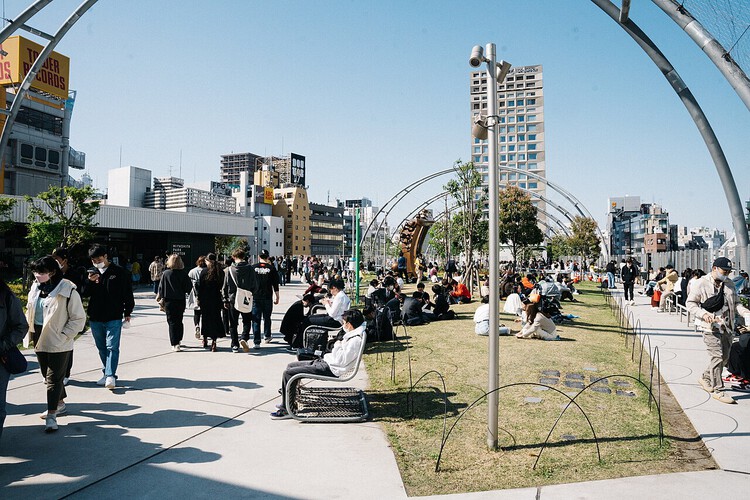
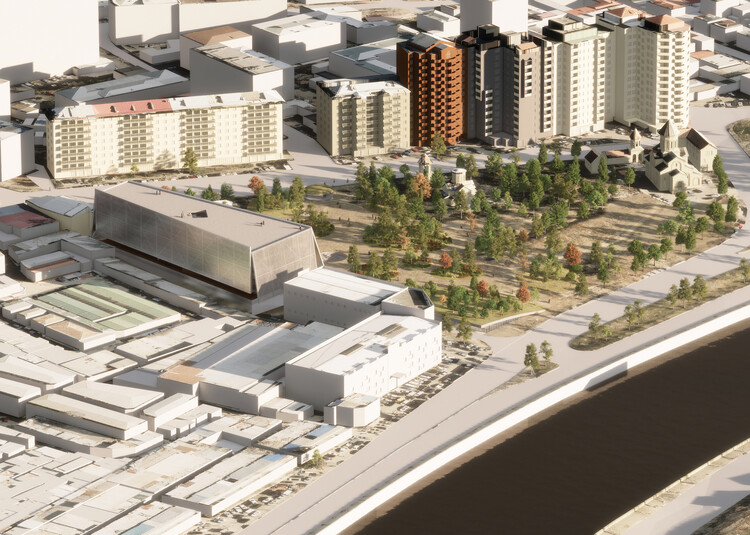
Miyashita Park (Miyashita Kōen), located in Shibuya, Tokyo, crystallizes this dilemma. Its current form—a layered, mixed-use complex balancing commercial activity with a publicly accessible park—emerged from years of negotiation, critique, and recalibration. The result is a distinctive example of a public-private partnership that seeks to align urban amenity, everyday leisure, and economic viability, producing a new piece of city that hosts public life while underwriting its own upkeep.
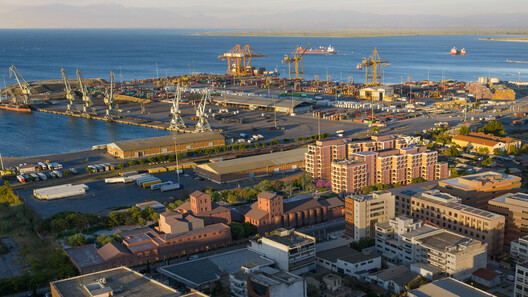
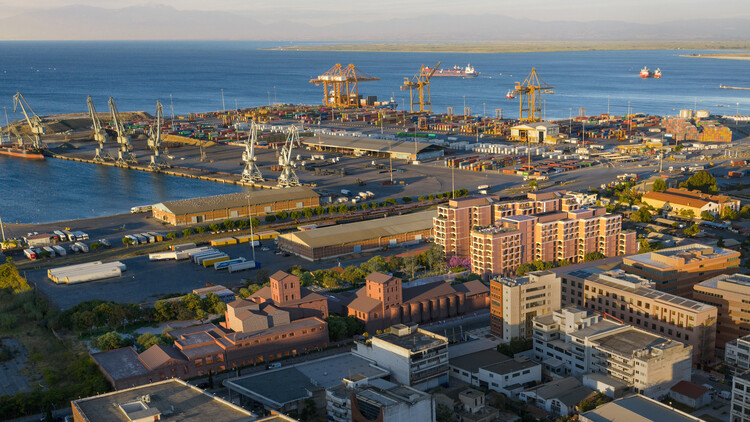
Foster + Partners has developed a master plan for the redevelopment of the former FIX brewery in Thessaloniki, Greece. The proposal, commissioned by Dimand, outlines a mixed-use district that integrates public space, housing, hospitality, and cultural programs. Positioned along the western seafront and within walking distance of the city center, the site serves as a key point of connection between emerging neighborhoods and the waterfront. The project builds on the industrial history of the brewery complex while introducing new spatial configurations intended to support broader urban regeneration efforts across Thessaloniki.
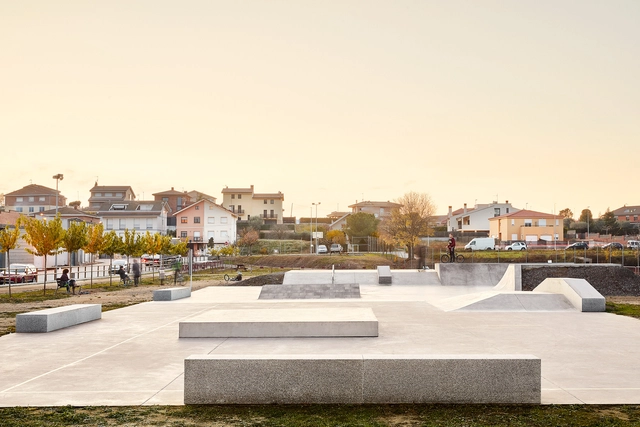
Created by California surfers who wanted to bring the lines of surfing onto asphalt, skateboarding soon outgrew its role as a simple alternative for flat days. It established itself as a practice that reads the city through a different logic, reinterpreting steps, handrails, walls, and interstitial spaces as possible lines, challenges, and opportunities. Over time, it evolved into a global urban culture, a way of inhabiting and transforming public space through movement. What was once marginal has become a catalyst for urban activation, community building, and new uses for overlooked spaces. At its core, skateboarding reveals how many cities coexist within the same city, depending on who moves through them and how each person is able to reinterpret their surroundings.
While adaptive reuse has been increasingly acknowledged as a vital architectural strategy worldwide, its discourse and implementation in Asia are still expanding—driven by growing ecological awareness and a shifting understanding of architectural knowledge. Rather than accelerating a developmentalist model centered on demolition and new construction, architects today are confronted with a different approach to the built environment: treating the existing structure as a resource—an archive of materials, spatial organizations, and informal histories.
Adaptive reuse is often associated with the preservation of historic buildings and culturally significant heritage. Yet the vast field of seemingly 'less-valued' structures—abandoned houses, standard yet old dwellings, non-conforming office buildings, and overlooked urban voids—has become ground for experimentation. These sites challenge architects and designers to reconsider prevailing standards of efficiency and market-driven development, and to imagine spatial and ecological practices that avoid the continual loss of embodied material and cultural knowledge inherent in constant rebuilding.
Public spaces remain some of the most dynamic sites for unbuilt architectural experimentation, revealing how cities and architects can imagine accessibility, gathering, and civic identity. In this curated Unbuilt edition, submitted by the ArchDaily community, the selected proposals examine parks, pedestrian corridors, cultural landscapes, and open-access urban environments that invite people to meet, move, rest, and participate in collective life. Rather than treating public space as leftover terrain, these projects position it as essential infrastructure—shaping urban health, memory, and social interaction.
Cities bring together the best and worst of the human condition. They concentrate opportunities for work, social networks, and cultural production, but they also expose deep social inequalities. Among the many forms of urban exclusion are limited access to transportation, housing, leisure, or safety issues. One form that is rarely discussed is thermal inequality. In lower-income neighborhoods, where there are fewer trees, parks, and permeable surfaces, heat accumulates and thermal discomfort dominates, resulting in higher energy consumption and health risks. As concern about the climate crisis grows, this discussion becomes more urgent: extreme heat is no longer just a climatic phenomenon but also a spatial expression of inequality.
This international competition invited architects, artists, and designers to create visionary public sculptures that reflect Saudi Arabia's rich cultural heritage and forward-looking ambitions. As the Kingdom undergoes a profound transformation under Vision 2030, this initiative—organized in partnership with the Mujassam Watan Initiative—called for works that engage with both history and future, tradition and innovation, within the public realm.
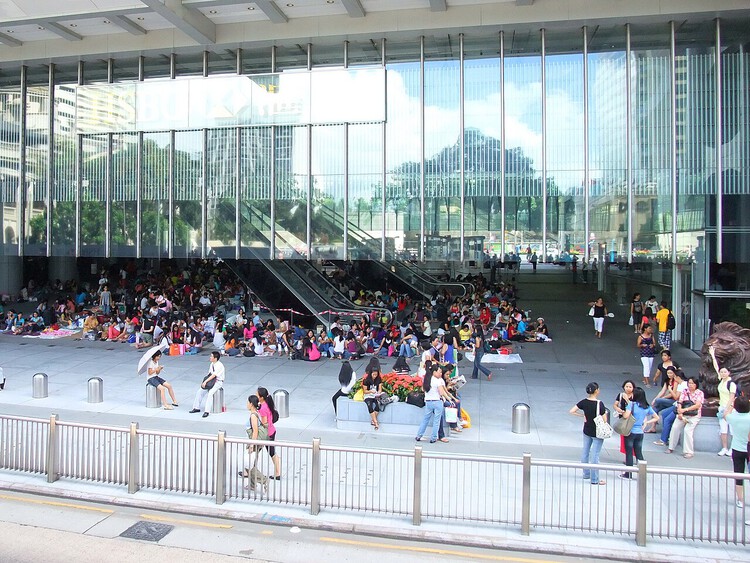
Domestic workers in Hong Kong and Singapore are the city's quiet infrastructure. In Hong Kong alone, there are a total of roughly 300,000 domestic workers, serving a portion of the approximate 2.7 million households. Their care labor sustains dual-income family routines: childcare, eldercare, cooking, cleaning, and the everyday logistics that make professional life possible. Yet the people who hold this balance together remain largely invisible in policy—and, crucially, in space.
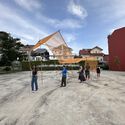
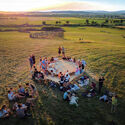
On Sundays in Hong Kong's financial district, that invisibility becomes visible. Elevated walkways and podium forecourts—underused on weekends—turn into ad-hoc commons. With cardboard mats, small tents, towels, food and water, and a music speaker or two, domestic workers assemble places to sit, rest, and socialize. These improvised rooms in the city are often their only chance to exercise spatial agency—something they rarely have in the homes they maintain or in formal public infrastructure. In the absence of sanctioned, serviced places for rest, quieter bridges and passages become practical stand-ins.
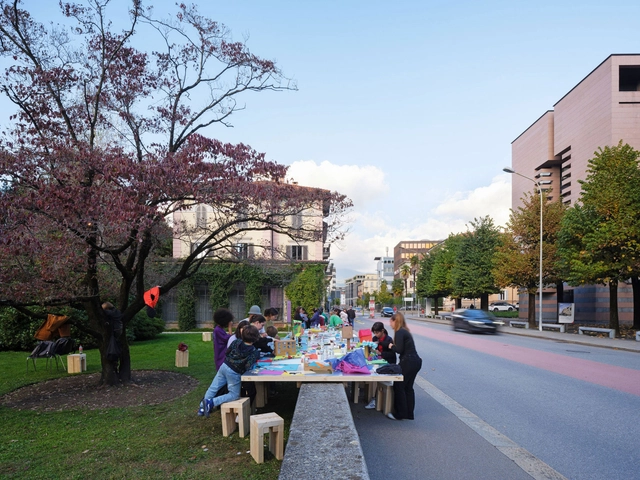
The habit of sitting at the table and sharing a specific moment with other people has been present for centuries in the most diverse cultures. The Greek Symposium, Roman Convivium, Medieval Feasts and Banquets, and Parisian Salons are just a few examples of how this custom was historically built and has been relevant in social and political negotiations, intellectual discussions, and philosophical debates.
Commensality often serves as a ritual for bonding, negotiation, and celebrating important events. In many Spanish-speaking cultures, the stretch of time after the meal when the entire family stays seated and talks is so present that there is a word for it: sobremesa — literally translated as "upon the table" (though in Spanish it more accurately means "dessert" or "after-meal conversation"). But, despite often being associated with sharing a meal, the table can be considered a flexible platform open to many possibilities for appropriation and interaction.
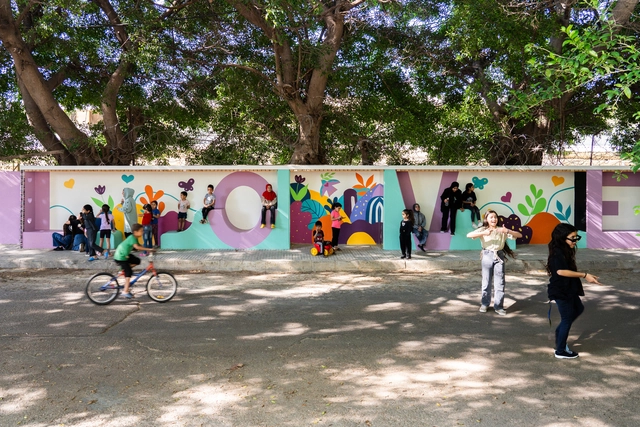
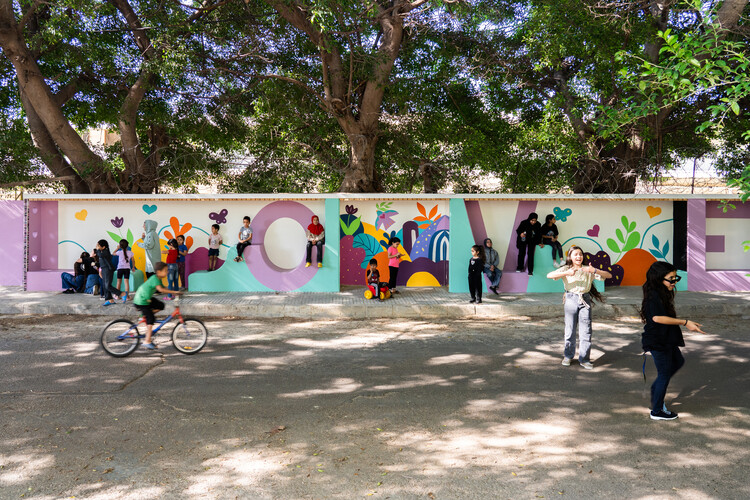
Adolescent Girls Co-Design and Build their Public Spaces in Beirut June 2024. Image Courtesy of CatalyticAction
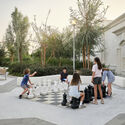
Make Space for Girls (MSFG) is a London-based charity that campaigns for public spaces and parks in the United Kingdom to be more inclusive of teenage girls. The organization conducts research on how public spaces are used and designed, raises awareness about perceived inequalities in their use, and collaborates with public and private institutions to promote the representation of teenage girls in the planning and design of outdoor environments. Their research indicates that their exclusion from the design of parks and public spaces often leaves them without places where they feel welcomed or valued, and that parks and public spaces for older children and teenagers are currently designed for the default male. From 8 to 15 October, the organization is running a fundraising campaign to support the implementation of its new three-year strategy aimed at promoting more inclusive public spaces.
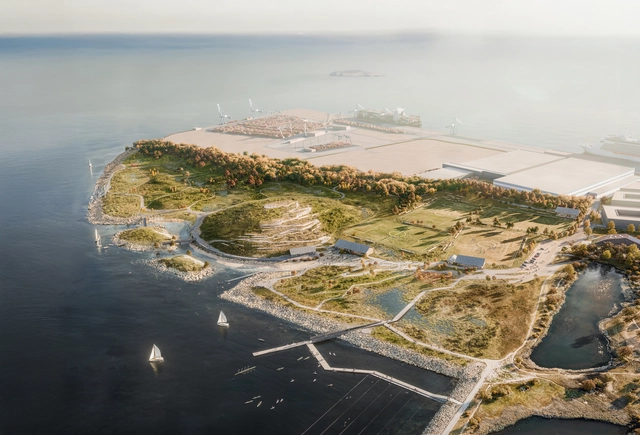
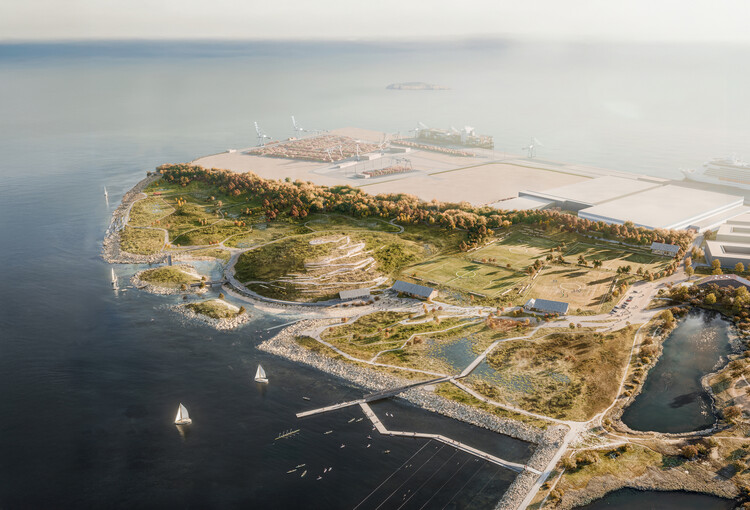
The City of Copenhagen has announced Team SLA as the winner of a design competition to create a new, large-scale urban park in Nordhavn. The project, titled "Nordør – New Park", was designed by Team SLA and By & Havn, and envisions a 30-hectare (75-acre) coastal nature park. Led by the design studio SLA, Team SLA includes VITA Engineers, Urban Agency, Aaen Engineering, Pihlmann Architects, Buro Happold, Kerstin Bergendal, Holdbart, and Aiming Spaces.
A "nature park" is a protected area where conservation is balanced with sustainable development and human use. It often encompasses human-shaped cultural landscapes and integrates strategies for regional development, supporting local communities and promoting the conscious use of the land. This framework allows the proposal to be understood as a platform for recreation, eco-tourism, environmental education, research, and regional growth.
As cities and landscapes evolve, architecture is increasingly asked to support well-being,performance, and collective experience. From stadiums that honor deep cultural memory to intimate wellness spaces that foster restoration and connection, sports and wellness typologies are expanding beyond mere functionality. They create environments where movement and health intersect with design quality, sustainability, and social meaning. Today, these spaces range from elite training grounds and recreational clubs to contemplative retreats and inclusive public amenities, shaping how communities gather, heal, and celebrate shared identity.
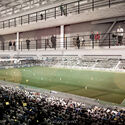
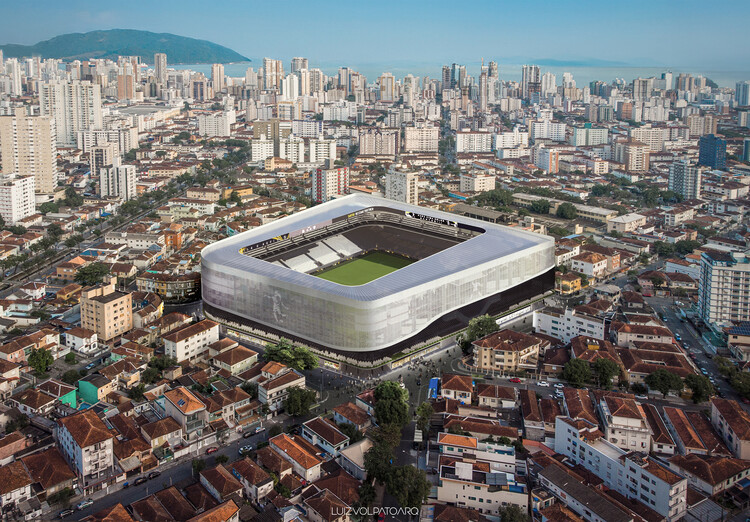
This selection of unbuilt proposals submitted by the ArchDaily community illustrates that diversity. In São Paulo, Luiz Volpato Arquitetura reinvents the historic Santos Futebol Clube stadium with a geometry that preserves fans' memory while introducing new commercial and social uses. In Hanoi, Van Aelst I Nguyen and Partners bring filtered light and fresh air to a dense urban sports complex. In Dubai, RSP proposes Haven, a residential development anchored in holistic wellness and nature-driven experiences, while India's Tropic Responses imagines Aira Club as a climate-conscious leisure hub. High in the Himalayas, Gadasu + Partners carve a meditative spa into mountain stone, and in Isfahan, Arsh4d Studio rethinks segregated women's parks to create inclusive, future-oriented civic space.
The architect's role has traditionally been relatively well-defined: design a building, direct the project, coordinate logistics, and guide construction through to completion. As specialised fields have proliferated, together with a rapidly changing social economy, the practice of architecture has diversified, opening multiple paths for how architects can contribute to society.
Since the 1980s, one of the most consistent shifts may have been the separation between the "design architect" and the "architect of record." Where a single office once carried a project from concept to completion, internationalisation—alongside cross-border work, licensure regimes, procurement models, and liability structures—has encouraged a split. Design teams increasingly set the conceptual and schematic direction, then hand over the design development to local record architects for technical detailing, approvals, and site execution. The model has clear advantages—sharper expertise, efficiency, and often profitability (or services offered at reduced fees)—but it also segments the profession and can distance authorship from delivery.
What, then, might the next shift be, and what new synergies could redefine the architect's role? How should architects adapt to the changing professional climate? One promising trajectory is a turn from singular, permanent objects toward ongoing placemaking—iterative, context-specific programmes that prototype, test, and refine spatial ideas in public. Rather than producing one large, iconic work that fixes a site for decades, this model privileges cycles of making, use, evaluation, and adjustment at the community scale.