

Noor Riyadh 2025 brought large-scale light installations to public sites across the Saudi Arabian capital, temporarily transforming transit hubs, historic districts, and significant landmarks into illuminated urban environments. From November 20 to December 6, 2025, Riyadh became a citywide gallery of light, motion, and shifting perception. The festival's fifth edition featured 60 artworks by 59 artists from 24 countries, including more than 35 new commissions, responding to the theme "In the Blink of an Eye." Through light as both medium and concept, the installations reinterpreted the capital's rapidly evolving architectural landscape and reflected how perception shifts in spaces shaped by heritage and ambitious urban development.
This edition continued the vision of Riyadh Art, the public art initiative launched by the Royal Commission for Riyadh City in 2019 as part of Vision 2030. The program embeds creativity within everyday life by placing artworks in parks, squares, transit hubs, and public areas, supporting a cultural transformation that is reshaping the city socially, spatially, and economically. Noor Riyadh demonstrates this mission at an urban scale, turning the city itself into a living canvas for several weeks each year. Since its launch, Riyadh Art has presented over 500 artworks and welcomed more than 6 million visitors, establishing the capital as a hub for contemporary art and public engagement.
The 2025 theme, "In the Blink of an Eye," reflects the speed at which Riyadh is evolving. The curators shaped a program that bridges the city's historic core with its emerging infrastructure, including the new metro network, reflecting a city that is always in motion. Many installations invited visitors to slow down and focus on subtle shifts in light, rhythm, and atmosphere. Light functioned not only as material but also as a tool to explore time, memory, and the relationship between built form and perception. As Mami Kataoka, Curatorial Advisory Lead, noted:
Light is both a medium and a metaphor for transformation. In the Blink of an Eye reveals how quickly perception can shift—offering a moment to pause within the momentum of change and see beauty in what is constantly evolving.
Noor Riyadh unfolded across six locations, each offering distinct relationships between architecture, public space, and light. Together, they formed an urban narrative linking historic districts with new landmarks:
Qasr Al Hokm
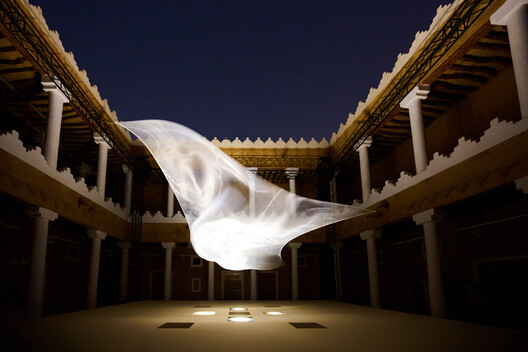
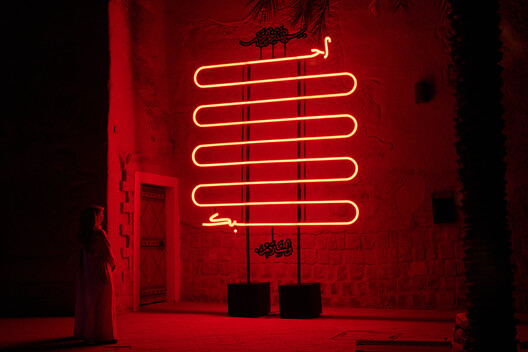
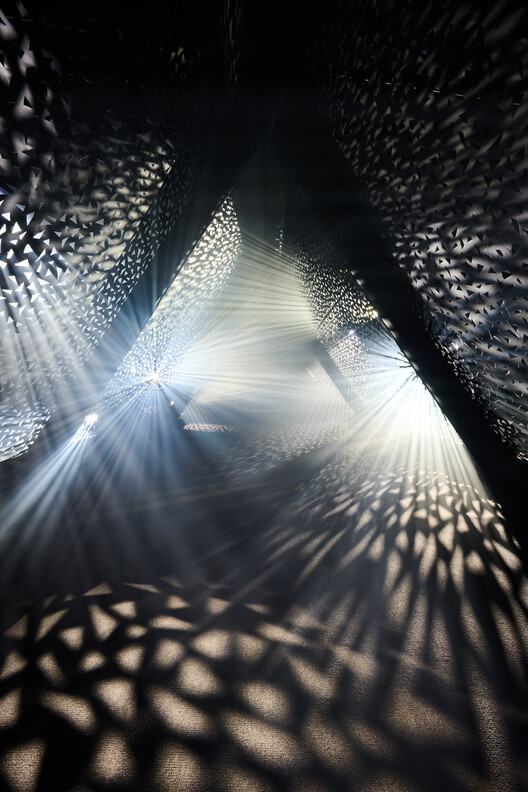
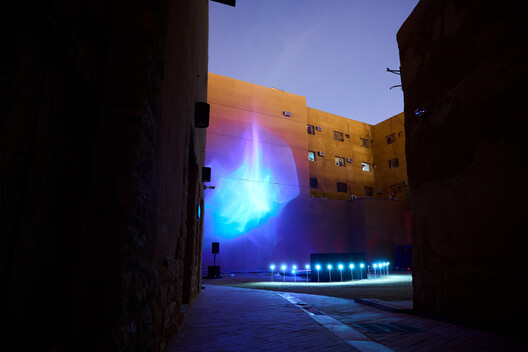
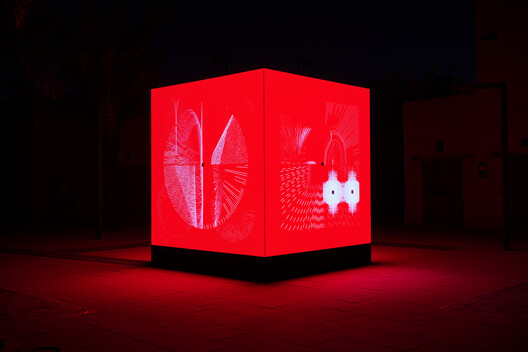
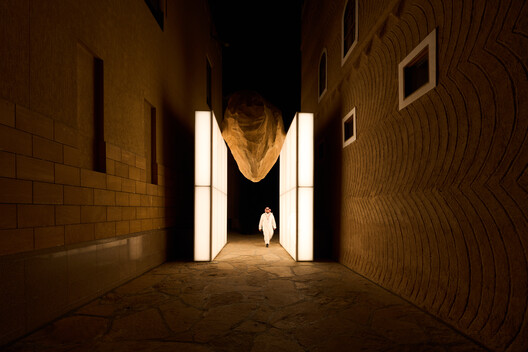
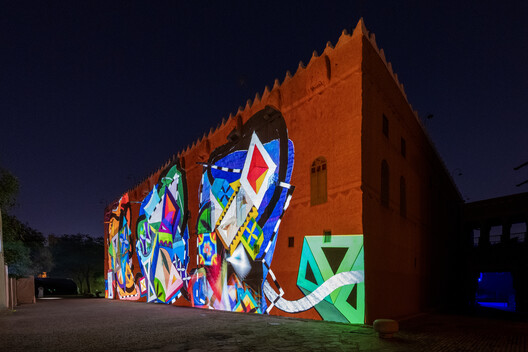
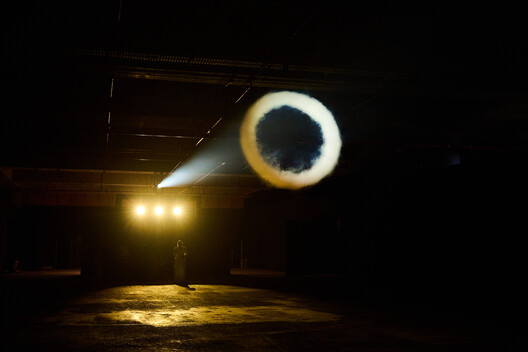
In Qasr Al Hokm, historic mud-brick courtyards and narrow alleys became settings for installations by James Clar, Abdelrahman Elshahed, Encor Studio, Otolab, and Iregular. Clar's When the Sky Reaches the Ground captured a lightning strike in suspended form, creating a sharp visual counterpoint to the district's textured surfaces. Encor Studio's Sliced introduced mist, sound, and perforated textiles that dissolved spatial boundaries, while other works engaged the architecture through rhythm, shadow, and atmospheric shifts, transforming heritage spaces into contemporary, immersive environments.
King Abdulaziz Historical Center
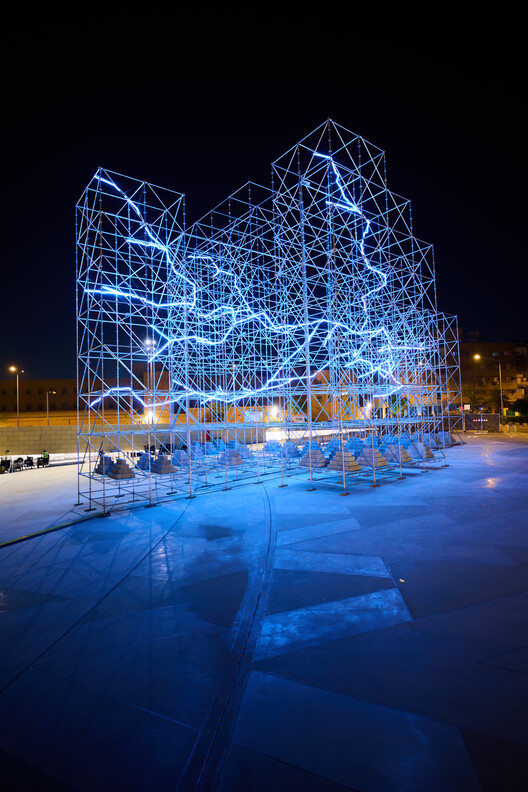
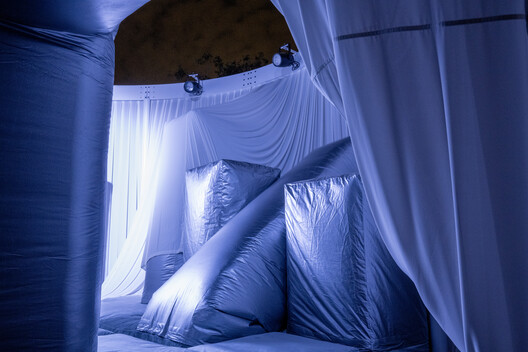
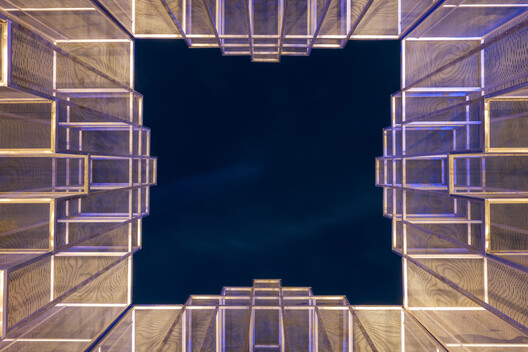
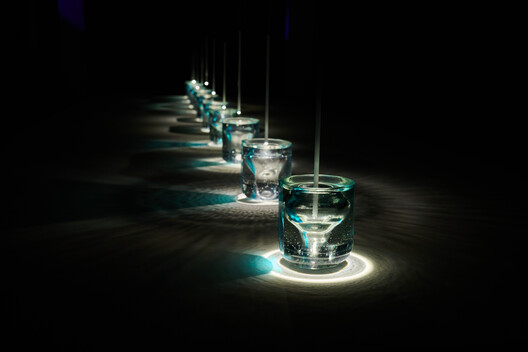
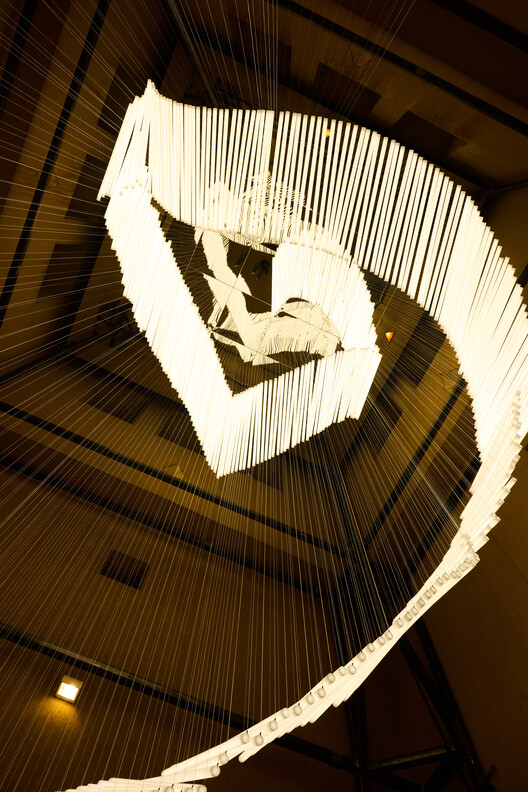
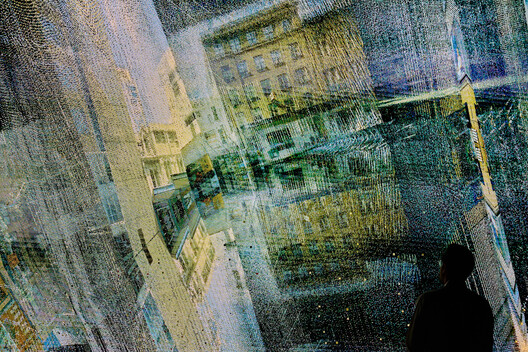
At the King Abdulaziz Historical Center, artists Shinji Ohmaki, Traumnovelle, Nebras Aljoaib, Alex Schweder, Khalid Zahid, Mohammed Farea, atelier oï + WonderGlass, and Wang Yuyang explored how material, atmosphere, and memory shape perception. Ohmaki's Liminal Air Space-Time filled a hall with thousands of fine threads that moved subtly with air flow, creating a spatial volume defined by continuous motion and drifting waves. Aljoaib suspended a boulder between illuminated planes. Schweder's inflatable structures expanded and contracted rhythmically, and Wang's work translated the fall of a feather into a lighting sequence. Together, these installations reconsidered how architectural space responds to contrast, movement, and time.
KAFD Metro Station
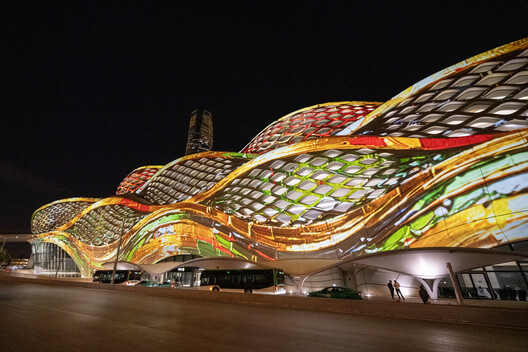
For the King Abdullah Financial District (KAFD) Metro Station, designed by Zaha Hadid, Vali Chincișan, transformed the facade with The Vision Grid, a projection of shifting black-and-white patterns that periodically burst into color. Synchronized with an electronic score drawn from Saudi rhythmic motifs, the lattice appeared to expand and contract, giving the station's surface the impression of momentarily slipping into motion before returning to structure.
STC Metro Station
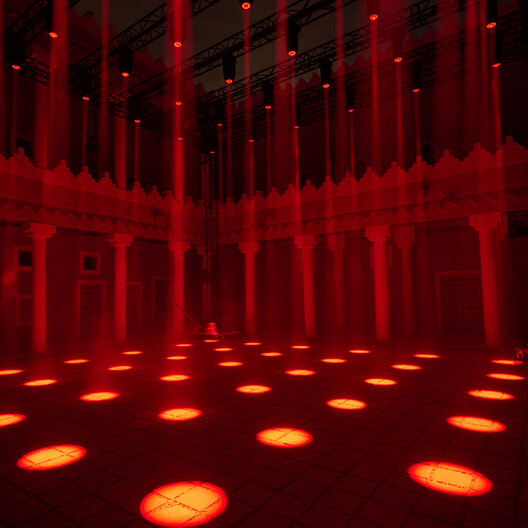
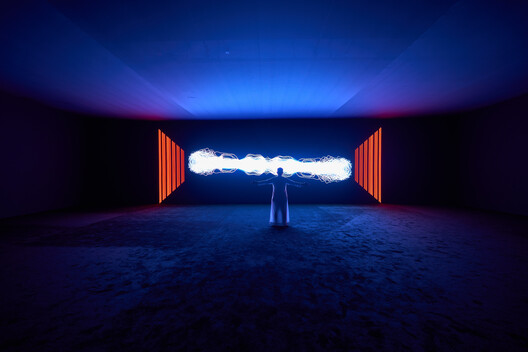
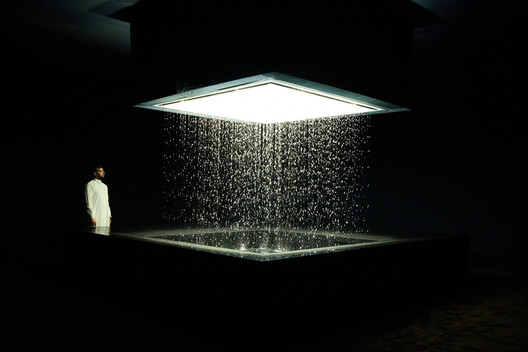
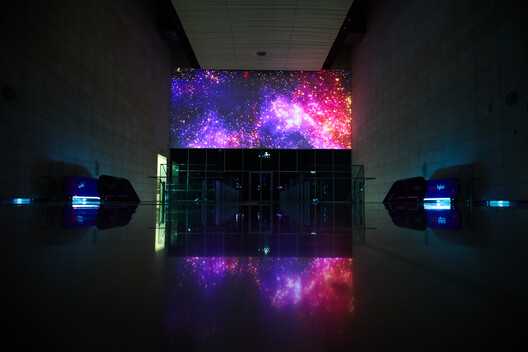
At the new STC Metro Station, works by Kurt Hentschläger, Shiro Takatani (Dumb Type), Roman Hill, Guillaume Cousin, Marnix De Nijs, and Christophe Berthonnneau transformed the station into a sequence of sensory environments. Hentschläger's Flux relied on darkness punctuated by controlled bursts of light to explore the psychology of perception. Takatani's Still for the 3D Water Matrix arranged water droplets into programmable, illuminated formations that generated volumetric shapes defined by the force of gravity. Each installation positioned the station not only as infrastructure but as an active site for atmospheric experimentation.
Al Faisaliah Tower
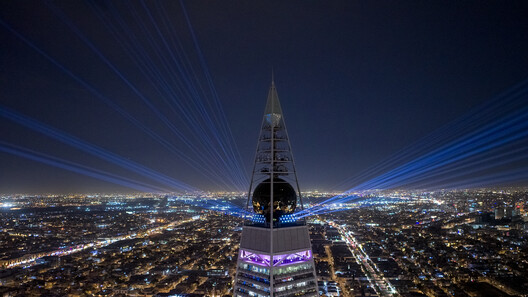
Across the city, László Zsolt Bordos activated the Al Faisaliah Tower, designed by Foster + Partners, with Astrum, projecting powerful beams of light aligned to celestial points, turning the tower into a visible landmark over a wide radius. Functioning as a planetary light compass, the installation invited viewers to reconnect to the Universe.
JAX District
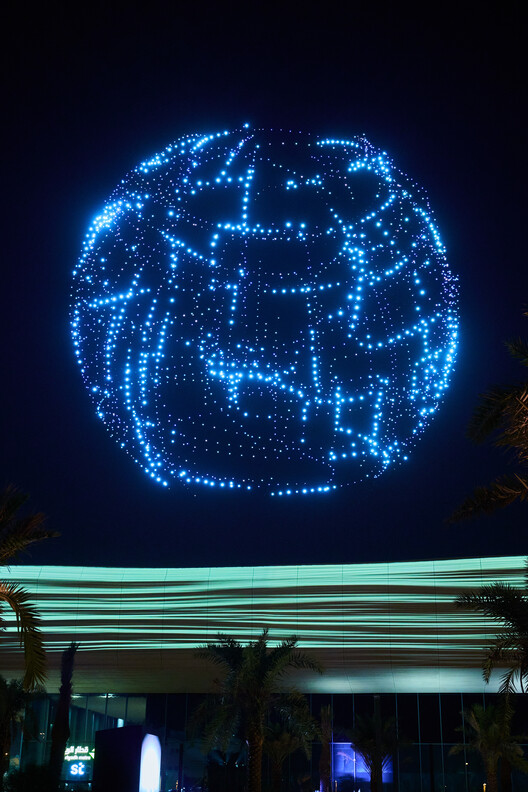
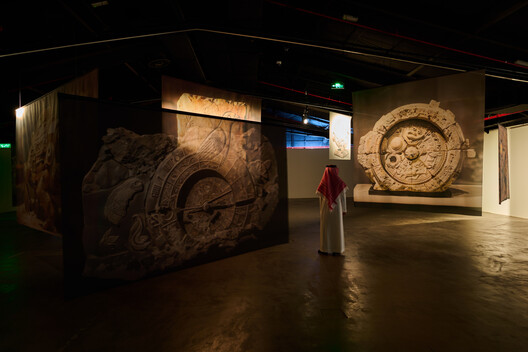
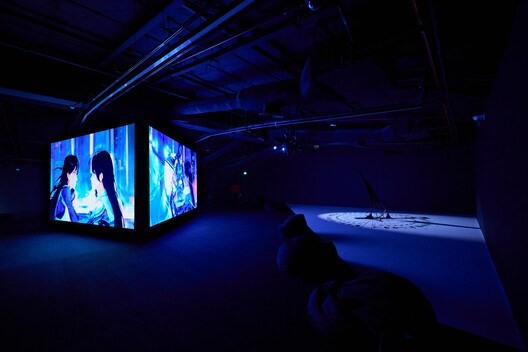
In the JAX District, Ayoung Kim presented a trio of works examining the gig economy through layered narratives of labor, digital routing, and accelerated time from her Delivery Dancer series: Delivery Dancer Simulation, Delivery Dancer's Sphere, and Delivery Dancer's Arc, Inverse. These installations reinforced Jax's identity as a vibrant creative hub.
Across all six locations, Noor Riyadh 2025 reflected Riyadh Art's broader mission to integrate art into the city's urban fabric, creating shared moments of wonder and supporting the growth of the creative economy. This year's program broke four world records and won eight awards, including the LIT Entertainment Lighting Design Awards, Muse Creative Awards, Muse Design Awards, NY Architectural Design Awards, and the Titan Awards, honoring excellence in light art, holograms, projections, theater lighting, design innovation, and conceptual design. Through immersive light interventions, the festival invited residents and visitors to experience the city differently, honoring its past while looking ahead, and revealing the interplay between heritage, innovation, transformation, and imagination. For several weeks, Riyadh transformed its fast-moving pace into a stage for reflection, where light captured the city's momentum and offered new ways of seeing and inhabiting public space—in the blink of an eye.



