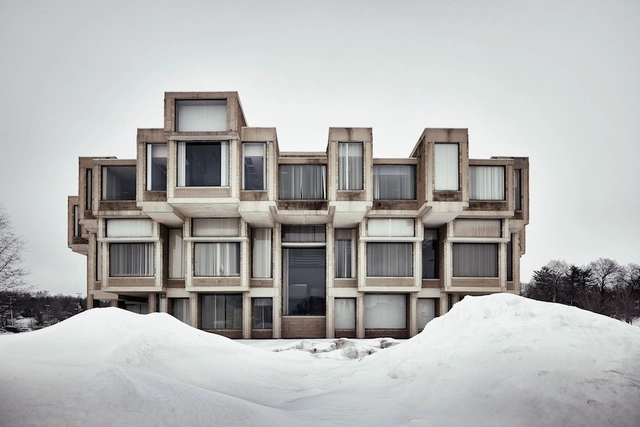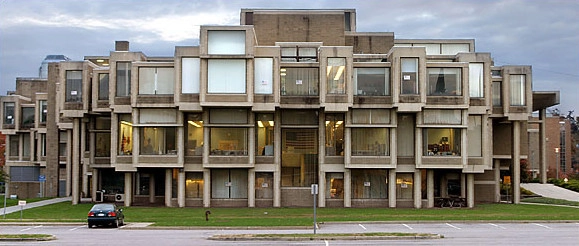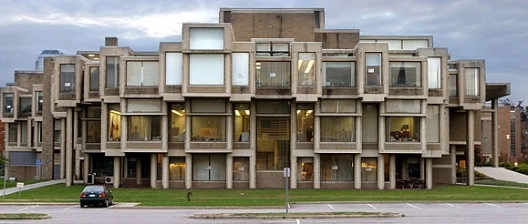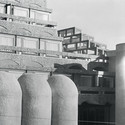
The latest in the debate over Paul Rudolph's controversial Orange County Government Center, Michael Kimmelman of the New York Times stresses the importance of its survival in "A Chance to Salvage a Master's Creation." The much debated plan for the now monumental structure would alter much of its existing character, whether by removal or replacement. Kimmelman argues that despite the criticism the Government Center has garnered from some, Orange County should reconsider architect Gene Kaufman's alternate proposal which would keep the structure intact and would restore it to its former glory.
120 HOURS' 2014 Winner: Architecture / Antariksh Tandon, Jennifer Tu Anh Phan (click to learn more). Image Courtesy of 120 HOURS
This year's 120 HOURS student architecture competition is set to run from February 9th through the 14th. The international competition is open to any current Architecture student, anywhere in the world. There is no fee to enter, and you (and your team of up to three) can do so by visiting the 120 HOURS website.
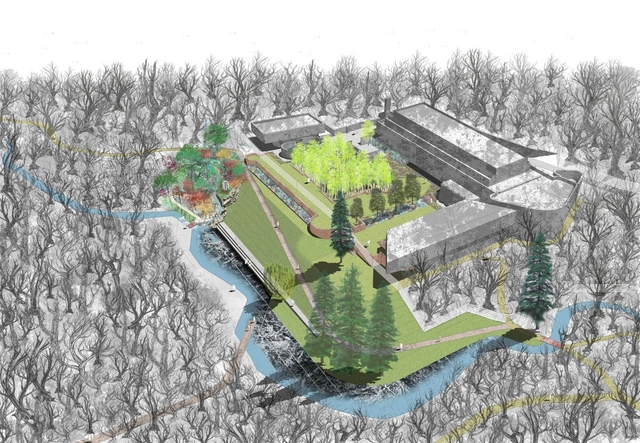
Landscaped overview (proposed). Image Courtesy of ERZ Landscape Architects
In an article for The Guardian, Rowan Moore explores the state and future of the Grade A listed BrutalistSeminary of St. Peter, "where the influence of Le Corbusier’s monastery of La Tourette combines with [...] Scottish inspirations." Although the building is often seen as wholly unique in the canon of religious buildings, it is still comprised of traditional elements - "cloister, chapel, refectory, cells - but rearranged over multiple levels in unexpected ways, alternately enclosing and opening up to its surroundings."
Visiting a city as large as Chicago can be overwhelming. For the architect, this is doubly true. The city is a treasure trove of architectural history, perhaps most notable as the birthplace of the skyscraper and the Chicago School. Names like Louis Sullivan, Frank Lloyd Wright, and Daniel Burnham are commonplace in Chicago, their buildings nestled amidst more modern works by the likes of SOM, Jelmut Jahn, and Studio Gang Architects.
Still more works are hidden away in obscure corners of the city, less well known but equally representative of the time and style in which they were built. In the interest of cataloging these buildings, and bringing attention to those that may not be on the typical city tour, blogger John Morris has created Chicago Architecture Data. A near-comprehensive survey of projects built before 1940 organized by neighborhood and architectural style, Chicago Architecture Data is a veritable history book for the architecture of the Windy City.
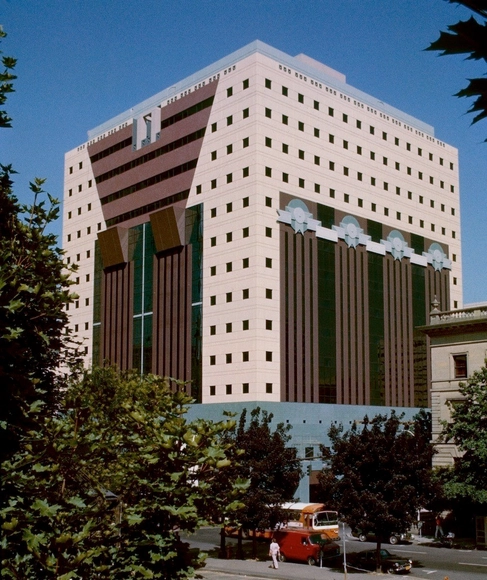
The Portland Building will be saved from the wrecking ball and undergo renovation, Michael Graves, the architect behind the postmodern masterpiece, told A/N blog. “It’s going to be saved,” Graves said to AN. “They told me… They said they are saving the building and not only that but we want you to sit on a committee for the redesign. I would imagine in the next year we’ll do something.”
In the UK, the commissioning of buildings is in crisis. The government and the industry as a whole is short-sighted, putting too much emphasis on function and too little thought into what makes for a long-lasting, and in that respect sustainable, building.
What is it that prompts a person to own a classic car or a family to continue to use old silver when both involve so much hard work? Why not buy a new car or use stainless steel cutlery? By convention these possessions have reached the end of their natural life, they require careful maintenance and in many cases they don’t function as well they might - they are obsolete. Their continued use requires a conscious commitment - time and money - on the part of their owner. But then, in time, this responsibility stops being a burden and instead becomes a cause for satisfaction and enjoyment.
It is a question that could be asked of those who commission and use buildings.
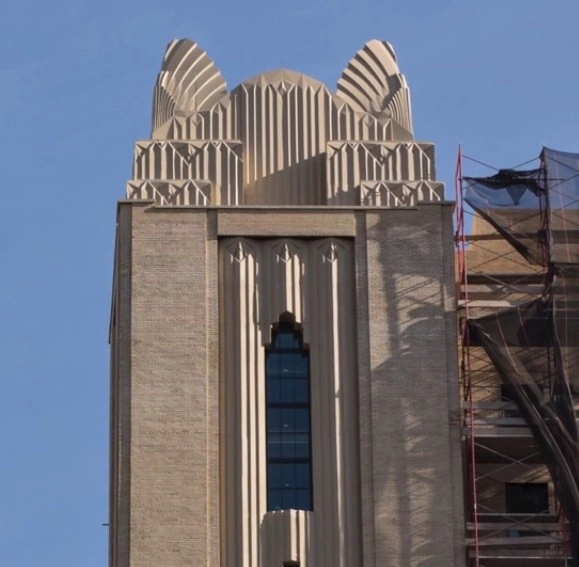
In some projects, preservation isn't just about retaining what's there, but also about putting back an element that has been forgotten to history (not always, though). This was the case at the Stella Tower in Manhattan, where as part of the building's recently completed condo conversion, JDS Development Groupand Property Markets Group, along with architects CetraRuddy have reinstated the dramatic Art Deco crown of Ralph Walker's 1927 design.
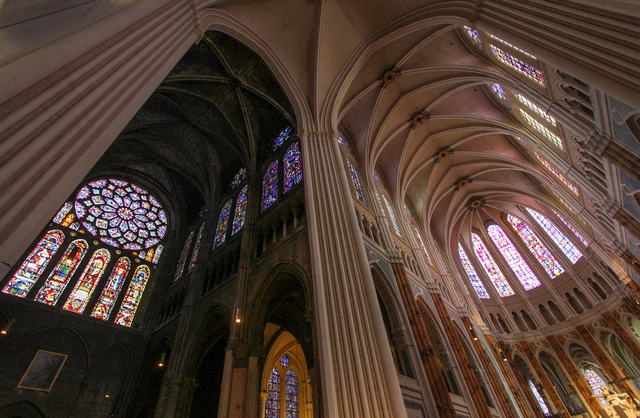
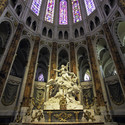
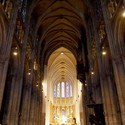
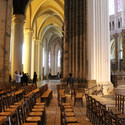
Throughout its eight-century-long history, Chartres Cathedral has been consistently cited as one of the world's greatest religious spaces, charming countless architects thanks to its dramatic interior combining brooding stone vaults and delicate stained glass windows. But this legacy is severely threatened, argues Martin Filler for the New York Review of Books, by a "foolhardy" restoration in its zeal for recapturing the past "makes authentic artifacts look fake."
As preparations for the 2020 Tokyo Olympics escalate, so do concerns regarding the preservation of the city’s heritage; and more specifically, according to Tomas Maier, Japan’s modernist architecture. The Bottega Venneta creative director recently embarked on an “urgent visit” to Japan in an effort to evaluate the city’s risk of loosing its modernist icons. With special consideration for the overlooked and threatened Hotel Okura, Maier believes that this Yoshiro Taniguchi-designed landmark is just one of many structures at risk of falling to "progress.”
Watch the video above and learn more about how you can help preserve the Hotel Okura, here.
London-based Avanti Architects, along with Glasgow-based ERZ Landscape Architects and NORD Architects, have released the first image of their design to revitalize one of Scotland’s modern masterpieces: St Peter’s seminary. Designed by Gillespie, Kidd & Coia in 1966, and built on the former Kilmahew estate, the Category-A listed Brutalist structure was voted as the best modern building in Scotland by readers of Prospect Magazine in 2005. However, the building has been abandoned for the past 25 years, leaving it dilapidated and facing numerous problems.
Public art charity NVA is leading a £7.3 million initiative to rehabilitate the building and its surrounding landscape to create an art, heritage and educational site. The designs include a performing arts venue with a 600-person capacity, informal indoor and outdoor teaching spaces across the 144 acre site and over 4 kilometres of woodland paths. In addition, the site will contain a heritage exhibition and a locally-led productive garden.
Architecture institutions and architects are outraged by the Norwegian Government plans to demolish a unique part of Norwegian and international architectural history. Called the Y-block for its Y-shaped plan, the building in the Government Quarter in the centre of the Norwegian capital of Oslo was designed by the Norwegian architect and pioneer inventor Erling Viksjø in the 1950s together with the “H-block” or Highrise (1959) and was completed in 1969. The building is internationally well known for the extraordinary craftsmanship of its sandblasted concrete and the famous Pablo Picasso murals, “The Fishermen” and “The Seagull”.
Rest stops are a disappearing sight in North America. Brought by tight highway budgets, and the increasing number of off-exit fast food outlets and gas stations, these roadside oases may soon become extinct. Photographer Ryann Ford wants to make sure they’re documented before this happens. Her project, “The Last Stop” is a series of photographs taken of unique rest stops across the nation. A Kickstarter campaign has been started to fund Ford’s work, and the ensuing publication of her photographs. Learn more, after the break!
The Science Secondary School in Kinkplatz, Vienna is the work of late Modernist architect Helmut Richter. Considered to be his most iconic and enduring work, Richter’s school is now faced with partial demolition to make way for a conversion of the building’s use and architects from around the world are making an effort to prevent that demolition from happening. Influential individuals, from Zaha Hadid to Bernard Tschumi, have signed a petition voicing their dissent and demanding that Richter’s legacy be protected. See the details, and sign the petition, after the break.
New York City is home to a plethora of Postmodernist designs — from the impressive Sony Tower to the diminuative Central Park Ballplayers' House — but most remain unprotected by traditional heritage registries. The New York City Landmarks Preservation Commission is at the threshold of its 50th anniversary but has yet to recognize the architectural successes of 1970 up to the most recent eligible year for landmarking, 1984. The commission has been unnecessarily slow to recognize Postmodernist structures in New York City, say Paul Makovsky and Michael Gotkin writing for Metropolis Magazine, who argue that the absence of historical recognition for Postmodernism has come at a high cost, citing the recladding of Takashimaya Building on Fifth Avenue as a "wake-up call" for the Commission.
Preservationists are in a race to document and preserve some of Yangon’s most admired cultural icons. Myanmar’s largest city, Yangon is experiencing an all to familiar story: rapid development taking precedence over preservation. As the National Geographic reports, “Hulking monoliths of concrete and blue-plated glass are replacing fine old residential and government buildings…Although much has already been lost, many architecturally or esthetically significant structures have hung on. The question now is how long they will last.” Read the complete story, here.
The 2014 World Monuments Fund/Knoll Modernism Prize has been awarded to the Finnish Committee for the restoration of Alvar Aalto’s seminal Viipuri Library in Vyborg, Russia. “Designed by Aalto and constructed between 1927 and 1935 in what was then the Finnish city of Viipuri,” stated WMF in a press release, “the library reflects the emergence of Aalto’s distinctive combination of organic form and materials with the principles of clear functionalist expression that was to become the hallmark of his architecture.”
A quote from Barry Bergdoll and more images, after the break.
From Gaudí-designed pavilions in Barcelona, Spain to the Tenyuji Temple in Ogatsu, Japan, nine "at-risk" historical monuments will receive funding for preservation works, thanks to a $1.5 million grant from American Express to the World Monuments Fund (WMF). The nine sites were all included on WMF’s 2014 Watch list, and include Pokfulam Village in Hong Kong (SAR), China; the churches of Saint Merri and Notre-Dame-de-Lorette in Paris, France; the Farnese Aviaries in Rome, Italy; Tenyuji Temple, in Ogatsu, Japan; Fundidora Park in Monterrey, Mexico; the Güell Pavilions in Barcelona, Spain; the House of Wonders in Stone Town, Zanzibar, Tanzania; Battersea Power Station in London, United Kingdom; and Sulgrave Manor in Sulgrave, United Kingdom.
This is the second portion of a $5 million, five-year grant from American Express to support WMF. "The longstanding support of American Express to the World Monuments Watch has resulted in preservation work at more than 150 sites in over 60 countries," said WMF President Bonnie Burnham in a press release. "The sites on the 2014 Watch that will receive support are extraordinary places whose preservation will benefit both local populations and visitors from around the world."
Read on after the break for a description of the sites.