We have talk a lot lately about Michael Graves, his Wounded Warrior Home Project and his thoughts on hospital room design, mentioning briefly about his initiative to create beautiful and functional furniture for hospitals. This video takes a closer look at the furniture Graves has designed for Capital Health, including discussions and reviews by healthcare professionals.
Michael Graves
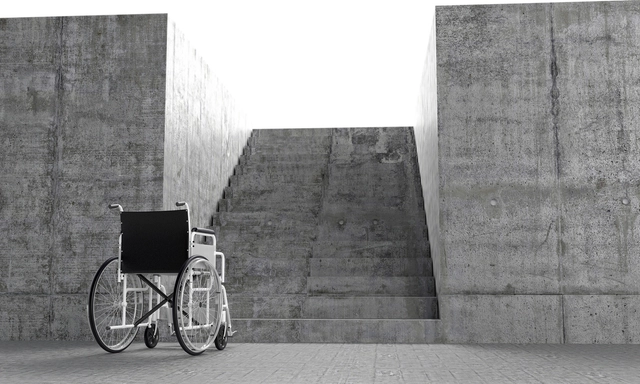
Architect Michael Graves, recipient of the 2012 Richard H. Driehaus Prize, recently gave a talk at TEDMED 2011 about his experience with a debilitating illness and his inspiration for designing improved healthcare designs that are much more suitable for individuals with limited mobility. His observations illustrated the need for a much more sensitive approach, “they didn’t make big mistakes…they just made the most frustrating mistakes you could ever imagine and made your cure more difficult. Your room should make it easier for the doctors and the aides and the patient. But instead it does just the opposite.” Armed with sketches of improved designs for furniture, rooms, and buildings, Graves collaborated with hospital furnishing company Stryker to release improved products for hospital rooms. Check out an introduction to his talk in the video above.
We found this great image from The All Nighter – a tumblr dedicated to students who want to share and prospective students who would like to know about the architecture studio experience. The ArchDaily team would like to wish you a wonderful holiday season and a happy new year!

Rendering of Scheme A © Michael Graves & Associates
As disabled U.S. military veterans return home, they often face the challenge of adapting to a new home and finding ways to cope with their surroundings. In order to better serve the returning soldiers, Clark Reality Capital commissioned Michael Graves & Associates (MGA) to design the “Wounded Warrior Home Project.” In conjunction with IDEO, Graves has designed a complete residential environment for physically impaired veterans. The single-family prototype homes provide everything from adjustable height kitchen counter-tops to easy-access rooms and closets, creating a comfortable environment for the physical and emotional needs of the soldiers.

Image provided by MICHAEL GRAVES & ASSOCIATES
Michael Graves has been chosen as the 2012 Driehaus Laureate, honoring his lifetime contributions to classical and traditional architecture in the modern world. The jury praised Graves for his “brilliant combinations of tradition and imagination” within his architecture and product design, stating that his deep understanding and respect of the past allows him to enrich the architectural process.
“Michael Graves has enhanced not just the architecture profession with his talent and scholarship, but everyday life itself through his inspiring attention to beautiful and accessible design,” says Michael Lykoudis, Driehaus Prize Jury Chair and Francis and Kathleen Rooney Dean of the University of Notre Dame School of Architecture. “The quality and scope of his work have enhanced how people work, live, and interact in public and private realms, making a profound impact on American life.”
View ArchDaily’s interview with Michael Graves here and continue reading for more information on the Driehaus Prize. read more »
This week, with the help of our readers, we visited Indianapolis for our Architecture City Guide. Our readers suggested a lot of really nice buildings and we greatly appreciate their help. Indianapolis’s numerous sporting events and conventions continually draw crowds to this industrious state capital throughout the year. It is only fitting that there is an architecture city guide for its various contemporary buildings. As a seat of government and industry, Indianapolis also boasts a nice variety of historic architecture that is worth seeing. Take a look at the list our readers help put together and add your favorites to the comment section below.
The Architecture City Guide: Indianapolis list and corresponding map after the break.
This week our Architecture City Guide is headed to Portland, Oregon. As one of the greenest cities in the world, it is a leader in sustainable architecture. Even though Portland is only the 29th most populous city in the U.S., it has the second highest number of LEED-accredited buildings. Only Chicago, a city more than four times the size of Portland, has more green buildings. Beyond its contemporary and green architecture it has a good variety of historic buildings that are worth visiting. We have put together a list of 12 contempory buildings to visit, but since we limited it to 12, it is far from complete. We would like you, our readers, to suggest other “must not miss” in the comment section after the break.
Architecture City Guide: Portland list and corresponding map after the break!
Welcome to the Architecture City Guide series. Here at ArchDaily we thought this series could especially be put to use during the upcoming holiday season. Many will be traveling to see family, having family visit, or taking a New Year’s vacation to a new city. Here is a small City Guide list, starting with Washington D.C.
We want to hear from you, share with us your City Guide list for buildings in Washington D.C. More cities to come, so be sure to check back.
Follow the break for our Washington D.C. list and a corresponding map!
Michael Graves, one of the most respected and original minds of post-modern architecture, was commissioned in 1990 to renovate and design an extension to the Denver Central Library. Known for his surreal and “entertainment” architecture; Graves’ implemented traditional post-modern motifs of abstracted classical forms, natural materials, and colors commonly found in past centuries.
Sitting adjacent to Daniel Libeskind’s Denver Art Museum, the Denver Central Library stands as the 8th largest library in the United States, as well as the largest library between Chicago and Los Angeles, attracting over a million visitors each year. read more »
A bright and fun building that stands out against it’s surroundings, Michael Graves is well respected for his design that brought hope to the families of children with disabilities in Washington D.C. and surrounding areas.
St. Coletta was founded in 1959 by a couple with a child diagnosed with Down Syndrome. As they had history dealing with the struggle of finding an educational system that worked for their child, they decided to establish the school as a special education charter which serviced and educated children with severe or multiple disabilities. The bright colors and simple forms make it very fitting for the people that the building serves, as it is fun, playful and inviting.
More on St. Coletta School after the break.
While in Chicago earlier this year I had the chance to interview an amazing architect: Michael Graves.
Michael Graves has played an influential role in architecture, often credited as moving the profession in America from abstract modernism to post-modernism. His designs communicate a clear point of view reflecting a sense of playfulness with sophistication. The balance of traditional elements (typically through arches, columns, and pediments) and exploration with color convey the lessons of modern architecture while referring to historical details.
Michael Graves’s most notable accomplishment may be in his success as a high profile architect and a household name. He teamed up with companies such as Target, Disney, Phillips Electronics, and Black and Decker developing a wide range of products reaching a larger public. In doing so he has required us to evaluate our design sensibility and responsibility, serving both large-scale design and intricate details such as bathroom fixtures, teapots, and dinnerware.
Michael Graves has served as a Professor of Architecture at Princeton University, founder and principal of Michael Graves & Associates, and has been awarded some of the most prestigious awards including the 2001 Gold Medal of the American Institute of Architects, and the 2010 AIA/ACSA Topaz Medallion for Excellence in Architectural Education.
Please find the rest of the interview below, including questions on American Architecture and the obsession of chasing green design:
read more »
In a world where anything in your imagination can become a reality, Walt Disney World in Lake Buena Vista, Florida stayed true to their word and hired architect Michael Graves to design a resort consisting of two hotels that would become part of Disney’s famous collection of “entertainment architecture.” Graves’ postmodern, colorful style was the perfect choice for the playful themepark resort, and his whimsical design decisions and statues of grandeur contribute to the famous Disney kingdom. The theme for the design of the hotels sprung right from its early conceptual stages, where Graves developed an entire story to create characters for both the Swan and the Dolphin in a magical tale that he thought could potentially become Disney characters.
More images and information after the break. read more »