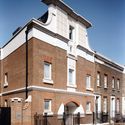
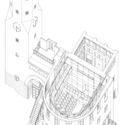
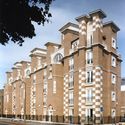
In this essay by the British architect and academic Dr. Timothy Brittain-Catlin, the very notion of British postmodernism—today often referred to as intimately tied to the work of James Stirling and the the thinking of Charles Jencks—is held to the light. Its true origins, he argues, are more historically rooted.
I grew up in a beautiful late Victorian terrace with ornamental brickwork, shaped ‘Dutch’ gables and pretty arts and crafts stained glass windows – and so I didn’t think then, and I don’t think now, that I had much to learn from Las Vegas. It turns out that I wasn’t the only one. Of British architects who made their names as postmodernists in the 1980s, not a single one would say now that they owed much to Robert Venturi, the American architect widely considered to be a grandfather of movement.