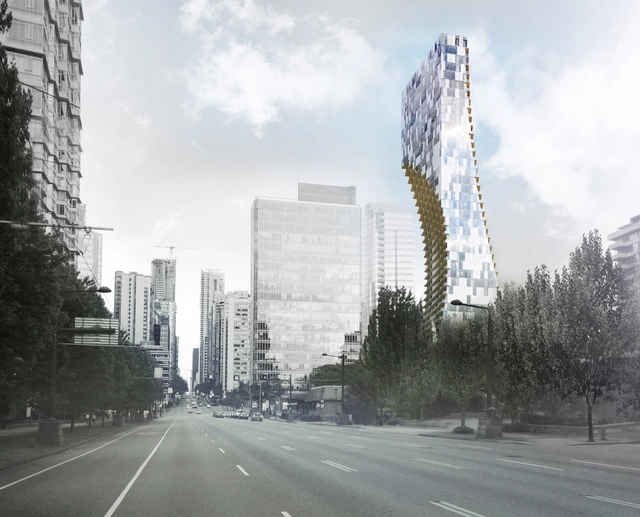
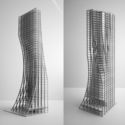
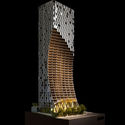
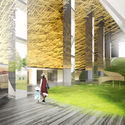
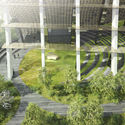
Kengo Kuma and Associates has revealed plans for the office’s first North American skyscraper, a mixed-use luxury tower on a site adjacent to Stanley Park in Vancouver. Known as ‘Alberni by Kuma,’ the 43-story tower combines 181 residences with retail space and a restaurant in a rectilinear volume accented by "scoops" on two sides. These curvatures are the building’s most important formal attribute, while a moss garden at the tower's base is its most important spatial feature. The project is being organized by Westbank and Peterson, and is part of a group of architecturally significant projects being developed by the pair in the west coast city.
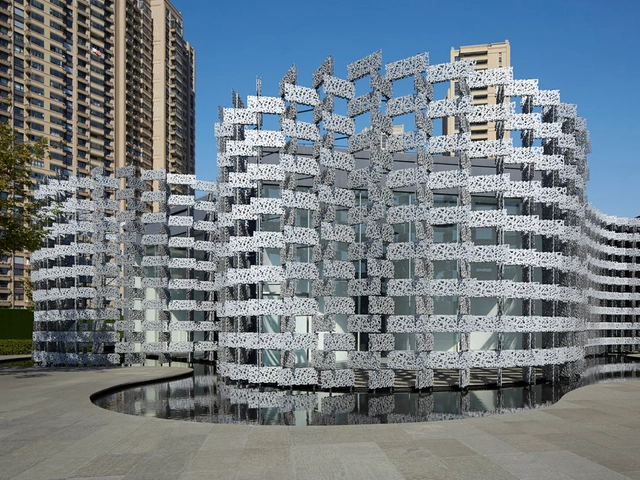
Kengo Kuma and Associates has completed its 10,440 square meter Wuxi Vanke arts and shopping complex, a renovated red brick cotton mill in Wuxi, China, featuring an aluminum-clad extension.
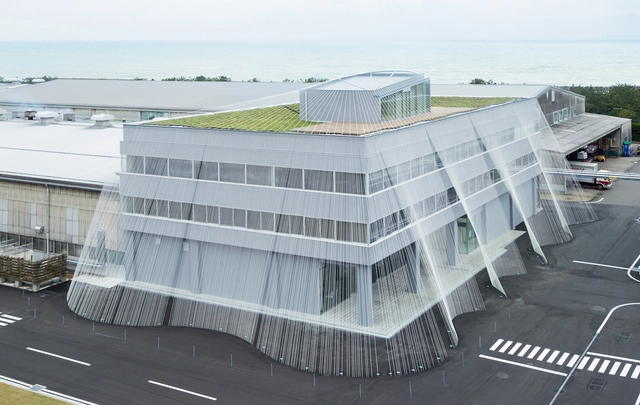
Japan-based Komatsu Seiten Fabric Laboratory has created a new thermoplastic carbon fiber composite called CABKOMA Strand Rod. The Strand Rod is a carbon fiber composite which is covered in both synthetic and inorganic fibers and finished with a thermoplastic resin. The material has been used on the exterior of Komatsu Seiten’s head office.
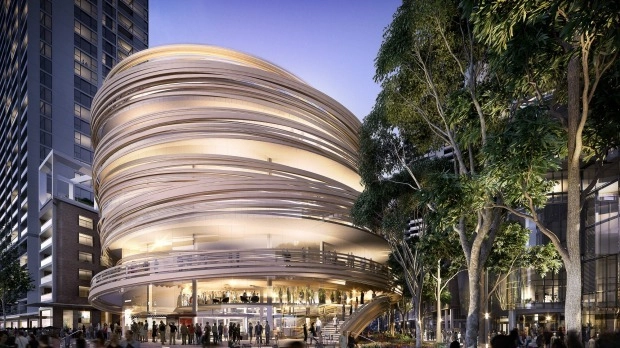
Darling Harbour has commissioned Kengo Kuma to design a new civic and creative center in Sydney - the Japanese practice's first Australian project. The 30-meter-tall, wood-clad "Darling Exchange" will rise six stories and provide space for a ground-floor market hall, library, childcare center, makerspace, and additional program for start-ups, as well as a rooftop bar and restaurant.
“Our aim is to achieve architecture that is an open and tangible as possible to the community, and this is reflected in the circular geometry that creates a building that is accessible and recognizable from multiple directions,” said Kuma.
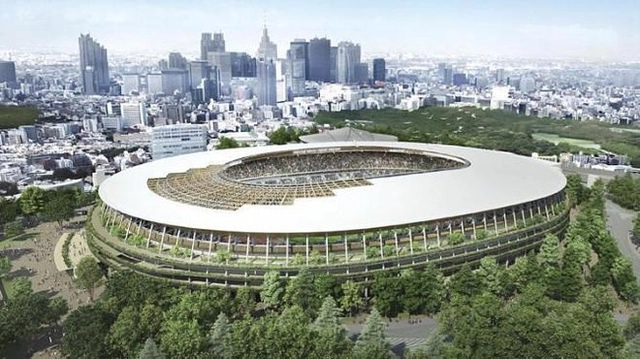
In the latest Tokyo National Stadium news, Kengo Kuma is firing back to Zaha Hadid's allegations regarding the "similarities" of the two designs by insisting that his "concept is completely different." As reported the Architects' Journal, the Japanese architect agrees there are some natural similarities due to appropriate sightlines and regulations, however the actual design and concept are radically different.
"I believe that the design by Zaha Hadid was excellent, with a unique shape and demonstration of her philosophy," said Kuma in a press conference. "When we consider the design is being created within the same land, using the same tracks and under the same laws it is natural and almost automatic that there are some similarities which will arise."
"And despite the technical details being similar, the concepts and designs are completely different," he added, referring to Hadid's "saddle-style" design and his flat-roofed proposal.
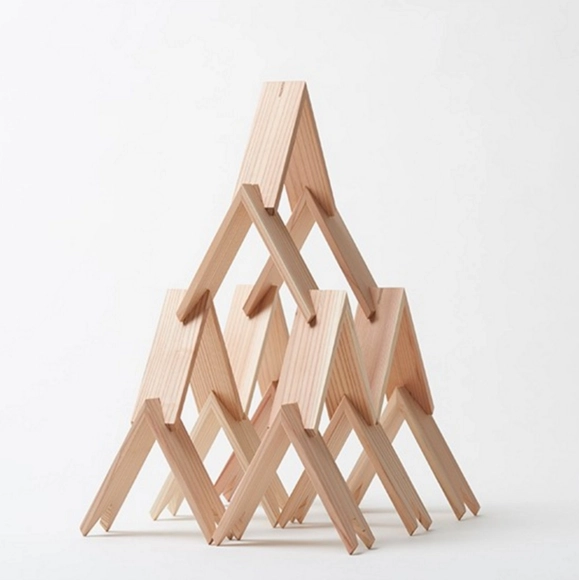
Check out this beautifully crafted 13-piece block set designed by Kengo Kuma - the (legendary) Japanese architect recently tapped to design Tokyo's controversial National Stadium. Light, wooden and soft to the touch, each four by four inch component is made of cedar from Japan's Miyazaki Prefecture and notched at the tips for easy stacking. You can order your own set for $70.
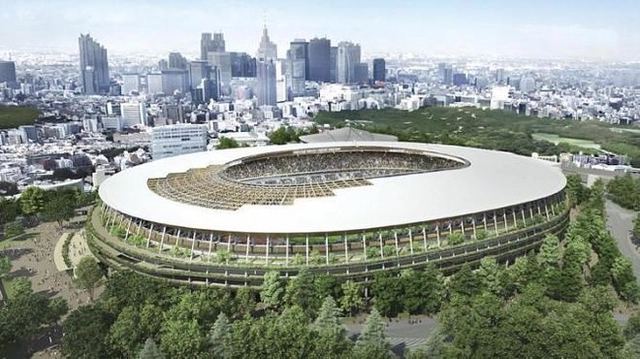
Kengo Kuma & Associates have been selected to replace Zaha Hadid Architects to design the new Tokyo National Stadium, the central venue for the 2020 Tokyo Olympics. Kuma's design was revealed alongside one other, a design by Toyo Ito, last week, after the original design by Zaha Hadid Architects was scrapped earlier this year. As reported by The Japan Times, Kuma's design narrowly won out against Ito's based on nine selection criteria by the Japan Sport Council, being awarded 610 total points compared to Ito's 602. Responding to concerns about the size and cost of Hadid's design, the new design will be under 50 meters tall and cost an estimated ¥153 billion, compared with the 70 meters and ¥252 billion of Hadid's controversial plans.
Kengo Kuma & Associates has unveiled its latest project for the Galerie Philippe Gravier in Paris. Entitled Yure, a Japanese expression for a nomadic habitat moving in the wind, the project is made from identical wooden pieces, seeking to blur the lines between art and architecture with its organic structural geometry.
Daniel Libeskind with accordion in Lodz, Poland, 1955
Zaha Hadid, Kengo Kuma, Daniel Libeskind, Nieto Sobejano, Denise Scott Brown and Philip Treacy reveal the childhood recollections that have shaped their outstanding visions and work.
Architects and designers are often asked whose work inspired them as students and influenced their thinking, but Roca London Gallery’s autumn show suggests that design inspiration actually goes back much further than this, into early childhood, and can take some unexpected forms.
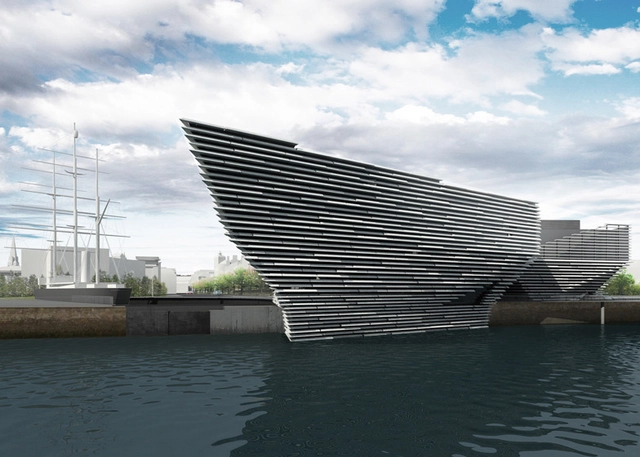
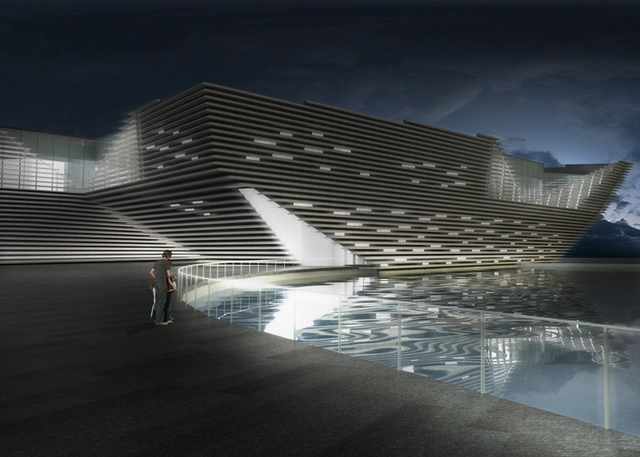
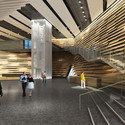
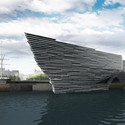
When Kengo Kuma's concept for the new Victoria and Albert Museum of Design (V&A) in Dundee, Scotland, was unanimously chosen as the winning design in late 2012, the jurors had stated that the proposal has been "subject to exhaustive scrutiny, including having external assessors do a detailed examination of projected costs." They stated that they "did not have to exclude any of the submissions on grounds of affordability." It is now reported, a little over two years later, that the original £45million budget has now exceeded £80million in spite of the fact that the building has already been 'redesigned' once in order to try to reign in soaring costs.
The latest obstacle in a tumultuous project history, figures released by Dundee City Council predict that Kengo Kuma and Associates'V&A museum in Dundee will cost an extra £31 million. Since unanimous selection by a competition jury in 2010, the project has been plagued by budget concerns, prompting a relocation from the original waterfront on the River Tay to a site further inland in 2012. Described by the V&A as "much more than just a building," Kuma's V&A Dundee is now slated to welcome the public in 2018, three years later than originally planned. Learn more about the delays after the break.
What influence do art and space have on the contemporary architectural design process? MoMA's most recent exhibition on architecture and designConceptions of Space strives to answer this question. Themed under the umbrella of spatial relations, Curator Pedro Gadanho ruminates on the subject in a broad and philosophical sense. The exhibition delves into the topic using an interdisciplinary approach, incorporating research from French philosopher Michel Foucault on the subject of the expanded field. The exhibition aims to explore the relationship between the development of space and its deep-seated roots in the creative arts.
In Kengo Kuma’s work you may see influences of light, transparency and materiality. But when visiting the Woodbury School of Architecture in San Diego, Kengo Kuma shared a few of his not so apparent influences, from Frank Lloyd Wright and Louis Kahn to jazz music. Make sure to view “Knowing Kuma” to see the architect’s definition of architecture, materials and more.
As a part of his ongoing film series about Japanese architecture, French architect and filmmaker Vincent Hecht has created this visual exploration of SunnyHills at Minami-Aoyama by Kengo Kuma. Designed to resemble a bamboo basket, this pineapple cake shop is built using the traditional Japanese joint technique of “Jiigoku-Gumi.” The wooden latticework is meant to provide visual contrast with the concrete facades of the building’s neighbors.
As an accompaniment to their ongoing Sensing Spaces Exhibition in London, the Royal Academy of Arts has produced six wonderful films interviewing the architects involved in the exhibition, unearthing what motivates and inspires them as architects, and what the primary themes of their exhibition projects are.
The above video features both Álvaro Siza and Eduardo Souto de Moura, who both designed their Sensing Spaces exhibits with the other in mind. Siza explains his preoccupation with the joints between the natural and the man-made through his Leça Swimming Pool complex, and the way the rock formations informed his interventions. He also introduces his one-time protégé Souto de Moura's Braga stadium as expressing the same understanding of the natural and man-made.
See videos from the 5 other Sensing Spaces participants after the break
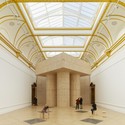
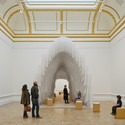
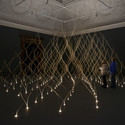
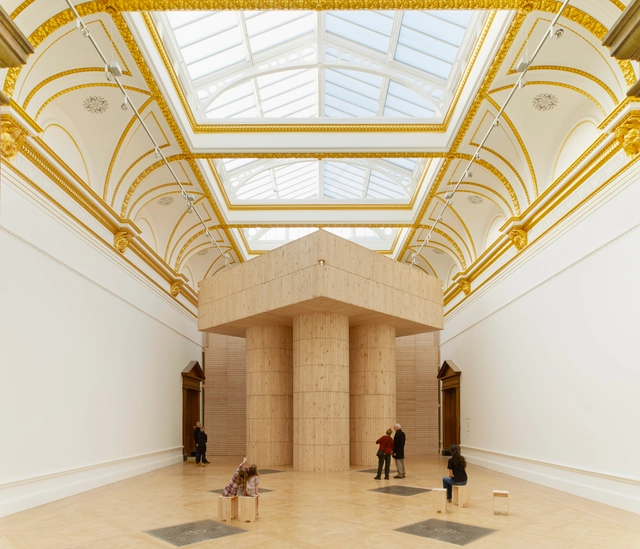
This past week London’s Royal Academy of Arts (RA) celebrated the opening of, what many claim to be, one of the most “epic” and “enchanting” exhibitions of 2014: Sensing Space: Architecture Reimagined. With a series of large scale installations by some of profession’s most acclaimed architects, such as Eduardo Souto de Moura, and Kengo Kuma, the immersive exhibition creates an atmosphere that encourages visitors to become part of the experience and open their minds to the sensory realm of architecture.
"Architecture is so often the background to our lives," stated curator Kate Goodwin. "We often don't think about it - it's practical and functional, but when does it do something more?"
The list of architects that have collaborated with Zhang Xin’s development company, SOHO China, reads like the roster of an architectural dream team (which includes Zaha Hadid, Yung Ho Chang, Bjarke Ingels, Kengo Kuma, Kazuyo Sejima, Herzog & de Meuron, Thom Mayne, David Adjaye, Toyo Ito and others). So it’s no surprise that the self-made billionaire lectured to a packed house at Harvard University’s Graduate School of Design last Thursday. Xin spoke about her commitment to and love of design, explaining that her company’s mission is to bring a variety of architectural languages to China. And though SOHO’s projects are certainly experimental, Xin contends that her developer mindset actually helps meliorate the architect’s propensity to take the experiment too far—all without sacrificing the impressive and iconic forms of SOHO’s building portfolio.
WatchZhang Xin link her practice in real estate to larger global issues and catch a glimpse of two Zaha Hadid-designs currently under construction: Wangjing SOHO and Sky SOHO.



Stefan_Tuchila_007_K3_2623.jpg?1447183979&format=webp&width=640&height=580)
Stefan_Tuchila_019_K3_2672.jpg?1446606943 "© Stefan Tuchila")
Stefan_Tuchila_016_K3_2675.jpg?1447184094 "© Stefan Tuchila")
Stefan_Tuchila_003_K3_2682.jpg?1447183936 "© Stefan Tuchila")
Stefan_Tuchila_017_K3_2687.jpg?1447184104 "© Stefan Tuchila")
Stefan_Tuchila_007_K3_2623.jpg?1447183979)