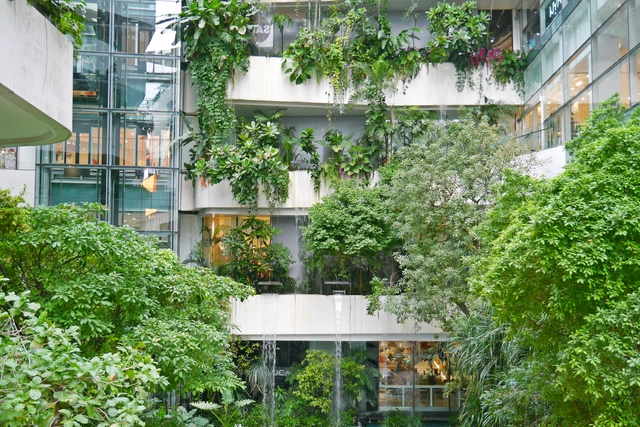
In these fast-paced and constantly evolving times, architecture has been adapting to new building technologies and complexities to serve today’s world needs. Teams of experts from all areas, architecture, engineering, construction, and a long list of professionals, come together to bring these solutions to our built environment. At ArchDaily we have been highlighting these actors in the architecture we curate and publish every day, but we often come across other types of projects, in which we spot different needs, and ways of building in certain places and communities, that equally require a highly qualified team, specific local techniques, and knowledge that are worth sharing.
Milan Design Week is back bigger and more ambitious than ever, and 2022 is a very special year. Designboom, Architonic, and ArchDaily which make up DAAily platforms have created for the visitors of Milan Design Week 2022, a unique, storytelling-programmed space - by architects and designers for architects and designers.
While each of our three online platforms continues as a leader in its particular field, addressing the needs of its specific community, we’re taking the opportunity to take to the stage together – and quite literally – at our special, can’t-miss Milan venue to the east of Brera. The Swiss Corner at Piazza Cavour / Via Palestro 2 will play host to the DAAily bar from 7 to 10 June, where a curated talk series hosted by our three Editors-inChief will seek to inspire and entertain, while our bar, lounge, and outdoor terrace deliver a healthy dose of conviviality and connection.
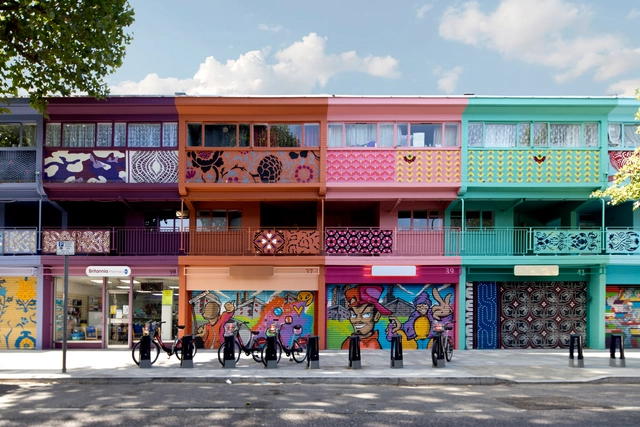
The award-winning firm based in London, England, Jan Kattein Architects, works to realize the civic and spatial opportunities that architecture presents’ with their projects establishing a social and physical legacy, achieved by embracing an open, interactive design process that responds positively to the needs and aspirations of the clients.
Allowing the process to drive each individual project, their method stimulates innovative design, seeking to add benefits through education, economic growth, cultural activity, and greater community coherence.
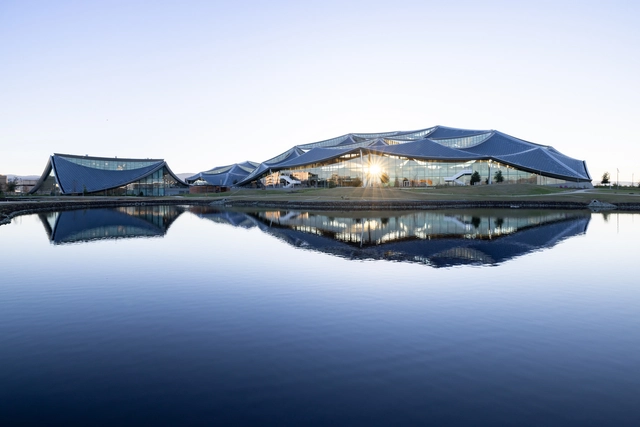
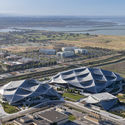
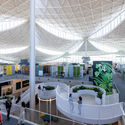
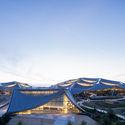
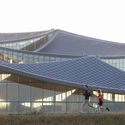
Google’s first ground-up campus, designed by BIG - Bjarke Ingels Group and Heatherwick Studios in collaboration with Google’s design and engineering teams, opened in Silicon Valley. The campus’ mission is to create a human-centric design for the future of Google’s workplace and set new global sustainability standards for construction and office design. The site aims to operate entirely on carbon-free energy by 2030; it integrates the most extensive geothermal pile system in North America and is net-water positive. The campus also includes 17 acres of high-value natural areas, including wet meadows, woodlands, and marsh.
Now that the effects of climate change are visible and indisputable, consumers are more environmentally conscious than ever. In fact, as a United Nations 2021 study suggests, 85% of them reveal that sustainability plays a key role when making their purchase decisions, motivating businesses and manufacturers to respond accordingly. This explains the rising demand for electric vehicles and products made of renewable or recyclable materials. However, architecture – and especially traditional housing – seems to be several steps behind compared to other industries. Although there are numerous efforts to move towards a greener built environment, the way most buildings are made today continues to be outdated, creating tremendous amounts of waste and significantly contributing to the global carbon footprint.
Forests cover about a third of the planet and play a fundamental role for life on Earth. According to Peter Wohlleben, author of the book “The Secret Life of Trees”, through fungal weaves, specimens of a forest can communicate with each other, exchange nutrients, help out the weakest plants, and organize survival strategies, which is essential for the healthy growth of individuals. The preservation of existing forests and the creation of new ones are essential for biodiversity and natural recovery, but also to meet the demand for wood. According to a report by the WWF (World Wide Fund for Nature), it is estimated that the amount of wood harvested in the world will triple by the year 2050, with the increase in population and income in developing countries. In addition, it is estimated that there will be an increased use of wood to manufacture biofuels, pharmaceuticals, plastics, cosmetics, consumer electronics and textiles. Searching for wood substitutes can be a smart path towards a sustainable future, especially if the alternatives are made using waste generated by other industries. Pyrus, for example, is an oil-free wood material produced sustainably with bacterial cellulose waste repurposed from the kombucha industry.
Since the early 2000s, it has been widely reported that the construction industry accounts for nearly 40% of the planet’s CO2 emissions. The role of interiors in that percentage has been historically underestimated, with common statistics suggesting that a project’s furniture, fixtures and equipment are only responsible for about 7 to 10% of its overall carbon footprint. However, new research notably indicates the contrary: in a building’s average life span, the carbon footprint of its interiors will equal – if not exceed – that of the structure and envelope. Interior design, to the surprise of many, has actually been doing great harm.
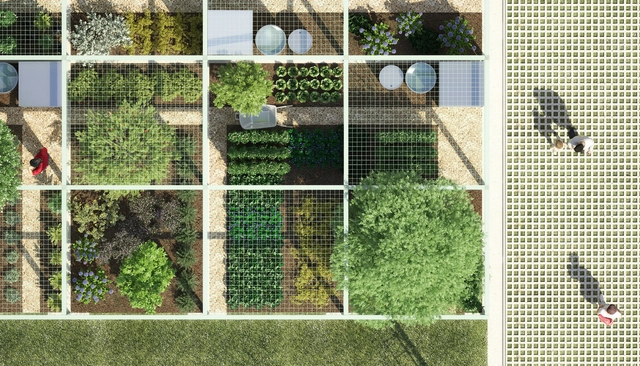
Transformação de Estacionamentos em Fazendas Urbanas. Image via Studio NAB
On March 31st, the Health and Nutrition Day is celebrated in Brazil, factors that are gaining more and more notoriety in the society in which we live. After more than two years living through the ups and downs of the Covid-19 pandemic and facing the evident need for a healthier, more active and community reality, it is important to reflect on how architecture and urbanism can become tools for accessing healthier daily lives.
To celebrate Earth Day, real estate developers Urban Villages and Studio Gang have unveiled and broken ground on "Populus", the first carbon positive hotel in the United States. Set to open in late 2023, the 265-room hotel in Denver features a rooftop restaurant and bar, designed as a significant milestone for the future of sustainable travel that meets the needs of travelers, the community, and the environment.
As the climate crisis continues to present itself as a significant threat to the future of the ecosystem and built environment, this year's IPCC report, titled Climate Change 2022: Impacts, Adaptation, and Vulnerability, found that while adaptation efforts are being observed across all sectors, the progress being implemented so far is greatly uneven, as there are gaps between the actions taken and what is needed. On this year's Earth Day, we explore the progress being made by governments and architects to achieve net-zero operations within the next decades.
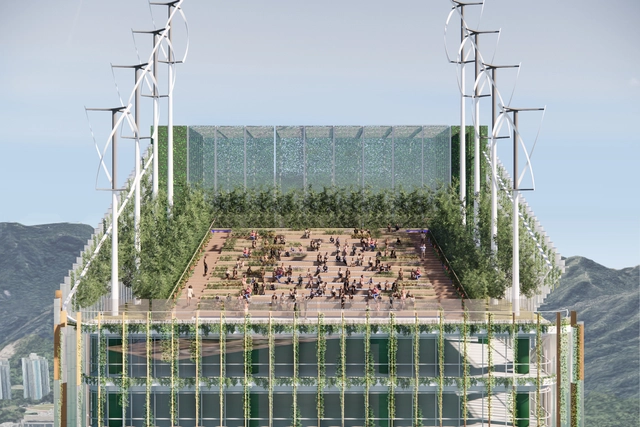
Torre Taikoo Green Ribbon / ARUP. Image Cortesia de ARUP
Discussing carbon neutrality in architecture should not only be based on local materials and new technologies, since there are many aspects that impact the construction production chain. From design to construction, without losing sight of the context and economic system of our society, the construction industry is responsible for a considerable part of the energy consumed worldwide. In order to interfere in this reality, it is necessary to expand the fronts of action, questioning the place of construction in our society.
With the recent Metaverse hype, let's address the elephant in the room! As more and more people dance around the subject of weather or not it is harmful for sustainably-conscious architecture designers to utilize the Metaverse, I decided to interview Oliver Lowrie, a Director at Ackroyd Lowrie, an award-winning London-based architecture practice dedicated to building the cities of the future, who is already using this technology to enhance Ackroyd Lowrie’s low-energy designs.
The Zero Carbon policy is intended to create a kind of ecological balance to neutralize greenhouse gas emissions. Several studies report that the construction sector is one of the main responsible for the unbalance in which we find ourselves today, after all, it consumes natural resources on a gigantic scale and still builds buildings that do not collaborate with the maintenance of the environment. Therefore, searching for paths towards a carbon neutral architecture has become fundamental and one of them is learning from past masters, such as the Brazilian architect João Filgueiras Lima, known as Lelé.
Carbon footprints and CO2 emissions are large topics in our conversations about how we create a more sustainable future. Over time, different companies, organizations, and individuals have pledged to alter their lifestyles and habits to make changes that show that they are dedicated to combating climate change. Especially in the design industry, where buildings generate nearly 40% of annual CO2 emissions broken down between daily operations and construction/demolition, architects have long been feeling the pressure of exploring ways to prove that we are doing our part.
When we take a look at the different scales of emissions, one question commonly occurs- how can we measure the different levels of impact? Is it on us individually to recycle and ensure we never use plastic straws again? Does this even have a major impact? Do more car manufacturers need to find alternates for gasoline-fueled automobiles? Do architects need to only source sustainable materials? What are the actionable steps that truly have an impact?
cove. tool's core mission is to fight climate change by helping architects, engineers, contractors, and developers use data-driven design through automation and cost optimization. Creating a competition premise that called attention to this critical issue was important. With the recently published landmark Intergovernmental Panel on Climate Change's (IPCC) 2021 report that warned of increased extreme heatwaves, droughts, and flooding, as well as a key temperature limit on track to be broken in just over a decade, it further highlighted the urgency. As climate change intensifies, housing stability will be increasingly under threat. These two inextricably linked issues had the potential to spark innovative ideas from the international design community and community-at-large. With the sizeable grand prize of $50k, the goal was to solicit entries from all over the world and help facilitate more conversations about carbon positive, affordable housing that could be replicated in multiple neighborhoods, cities, and countries. Sustainability and affordability are often two topics that are at odds. However, this competition proved that there are creative solutions to complex problems.
Climate change, the scarcity of resources, and urbanisation are hot topics in the building and construction industry. In this context, the importance of sustainability cannot be overemphasised: almost 40% of global CO2 emissions and 36% of global energy usage is associated with building and construction. These figures clearly illustrate the increasing need for more sustainable solutions in the industry.
Companies that play an active role in the building industry have a responsibility to pave the way toward a more sustainable future. This is why partners like Uponor, one of the leading international providers of solutions that move water for buildings and infrastructure, strive to help customers in Europe to choose the perfect solutions for greener building designs.
The climate crisis has reshaped contemporary architecture. Sustainability has become a central guiding force in design, and in turn, architects are rethinking how to build today. For CO Adaptive Architecture, addressing the climate crisis begins with a process oriented practice. Together, Ruth Mandl and Bobby Johnston have created a firm that embodies how a values-based approach can tackle the most pressing issues of our time. The result is elegant and impactful architecture brought to life with poise and finesse.
Nowadays everything is “painted” green. It's green packaging, green technologies, green materials, green cars and, of course, green architecture. A “green wave”, stimulated by the environmental and energy crisis we are facing, with emphasis on climate change and all the consequences linked to global warming. This calamitous situation is confirmed by the second part of the report entitled Climate Change 2022: Impacts, Adaptation and Vulnerability prepared by the Intergovernmental Panel on Climate Change (IPCC) and presented in recent weeks. It reveals that, although adaptation efforts are being observed in all sectors, the progress implemented so far is very low, as the actions taken are not enough.











_Studio_Gang.jpg?1650877866&format=webp&width=640&height=580)
_Studio_Gang.jpg?1650877933 "© Studio Gang")
_Studio_Gang.jpg?1650877902 "© Studio Gang")
_Studio_Gang.jpg?1650877802 "© Studio Gang")
_Studio_Gang.jpg?1650877866)




.jpg?1649194242&format=webp&width=640&height=580)