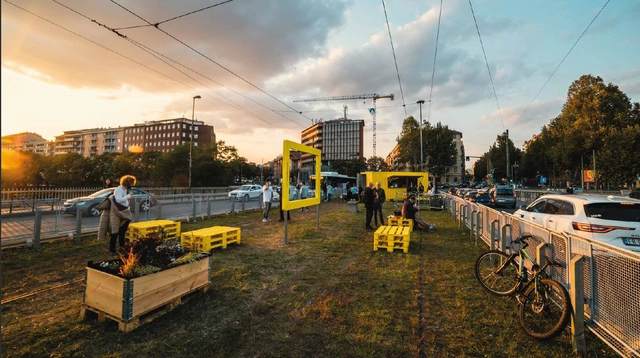
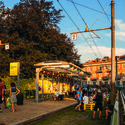
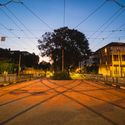
Ever since the tramline’s closure, the 800-meter-long strip in the center of Corso Gabetti and Ponte Regina Margherita in Turin, has been abandoned. To make use of the dead area and give residents an extra space outdoors following Italy's severe pandemic repercussions, non-profit cultural association Torino Stratosferica has transformed the tree-lined strip into Precollinear Park, a temporary public space fit for socially-distanced leisure.
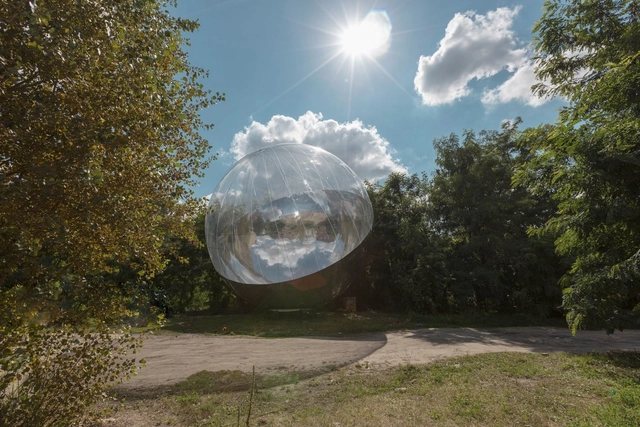
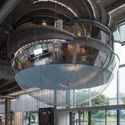
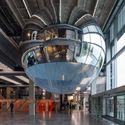
Argentine environmental artist Tomás Saraceno has recently unveiled his latest venture at Moscow’s Garage Museum of Contemporary Art. On view and remaining until February 14, 2021, the installation entitled Moving Atmospheres, is a partially mirrored sphere suspended midair in the museum’s atrium, made from ETFE.
Being in confinement has produced unconventional means of exploring architectural spaces and installations. Instead of putting everything on hold until life goes back to normal, designers and curators found inspiration from practices like performance arts and theatre, breaking down the walls between the subject and viewers but from a distance.
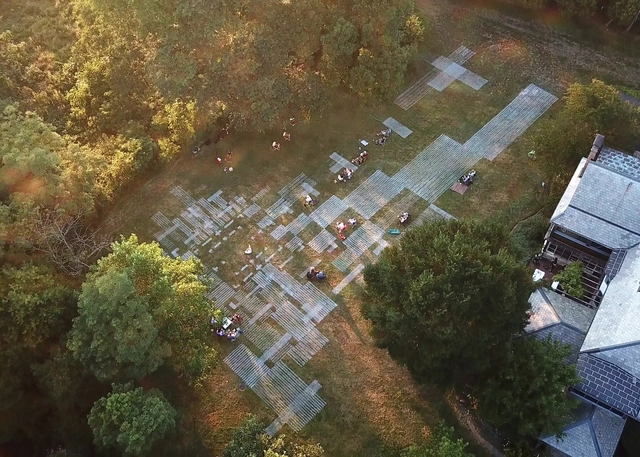
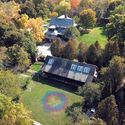
Ashley Bigham and Erik Herrmann of Outpost Office reimagined the theme of "mobility" by creating 1:1 scale drawings on the Ragdale campus using GPS-controlled field marking robots. Their unique urban installation, which addressed modern-day concerns such as public spaces, how we are engaging with them, and physicality, won first place in the 2020 Ragdale Ring competition.
Stefano Boeri Interiors has unveiled images of his latest circular wooden installation, in an open-air setting of contemporary art. Entitled TREE-ROOM, the project in which “humans and living nature come together, between meditation and contemplation”, is designed for Arte Sella and is located in the garden of Villa Strobele in Val di Sella, in Northern Italy.
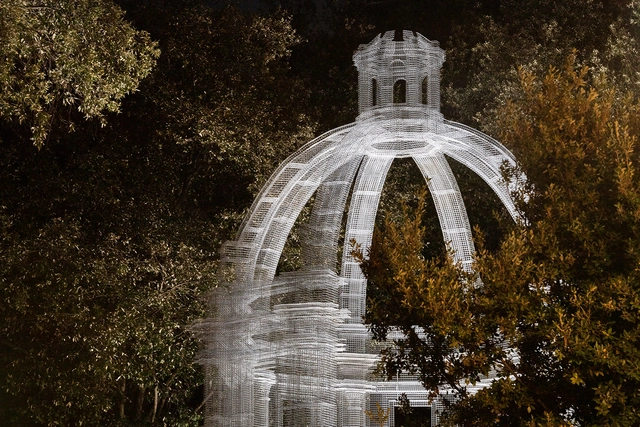
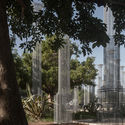
Etherea, the installation conceived by Edoardo Tresoldi for the Coachella festival in 2018, has landed in Rome for "Back to Nature”, an exhibition project curated by Costantino d’Orazio. The large transparent mesh sculpture will dialogue with the trees of the Parco dei Daini, in Villa Borghese, until December 13, 2020.
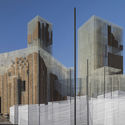
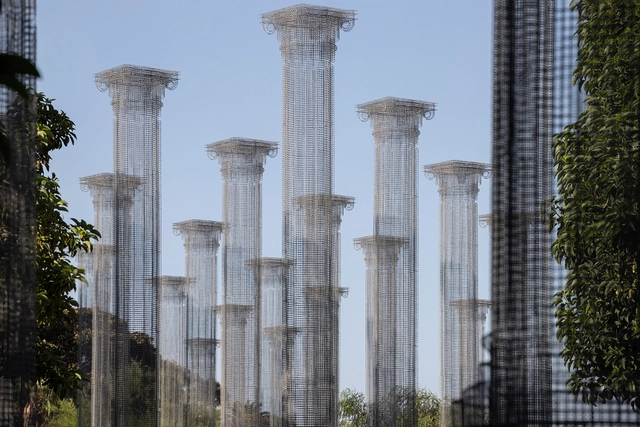
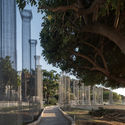
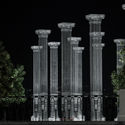
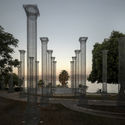
Edoardo Tresoldi has inaugurated a permanent installation on Reggio Calabria’s seafront, in Italy entitled Opera. Commissioned by the local Municipality and the Metropolitan City, the public art intervention “was created to celebrate the contemplative relationship between place and human beings through the language of classical architecture and the transparency of the Absent Matter”.
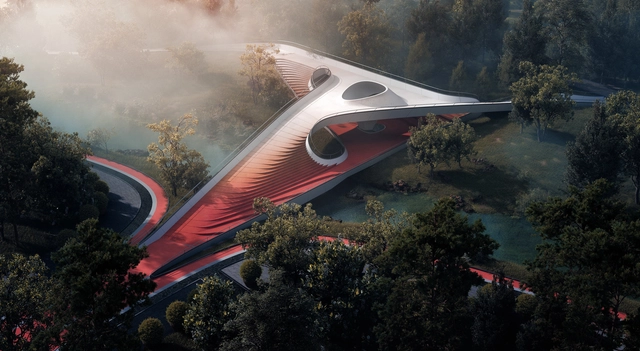
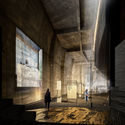
This week’s curated selection of Best Unbuilt Architecture encompasses conceptual proposals submitted by our readers. It features diverse functions and tackles different scales, from a spiraling bridge in China to a transportation hub dedicated primarily to space travel in Japan.
Comprising uncommon design approaches, this article introduces a humanitarian architectural response to the needs of the residents in an informal Egyptian settlement. In the master plan category, a Green city proposal highlights how we should develop our cities and neighborhoods in the future, and the first net-zero energy airport in Mexico reinterprets holistic design approaches. Moreover, the roundup presents different cultural interventions, from a museum in Botswana, an installation at the Burning Man festival by AI Studio, and an observatory in Vietnam.
Videos
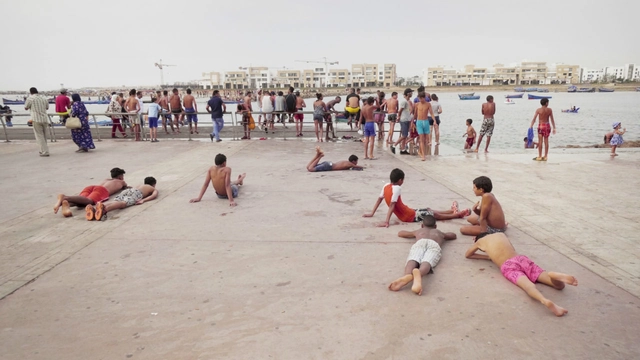
HOMO URBANUS Rabatius . Image Courtesy of Bêka & Lemoine
As the world is moving into a post-pandemic time, museums are finally resuming their work under strict social distancing and health measures. Arc en rêve d’Architecture in Bordeaux, France has reopened its main gallery with an exhibition by Ila Bêka & Louise Lemoine, entitled Homo Urbanus. Shown for the first time in its complete version, the exposition offers a vibrant tribute to public spaces.
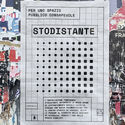
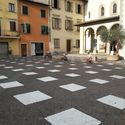
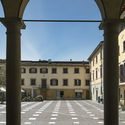
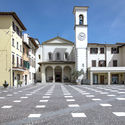
As architects around the world reimagine public spaces in the midst of the coronavirus, Italian architecture firm Caret Studio has envisioned the “StoDistante” installation. Searching to reconcile people with the outdoors, and allowing theses spaces to reopen safely while respecting the social distancing measures, Caret Studio created a temporary installation that reflects our current situation.
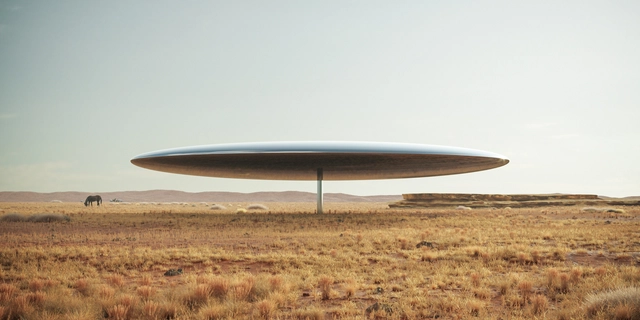
Citizens of Earth is a conceptual proposal by Marc Thorpe Design for the city of Marfa in Texas. Located 20 miles outside of the city on the border of Mexico and the United States, the installation aims to “question the value of international borders within the context of the 21st century”.
Asif khan studio has unveiled images of his first intervention for the public realm of Expo 2020 Dubai. Running from the 20th of October 2020 till the 10th of April 2021, The World Expo will have three majestic Entry Portals to welcome visitors from all over the world.
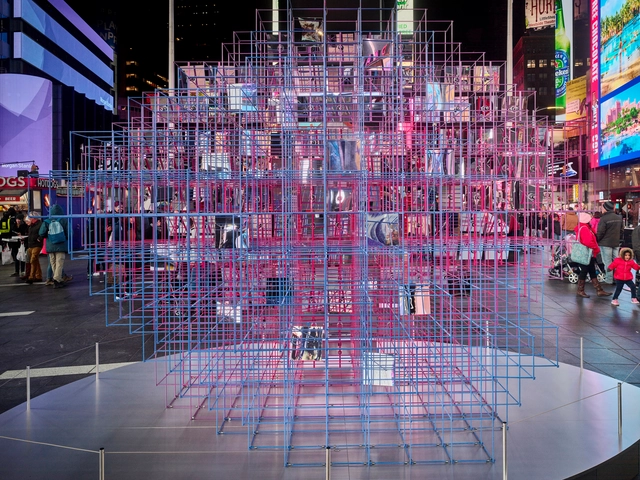
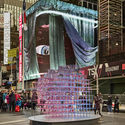
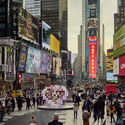
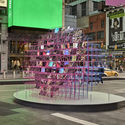
Dedicated to love and diversity, the public art installation Heart Squared has just opened to the public. In its 12th edition, the Times Square Valentine Heart Design Competition curated by Cooper Hewitt, Smithsonian Design Museum had selected the winning proposal of MODU, an architecture and design firm based in Brooklyn, and Eric Forman Studio.
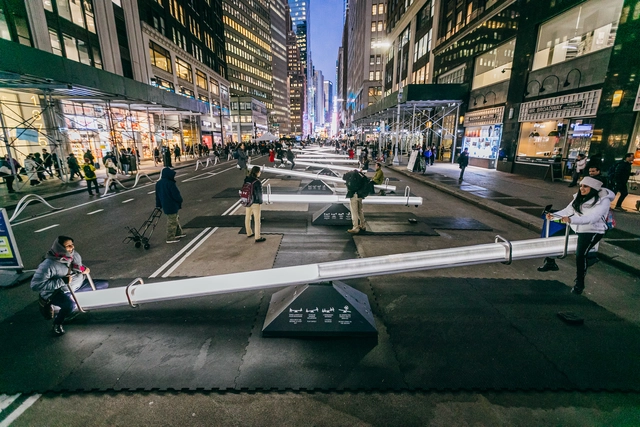
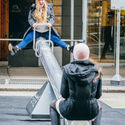
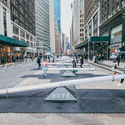
Lateral Office, the Canadian experimental design practice that operates at the intersection of architecture, landscape, and urbanism, in partnership with CS Design, installed 12 seesaws in New York City's Garment District. The urban intervention will stay on display until the 31st of January 2020.
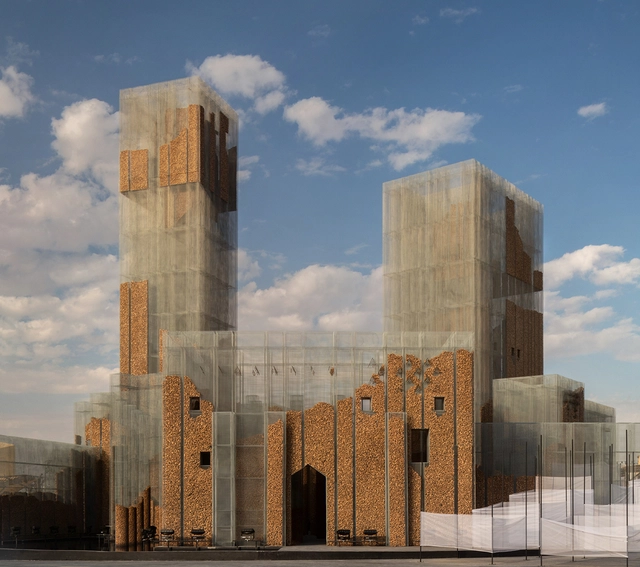
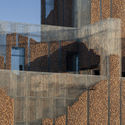
Created by Studio Studio Studio, the new interdisciplinary lab founded by Edoardo Tresoldi, Gharfa is a pavilion located in Riyadh, Saudi Arabia. The experimental installation is part of the temporary creative project Diriyah Oasis, designed and curated by Dubai-based studio Designlab Experience.
The third edition of the Hangar Exhibition was held this past October in the Jordanian capital, Amman, as part of the city's Design Week. Among the projects exhibited, one installation was able to momentarily teleport visitors into one of the country's most historic sites.
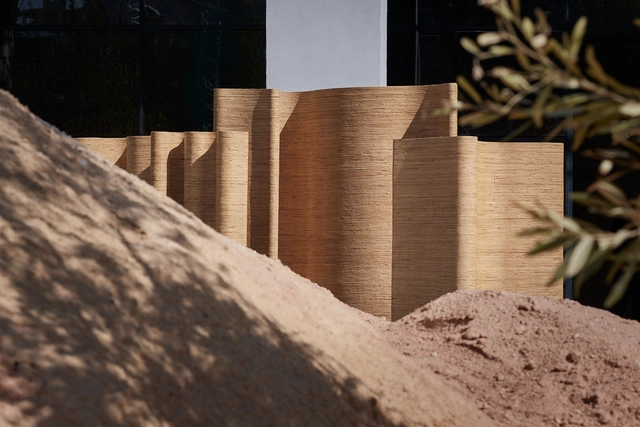
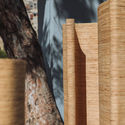
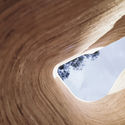
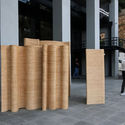
Designed by architect Rasem Kamal, Canyon Walls, a series of freestanding curvilinear partitions, served as a sanctuary for people to disconnect and remain in solitude for a period.
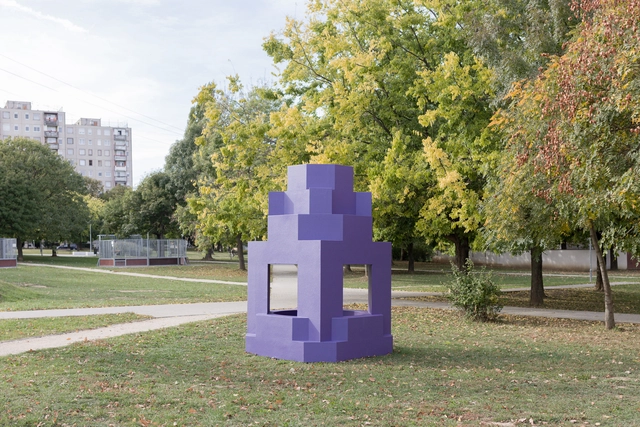
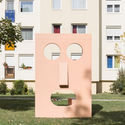
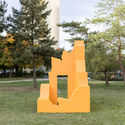
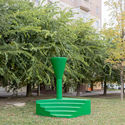
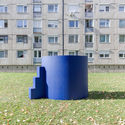
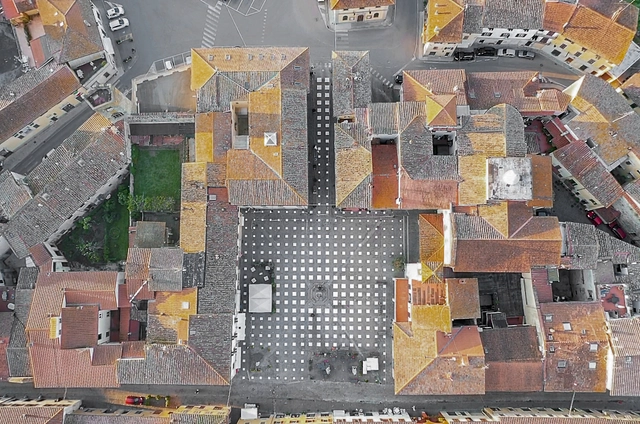
The Haszkovó housing estate in the city of Veszprém, Hungary has been seen as a failed urban development: "grey, sad, and soulless". However, this cold structure managed to shelter 20,000 inhabitants within its walls, standing as a "real city" within the area.
On the occasion of Veszprém Design Week, a collaborative project by five renowned architects and architecture studios: Edward Crooks, Point Supreme, Supervoid, MAIO, and Paradigma Ariadné, invited the visitors to change the perception and current state of Haszkovó, by creating five vibrant, portable, and durable urban artifacts.
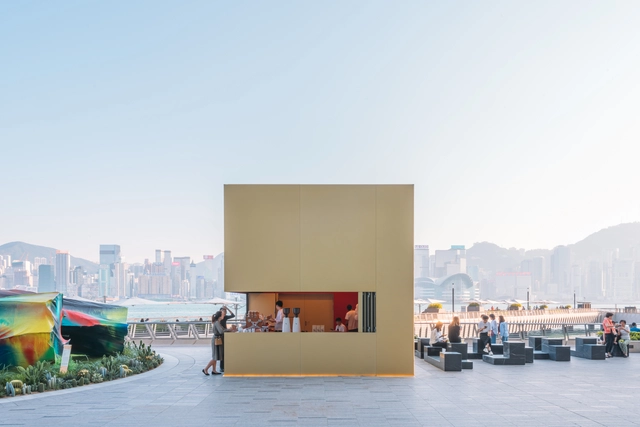
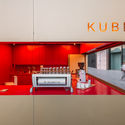
OMA revealed the KUBE, an installation located in front of the main entrance of K11 MUSEA, on Hong Kong’s waterfront. The multi-functional installation creates an urban landmark, amidst the dense skyline of the city, through very simple yet engaging geometry.




.jpg?1480340266&format=webp&width=640&height=580)
.jpg?1480340503 "© Kang Wei")
.jpg?1480326382 "© Kang Wei")
.jpg?1480340215 "© Kang Wei")
.jpg?1480340918 "© Kang Wei")
.jpg?1480340266)



.jpg?1603183617&format=webp&width=640&height=580)
.jpg?1603183812 "© Giacomo Bianchi")

.jpg?1603182934 "© Giacomo Bianchi")
.jpg?1603183917 "© Giacomo Bianchi")
.jpg?1603183617)



2020_canaria__dentsu__noiz__Space_Port_Japan_Association.jpg?1597222708 "SPACEPORT CITY. Image Courtesy of Noiz Architects")




.jpg?1581411207&format=webp&width=640&height=580)
.jpg?1581410964 "© Helene Binet")
.jpg?1581411372 "© Helene Binet")
.jpg?1581410853 "© Helene Binet")
.jpg?1581410986 "© Helene Binet")
.jpg?1581411207)