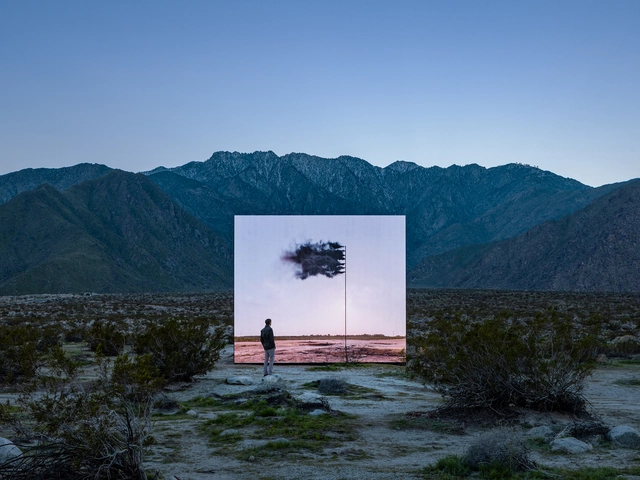
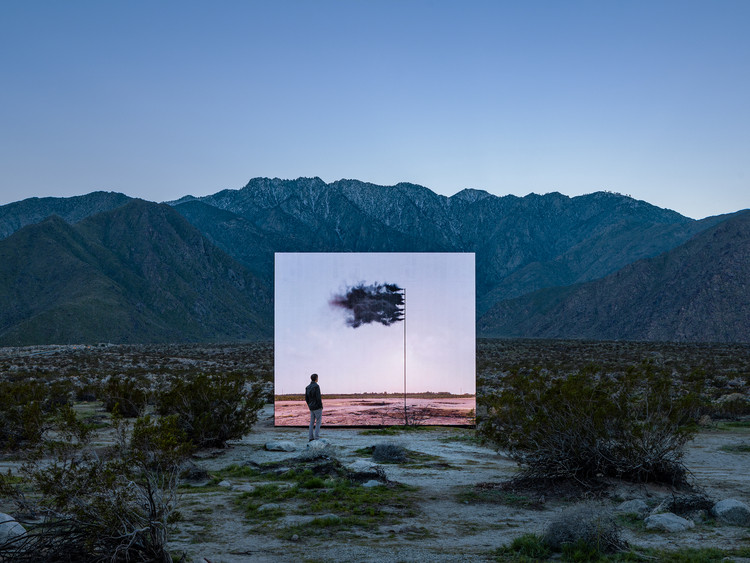
19 installations have been unveiled across the California Desert as part of the Desert X international contemporary art exhibition. The second edition of the exhibition, running from February 9th to April 21st, 2019, is free and open to the public, and seeks to “activate the desert landscape through nineteen site-specific installations and performances by some of today’s most recognized international contemporary artists.”
Co-curated Amanda Hunt and Matthew Schum, the exhibition explores ideas of site-specificity, framing post-industrial art and the interactive possibilities it contains. The 2019 edition includes film projects and process-driven works, spanning 50 miles across the Coachella Valley into Mexico.
Augmented Reality. Image Courtesy of Matt Alderton
The Serpentine Galleries, Google Arts & Culture and trustee David Adjaye have released a call for augmented reality (AR) architecture proposals to run alongside the 2019 Serpentine Pavilion this summer. Applicants are asked to propose "imaginary city spaces and speculations on the built environment to be developed and experienced” in AR onsite at the galleries. The call invites applicants to consider AR as a digital layer that offers new opportunities to design, visualize and experience.
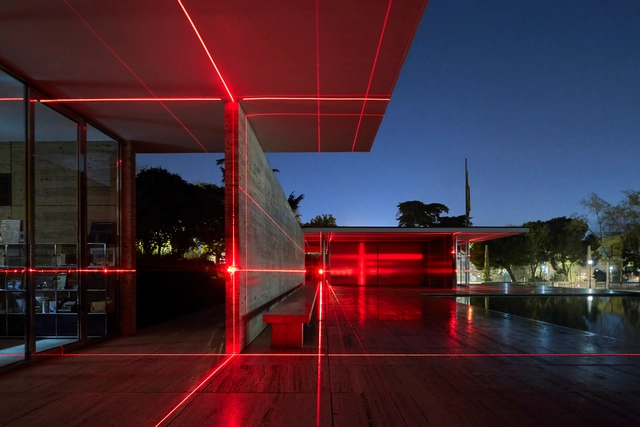
A new laser light installation by Luftwerk and Iker Gil has transformed the Mies van der Rohe's famous Barcelona Pavilion. Dubbed Geometry of Light, the installation was designed to highlight the materials and architecture of the structure using light and sound. Taking cues from the pavilion's gridded plan and vertical planes, the light project was designed to create a new interpretive layer that traces, highlights and reimagines the pavilion itself.
Winter is hardly the high season for Toronto's waterfront. Nevertheless, the annual design competition Ice Breakers aims to draw people back to the outdoors, populating the frozen harborside with installations celebrating the winter. This year's winning designs are currently on show, centering around the theme "Signal Transmission."
For a third year in a row, Ports Toronto and the Waterfront Business Improvement Area (WBIA) partnered to produce this 2019 exhibition. Out of hundreds of international submissions, the winning designs include an illuminated starlight house, kaleidoscopic mirrors, and arches of bells, now on display until February 24.
See all five winning installations with descriptions by the architects below.
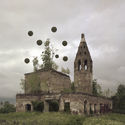
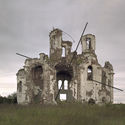
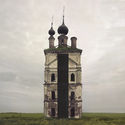
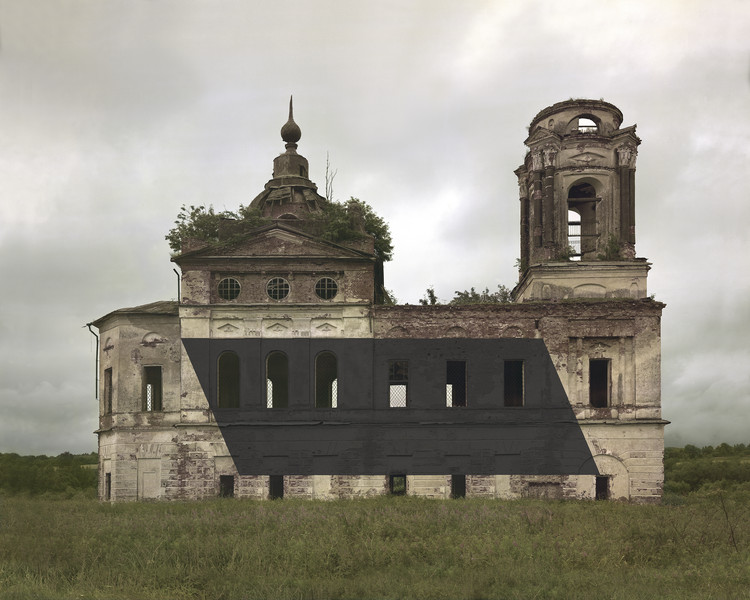
Moscow-based visual artist Danila Tkachenko has developed a project researching the boundaries of historical memories in Russian Orthodox churches. “Monuments” involved the sensitive appropriation of the abandoned rural churches, erecting lightweight structures in abstract modernist shapes.
The project sought to explore the area between fact and fiction, reflecting on “humanity’s inclination to exploit images of the past for the sake of our current needs, and future goals.” The structures, all abandoned in 1917 following the Russian Revolution, were adorned with striking modernist elements which, although visually powerful, can be dismantled following the project’s completion with no effect on the landmarks.
https://www.archdaily.com/909662/abandoned-russian-orthodox-monuments-appropriated-with-abstract-modernist-shapes-by-danila-tkachenkoNiall Patrick Walsh
Tower of Twelve Stories. Image Courtesy of Bureau Spectacular
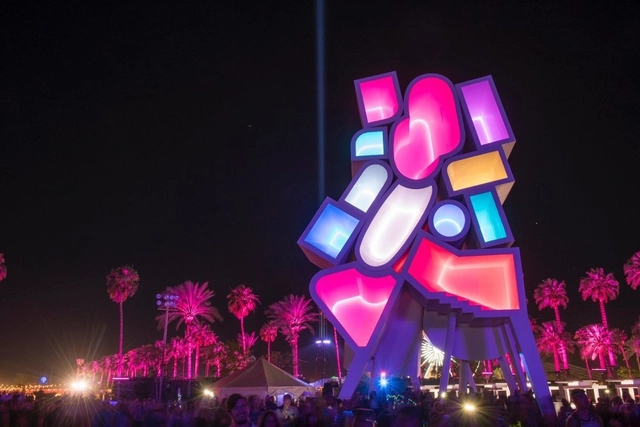
Francis Kéré, Office Kovacs, and NEWSUBSTANCE are among a set of designers selected to create art installations for the Coachella Arts and Music Festival in California. The 2019 lineup has been announced with Childish Gambino, Tame Impala, and Ariana Grande headlining the two-weekend experience. Over half a dozen large-scale installations will be built at Coachella, where over 100,000 people will experience the work of up-and-coming artists, designers and architects.
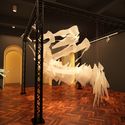
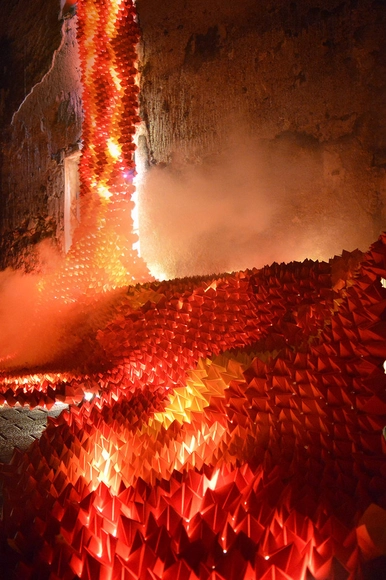
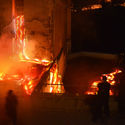
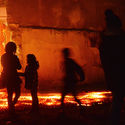
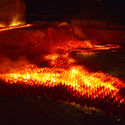
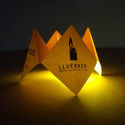
In the wistful irony of creating liquid fire through sheets of paper, David Oliva of Barcelona-based firm SP25 Arquitectura and Anna Juncà of Atelier 4 collaborated to fabricate an installation piece for the LLUÈRNIA festival of fire and light in Catalonia. Titled, "Origami Lava", the field of flame cloaks the 100 m2 surface of an abandoned building using over 10,000 pieces of origami.
If the surest sign of summer in London is the appearance of a new pavilion in front of the Serpentine Gallery, then it’s perhaps fair to say that summer is over once the pavilion is taken down. The installations have gained prominence since its inaugural edition in 2000, acting as a kind of exclusive honor and indication of talent for those chosen to present; celebrated names from the past names include Zaha Hadid, Rem Koolhaas, and Olafur Eliasson.
The 2018 London Design Festival is now underway, having returned for its 16th year. Running from 15th to 23rd September, and spread across the city, the Festival features works such as Snøhetta’s rotating book pavilion and a series of installations at the V&A celebrating the venue’s 10th year as the Festival’s official hub.
Below, we have compiled a list of collaborations to look out for throughout the week, including investigations into issues such as climate change and plastic pollution, and artistic themes such as Cubism and classical music.
https://www.archdaily.com/902215/7-installations-to-watch-out-for-at-the-2018-london-design-festivalNiall Patrick Walsh
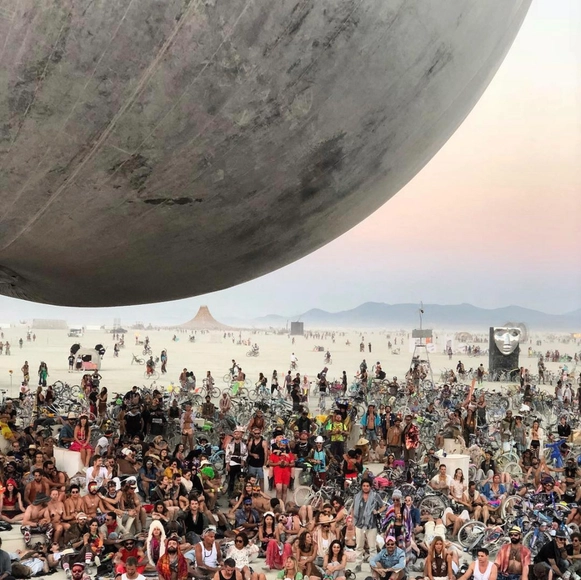
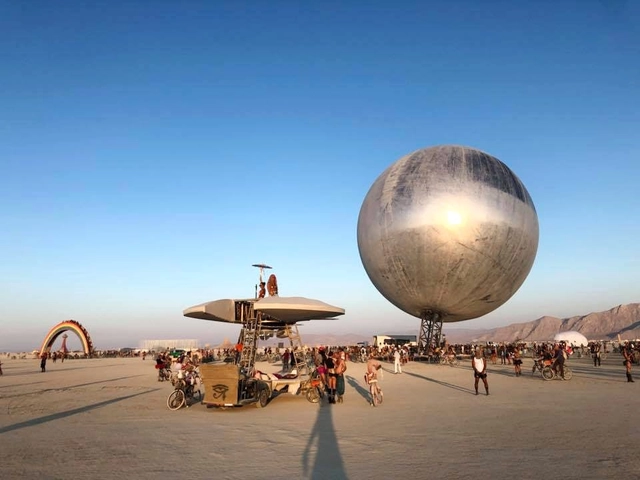
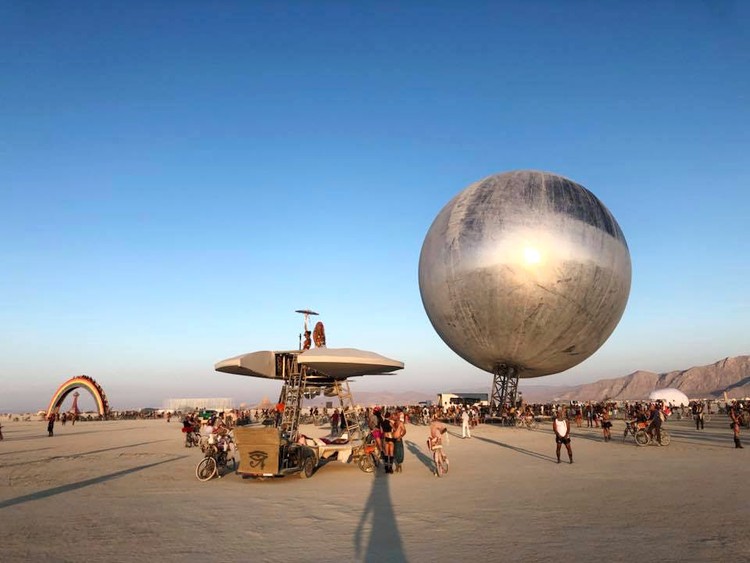
As Burning Man 2018 comes to a close, snapshots and glimpses of the event have begun to emerge in the mediasphere. The most recognizable among these is, perhaps, BIG's Orb, a hovering sphere representing a scaled version of the earth itself.
https://www.archdaily.com/901298/the-best-structures-of-burning-man-2018AD Editorial Team
Bjarke Ingels Group has built an 80-foot-diameter ORB at the 2018 Burning Man festival in Black Rock City, Nevada. The ORB was designed as an inflated spherical mirror with a steel mast. A series of photos have captured the ORB from both Burning Man festival goers and BIG partner Kai-Uwe Bergmann. As a landmark in The Playa, the ORB conceptually references mother earth and human expression, designed to leave no trace following its deflation.
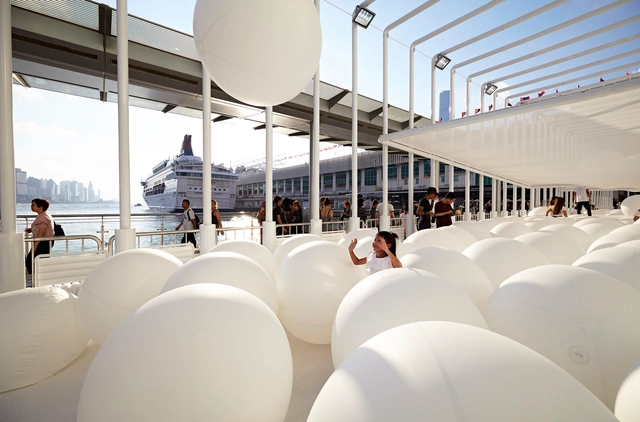
New York-based collaborative and design studio Snarkitecture have unveiled their newest interactive installation, bringing a surreal sense of play to Hong Kong’s waterfront. Titled “BOUNCE,” the installation features hundreds of 300% sized bouncing balls contained in a cage-like stadium, inviting the public to “create their own unique playing experiences.”
The program is spread across three locations, with the feature installation along the Harbour City waterfront, an indoor installation at the Ocean Center titled “Gallery by the Harbour,” and a children’s “Eyeball Maze” at the Ocean Terminal.
Videos
Kagkatikas Secret. Image Courtesy of Quintessenz
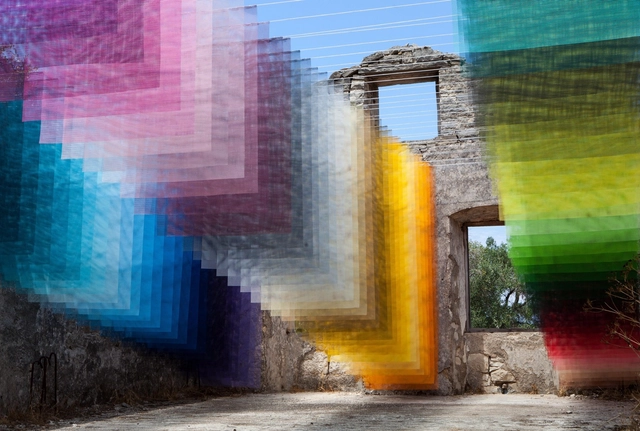
Founded by the Hanover and Berlin-based artists Thomas Granseuer and Tomislav Topic, Quintessenz has its roots in both graffiti-culture and chromatics. Combine painting, moving image, and installation, their work uses patterns and shapes found in architecture to change perceptions of space. Using old factory buildings as their canvas, Quintessenz consistently aims to create space for color. In every medium they use, color is the content itself.
The Silent Room. Image Courtesy of London Design Biennale
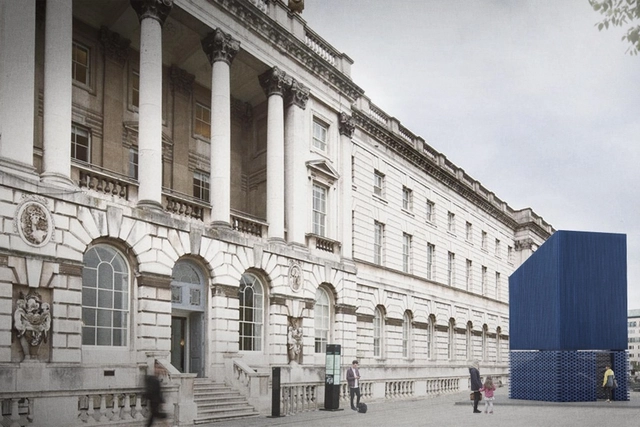
Opening next month, the London Design Biennale returns with an impressive cast of characters. In its second iteration, the Biennale begins September 4 under the theme ‘emotional states’ and will run until September 23. After the 2016 inaugural launch, the event has expanded to include 40 countries, cities and territories. Taking over Somerset House, including the Edmond J. Safra Fountain Court and River Terrace, the event will explore ideas ranging from social equality and pollution to migration and cities.
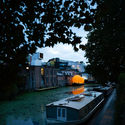
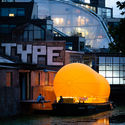
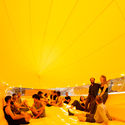
The scheme was chosen from 132 entries to the competition run by Shiva Ltd and the Architecture Foundation, which asked participants to engage with “the heritage of the Regent’s Canal in innovative ways.”
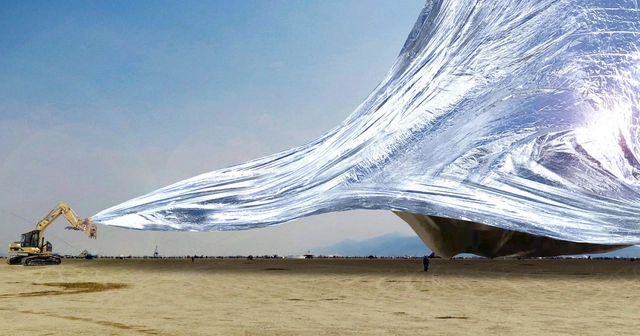
Moscow-based designer Alex Shtanuk has launched an Indiegogo campaign for his 107,000-square-foot (10,000-square-meter) blanket woven from over 3000 NASA Space blankets, to feature at this year’s Burning Man festival at Black Rock City, Nevada.
“The Blanket” seeks to “bring the waves of the ancient Lake Lahontan back to Playa,” influenced by wind conditions to mirror surreal forms such as waves, mountains, or giant sculptures. With an exterior metallic coating, the blanket will reflect 97% of radiated heat, creating a cool, refreshing environment underneath for those seeking shelter from the hot Playa sun.








.jpg?1539856634&format=webp&width=640&height=580)


.jpg?1539856634)