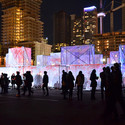
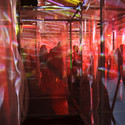
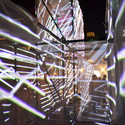
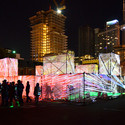
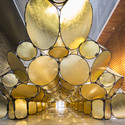
Colorful lights dance across translucent panels, illuminating the backdrop of Toronto’s glowing downtown high-rises. In their three-dimensional interactive installation entitled AMAZE, design and research laboratory UNSTABLE has created a multisensory experience like no other. Complex branching passageways challenge visitors to find their own path through the ever-changing structure, as if wandering through a vivid psychedelic dream. Becoming an integral part of the installation, visitors are met with dynamic shadows of the crowd and the urban landscape beyond before finding their way out of the maze.
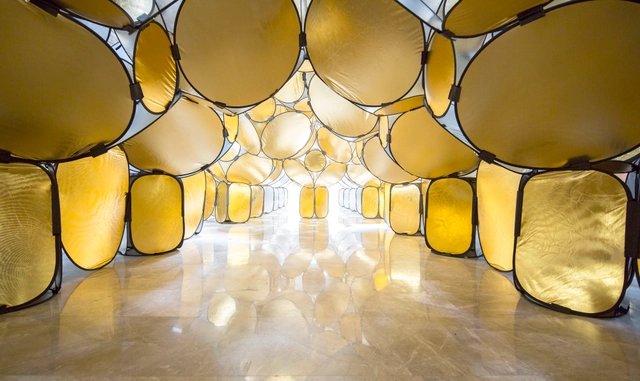
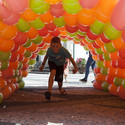
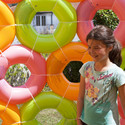
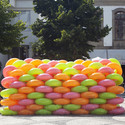
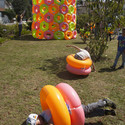
Inspired by the recent popularity of amateur photography in China, People’s Architecture Office (PAO) + People’s Industrial Design Office (PIDO) repurposed reflective photography panels to create multipurpose Pop-Up Habitats. Incredibly lightweight and comprised of only flexible steel rings and a soft fabric, the Pop-Up Habitats can fold quickly and form self-supporting structures when expanded.
The Pop-Up Habitat has been exhibited in numerous architecture and design festivals around the world -- including Beijing Design Week and the Bi-City Biennale of Urbanism/Architecture in Shenzhen -- and in numerous forms. The Pop-Up Habitats have been turned into an auditorium, a gallery and a canopy, in addition to “an unintended but apt backdrop for selfies" at one exhibition. A consumer version has also been developed as a “weatherproof modular tent.”
Check out some of the exhibitions the Pop-Up Habitats have been featured in after the break.
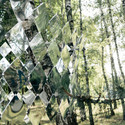
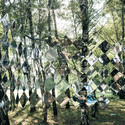
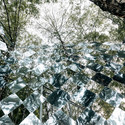
With their winning competition entry for Hungary's Sziget festival, one of Europe's leading music festivals, Studio Nomad created an installation to draw visitors back to nature. Their mirrored pavilion is a simple approach that creates a powerful experience for visitors, as more than 1200 reflective plastic sheets create shards of reflections which appear to fragment the surrounding forest.
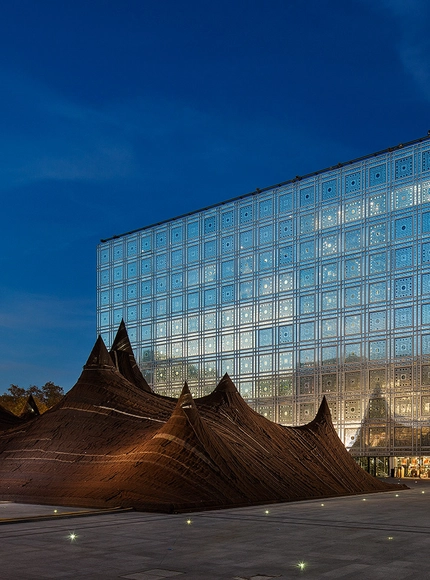
In conjunction with the Contemporary Morocco exhibit (Le Maroc Contemporain) at the Jean Nouvel-designed Institut du Monde Arabe in Paris, a giant tent has been constructed on the plaza in front of the building. Designed by Tarik Oualalou and Linna Choi of OUALALOU+CHOI, the tent harmonizes contemporary design and technical innovation with traditional fabrication methods. Constructed from more than 650-square-meters of camel and goat wool woven by female cooperatives in the Saharan desert, the tent serves as an urban landmark and a symbol for the Contemporary Morocco exhibit. The rhythm and scale of the tent’s silhouette renders a topographic dimension to the structure which pays homage to the nomadic traditions of southern Morocco.
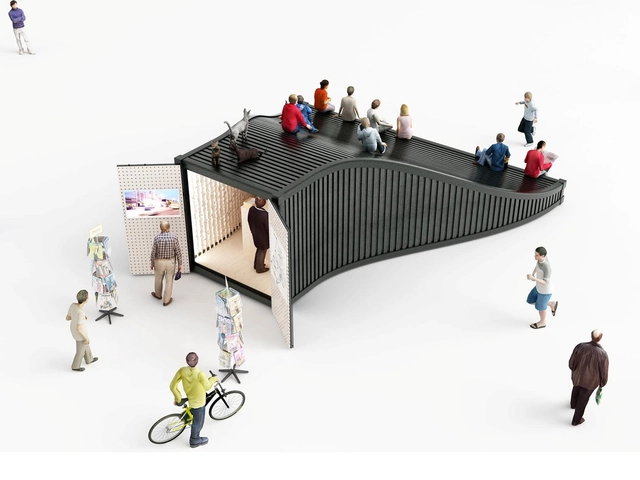
Information kiosk. Image Courtesy of NL Architects
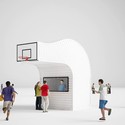
Fashion, design and architecture collide in Zaha Hadid's recently completed Dongdaemun Design Plaza, one South Korea's most popular tourist destinations. Commissioned by the Design Plaza's Supervisor of Public Space Young Joon Kim of yo2 Architects, the latest development for the plaza is a series of compact kiosks designed to activate the expansive public space surrounding the new building. One of ten teams invited to submit ideas for these new kiosks, Amsterdam-based NL Architects developed a series of impermanent but practical solutions for the plaza. Using new methods for reuse of standard shipping containers, the team proposed a host of kiosks, with two of their designs - an information booth and a miniature exhibition space - being accepted for construction.
See all of NL Architects' Zaha-inspired shipping container kiosks after the break
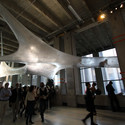
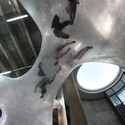
They began with a single roll of tape, frenetically navigating the space between columns with the help of a ladder and a lot of creativity. Ten days and twelve sets of hands later, Tape Paris was completed at Palais de Tokyo for 'Inside,' an exhibition of site-specific projects designed to be interactive and introspective. Tape Paris delves into the physical and psychological experience of interior space through an experiential model of exploration. Visitors travel through a matrix of elastic tunnels suspended precariously above the traditional exhibition space, as guests observe their movements from below. The biomorphic skin is a playground for the senses, offering opportunities to climb, relax, and discover.
Enter the elastic world of Tape Paris after the break
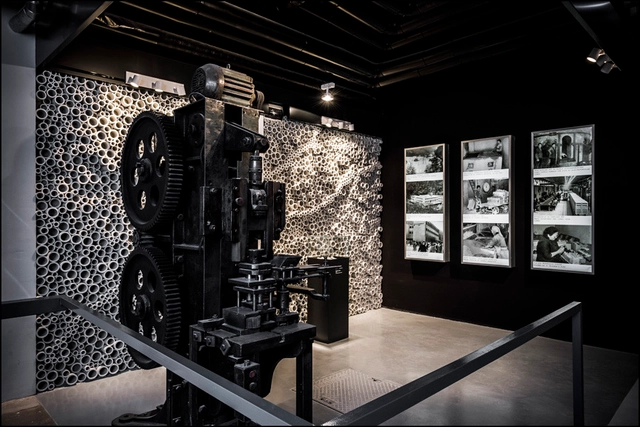
Winner of a 2014 National Design Award for Best Interior of the Year, this showroom design by RIBA ARHITEKTI (Janja Brodar and Goran Rupnik), transforms an otherwise drab factory corridor into a surprisingly engaging space through the innovative re-use of materials. Tasked with converting part of an unused hallway into a showroom, the client’s expectations were initially quite modest and called for re-painting and designing presentation posters. However, while inspecting the production units in the factory, the architects began to imagine using the freely available materials in the building to create a more engaging visual narrative about the company itself.
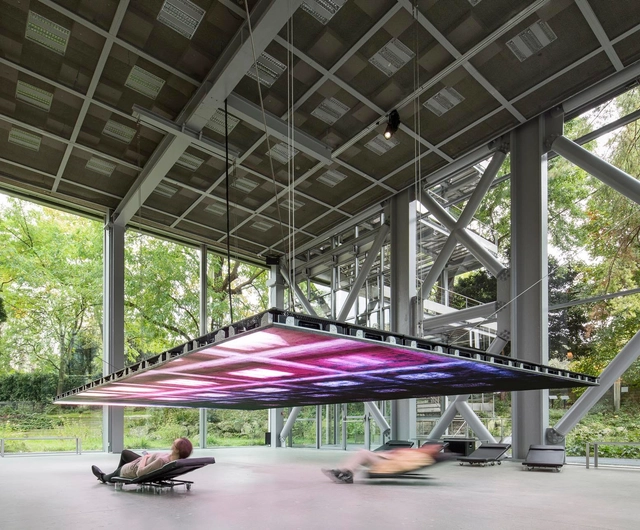
In celebration of the Fondation Cartier pour l’art contemporain’s 30th anniversary, Diller Scofidio + Renfro has installed an immersive exhibition that encourages visitors to experience the Jean Nouvel-designed, glass and steel museum building in an entirely new way.
“The Fondation Cartier building designed by Jean Nouvel will be used as raw material for their work, a first in the history of the institution. Musings on a Glass Box is a complex work occupying the entire ground floor of the Fondation Cartier, where a disturbance in the ceiling will trigger a surprising reaction. The result is an immersive environment, including an integral acoustic component by American composer David Lang and sound designer Jody Elff, that works with the building’s architecture to raise questions about transparency, perception, and one’s relation to space.”
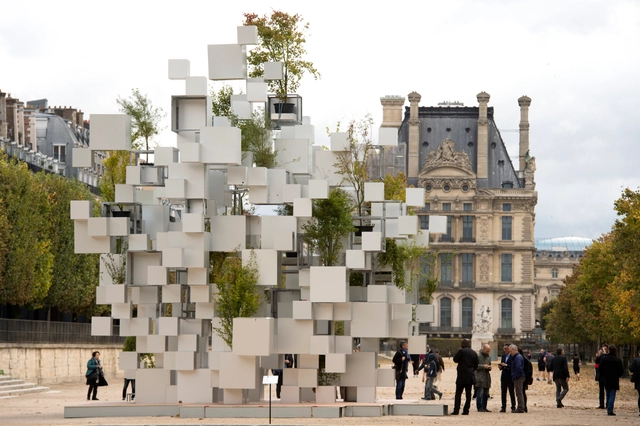
Over the weekend, Japanese architect Sou Fujimoto exhibited an inhabitable sculpture of stacked and suspended aluminum cubes as part of the FIAC art fair in the Parisian Jardins des Tuileries’ gardens. The installation, “Many Small Cubes” is his first project in Paris and was commissioned by the Philippe Gravier art gallery as an exploration of nomadic structures and Sou Fujimoto’s concept of bringing architecture closer to nature.
"The floating masses of Many Small Cubes creates a new experience of space, a rhythm of flickering shadows and lights like the sun filtering through leafy trees,” described Sou Fujimoto.
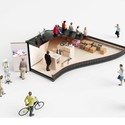
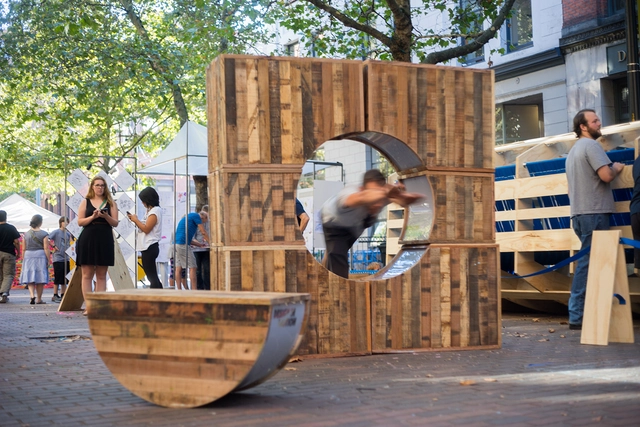
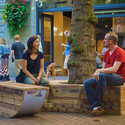
Downtown Seattle was transformed into a playground for people of all ages in September with Pop-Up! Street Furniture, an creative take on interactivity in the built environment. Eight movable modules combine to create endless configurations capable of forming either seating or play space for a dozen people. The project was realized by Seattle-based LMN Architects, leading an inter-disciplinary team of students, professionals, designers, manufacturers, and contractors, intent on stimulating ordinary streets in the city's downtown core. Created for the Seattle Design Festival, the project created a temporary hub for conversation, play, and engagement.
Read more after the break on the many uses of Pop-Up! Street Furniture in Seattle
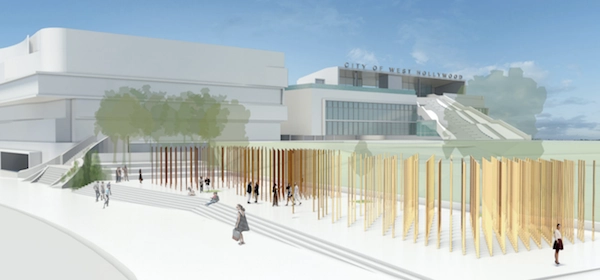
The West Hollywood City Council has selected Australian designer Daniel Tobin to build an AIDS memorial for West Hollywood Park. As stated by the non-profit Foundation for an AIDS Monument, Tobin’s installation of 341 vertical strands “functions as a destination piece — recognizable as an AIDS monument, leaving no question about the work when you leave the space.” Each vertical strand represents 5,000 Americans who have died from or living with AIDS. You can learn more about Tobin’s selection and design, here.
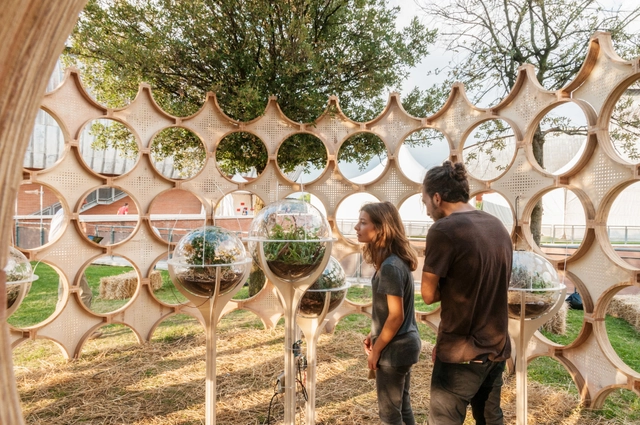
Within the walls of OFL Architecture's open-air wooden pavilion, the term "built environment" truly earns its keep. In Wunderbugs, humans become spectators of the natural world as insects toil away in six spherical ecosystems, and sensors weave movements into a web of data. Upon entering the pavilion, visitors are transformed into components of an interactive soundtrack harvested from the sensors and broadcast in the space, uniting the insect and human experience. The project was conceived for the second annual Maker Faire Europe in Rome, where it was installed earlier this month.
Enter the interactive acoustic experience of Wonderbugs after the break.
Waves of golden light appear to shimmer and float from the ceiling in “Breaking the Surface” a new interactive installation from Scandinavian Design Group, ctrl+n, Abida, Pivot Product Design and Intek. The kinetic sculpture is composed of an array of acrylic plastic tubes extending through the floor of a two-story mechanized matrix, gracefully moving above and below the surface to evoke abstract images of the undersea geography. Read more about the interactive installation after the break.
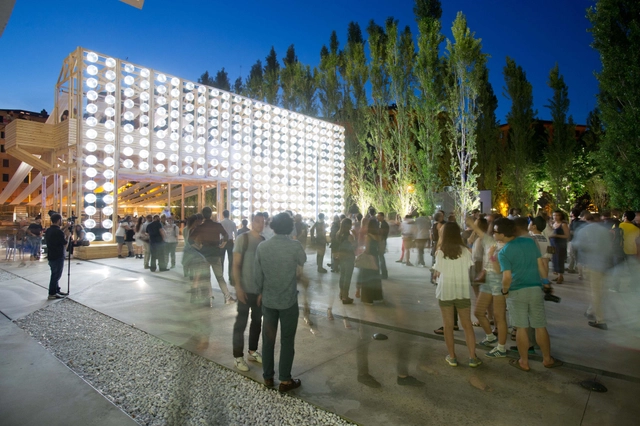
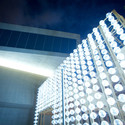
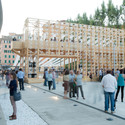
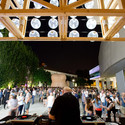
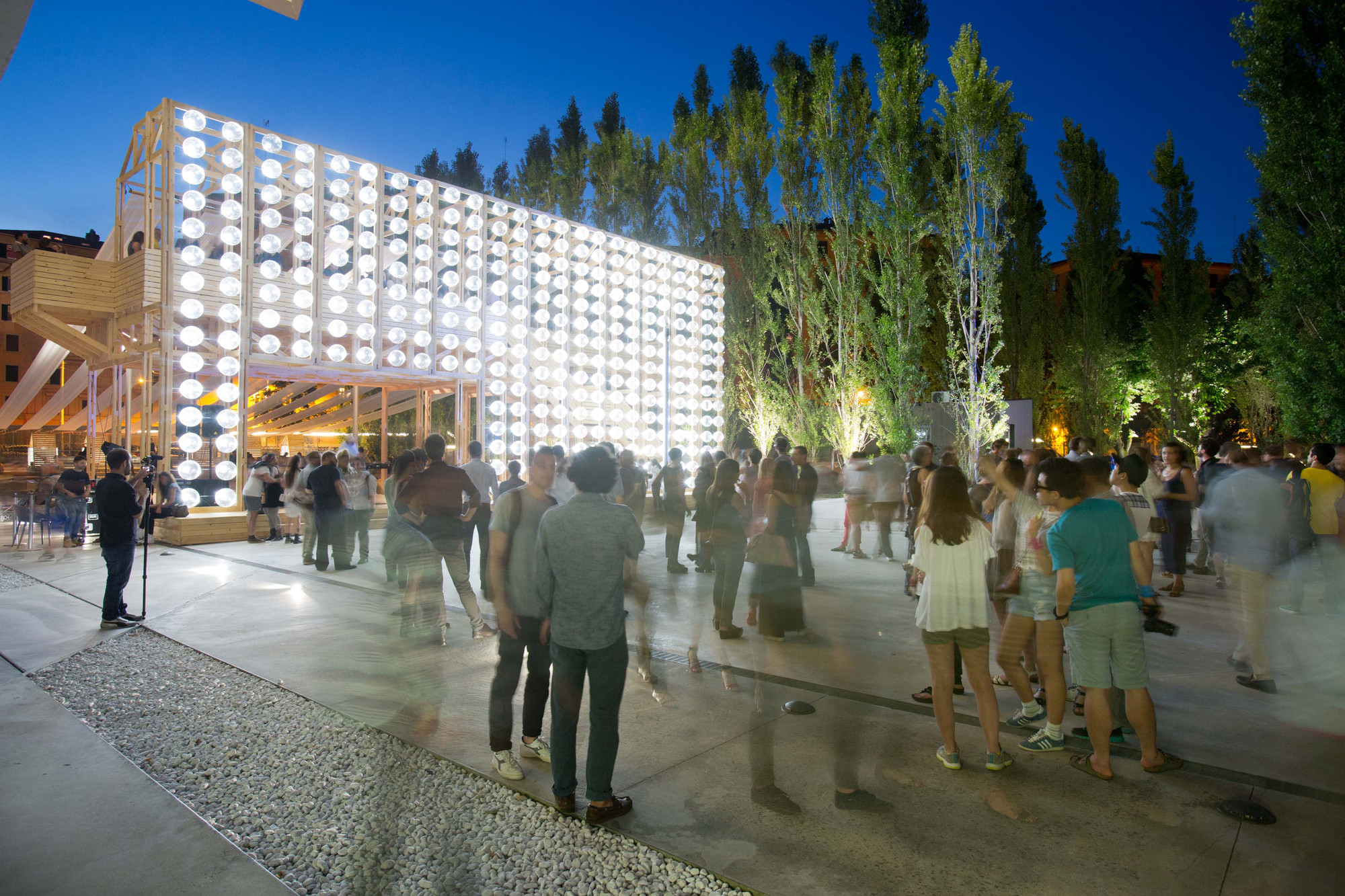
Orizzontale, winners of the 2014 Young Architects Program (YAP), have transformed the MAXXI’s piazza Boetti with an “8 1/2” meter-tall mobile theater made of timber and recycled beer kegs. Built in just four weeks, the installation created an “urban room” for the museum’s Play with YAP events program that provided an inhabitable podium illuminated by a translucent wall of lighted plastic beer kegs for a series of concerts and events.
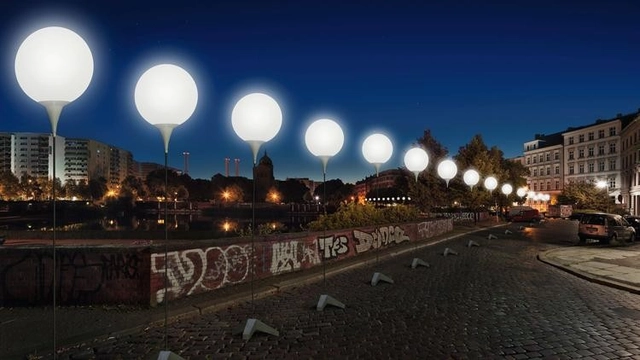
25 years ago on November 9, East German protesters torn down the Berlin Wall. To commemorate this moment, the German capital plans to line the wall’s original 9-mile stretch with 8,000 illuminated, white balloons. The installation, named lichtgrenze or “light frontier,” will be open November 7. On the 9th, the balloons will be simultaneously released into the air to music provided by the Staatskapelle Berlin orchestra.
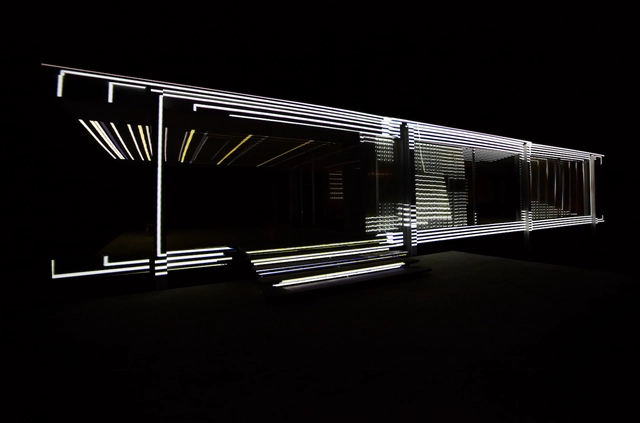
Starting tomorrow (October 17), Chicago-based artists Petra Bachmaier and Sean Gallero of Luftwerk will be transforming Mies van der Rohe’s Farnsworth House into a “canvas of light and sound” with the digital installation, INsite. “An exploration of the philosophy of Mies through light,” INsite will offer an entirely new nighttime experience at the Plano residence that highlights the architecture’s famed characteristics with an interactive light show pulsating to the original “sonic exploration” of Owen Clay Condon.
A video preview of the installation, after the break.
In this video from the Louisiana Museum of Modern Art's Lousiana Channel, three acclaimed writers - Sjón, James McBride and Daniel Kehlmann - talk about their experience of Olafur Eliasson's Indoor Riverbed at the Danish museum. Sjón describes how he felt when he saw 180 tons of rock from his home country of Iceland filling the room, saying "It was like a moment in a dream, when you enter a room and something is not right, but familiar."