




-
Architects: dEEP Architects
- Area: 2600 m²
- Year: 2018



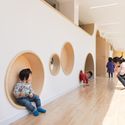
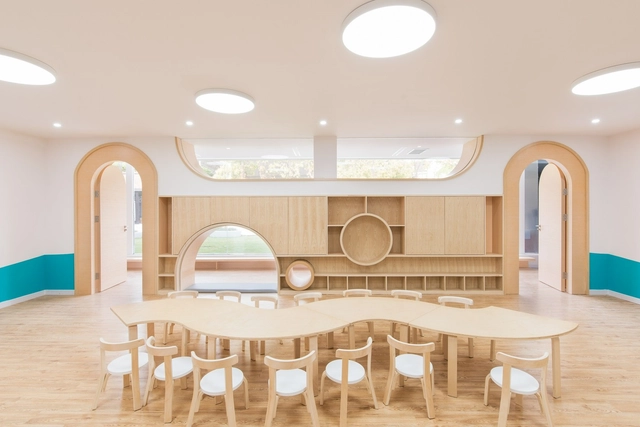
Within the architecture field, the relationship between design and education has gained prominence, especially when it comes to children’s education. The relationship between architecture, philosophy, and sociology is well known. Frequently, when designing, issues introduced by these fields work as tools to reflect upon the relationship between the space and the user. When we consider children’s education, we must go beyond ergonomics and think of architecture as an educational tool.

Steven Holl Architects have been announced as winners of the University College Dublin Future Campus Competition, overcoming 98 total entries, and a shortlist of Diller Scofidio + Renfro, John Ronan Architects, O’Donnell + Tuomey, Studio Libeskind, and UNStudio.
The winning design features seven new quadrangles designed around historic features and woodland, integrating sustainable features such as solar connectors and water retention ponds. The competition sought to express UCD’s creative abilities and strengthen its physical presence and identity, signifying a major educational project for the Irish capital.

Architecture schools and the students they house have a particularly unique and interesting building-user relationship. Architecture students value the buildings of their school not only for providing the valuable work space necessary for constructing studio projects but also as an example and model of a building in use. As the buildings are the places where students first learn how to read and understand architecture, design schools become full-scale teaching tools that help new designers grasp structure, details, how materials perform and interact, and so many of the other core concepts of architecture. While the scrutiny of students and faculty can be exhaustive, architects have embraced the challenge of creating engaging works of architecture that both suit the specific needs of a school and take on the pedagogical challenge of educating students by example.


Within a week of its successor being awarded the Silver Lion at the 2016 Venice Biennale, the original Makoko Floating School collapsed. Designed by Nigerian architect Kunlé Adeyemi of NLÉ Architects, the school was located in the Lagos Lagoon in Nigeria. Now, almost two years later, Lagos-based writer Allyn Gaestel has investigated the vulnerable coastal community and architect behind the project in a remarkable narrative nonfiction piece, "Things Fall Apart."


Perkins+Will’s triangulated facade scheme has won an international competition for the design of the new School of Continuing Studies at York University’s Keele campus outside of Toronto, Canada.
Beating out proposals from top firms, including finalists HOK andGow Hastings Architects with Henning Larsen, Perkins+Will’s design twists as it rises, both reacting to solar optimization studies and opening up the building to create a new gateway at the campus’ southeast entrance.


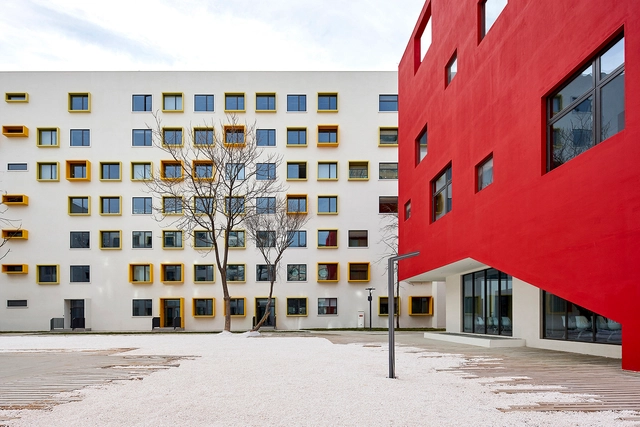
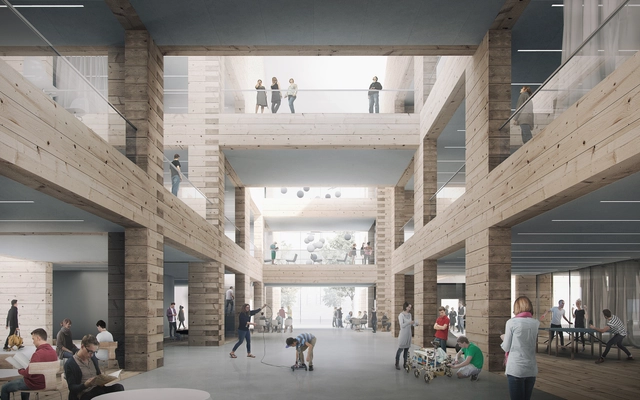
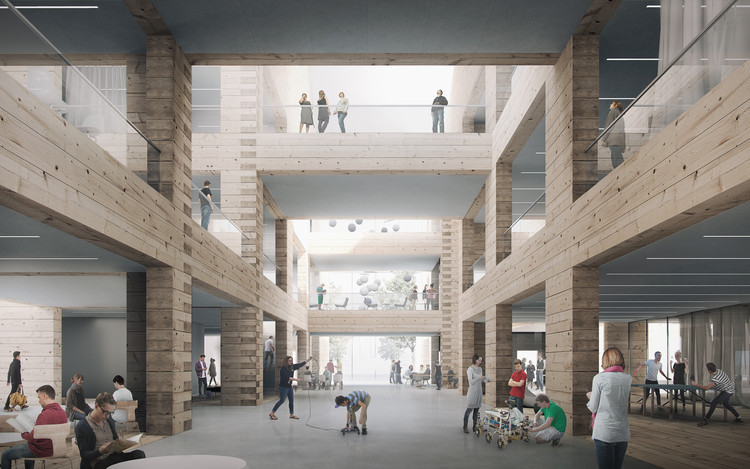
AOR Architects, a young practice based in Helsinki, have won the commission to design Monio High School and Community Centre in Tuusula, Finland. The project explores an innovative use of timber log building and will be the largest timber log school building in the world after its completion. Consisting of a high school, music institute, and community college, AOR’s proposal combines these different programs in a multi-functional learning and community environment.

Sou Fujimoto Architects has been selected as the winner of a competition to design the new HSG Learning Center at the University of St. Gallen in Switzerland.
Chosen from a shortlist of 8 teams, Sou Fujimoto Architects’ proposal “Open Grid – Choices of Tomorrow” received the highest marks across the following criteria: architecture and urban planning, innovation in concept execution, functionality, sustainability and economic efficiency. According to the competition jury, the project was notable for its “highly developed didactic concept, compatibility with the district, architectural ambition and affordability.”

Stefano Boeri Architetti has revealed the design of three new innovative schools to be built in Tirana, Albania, that will be open 24 hours a day, everyday of the year, transforming them into essential social centers for residents of all ages.
The three new structures will be integrated into Stefano Boeri Architetti’s competition-winning masterplan for Tirana, positioned within key social nodes of the Albanian capital’s northwest quarter: the neighborhoods of Don Bosco, Kodër-Kamëz and Shqiponja Square. Multiple schools will be housed within each of the three structures, which will also contain meeting and social spaces open and available to the entire community.
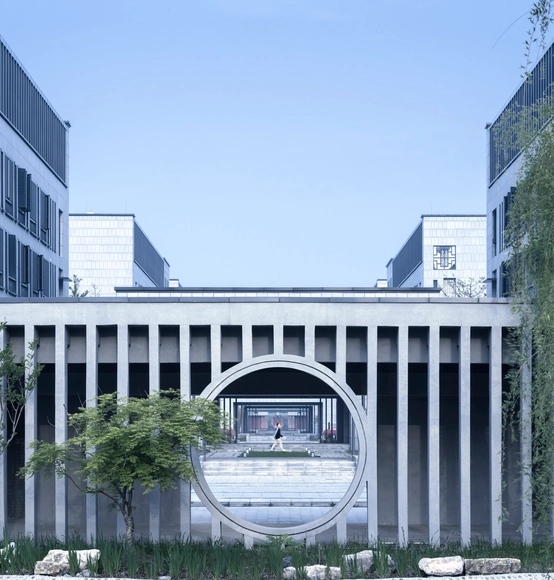
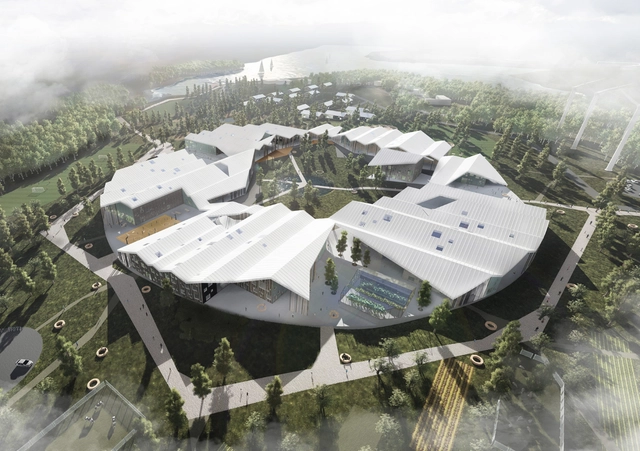
With high hopes of contributing to the reformation of Russia’s secondary schooling system, construction has begun on Smart School, a planned 31,000 meters square educational complex in Irkutsk, Siberia, which combines multi-use educational facilities, outdoor learning spaces, and housing developments for adoptive families. Designed by Danish firm CEBRA, the project was the winning proposal for the school’s international competition back in 2015, beating 48 other firms, including MVRDV and Sou Fujimoto Architects.
“Based on the program and principles of Smart School, an architectural concept has been developed which integrates buildings, a plot of land and the surrounding urban community into a complete, diverse and activating learning environment, a ‘school park’, explain the architects. “There is school life not only in specialized premises but also in open areas inside and around buildings."

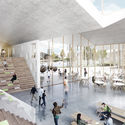



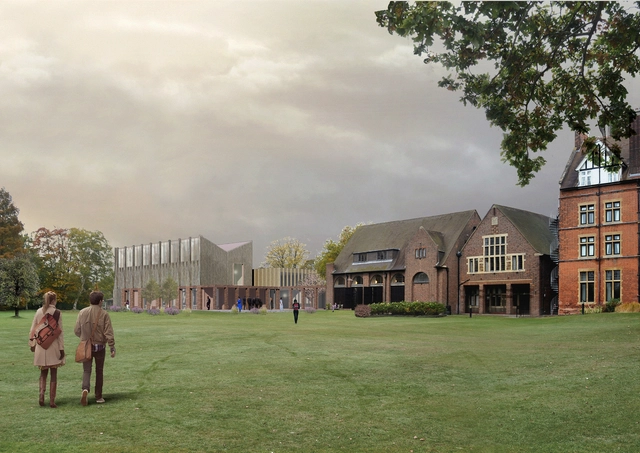
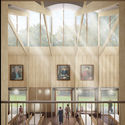
Homerton College, Cambridge and competition-organizers Malcolm Reading Consultants have announced that emerging practice Feilden Fowles has been selected as the winners of the competition to design a new £7 million showpiece dining hall for Homerton College, the newest constituent college of the University of Cambridge. Unanimously selected by the competition jury, Feilden Fowles’ scheme was chosen over a shortlist of entries from 2016 Stirling Prize winner Caruso St John, dRMM, Hall McKnight and Walters & Cohen Architects.
“Feilden Fowles’ concept design for the dining hall subtly relates to the existing ensemble of buildings and the garden setting, and yet has the poise to convince as a showpiece,” said Professor Geoffrey Ward, Principal of Homerton College, Cambridge.
“What appealed so strongly about the team’s particular approach was their openness to creating many opportunities for dialogue. We are looking forward to working with them as they develop the detailed design.”


This article was originally published by Metropolis Magazine as "Why Architects Must Rethink Restroom Design in Schools."
"Gang style" bathrooms, in which rows of stalls are installed opposite rows of wash basins and designated only for males or for females, have been de rigueur in educational facilities for the last hundred years. They involve predictable plumbing, mechanical exhaust, and fixture costs. Short doors and divider walls allow for the passive monitoring of behavior.
Relinquishing this traditional bathroom model is daunting, since individual toilet rooms can significantly increase costs through additional plumbing, ductwork, ventilation, partitions, doors and hardware. These designs many times require additional space, trigger further ADA compliance, and invalidate some USGBC LEED points. Moreover, school districts typically have limited budgets, established facilities, and deep-rooted social practices.