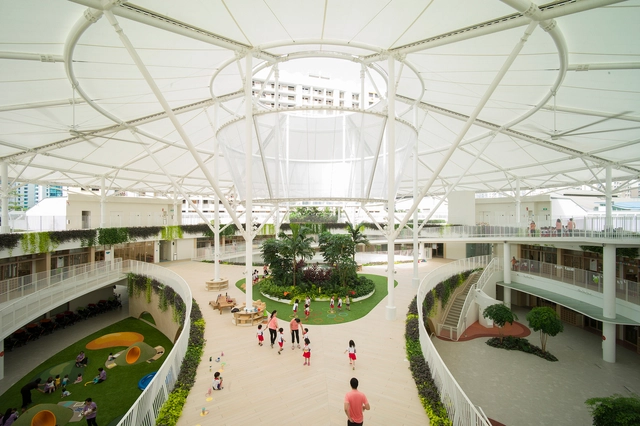
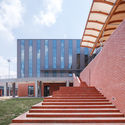
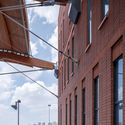
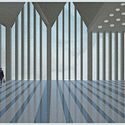
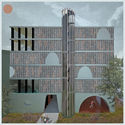
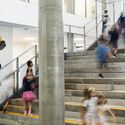
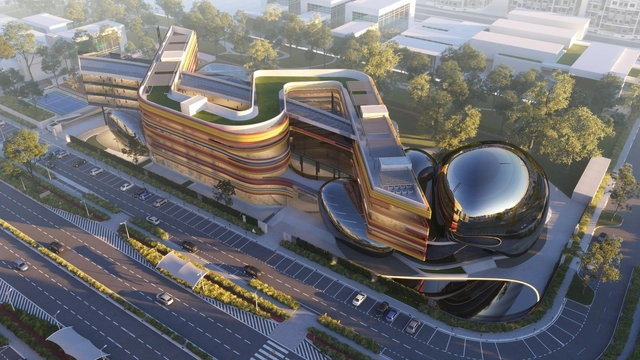
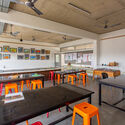
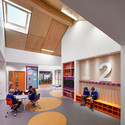
International School. Image Courtesy of CUBE Consultants
This week’s curated selection of Best Unbuilt Architecture highlights educational architecture submitted by the ArchDaily community. From preschools to higher education institutes, this article explores how architects shifted towards fostering individual creativity, critical thinking, and exploration, and presents projects submitted to us from all over the world.
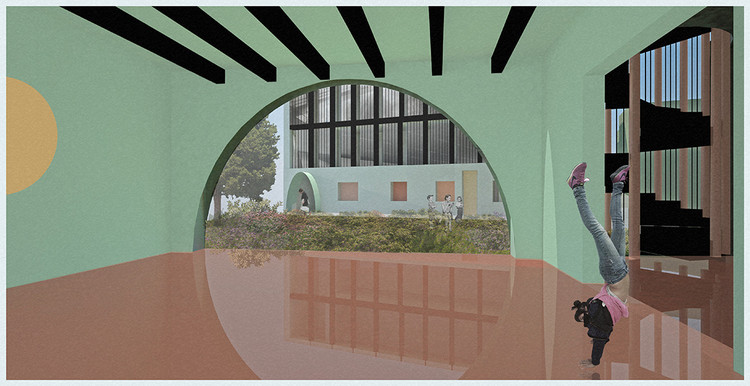
Featuring a secluded kindergarten in the Icelandic mountains, a vibrantly-colored playschool in the industrial city of Shenzhen, and a Florentine high school with a flow of natural sunlight, this round-up explores how architects prioritize student well being and comfort in spaces that promote productivity, learning, and creativity. The selection also includes preschools, high schools, and academies in France, United States, Egypt, Kazakhstan, and Israel.
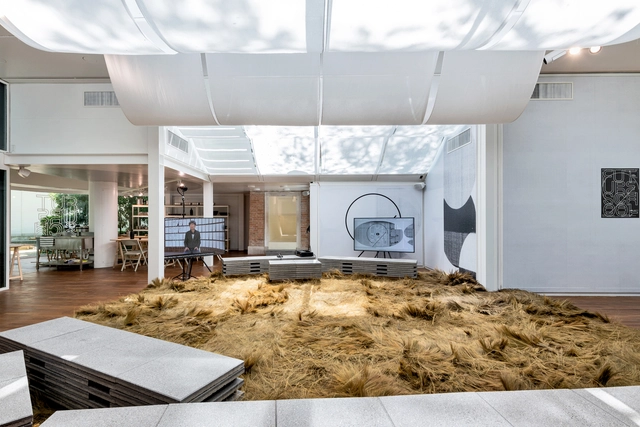
The 17th Venice Architecture Biennale is currently unfolding, and its 60 national pavilions reveal a wide range of answers to the question "How will we live together". This year's edition restates the Biennale's role as a platform for inquiry, prompting a collective re-evaluation of pressing issues such as migration, inequality, climate change or the role of technology. While in Venice, Archdaily met virtually within the Korean pavilion with curator Hae-Won Shin, as the pandemic prevented the exhibition's creators to be present at the Biennale. The conversation explored the thinking behind "Future School" and how it creates a framework for collective learning and exploration.
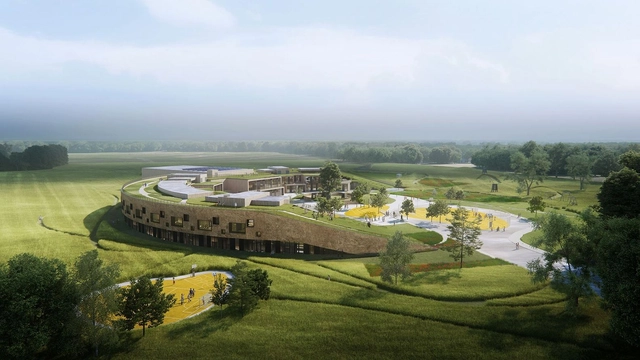
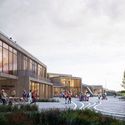
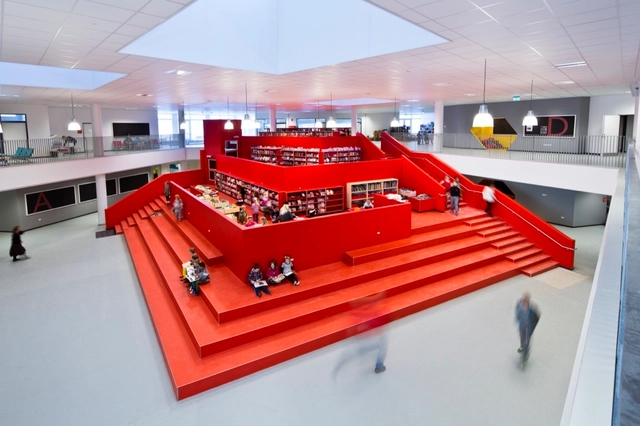
Located in Denmark’s Lolland-Falster region, Henning Larsen's New School in Sundby marked the commencement of a historic project for the country's sustainable educational-facility architecture. The primary school is set to be the largest construction project in Guldborgsund Municipality that ensures high sustainability parameters and community engagement. The school is expected to open its doors at the end of summer 2022, welcoming over 580 students in a nature-oriented premises.
Titled "Future School", the Korean Pavilion at the 17th International Architecture Exhibition - La Biennale Di Venezia, transforms the structure into an explorative academic facility. Curated by Hae-Won Shin, the pavilion will be on display at the Giardini from May 22nd until November 21st, 2021.
Educational architecture is crucial for creating spaces that, not only nurture and mold the minds of the future generations, but also provide spaces for the wider public to come and share knowledge and ideas.
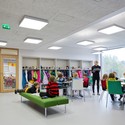
New City School, Frederikshavn / Arkitema Architects . Image Cortesía de Arkitema Architects
According to architect and academic Frank Locker, in architectural education, we keep repeating the same formula from the 20th-century: teachers transmitting a rigid and basic knowledge that gives students, no matter their motivation, interests, or abilities, little to no direction. In this way, says Locker, we are replicating, literally, prisons, with no room for an integral, flexible, and versatile education.
"What do you think of when you're in a space with closed doors and a hallway where you can't enter without permission or a bell that tells you when you can enter and leave?" asks Locker.
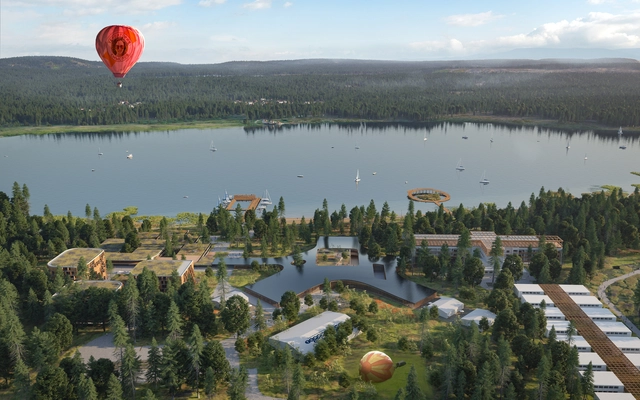
Mecanoo was selected as the winner of the international architectural competition for the development of the Senezh Management LAB. The master plan highlights an architecture that responds to its surroundings and generates a rich environment with a diverse variety of functions and spaces.
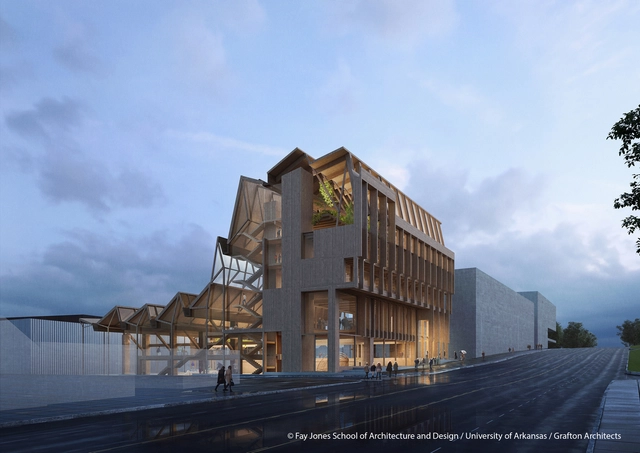
Courtesy of Fay Jones School of Architecture and Design, University of Arkansas / Grafton Architects
Grafton Architects was selected as the winning firm to design the Anthony Timberlands Center for Design and Materials Innovation at the University of Arkansas. In collaboration with Modus Studio for the planned campus design research center, the design on the project is scheduled to begin this summer.
Courtesy of Coldefy & Associés with RDAI_onePULSE Foundation
OnePULSE Foundation has selected Coldefy & Associés with RDAI, Orlando-based HHCP Architects, Xavier Veilhan, dUCKS scéno, Agence TER, and Prof. Laila Farah, to design the National Pulse Memorial & Museum.
The most important part of children's education happens in the playground, instead of in the classroom. Despite this, many times we find huge empty school playgrounds.
Due to its importance and meaning, many schools and educational institutions have broken traditional paradigms and have opted to explore new possibilities. We have selected innovative examples, in which, through the use of specially designed equipment, strident colors and a variety of textures, they allow recreation areas to promote exchange, learning, and discovery.
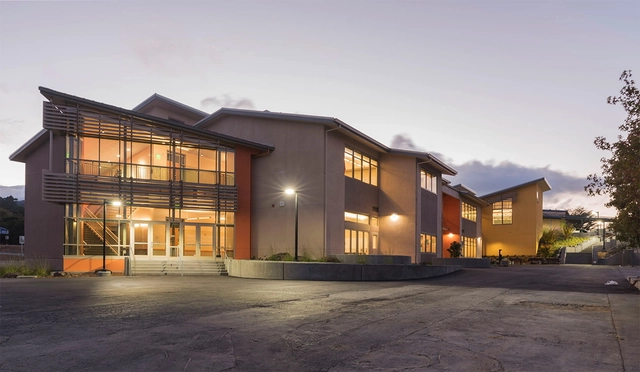
Burlingame Intermediate School. Image courtesy of Hamilton + Aitken Architects.
“When we started out, our goal was to change the world, to do something that would really make a difference to the lives of people,” said Chad Hamilton, AIA LEED AP BD+C, Principal Architect of Hamilton + Aitken Architects (H+AA). “And education is one of the things that really determines how people live the rest of their lives. “So, for us it’s just a wonderful feeling, to improve kids’ educational spaces.”
https://www.archdaily.com/919991/sustainable-school-design-how-hamilton-plus-aitken-architects-maximize-natural-light-using-vectorworksSponsored Post
Prague's architecture is known for a patchwork of buildings ranging in styles and eras. A recent proposal for the redesign of the Trojska Skola aims to supplement a similar cohesive attitude to the space. Titled, Dissonant Unity, the project designed by Stefano Corbo Studio explores the ways to incorporate new programs and increased public space to an existing grammar and primary school with an attached sports center, auditorium, and cafeteria.
Did you know that 64 million European children spend more time at school than anywhere else other than their home? European children spend approximately 200 days each year at their primary schools. With this information, how do we go about designing healthier classrooms that create productive learning environments? This question is perhaps more important than ever, as this will be the first time since the 1970s that Europe and the UK will see a boom in the construction and renovation of schools. What a tremendous opportunity this is for both architects and educators to rethink what an educational facility should be and how the physical environment can be designed to have a positive impact on learning.



















.jpg?1572522806&format=webp&width=640&height=580)