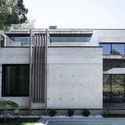
With spaces for children, “you have the opportunity to create architecture that in many ways is unformulated architecture. Children react to spaces completely spontaneously. It is almost an enhanced architecture”, says Dorte Mandrup. The implication is that design can contribute to forming critical thinking, encouraging autonomy, and responsibility, and helping forge future citizens. For the most part, the educational system and its spatial expression haven’t changed significantly in the last hundred years. Nonetheless, with access to information becoming ubiquitous, the focus is slowly moving from accumulating information to nurturing critical thinking, and new teaching methods open up a new area of architectural experimentation. The following explores the impact of space on learning, specifically in primary and secondary education, discussing how architecture could aid the educational process, becoming a teaching tool.
The role of a school is to prepare children for life. But with life-changing faster than ever, schools need to change just as quickly. Recent additions to school curriculums reflect the complexities of modern life, with environmental crises, societal injustices, and the dangers of social media now major parts of the syllabus.
Although it’s often said that long-term change begins at ground-level, change is never easy, wherever it starts. For example, a curriculum that responds to environmental issues is said to cause growing instances of eco-anxiety in children, one of a number of causes of another crisis, in children’s mental health.
For architects, schools are often complex structures to design. They must provide a variety of spaces for education, and also consider sports and recreational activities. But beyond its size or surface, the greatest challenge is to design an area that fosters a positive pedagogical environment for children. Below, a selection of +70 school projects with their drawings to inspire your proposals for learning campuses.
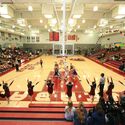
New Ground-Academy Extension Arena of the Arts / READ Architecture. Image Courtesy of re-a.d
As the summer days come to an end, the focus naturally shifts to the realm of academia, a space full of curiosity, energy, and ingenuity. For architects, educational spaces are an opportunity for exploration, as they gather eager students together with professors and experts in their respective fields. The environment of educational facilities thus becomes a canvas for the cultivation of creativity, curiosity, and growth. From the playfulness of kindergartens and preschools to the halls of faculties that shape the scholars of tomorrow, the architecture of educational spaces must balance structure and flexibility to respond to the needs of students, teacher, and their larger communities.
This week’s curated selection of Best Unbuilt Architecture highlights designs submitted by the ArchDaily community dedicated to educational institutions. From innovative programs dedicated to child development and community engagement to specialized high schools or inclusive institutions learning to work with locally available materials such as rammed earth, this selection highlights projects dedicated to the exchange of knowledge in its varied forms.
As societies evolve, educational facilities also undergo continuous transformation processes to keep up. In terms of their design strategies, they must embrace modern approaches that respond to the changing needs of students and teachers. Including flexible, inclusive, and engaging spaces that seamlessly integrate technological advances, contemporary educational design aims to enhance learning and collaborative work, as well as comfort and wellbeing.
Kalwall focuses on developing forward-thinking solutions for human-centered design that address these evolving needs, while responding to a tight budget. Through a collaborative strategy with architecture and engineering projects, they focus on four ways to design optimal learning environments, including daylight design, energy efficiency, safety, and cost savings through renovation and installation.
For many, schools and kindergartens represent the first contact with public architecture. They, together with every educational facility, serve as the foundation for learning and knowledge dissemination, playing an important role in shaping the formative years of children and young adults. In consequence, these buildings need to respond to the needs of different age groups, while creating functional and flexible spaces for learning, but also for play and unstructured interaction. Light and ventilation needs contribute to the complexity of these architectural programs. However, designing educational facilities presents opportunities for innovation and creative expression, as they are required to adapt continuously to the changing needs of students and faculty while creating a conductive environment for learning.
This week’s curated selection of Best Unbuilt Architecture highlights designs submitted by the ArchDaily community dedicated to cultural institutions. From a learning center created to offer the girls in Mozambique an equal opportunity to learn, play and connect, to a naval station redesigned as a research center on the coast of Puerto Rico, this selection features projects created to encourage learning, curiosity, and the exchange of knowledge and expertise. The article includes designs from both established and emerging architectural practices, including Moore Ruble Yudell, C+S ARCHITECTS led by Carlo Cappai and Maria Alessandra Segantini, Hello Wood, and snkh studio.
After two weeks of voting in our 14th edition of the Building of the Year Awards, our readers have narrowed down over 4,500 projects to just 75 finalists across 15 categories, casting over 100,000 votes. This year's awards celebrate the very best in design, innovation, and sustainability from around the globe, with the shortlist featuring an exceptional range of projects, from a house in a favela to cutting-edge cultural centers and innovative public spaces that are sure to impress. As a crowdsourced award, we are proud to say that your selections are a true reflection of the state of architecture, and this year's finalists are no exception.
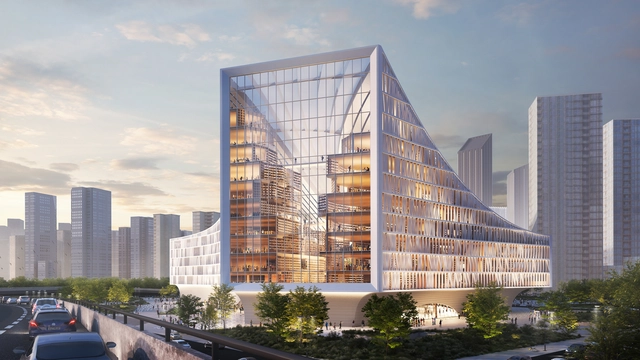
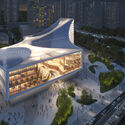
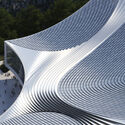
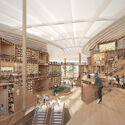
MVRDV, in collaboration with UAD, has been selected as the winner of the competition to design a new library for Wuhan, poised to become one of the largest libraries in China. The large-scale project creates diverse study environments and offers reading and studio spaces while also connecting to its surroundings via three large openings that display the life inside the buildings to invite visitors to enter. Spanning over 140,000 square meters, the distinctive building adapts its volume to reflect its position at the confluence of two main rivers in Wuhan and become a recognizable landmark for the city.
Designed by Bjarke Ingels Group, The Robert Day Sciences Center at CMC in California breaks ground and is expected to be completed in 2024. Featuring an open auditorium, labs, research spaces, and multifunctional roofs with 360-degree views of Mt. Baldy, the building will serve a community of 1,400 students. By literally stacking disciplines together in a Jenga-like composition, the framing of a column-free bar will serve as a multilevel gathering hub of collaboration and a crossroads for scientific thought and also stimulate the rest of the liberal arts students to take a deeper interest in the sciences and vice versa.
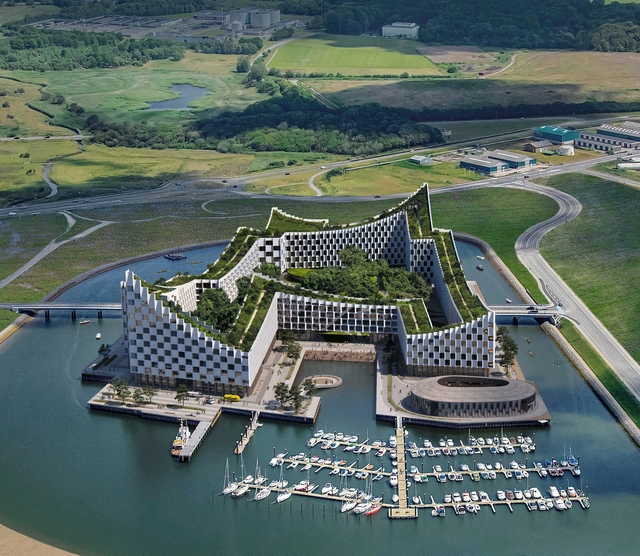
Bjarke Ingels Group has unveiled the vision for the Masterplan Esbjerg Strand, which will form the framework for a campus environment that aims to bring a new approach to education. The Education Esbjerg project will accommodate an innovative educational platform that rethinks the traditional education system in the country. BIG’s concept is to recreate an entire city in one building. Education and development will create a frame of life for the new communities, while the island will welcome a varied array of functions to create a sustainable, human-centered ecosystem.
Architecture practice Grimshaw has revealed designs for the Futures Institute at Dollar Academy (FIDA) in Scotland, UK, an open-access learning platform developed by the Dollar Academy, one of Scotland’s leading independent schools. The Institute’s new building will receive the country’s first Living Building certification.
FIDA was launched in May 2021 to tackle fundamental challenges in education: providing equitable access and closing the poverty-related attainment gap; finding compelling alternatives to traditional teaching and exam systems; and addressing sustainability. The initiative invites young people across Scotland to participate in innovative projects rooted in the United Nations Sustainable Development Goals. These challenges include workshops, skills-based courses, design challenges, and competitions, all offered in-person and via an online platform to enable the broadest possible participation.
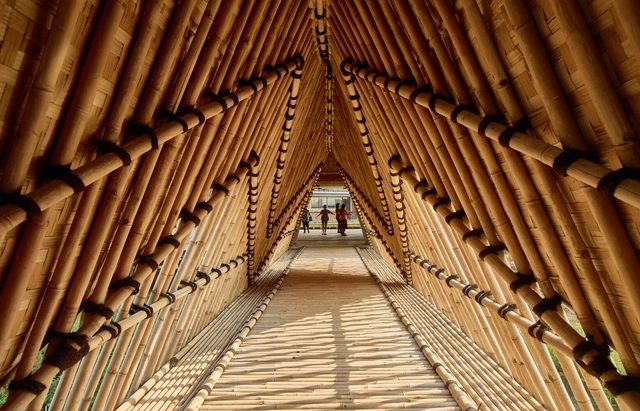
Arteries of hope by Partner-z Architects. Image Courtesy of Partner-z Architects
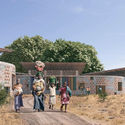
This week’s curated selection of Best Unbuilt Architecture highlights educational facilities submitted by the ArchDaily community. From a contextual Earth school in Senegal, to a borderless, collaborative school in Vietnam, this round up of unbuilt projects showcases how architects infused nature with architecture, offering students the chance to engage with the landscape and learn more about their surroundings from their academic institutes. The article also features projects from Lebanon, Switzerland, Armenia, Ukraine, and Greece.
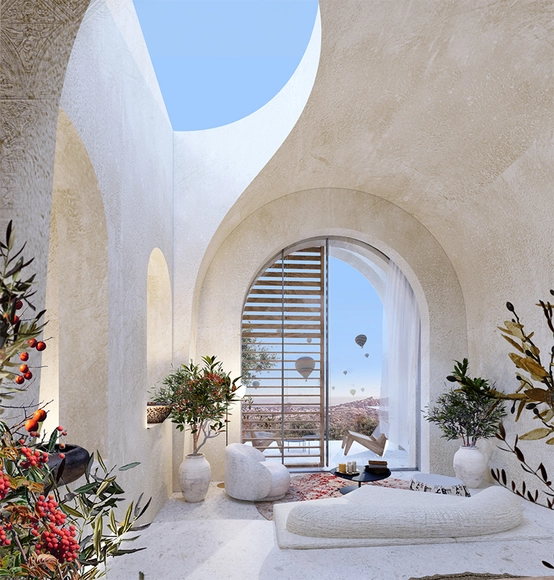
Cappadocia Spa Hotel by GAD ARCHITECTURE. Image Courtesy of GAD ARCHITECTURE
Offering short-term accommodation to travelers, hotels represent one of the main elements supporting the hospitality sector. They often aim to create a serene environment, isolated from the bustle of city life, yet representative of the local identity. Boutique hotels represent a rising sub-sector of hospitality design. These are small hotels typically between 10 and 100 rooms with carefully chosen interior design, providing a memorable experience to their guests. From historic renovations to contemporary ground-up hotels, hotel projects represent a great opportunity for architects to create unique environments centered around leisure and relaxation.
This week’s curated selection of Best Unbuilt Architecture highlights projects submitted by the ArchDaily community. Located in the forests of Portugal, on the shore of the Greek island of Crete, or in the deserts of Egypt, this round-up of unbuilt projects showcases how architects respond to local conditions in order to create designs that cater to the needs of tourists and travelers.
This week’s curated selection of Best Unbuilt Architecture highlights educational and cultural projects submitted by the ArchDaily community. Through examples from all around the world, the article explores how these spaces of knowledge and discovery are designed to inspire and inform.
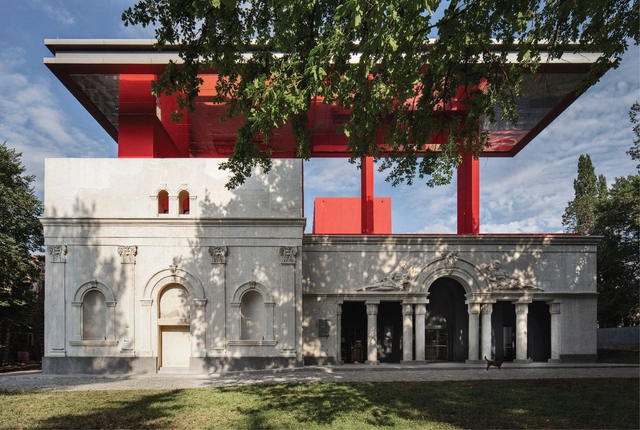
Featuring a monolithic museum in Portugal, a digital heritage centre with a media facade in Korea and a mobility research centre in Turkey, the round-up spans various kinds of educational and cultural spaces, as well as different attitudes towards the built or natural environment. The following projects reveal the ideas that shape spaces of knowledge in different contexts, illustrating diverse approaches toward what constitutes an institution of culture.
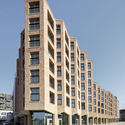
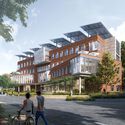
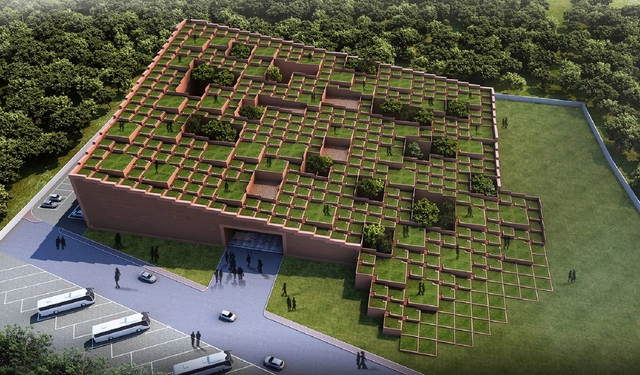
Sanjay Puri Architects has designed a new building for the Prestige University in Indore, a stepped massing with green terraces that blends with the landscape. Currently under construction within the 32-acre university campus, the project echoes traditional Indian architecture through its use of red brick and contextual adaptation to the local climate. The morphology creates an outdoor amphitheatre for students and faculty, while the interweaving of indoor and outdoor spaces is meant to foster engagement and social interaction.
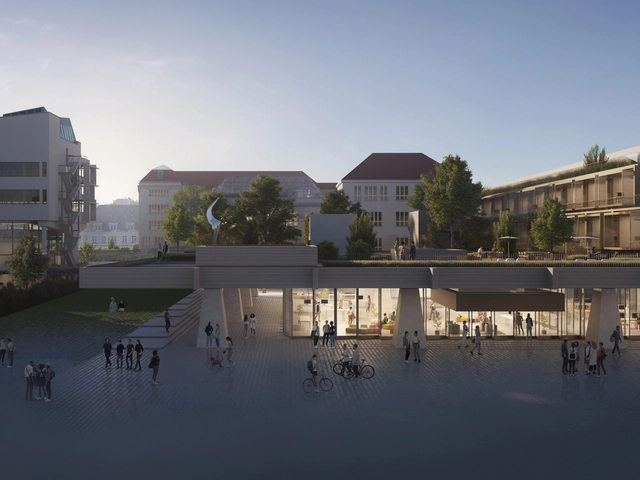
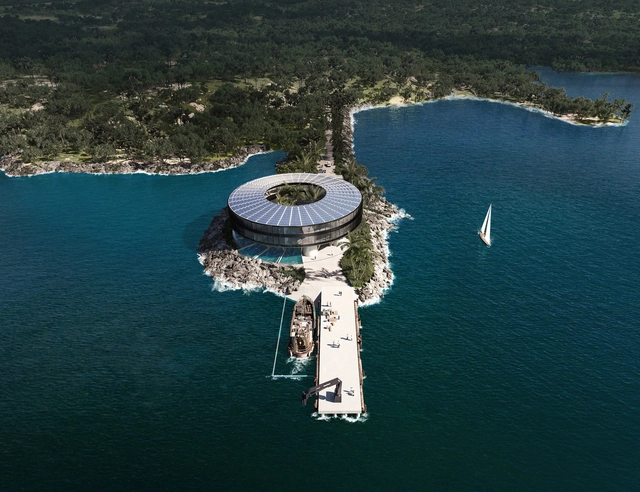
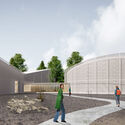
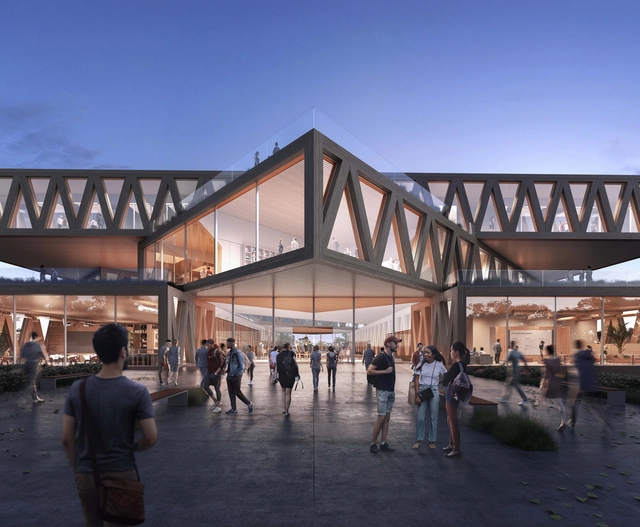
HENN has won two major architecture competitions in Germany to design the Brainergy Hub in Jülich and the German Language Forum in Mannheim. The office's Brainergy Hub proposal features a circular design dedicated to renewable energy research, whereas the Language Forum proposal stands as an inviting open space that promotes communication and interaction through unique learning experiences.
The European Commission and the Fundació Mies van der Rohe have announced the second list of 85 works competing for the 2022 European Union Prize for Contemporary Architecture – Mies van der Rohe Award. Joining the batch of first nominations announced in February 2021, the full list comprises now of 532 competing works for the EU Mies Award 2022. The shortlist of 40 will be announced in January 2022, the winners in April 2022, and the Award ceremony will take place in May 2022.


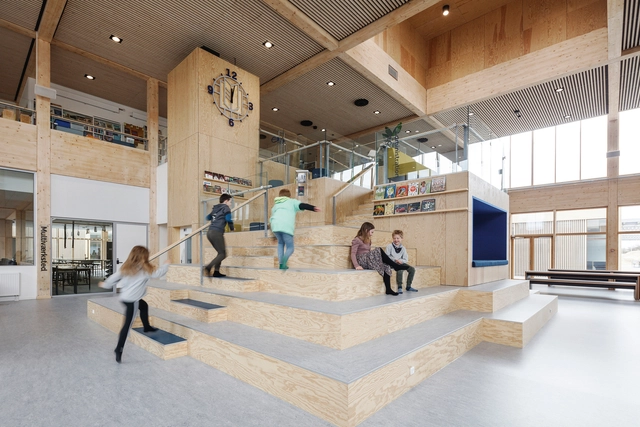


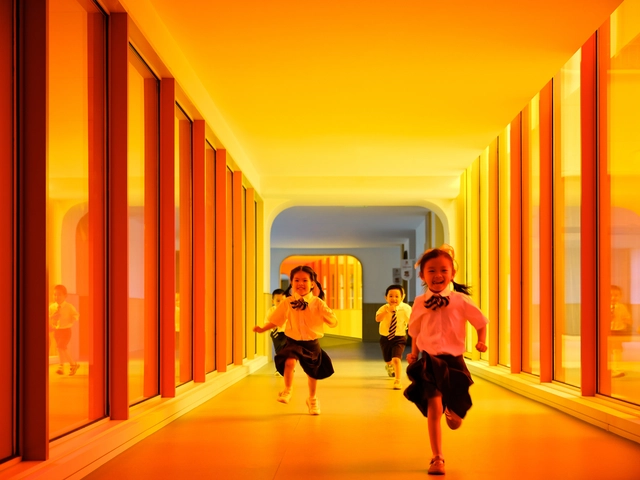

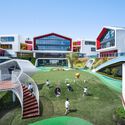










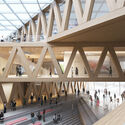
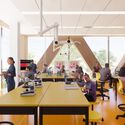
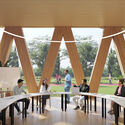
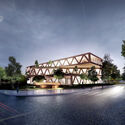



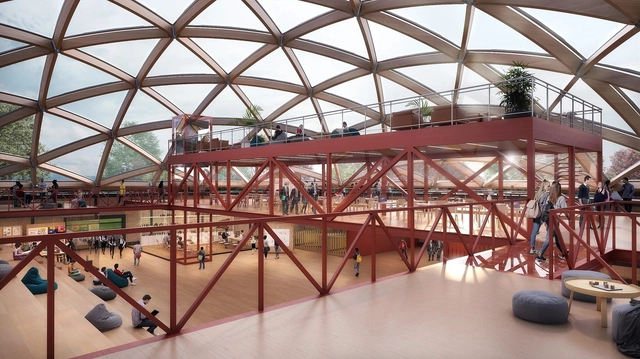


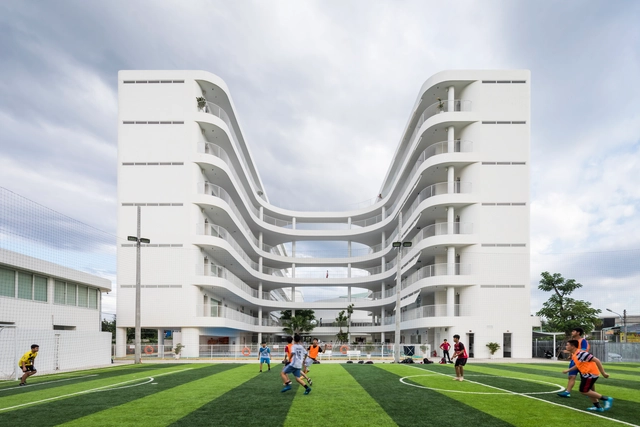



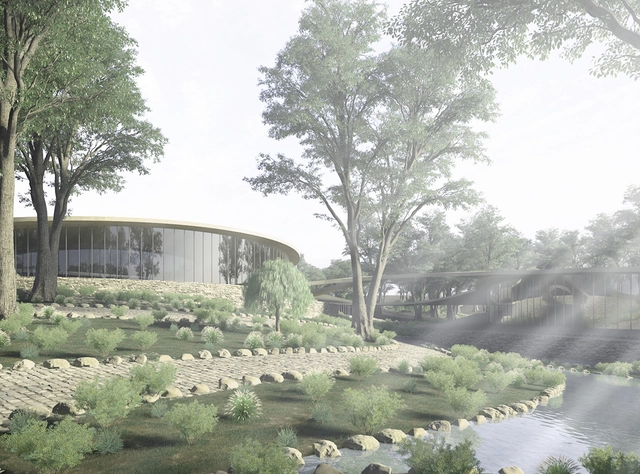

.jpg?1656583509 "The Creeper – COAF Smart Campus Armavir by TarberAK Architectural Studio; TL Bureau. Image Courtesy of TarberAK Architectural Studio; TL Bureau")






.jpg?1634887210&format=webp&width=640&height=580)
.jpg?1634887251 "Brainergy Hub. Image Courtesy of HENN")
.jpg?1634887182 "German Language Forum. Image Courtesy of HENN")
.jpg?1634887186 "German Language Forum. Image Courtesy of HENN")
.jpg?1634887229 "Brainergy Hub. Image Courtesy of HENN")
.jpg?1634887210)