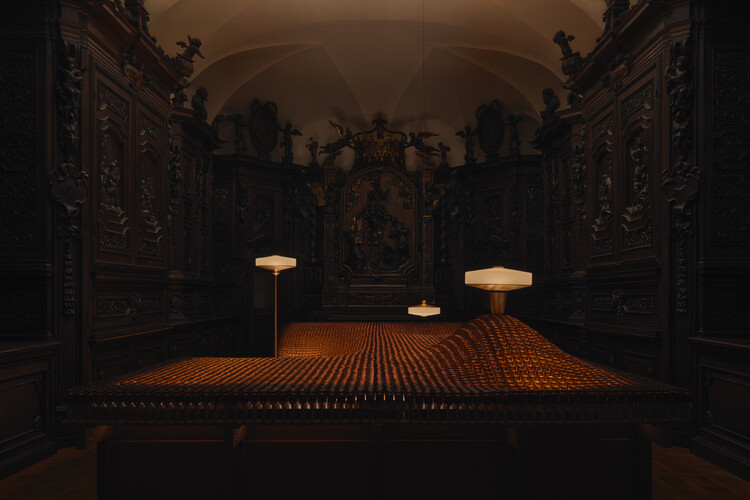
Each spring, Milan Design Week 2026 transforms the city into a distributed platform for design culture, where prototypes, product launches, and research-driven explorations coexist across multiple scales, including a growing presence of architect-designed objects. Held from April 20 to 26, the 2026 edition once again centered around the 64th Salone del Mobile.Milano at Fiera Milano, complemented by a network of independent venues and exhibitions throughout the city, an expanded landscape that is further reflected in ArchDaily's accompanying selection of installations and exhibitions from this year's program.
As architectural discourse continues to expand across cultural, educational, and civic domains, this week's developments highlight how the discipline operates simultaneously through legacy, knowledge production, and large-scale public engagement. From reflections on influential figures and their enduring impact to evolving academic landscapes and new forms of cultural infrastructure, architecture is positioned as both a repository of ideas and an active agent in shaping contemporary identities. At the same time, projects spanning entertainment, museums, and waterfront developments point to a growing emphasis on hybrid programs and experiential environments, where architecture mediates between culture, public life, and global audiences.
Throughout 2025 and early 2026, numerous museum projects were announced, advanced, or broke ground across multiple regions, with completion timelines largely extending from 2026 to 2030. Located across Asia, Europe, North America, and Central Asia, these developments reflect ongoing shifts in the role of cultural institutions within contemporary cities. Increasingly, museums are conceived not only as exhibition venues but as public-facing environments that accommodate education, research, and civic engagement. This expanded programmatic scope is often accompanied by architectural strategies that respond to urban conditions, spatial continuity, and the integration of cultural infrastructure into broader city-making processes.
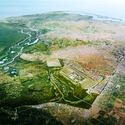
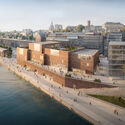
Aerial view of the Port Vell area where Liceu Mar is set to be built. Image Courtesy of Gran Teatre del Liceu and Port de Barcelona
The city of Barcelona has announced the five finalist teams selected to advance in the international competition for Liceu Mar, a new cultural venue planned for the Port Vell waterfront. Promoted by the Gran Teatre del Liceu in collaboration with the Port of Barcelona, the project is conceived as a second venue for the historic institution, expanding its artistic and civic role while strengthening its international presence. Bringing together a group of internationally recognized and locally rooted practices, the shortlist underscores the project's global relevance, with the winning proposal expected to be announced in autumn 2026.
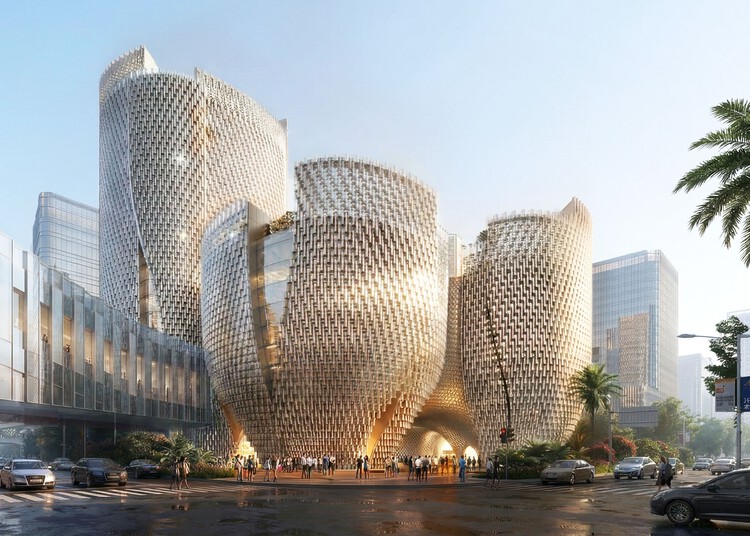
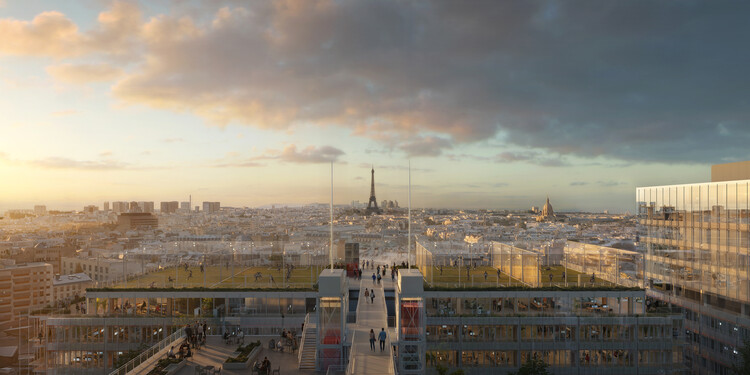
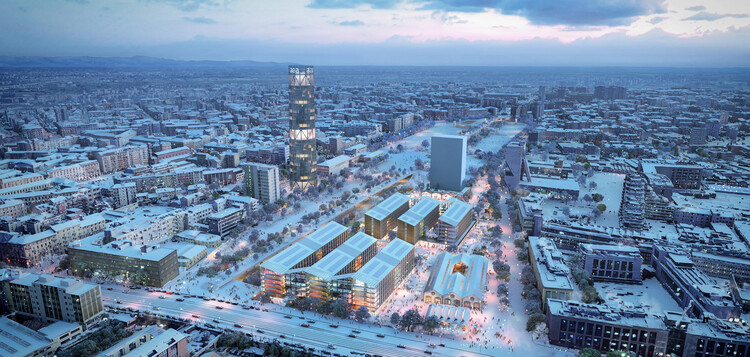
Montparnasse Commercial Centre and CIT Tower redevelopment project, 2026. Image Courtesy of RPBW
This week's news compilation opens with two international commemorations, the International Day for Clean Energy and the International Day of Education, alongside a major archaeological discovery in Fano, Italy, where excavations have revealed a basilica described by Vitruvius, linking contemporary architectural discourse with deep historical continuity. Across this week's broader architecture news landscape, a central theme emerges around the advancement of civic architecture conceived as open, publicly engaged infrastructure, with cultural and institutional projects increasingly designed to strengthen their relationship with the city and everyday urban life. At the same time, renewed global attention turns toward Africa, where large-scale transport infrastructure and the conservation of modernist landmarks reflect interests in the region and the reassessment of the continent's architectural heritage. Complementing these narratives, this week's highlights also include a new model for car-free urban districts, co-designed public landscapes grounded in indigenous knowledge, and a residential development responding to regional context, reflecting how architecture is negotiating public space, civic responsibility, and territorial identity across diverse geographies.
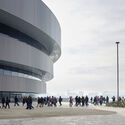
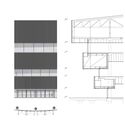
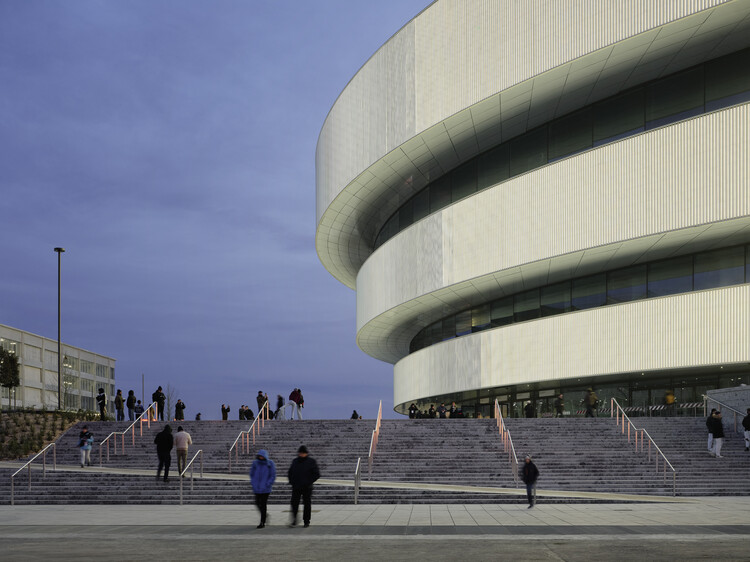
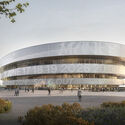
David Chipperfield Architects has released new images of the Ice Hockey Arena in Milan, one of the host sports venues for the 2026 Milano Cortina Winter Olympics. The project, currently in its testing phase, was commissioned to Arup and David Chipperfield Architects in 2021. The first images of the elliptical amphitheatre arena were released in 2022, ahead of the start of construction in 2023, which was scheduled for completion in 2025. The new sports and cultural events venue has a capacity of 16,000 spectators, 12,000 seated and 4,000 standing, and is a centrepiece of a broader urban redevelopment project originally designed by Foster + Partners for Milano Santa Giulia, a district in the south-east of Milan, just a few kilometres from the city centre and connected to the high-speed rail network and motorway.
Architecture's public role emerges as a central theme across recent announcements, institutional projects, and professional programs. The selection of the 2026 Serpentine Pavilion designer foregrounds architecture as a space for public encounter and material inquiry, while major civic and cultural projects point to renewed investment in institutions that support education, exchange, and urban continuity. Alongside these developments, international award programs and policy-aligned initiatives continue to situate architecture within broader conversations on sustainability, social responsibility, and long-term impact, highlighting how design decisions at both intimate and monumental scales respond to shared environmental and civic challenges.
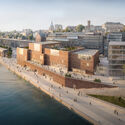
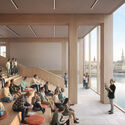
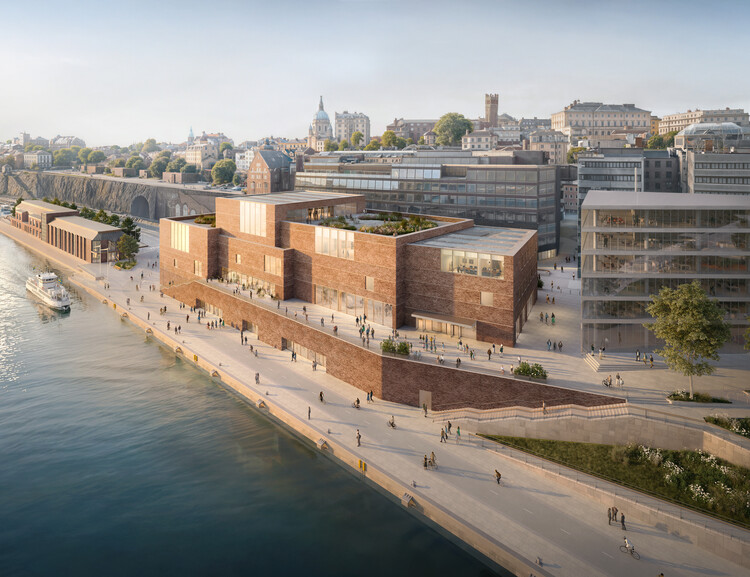
The Nobel Foundation has revealed the first design proposal for the new Nobel Center, a public cultural and educational institution dedicated to science, literature, and peace. Designed by David Chipperfield Architects Berlin, the project will be constructed along Stadsgårdskajen at Slussen in Stockholm, with construction scheduled to begin in 2027 and completion planned for 2031. Conceived as a permanent home for the activities surrounding the Nobel Prize, the building aims to make the work of Nobel Prize laureates accessible to a broad public through exhibitions, public programs, and interdisciplinary exchange, positioning the center as both a civic landmark and an international point of reference.
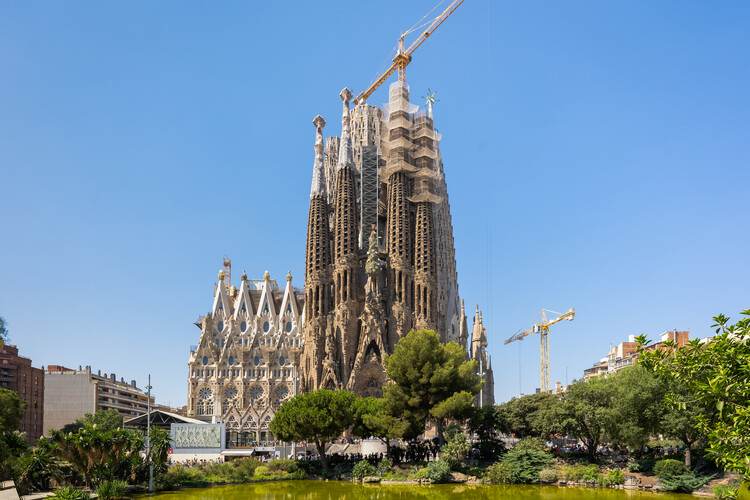
La Sagrada Familia by Antoni Gaudi. Image by Maksim Sokolov, via Wikimedia Commons, License CC BY-SA 4.0
As 2025 concludes, we look ahead to 2026, a year scheduled to deliver a diverse range of significant architectural projects across the world. The year is particularly notable for the completion of new infrastructure and cultural buildings, including long-term projects. Europe will be in the spotlight of the new year with the Milano Cortina 2026 Winter Olympics. This event will feature projects such as the Olympic Village by SOM and the Winter Olympics Arena by David Chipperfield Architects. Also in Milan, BIG is set to complete construction of the City Wave project as part of a new business district in the city. At the same time, after more than 140 years of its establishment, the architects around the world will also be watching for the long-awaited completion of Antoni Gaudí's La Sagrada Familia in Barcelona, announced for 2026.
In a world facing ecological exhaustion and spatial saturation, the act of building has come to represent both creation and consumption. For decades, architectural progress was measured by the new: new materials, new technologies, new monuments of ambition. Yet today, the discipline is increasingly shaped by another form of intelligence, one that values what already exists. Architects are learning that doing less can mean designing more, and this shift marks the emergence of what might be called an architecture of restraint: a practice defined by care, maintenance, and the deliberate choice not to build.
The principle recognizes that the most sustainable building is often the one that already stands, and that transformation can occur through preservation, repair, or even absence. Choosing not to build becomes a political and creative act, a response to the material limits of the planet and to the ethical limits of endless growth. That Architecture moves beyond the production of new forms to embrace continuity, extending the life of structures, materials, and memories that already inhabit the world.
There is growing awareness around sustainability—and the environmental cost of prematurely demolishing safe, structurally sound buildings only to replace them with new construction. In the broader race to reduce carbon emissions, corporations and institutions are placing greater emphasis on ESG performance (environmental impact, social responsibility, and governance). Many now require carbon accounting, set "carbon-neutral" targets, or purchase carbon credits to offset footprints.
This shift, together with a wave of exemplary adaptive-reuse projects worldwide—Herzog & de Meuron's Tai Kwun in Hong Kong, Powerhouse Arts in Brooklyn, David Chipperfield's The Ned Doha, and Xu Tiantian's transformations of factories, quarries, and rammed-earth fortresses in China—has accelerated serious reconsideration of reuse as a primary development strategy. Yet despite its many benefits, adaptive reuse is still not as prevalent as it could be. Why and what might be the main obstacles and tensions?
Quarries can be seen as indelible abandoned scars of human resource extraction. Man-made spaces, perceived as voids, and material gain, have fundamentally shaped our accelerating built environment. All the while, the earth stands still as a silent witness. For decades, these open-pit mines have been viewed as a necessary consequence of consumerism and urban growth, their raw, imposing forms a testament to the large-scale extraction of materials essential for building our cities. However, a global architectural movement is now emerging to engage with these existing forms, transforming these subtractive spaces into sites of innovation, collaboration, and renewed purpose.
Italy is preparing to host its third Olympic Winter Games as Milan and Cortina d'Ampezzo welcome Milano Cortina 2026, seventy years after Cortina staged the 1956 edition and two decades after Torino 2006. The Games will take place from February 6 to 22, 2026, marking the first time the Winter Olympics are organized across two cities, two regions, Lombardy and Veneto, and two autonomous provinces, Trento and Bolzano. Covering a territory of 22,000 square kilometers, Milano Cortina 2026 will become the most geographically extensive Winter Games to date, with over 90% of venues already existing or designed as temporary facilities.
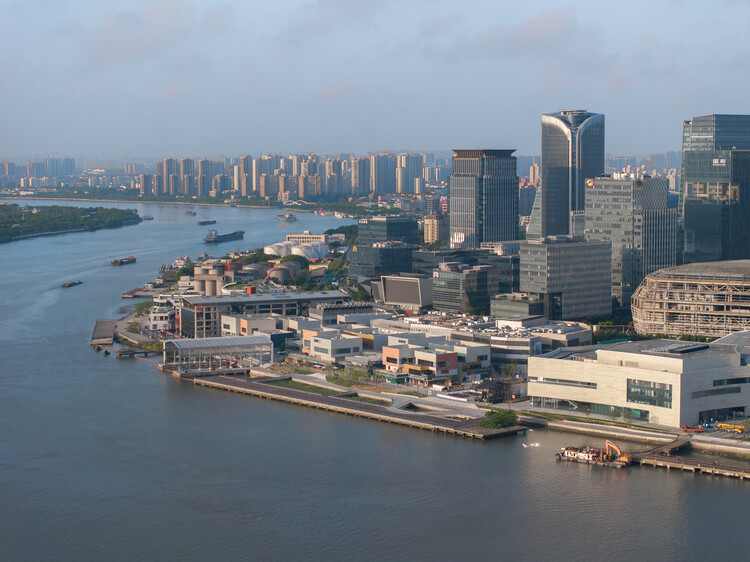
Amidst global economic adjustments and a domestic focus on high-quality development, Shanghai has implemented a strategic shift in its urban development approach—moving from 'incremental expansion' to 'connotative enhancement.' Guided by the concept of a "people-oriented city", Shanghai has elevated urban construction from mere physical space aggregation to a comprehensive endeavor aimed at optimizing functional quality, revitalizing spatial vitality, and boosting residential resilience through urban renewal initiatives. This transformation is framed not merely as a response to resource constraints but also as an intentional approach to urban development principles. Its core proposition lies in: under the policy framework of strictly controlling incremental land use, how to unleash development potential through the "reproduction" of existing spaces.
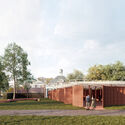
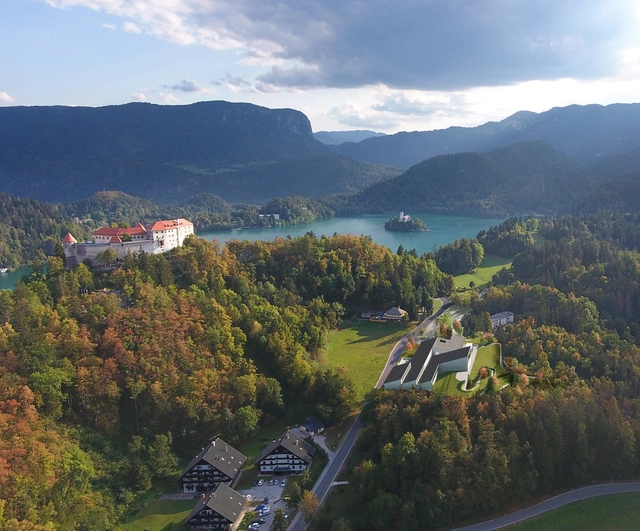
Designed by David Chipperfield Architects, Muzej Lah, a new contemporaryart museum, is set to open in the summer of 2026 in Bled, Slovenia. Located at the foothills of the Julian Alps, the museum will house the Fundacija Lah art collection, developed over more than three decades by Slovenian philanthropists Igor and Mojca Lah. The collection will be made publicly accessible for the first time with the opening of the institution.
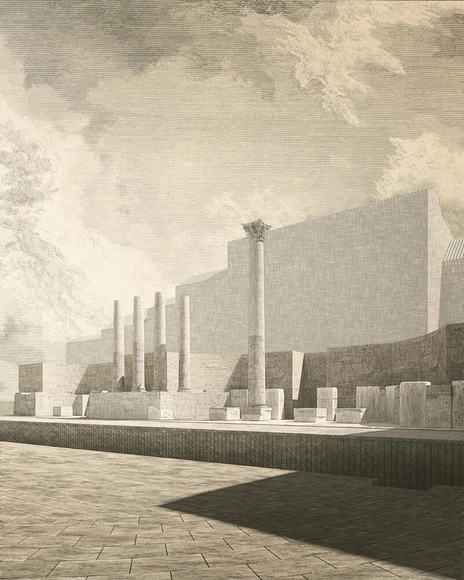
Scaenae view render. Image Courtesy of David Chipperfield Architects
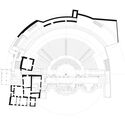
The preliminary design for the architectural restoration and functional redevelopment of the Roman Theatre was presented on Tuesday, April 8, 2025, at the Auditorium of the Santa Giulia Museum in Brescia. The project was developed by the Milan office of David Chipperfield Architects, commissioned by the Fondazione Brescia Musei in collaboration with the Municipality of Brescia and the Brescia Chamber of Commerce, Industry, Handicraft, and Agriculture. Chipperfield was tasked with identifying the essential architectural elements to guide future design phases, leading to the drafting of the Technical-Economic Feasibility Project (PFTE) and the final project, including the necessary authorizations. This initiative is financially supported by the Italian Chamber of Commerce under a 2019 ministerial decree prioritizing cultural heritage, especially where it enhances tourism.
In Venice, surrounded by an overwhelming abundance of architectural beauty—the grandeur of landmarks like the Basilica di San Marco, St. Mark's Square, and the Rialto Bridge, to name just a few—it is easy to become swept up in the iconic imagery and spatial majesty of the city. One could lose sight of the quieter, yet equally masterful, moments found in the execution of details across its built fabric. Beyond the grandeur, the city offers a richness in its winding alleyways, narrow canals, and vibrant street life—each contributing to the cultural tapestry that makes Venice so unique. Amidst these celebrated elements, however, lie subtle but remarkable architectural details that often go unnoticed. These deserve closer observation and reflection, as they offer their own kind of mastery—one grounded in material precision, craft, and the lived rhythms of the city.
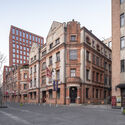
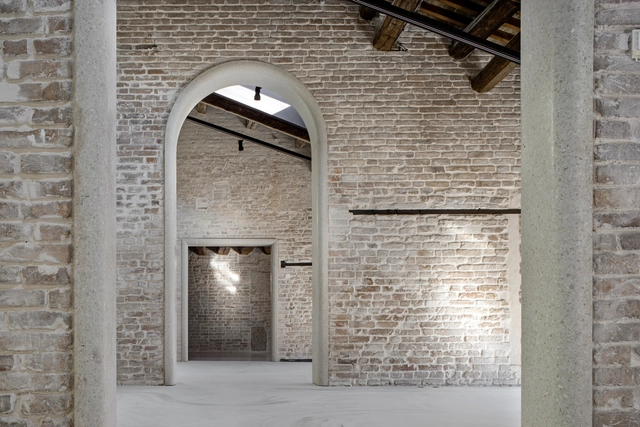
Just steps away from the iconic Piazza San Marco, a quiet architectural dialogue unfolds between two celebrated figures. Within a one-minute walk, two projects—each meticulously crafted—sit in close proximity: the Olivetti Showroom by Carlo Scarpa, a long-revered pilgrimage site for architects and designers, and the recently reopened Procuratie Vecchie, restored by David Chipperfield Architects. A closer look at the architectural details embedded within each work reveals a compelling exchange across time—one that unfolds through material language, spatial precision, and an unwavering commitment to craft.