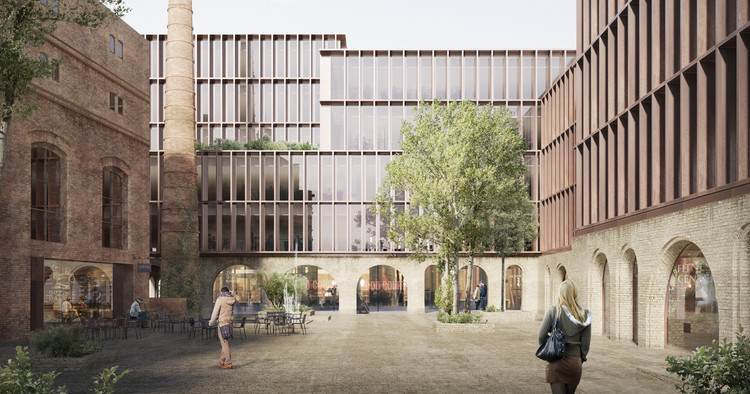
MVRDV has released details of their proposed renovation of a 19th-century listed building on Slodowa Island in Wroclaw, Poland. The “Concordia Hub” will see the retention of the existing façade, with the addition of a contemporary rear extension to “create a focal point” for the general public and visitors.
The site’s former use as a German artillery base in 1945 means almost all of the island’s structures were destroyed in the closing months of World War II. The Concordia Hub scheme seeks to preserve one of the only surviving heritage structures on the island, while transitioning the building into the modern age.
https://www.archdaily.com/903159/mvrdv-proposes-respectful-renovation-for-19th-century-heritage-building-in-wroclaw-polandNiall Patrick Walsh
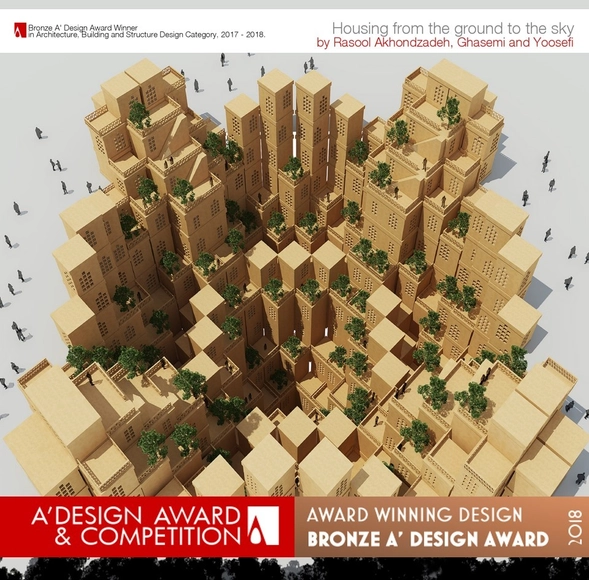
Housing from the ground to the sky The residential complex
Housing from the ground to the sky The residential complex
Award Winning Design - BRONZE A DESIGN AWARD
In modern architecture, high-rise building and skyscrapers was proposed as one of the effective factors to urban problems. This proposed method causes so much problems in these cities conditions such as twinkling city skyline, environmental pollution, disturbing privacy and also undesirable view of the buildings lower in height, safety factors, communication problems, installation, Etc. Skyscrapers, each trying to reach their peak in such a way that they aim to connect the earth to the sky. Somehow they are bridges from earth to sky. Dome is one
Carlo Ratti Associati has released details of their schematic design for the University of Milan’s new science campus, featuring robotically-assembled brick facades, porous communal areas, and natural oases. Working in collaboration with Australian real estate group Lendlease, the “Science for Citizens” proposal will sit within a new Milan Innovation District, located on the site of Milan’s 2015 World Expo.
Located within this new district, and home to over 18,000 students and 2,000 researchers, the “Science for Citizens” proposal seeks to “put forward a vision for an open campus that becomes a testing ground for innovative education while fostering exchanges between the university and the surrounding innovation neighborhood.”
https://www.archdaily.com/899777/carlo-ratti-associatis-proposed-milan-science-campus-features-robotically-assembled-brick-facadesNiall Patrick Walsh
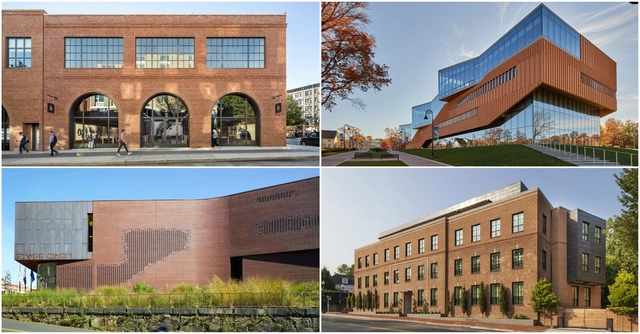
The Brick Industry Association (BIA) has announced the winners of the 2018 Brick in Architecture Awards, given to “the country’s most visionary projects incorporating fired-clay brick.” This year, 19 projects were selected from 88 total entries, spanning commercial, educational, landscaping, and residential categories.
“Fired-clay brick offers unlimited aesthetic flexibility, and is an integral part of any sustainable, low maintenance building strategy,” said Ray Leonhard, BIA’s president and CEO.
Full details on the awards and winners are available on the official website here. Below, we have organized the winning schemes by category.
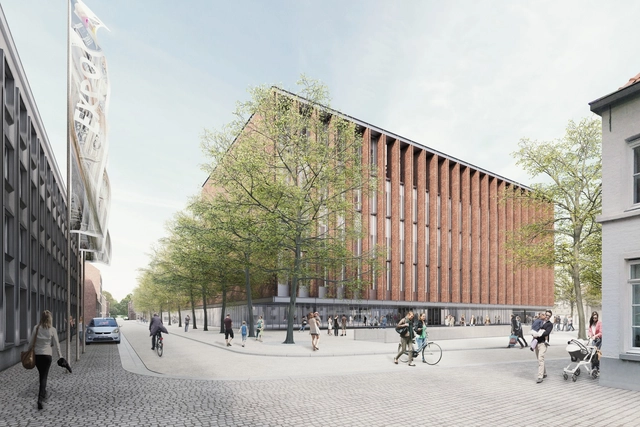
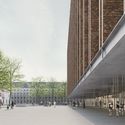
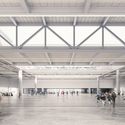
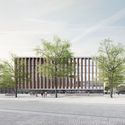
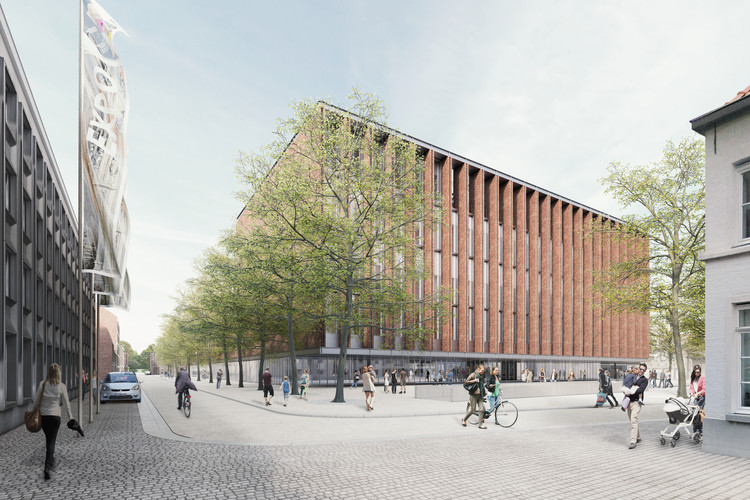
Eduardo Souto de Moura, in collaboration with META architectuurbureau, has released images of a proposed urban renewal project in the Belgian city of Bruges. The Beursplein & Congresgebouw consists of a new exhibition hall and covered public square on the site of a recently demolished trade fair complex.
The $46million (€40million) scheme seeks to act as a catalyst for urban renewal at the center of Bruges, with a dual role of exhibition hall and conference center capable of receiving business delegates on weekdays, and tourists on weekends.
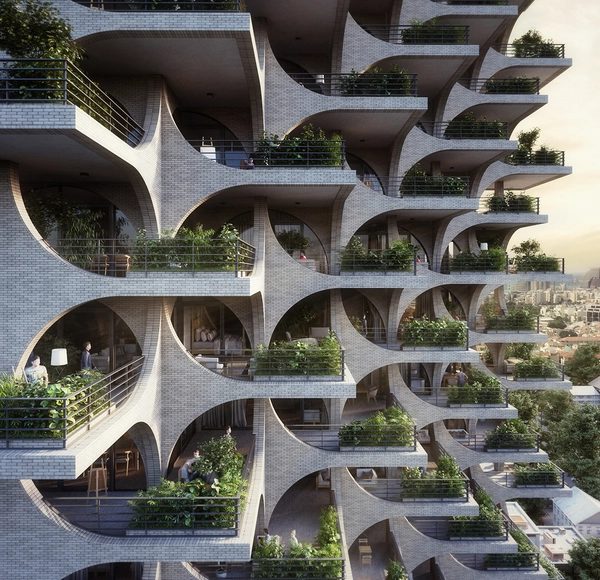
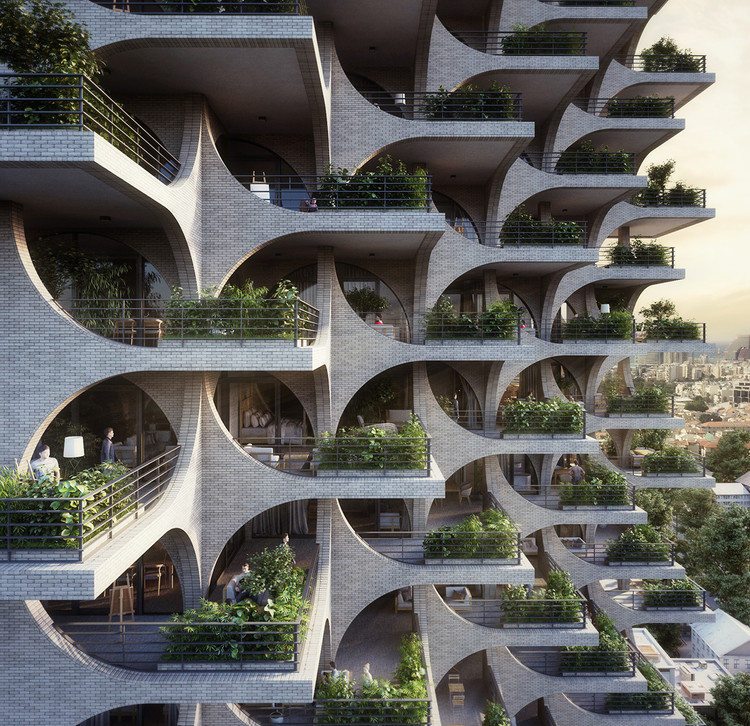
Penda has released images of its proposed high-rise residential tower in Tel Aviv, featuring brickarches and cascading terraces influenced by the city’s Bauhaus era and the materiality of its Old Town. The 380-foot-high (116-meter-high) scheme will house a range of one to four bedroom apartments, as well as double-height penthouses.
For the scheme’s design, Penda rejected the “generic glass tower” in favor of a form and materiality which responds to Tel Aviv’s sunny Mediterranean climate.
A team comprising Schauman & Nordgren Architects, MASU Planning, and Schauman Architects have been announced as winners of an invited competition for the design of a new exhibition, shopping, and housing scheme in an old customs area of Tampere, Finland. The “Tulli Halls” scheme is defined by a red brick materiality referencing the industrial heritage of the area, and a central tower forming a “beacon and focal point for Tampere.”
The scheme seeks to balance old and new, as well as public and private, with a form which has a “grounding in Tampere’s heritage as well as aspiring future” and public space to improve living conditions of residents and offer meeting places for the general public.
The extension is viewed as an urgent project to address overcrowding in the vital facility, with the demands of 20,000 annual patients resulting in hot, overcrowded communal spaces, and children sharing beds in wards. The Foundation described Manuel Herz as the “unanimous choice” with an approach showing “a mix of visual flair, practical understanding, and profound humanitarianism.”
https://www.archdaily.com/895766/manuel-herz-to-design-curvilinear-expansion-of-rural-senegal-hospitalNiall Patrick Walsh
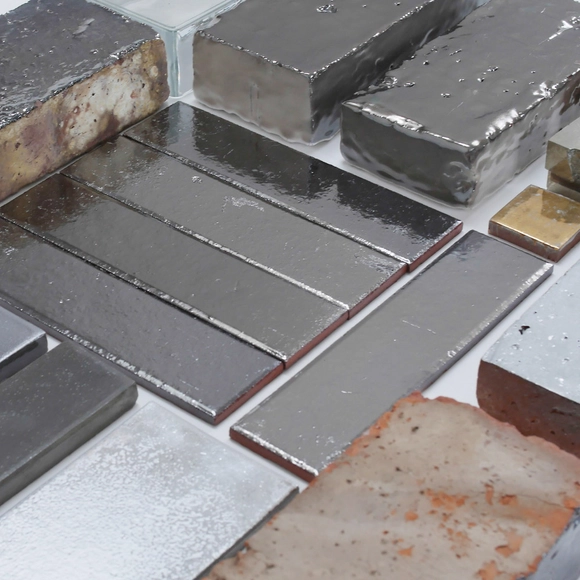
French designer, Nathanaël Abeille's metalized pieces in 'Proyecto Reflexión' shows how a building could reflect sunlight and share it with another building in some of the narrow spaces of Villa 21 de Barracas, Buenos Aires. These "metal bricks" came about as a combined team effort with architects Francisco Ribero and journalist Cecilia Fortunato.
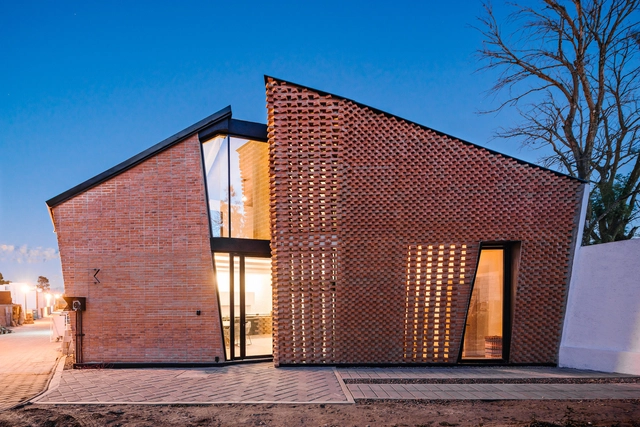
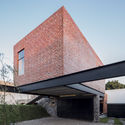
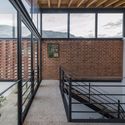
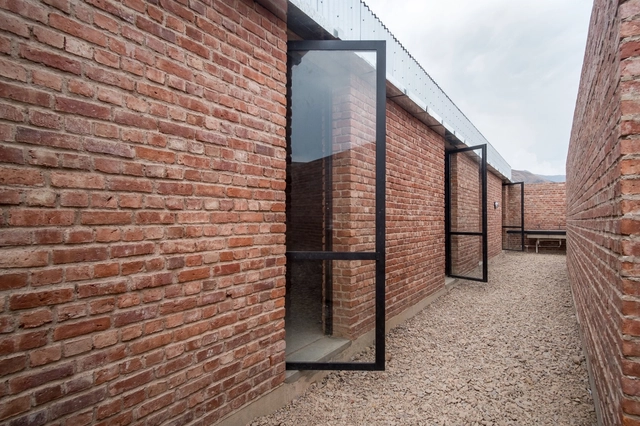
This week we present a selection of the best images of brick houses published on our site. These 11 Mexican projects reveal the diversity of expression that architects in the country have achieved through creative arrangements of the brick modules. read on for a selection of images from prominent photographers such as Carlos Berdejo Mandujano, Onnis Luque, and Patrick Lopez.
The proposal for the 120,000-square-foot (11,500-square-meter) district manifests as a vibrant, public-orientated program, including a gym, child care center, café, food court, and spa. A series of courtyards and plazas are laced throughout the scheme, connecting old and new in a “timeless, classic appearance that is also uniquely contemporary.” The design took 2nd place in a competition in which no first place winner was selected, as the jury felt that no entry fully met the competition criteria. As the highest-placing entry, the competition organizers have committed to begin negotiations with Schmidt Hammer Lassen to refine the design.
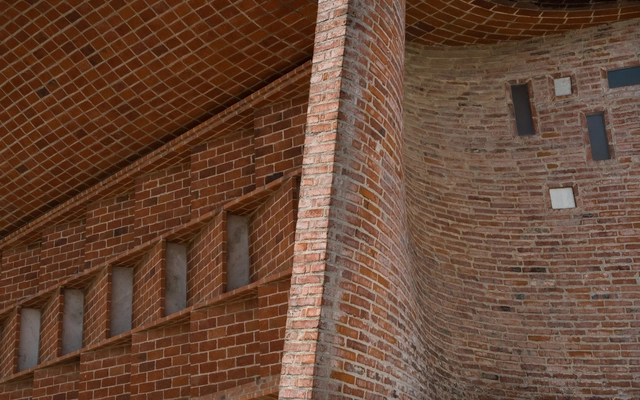
Gonzalo Viramonte has released a series of photographs that focus in on the use of bricks by engineer Eladio Dieste in his Atlántida Cristo Obrero church.
Viramonte shows us the essence of the project with an artful register that places the serial yet simple material element (the brick) at the forefront. This gallery also celebrates the potential and versatility of bricks by highlighting the artfully geometric interior and exterior spaces and the apertures that allow natural light to cast upon the walls, floors, and other surfaces.
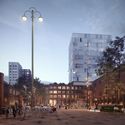
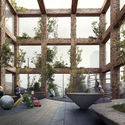
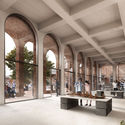
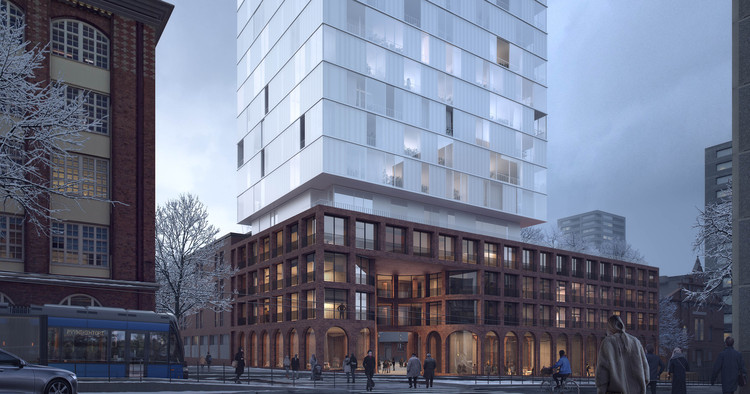
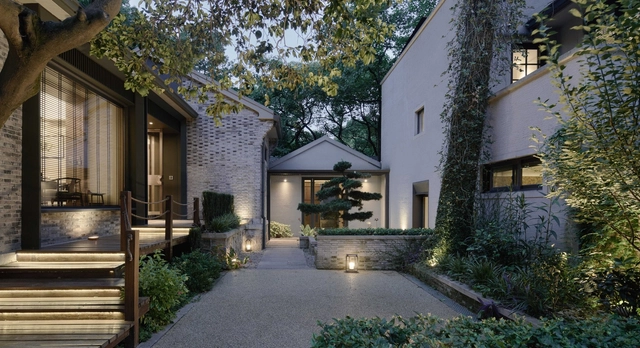
The mayor of Strasbourg, Roland Ries, has announced the winner of the architectural design competition for a residential tower. The site is located near the Rhine, within the ‘Strasbourg, Presqu’ile--Citadelle’ neighborhood -- dense with low-rises, not exceeding five levels. The winning design by KCAP Architects & Planners and OSLO Architectes is commended for its contextual sensitivity and formal relationship with Germany which sits just on the other side of the Rhine river.
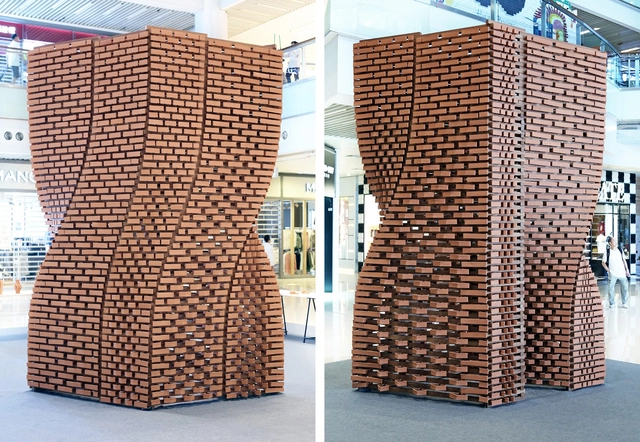
Developed by researchers and students from the Faculty of Architecture at HKU and supported by Sino Group, the 'Ceramic Constellation Pavilion' is built on a wooden structure that supports a series of "walls" formed by about 2,000 clay bricks. Each of these individual components is unique and has been manufactured using robotic technology and 3D printing, allowing to generate different types of transparency and opacity in their different faces.
A design by Ashari Architectsforan architectural installation in Iran is a direct response to the need to reconnect with the senses. The project, a pavilion built from a cube that holds a suspended brick volume, shows the potential of the use of this material by creating distinct atmospheres.
The Brick Industry Association (BIA) has announced the winners of the 2017 Brick in Architecture Awards, given to “the country’s most visionary projects incorporating fired-clay brick.” This year, 35 projects from 19 states were selected as winners, with a best in-class project awarded across eight categories: Commercial, Educational (Higher Education), Educational (K-12), Renovation / Restoration, Municipal/Government, Residential (Multifamily), Residential (Single Family) and Paving & Landscape.
“The winners demonstrate brick’s aesthetic flexibility, and its integral role in any sustainable, low maintenance and durable building strategy,” said Ray Leonhard, BIA’s president and CEO.


.jpg?1538567368&format=webp&width=640&height=580)
.jpg?1538567368 "Courtesy of MVRDV")
.jpg?1538567396 "Courtesy of MVRDV")
.jpg?1538567380 "Courtesy of MVRDV")
.jpg?1538567412 "Courtesy of MVRDV")
.jpg?1538567368)



.jpg?1530628241 "© infunctievan")
.jpg?1529596344 "Courtesy of Penda Austria")
.jpg?1529596300 "Courtesy of Penda Austria")
.jpg?1529596248 "Courtesy of Penda Austria")
.jpg?1529596380 "Courtesy of Penda Austria")

.jpg?1528130931&format=webp&width=640&height=580)
.jpg?1528130951 "Image by Play-Time © Manuel Herz Architects")
.jpg?1528130941 "Image by Play-Time © Manuel Herz Architects")
.jpg?1528130931 "Image by Play-Time © Manuel Herz Architects")
.jpg?1528130920 "Image by Play-Time © Manuel Herz Architects")
.jpg?1528130931)




.jpg?1518089499 "© CODE + Johannes Belz")



_Yam_Studio_for_KCAP-OSLO-SAS-3B_place.jpg?1510362904)


.jpg?1502071782&format=webp&width=640&height=580)