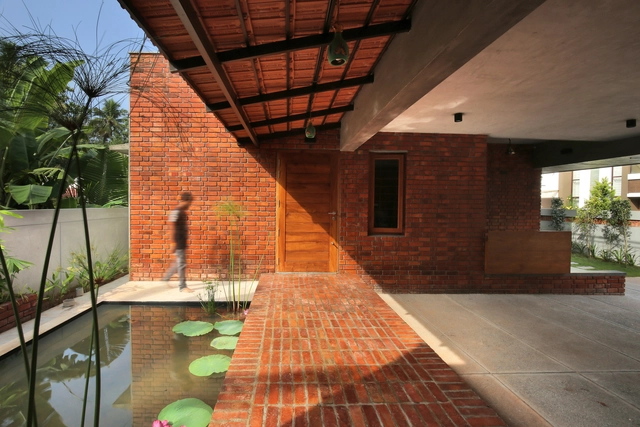
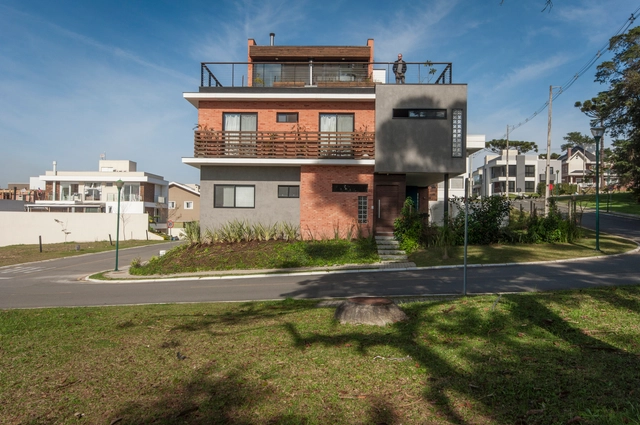
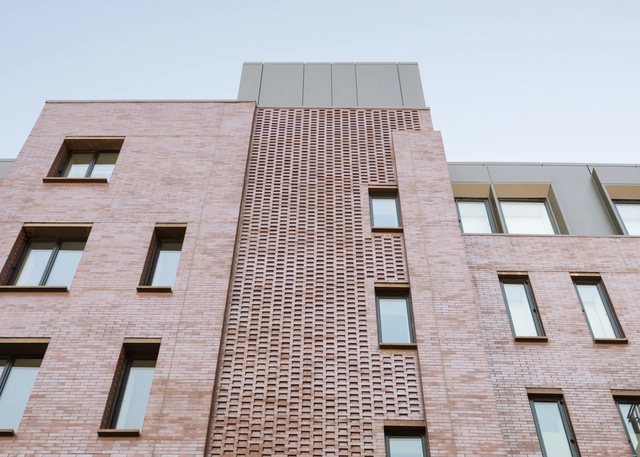
Often recognized as one of the most widespread constructive materials in the world, brick is, with no doubts, very versatile, low-cost and easily applied. Although it usually used in vertical surfaces, it also presents excellent properties when applied to horizontal ones, like floors.
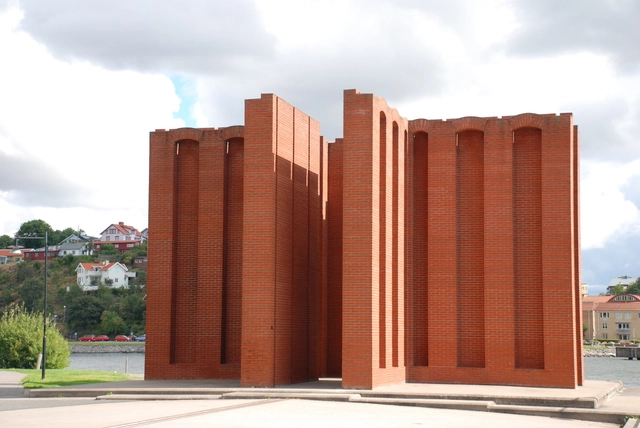
The interview Per Kirkeby: "We Build Upon Ruins" published on Louisiana Channel not only showcases the colorful canvases of the Danish painter, sculptor, filmmaker, and writer, but also his own reflections on the importance of surroundings that "give us so much baggage." It's this very idea that Kirkeby brings to his brick sculpture displays, where something simple and sometimes useful puts aside inaccessible conceptualism to pay homage to the surroundings rather than the sculptures themselves.
Iran’s architecture has long been rooted in Persian culture. From tea houses and pavilions to domestic huts and elaborate mosques, the country’s built environment is tied to these influences, as well as the landscape and its broader context. At the heart of Iran’s more recent projects is a desire to reinterpret history through new spaces and forms.
The Brick Industry Association (BIA) has opened the entries for the 2019 Brick in Architecture Awards due on October 31, 2019.
The Brick Industry Association (BIA) has opened its entries for the 2019 Brick in Architecture Awards—now celebrating 30 years as the nation’s leading architectural design competition featuring fired-clay brick. Entries are due by Oct. 31.
With a history of stunning, innovative and unusual design, all submissions must use clay brick as the project’s primary building material.
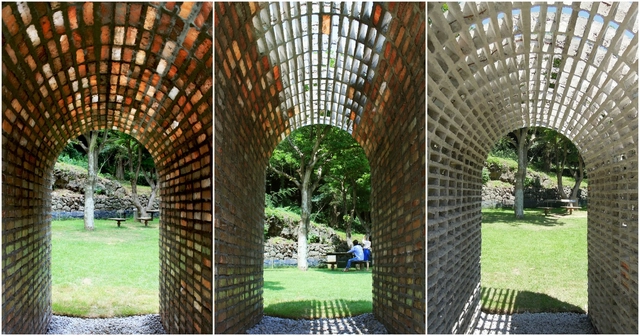
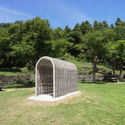
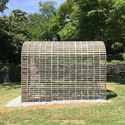
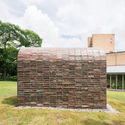
Sometimes known as the “Island of the Gods,” Jeju Island in South Korea is characterized by its volcanic rock, stunning waterfalls, and warm, tropical climate. Here, life is integrated with nature and the architecture is in harmony with the landscape. Dissolving Arch, a weather-specific installation by stpmj, responds to the island’s tropical environment. The structure began life as a solid brick vault, which then slowly dissolved in the hot and rainy periods of Jeju to produce a light, porous skeleton made of the remaining mortar which connects people with nature.
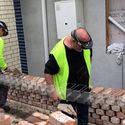
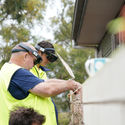
Fusing augmented reality with the physical space, Fologram seeks to facilitate the construction of complex designs (for example, parametric designs that require a series of measurements, verification, and specific care) through digital instructions that are virtually superimposed into the workspace, directing a step-by-step guide for bricklayers during the construction process.
'Research institutions and large companies are working with industrial robots to automate these challenging construction tasks. However, robots aren’t well-suited for unpredictable construction environments, and even the most sophisticated computer vision algorithms cannot match the intuition and skill of a trained bricklayer,' stated their creators.
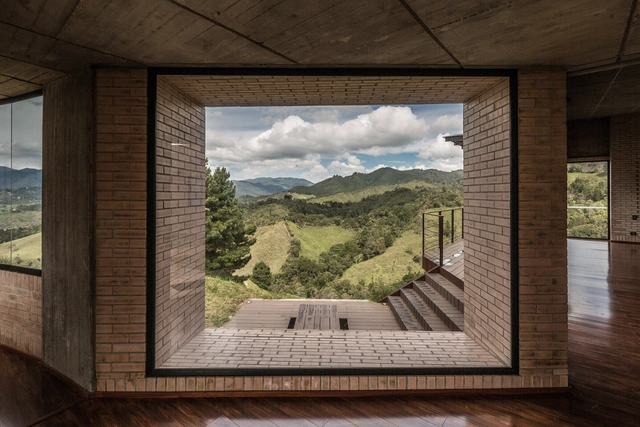
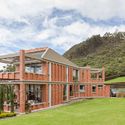
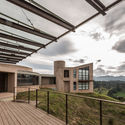
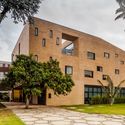
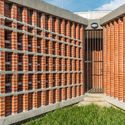
The greats of twentieth-century Colombian architecture were regarded for their genuine interest in brick. To this day, many of Colombia's iconic neighborhoods are filled with brick buildings.
Below, a selection of stunning Colombian brick projects —available in this My ArchDaily public folder as well.
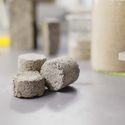
Some years ago, researchers in the United States previously tested the concept of using synthetic urine-based substances to fabricate building materials. However, new research conducted by Masters student Suzanne Lambert at the University of Cape Town, South Africa, puts forth a zero-waste process of producing urine-based bricks by using collected human urine for the first time.
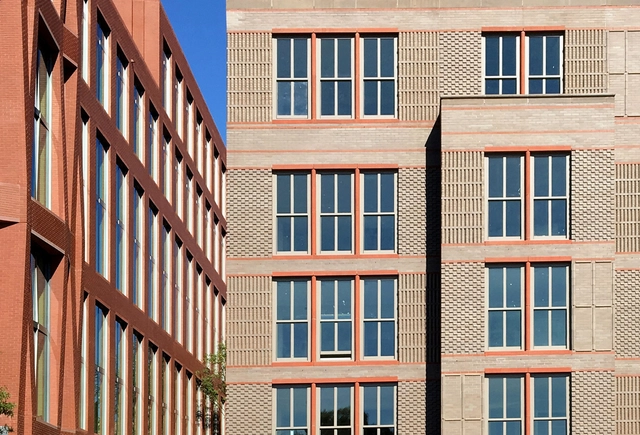
MVRDV has released details of their proposed renovation of a 19th-century listed building on Slodowa Island in Wroclaw, Poland. The “Concordia Hub” will see the retention of the existing façade, with the addition of a contemporary rear extension to “create a focal point” for the general public and visitors.
The site’s former use as a German artillery base in 1945 means almost all of the island’s structures were destroyed in the closing months of World War II. The Concordia Hub scheme seeks to preserve one of the only surviving heritage structures on the island, while transitioning the building into the modern age.
https://www.archdaily.com/903159/mvrdv-proposes-respectful-renovation-for-19th-century-heritage-building-in-wroclaw-polandNiall Patrick Walsh
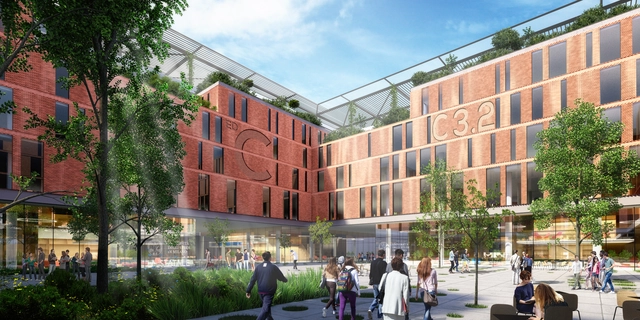
Carlo Ratti Associati has released details of their schematic design for the University of Milan’s new science campus, featuring robotically-assembled brick facades, porous communal areas, and natural oases. Working in collaboration with Australian real estate group Lendlease, the “Science for Citizens” proposal will sit within a new Milan Innovation District, located on the site of Milan’s 2015 World Expo.
Located within this new district, and home to over 18,000 students and 2,000 researchers, the “Science for Citizens” proposal seeks to “put forward a vision for an open campus that becomes a testing ground for innovative education while fostering exchanges between the university and the surrounding innovation neighborhood.”
https://www.archdaily.com/899777/carlo-ratti-associatis-proposed-milan-science-campus-features-robotically-assembled-brick-facadesNiall Patrick Walsh
The Brick Industry Association (BIA) has announced the winners of the 2018 Brick in Architecture Awards, given to “the country’s most visionary projects incorporating fired-clay brick.” This year, 19 projects were selected from 88 total entries, spanning commercial, educational, landscaping, and residential categories.
“Fired-clay brick offers unlimited aesthetic flexibility, and is an integral part of any sustainable, low maintenance building strategy,” said Ray Leonhard, BIA’s president and CEO.
Full details on the awards and winners are available on the official website here. Below, we have organized the winning schemes by category.
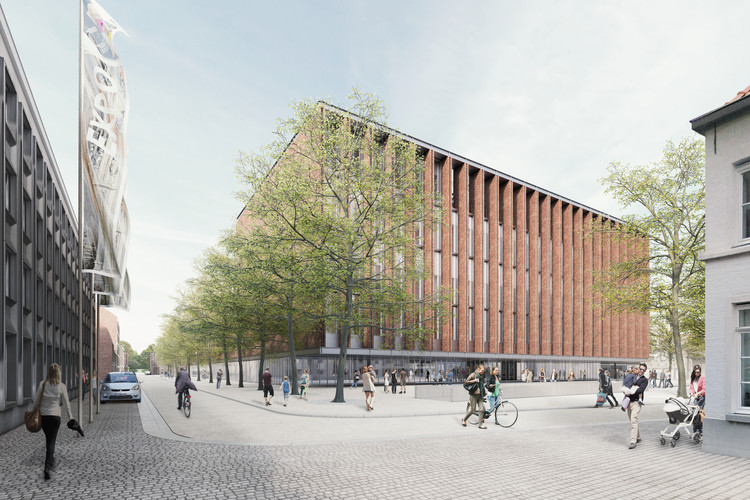
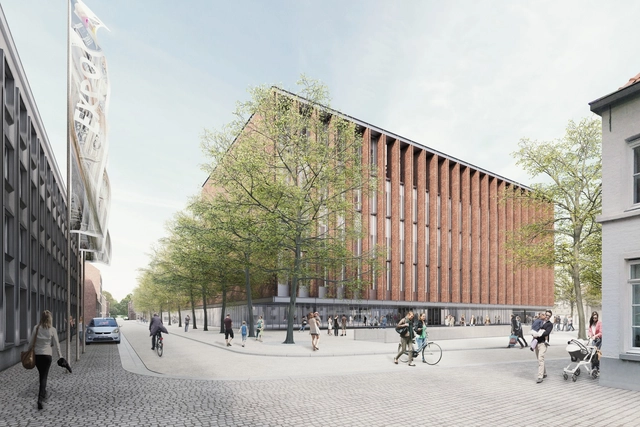
Eduardo Souto de Moura, in collaboration with META architectuurbureau, has released images of a proposed urban renewal project in the Belgian city of Bruges. The Beursplein & Congresgebouw consists of a new exhibition hall and covered public square on the site of a recently demolished trade fair complex.
The $46million (€40million) scheme seeks to act as a catalyst for urban renewal at the center of Bruges, with a dual role of exhibition hall and conference center capable of receiving business delegates on weekdays, and tourists on weekends.
















.jpg?1538567368&format=webp&width=640&height=580)
.jpg?1538567368 "Courtesy of MVRDV")
.jpg?1538567396 "Courtesy of MVRDV")
.jpg?1538567380 "Courtesy of MVRDV")
.jpg?1538567412 "Courtesy of MVRDV")
.jpg?1538567368)


.jpg?1530628241 "© infunctievan")