Pink Floyd's song “Another brick in the wall” criticizes an alienating and demotivating educational system. People, or children, are portrayed as bricks due to their homogeneity, whether in the way of living or thinking in a society that is not very fond of opposition. Bricks work very well in this comparison, having changed very little throughout history and around the world in their rectangular shapes. But that's not true of their colors. Although we tend to think of red when we talk about bricks, there are infinite possibilities of shades, depending on the composition and manufacturing process of the pieces.
Brick beams have been widely used in construction due to their strength, durability, and aesthetic appeal. By embedding steel reinforcing bars into a series of bricks arranged in a specific pattern, these elements form horizontal load-bearing structures that distribute the weight and forces that act on a building. However, it is difficult to find brick beams with excessively large spans, in order to avoid long-term structural problems. Instead, they mostly come in the form of simple lintels, which can be easier to handle.
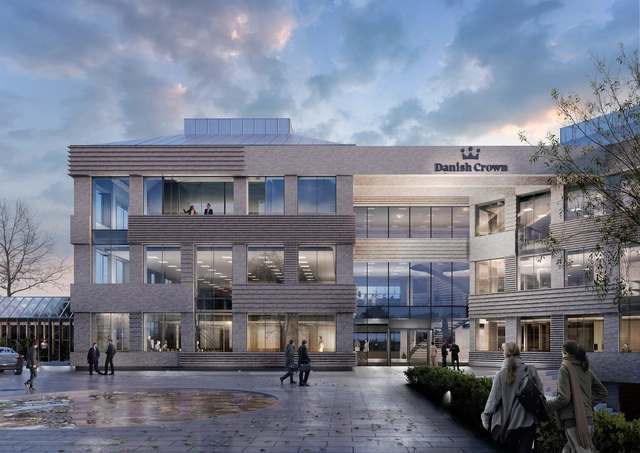
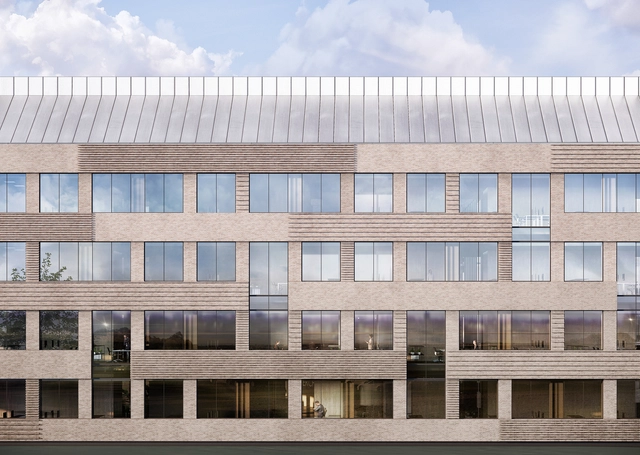
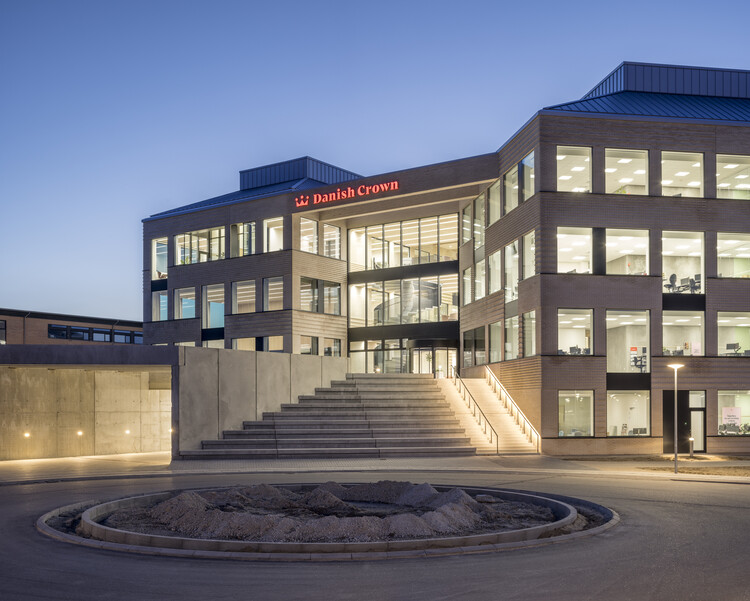
With a length of 16.2 meters and an impressive clear span of 15.8 meters, CEBRA architects have collaborated with the Randers Tegl group, the largest brick supplier in Scandinavia, to complete the construction of probably the longest brick beam to date. This exterior beam is accompanied by a 13-meter-span interior "sister" beam and is located above the main entrance to the Danish Crown's new headquarters in Randers, Denmark, extending freely between two of the building's wings. The longest beam is made up of almost 4,200 bricks – its height is made up of 25 rows of bricks, equivalent to 1.6 meters, and its edge consists of 4 bricks.
Brick is a traditional building material that enhances durability, versatility, and the aesthetic appeal of building design. Used in construction for thousands of years, contemporary architecture explores creative ways to incorporate brick into design, combining it with different materials to seamlessly integrate the old and the new. Traditionally composed of clay, these rectangular-shaped elements are also heavy-duty materials suitable for use in both load-bearing and non-load-bearing walls.
Delving into lighter alternatives, thin brick –with minimum thicknesses of approximately 1/2 inch (13mm)–combines the technical and aesthetic qualities of traditional brick with the advantages of being lightweight and space-efficient. In various colors, sizes, and textures, thin brick can be applied to diverse surfaces, such as walls and facades, without additional structures. The Brick Industry Association showcases interior and exterior projects, developing practical guides and solutions for achieving the classic, timeless look of brick masonry, along with design flexibility and easy installation.
The ample supply, durability, and affordability of brick makes it one of the most widely used and iconic materials in Spanish architecture, especially within the Mudejar tradition. Throughout history, they have added both beauty and function to the spaces that use them, offering protection from the elements while also permitting the entry of natural light and air flow.
In recognition of brick's impact on Spanish architecture throughout history, we have created a compilation of contemporary projects that highlight its aesthetic and functional benefits along with advice from their creators about how best use this tried and true material.
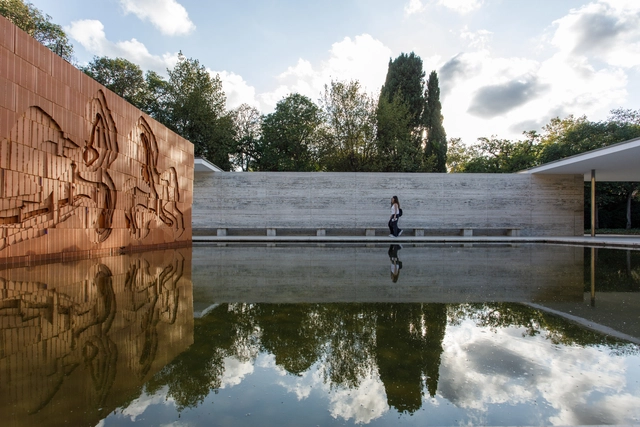
From September 14th to October 8th, 2023, "Psicoarquitectura" will be showcased at the German Pavilion, designed by Mies Van der Rohe and Lilly Reich, located in the city of Barcelona. The Mies van der Rohe Foundation, in collaboration with LAB 36 and Senda Gallery, is hosting this temporary artistic intervention by the artist and architect Oscar Abraham Pabón. This intervention explores the materiality of this iconic work of the Modern Movement, delving into its interpretative and psychological dimensions.
Videos
Gent Waste Brick. Image Cortesia de Carmody Groarke
There are several symbols that transcend language barriers and are easily recognized and understood by people from different cultures. Examples include the male and female bathroom icons, the cross symbolizing health, and the universal Wi-Fi symbol. Among these universal icons is the recycling symbol, conceived in 1971 by Gary Anderson, an architect and designer who was a student at the University of Southern California. Depicting a continuous cycle, it is a triangle with three arrows arranged clockwise, each of which represents the industry, consumers and recycling.
Central to the concept of the circular economy is the reintegration of materials typically viewed as waste back into the production cycle. This concept is particularly important for the construction industry, which has historically depended on the destruction and extraction of resources in order to exist. In this case, nothing is more symbolic than the brick, which not only represents the construction of new things, but is also the perfect example of how to apply the concept of circularity. Creative minds have embraced the challenge of circularity, devising solutions that transform discarded materials into high-value resources and generating a wide range of products, using raw waste materials that range from seaweed and plastics to human hair. These innovations not only address pressing environmental issues but essentially redefine the way we build and inhabit our spaces. In this article, we highlight seven initiatives that are turning waste into bricks.
The Monadnock Building in Chicago began construction in 1891 and is still in use today. The building features a somber facade without ornamentation and a colossal height - at the time - of 16 floors. It is considered the first skyscraper built in structural masonry, with ceramic bricks and a granite base. To support the entire load of the building, the structural walls on the ground floor are 1.8 meters thick, and at the top, 46 centimeters. One hundred and thirty years later, this construction system remains common and allows for the erection of taller buildings with much thinner walls, accomplishing even new architectural works economically and rationally. But what is structural masonry about, and how can designers use it in architectural projects? And for what kinds of buildings is this system most suitable?
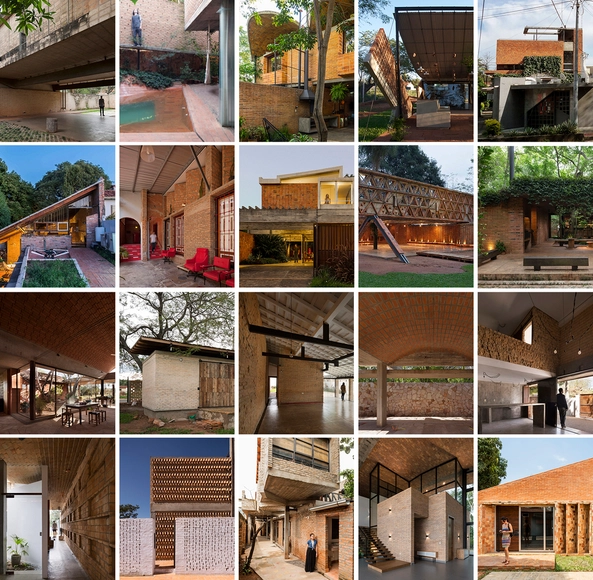
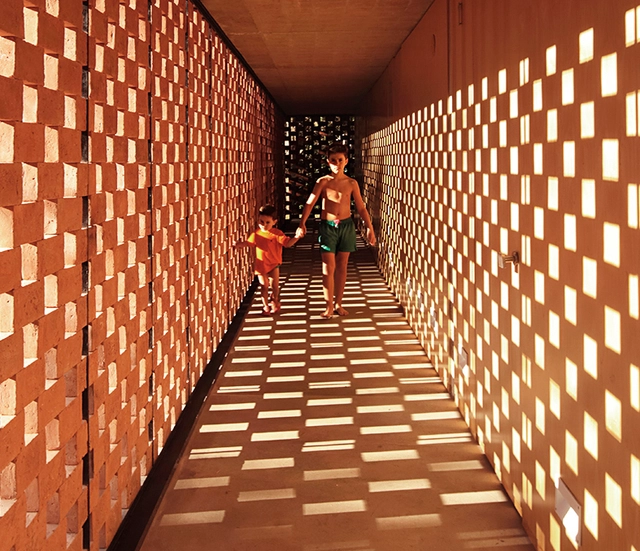
In Paraguay, brick can be many things. Walls, dividers, facades, sieves, vaults, floors, and pavement are just some of the many example that demonstrate, not only the variety of uses for brick, but the ingenuity of the architects who choose to utilize it in their projects.
Villa Peer / UAU Collectiv Architects. Image Courtesy of Randers Tegl
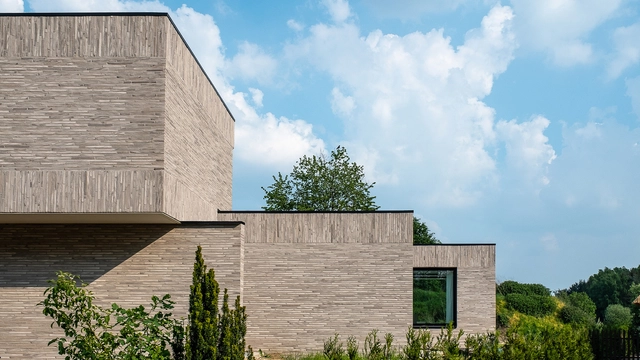
Identified as small rectangular blocks made of fired or sun-dried clay, bricks have traditionally been used for building pavements, walls and other elements of masonry construction. Laid in courses or rows and joined together with mortar, bricks are known for their strong structural strength and durability. But beyond their basic functional purposes, their multiple patterns, sizes and shapes allow for a distinctive aesthetic with an infinite design versatility, becoming a design feature themselves. Showcasing an example of aesthetic brickwork, we will take a closer look of Villa Peer, an architecture project in Belgium that uses Randers Tegl’s long format waterstruck bricks as the main design feature for the whole building’s facade.
Francisco Cadau received the highest award at the recent Buenos Aires 2022 International Architecture Biennial. A recognition of his genuine trajectory that, from technique and materiality, consistently manages to position his favorite location on the map: The city of Campana on the edge of the Parana River in Argentina. His works in this place, such as House of Sieves or Damero Building, are references when it comes to thinking about project models where "construction and technology constitute the ideas themselves".
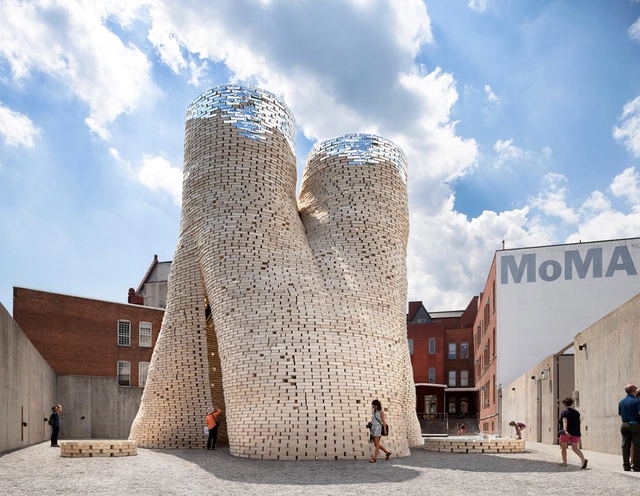
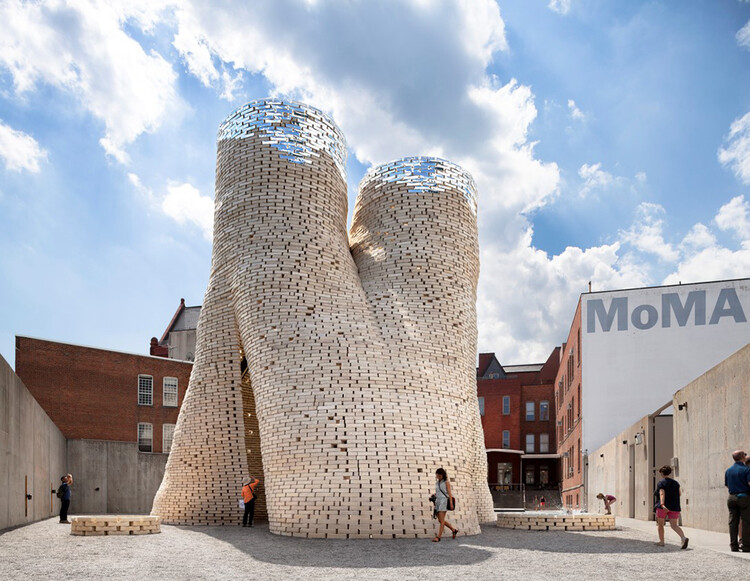
Mycelium-Grown Bio-Bricks / Evocative Design & The Living. Image Courtesy of The Living
The building industry is one of the biggest generators of carbon emissions, with some estimates suggesting that 38% percent of all CO2 emissions are linked to this field. As a response to the current crisis, architects, designers, and researchers are taking measures to reduce their carbon footprint during and after construction. Many initiatives and research teams are looking at building materials to find low-carbon solutions and reduce the impact of building materials during production.
One of the most prominent fields of research is concerned with biofacture, the type of process that involves using biological organisms to manufacture materials. By understanding the abilities of organisms such as algae of fungi, alternatives to widely used materials can become carbon neutral or even carbon negative. Other initiatives are researching novel ways to use untapped, yet readily available resources such as desert sand, soil, or waste from demolitions.
The terms critical regionalism, popularized by theorist Kenneth Frampton, proposed an architecture that embraced global influences, albeit firmly rooted in its context. That is, an approach defined by climate, topography and tectonics as a form of resistance to the placidity of modern architecture and the ornamentation of postmodernism. Bringing familiar elements to a particular location can allow the building to be better accepted and incorporated into the local context. This was the case of the New Maitland Hospital, which incorporated a large brick panel next to the main façade, as a reference to the community's traditional symbols.
Brick has positioned itself as one of the materials that characterise and identify Argentinean and Latin American architectural culture. The diversity and versatility of masonry in our region have given rise to great heterogeneity in its uses and applications: structural walls, partitions, enclosures, screens, envelopes, skins, roofs, vaults, domes and floors allow us to visualise the great adaptability of this material in order to adapt to the particular requirements of each project.
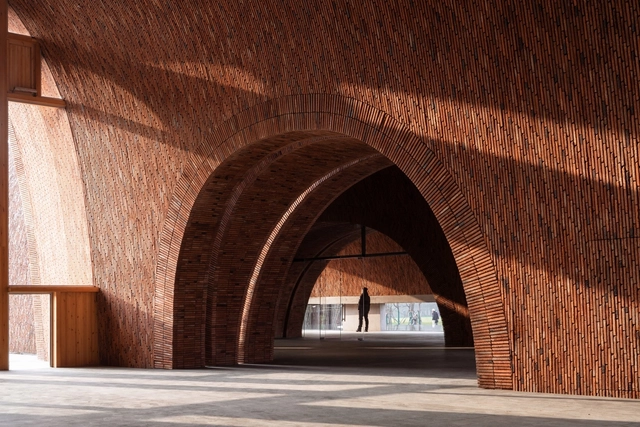
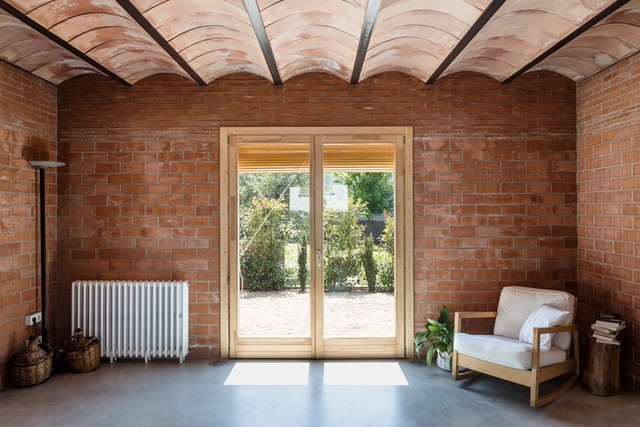
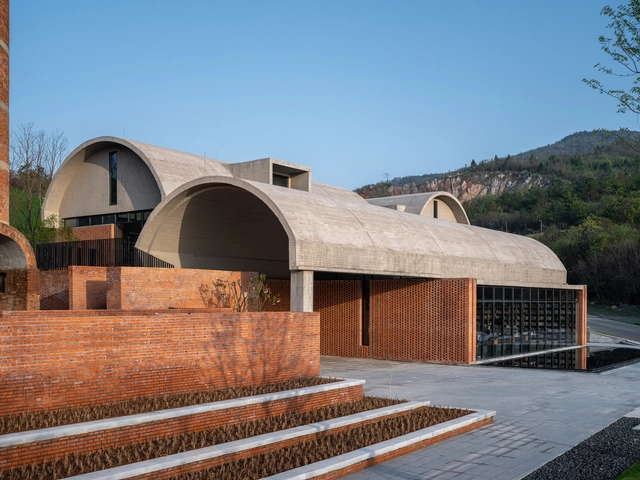
The oldest record of barrel vaults is estimated to date back to 4000 BC. These provided the spans in the Sumerian ziggurat at Nippur in Babylonia, built from fired bricks amalgamated with clay mortar. This type of vault was built as a continuous round arch and became a characteristic architectural element of Roman architecture, later used also in Renaissance architecture.
It is crucial to consider the future environmental impact of everything we create. Climate change remains high on the global agenda, and every industry must take part in the goal of reaching Net Zero. One of the more challenging industries concerns construction, which plays a vital role in the process of decarbonization and is constantly encountered with challenges to become greener. Therefore, it demands innovative techniques and development of data to find new and sustainable processes. One solution is to introduce and design both cleaner and more efficient materials. Bricks are a good example, as they can be used in building constructions to ensure a circular process and minimize carbon emissions, being an extremely durable material that can be produced with more sustainable techniques.
Generally made from kiln-fired clay, it is estimated that bricks have been used since 7000 BC, as examples were discovered in the ancient city of Jericho. Since then, bricks have been omnipresent in the history of architecture, combining constructive ease, aesthetics and comfort. Nowadays, with the growing concerns around the environment and the larger impact of materials used and decisions taken on a project, there are ways to modernize an ancient material such as brick through a few updates to its manufacturing process, making it even more eco-conscious. Brick can already be considered a sustainable material because of its durability and recyclability, but there are ways to further improve it. The new project for the headquarters of the food manufacturer Danish Crown, under construction and developed by CEBRA office, is a good example of how to apply this product in a more sustainable way.
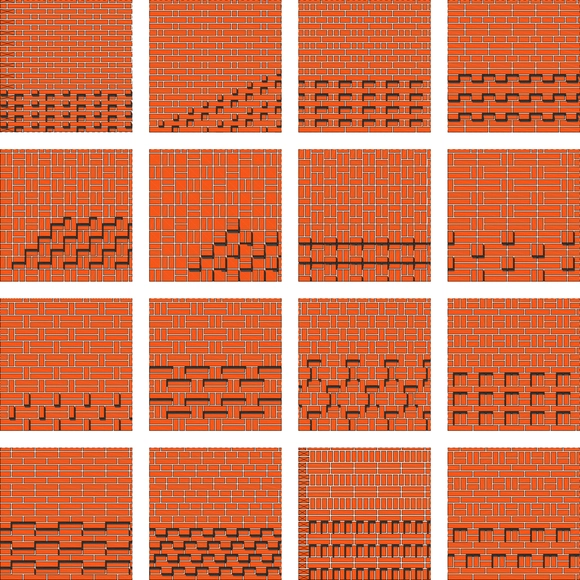
"Welcome to this strange book. With all the drawings, it might appear like a manual, but it isn't. The book is as much about joints as it is about pieces. Above all, it seeks the order that is inherent in things". These words are part of the introduction to Koen Mulder's book, "The lively surface: Masonry associations as a pattern art and tool of composition". Available in German, the 160-page manual, rigorously illustrated, presents a universe of possible pattern variations that can be created when you start designing.
We interviewed Koen to find out what inspired him to talk about this topic and to understand how he managed to gather all this information, while also figuring out the impact that this type of study can have on architecture students and architects.
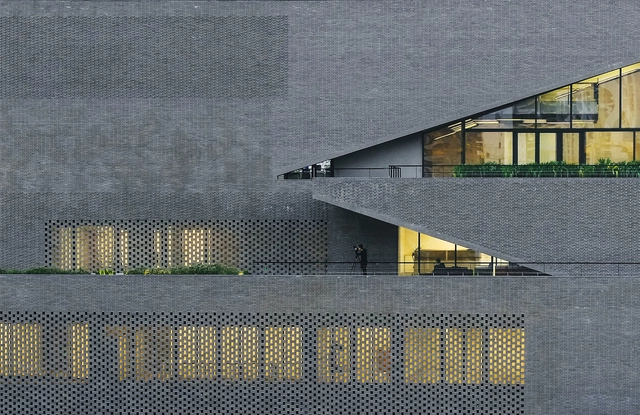
Jingdezhen Imperial Kiln Museum / Studio Zhu-Pei. Image Courtesy of Studio Zhu-Pei
Over the course of the last decade there has been a growing interest in the handcrafted buildings, as well as in the application of local and renewable materials in building construction. Under the concerns about the heavy environmental and economic expenses caused by construction, nowadays urban planners are embracing the concept of sustainability, which refers to “meeting our own needs without compromising the ability of future generations to meet their own needs”.






_Maureen_M._Evans.jpg?1646840531 "© Maureen M. Evans")