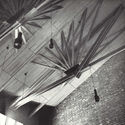
In a 12-day workshop, Building Trust International and Terraepaglia joined the Ciuffelli Agricultural Technical Institute in Todi, Italy, with the aim of exploring a series of construction techniques with raw soil. In addition to producing earth bricks and rammed earth structures -in collaboration with experts such as Eliana Baglioni and Pouya Khazaeli-, a curved wall was erected with a wooden structure and a cane framework, on which a massive layer of earth and straw was spread.
The activity generated a series of internal spaces as a kind of laboratory, to show the construction methods and the materials in situ.
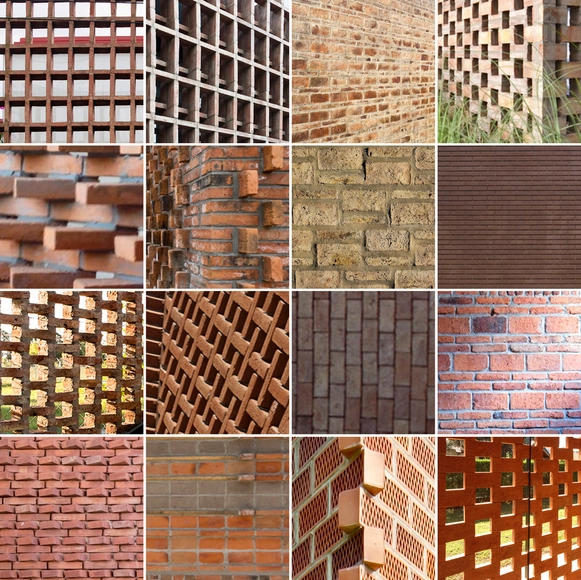
It can't be denied that architects love brick. The material is popular both for its warmth and for the diversity of expressions that can be achieved by applying it in a creative way—depending on the arrangement of individual bricks or the combination of bonds, it’s possible to arrive at a result that is both original and attractive. That ingenuity is what photographers like Hiroyuki Oki, Gustavo Sosa Pinilla, and François Brix, among others, have attempted to capture in their photographs. In these images, light is a key element of good composition, allowing the photographers to control the intensity of color and the contrast of masses and voids, as well as enhancing the incredible textures of the brick we love so much.
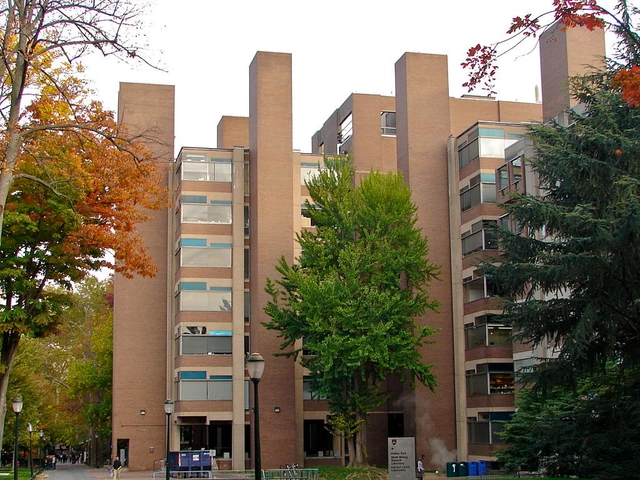
The L-shaped footprint of the building allows it to focus in on the garden. ImageCourtesy of Flickr user Gabrielle Ludlow (licensed under CC BY-NC-ND 2.0)
In the heart of a suburb just east of London stands an incongruous red brick villa. With its pointed arched window frames and towering chimneys, the house was designed to appear like a relic of the Middle Ages. In reality, its vintage dates to the 1860’s. This is Red House, the Arts and Crafts home of artist William Morris and his family. Built as a rebuttal to an increasingly industrialized age, Red House’s message has been both diminished by the passage of time and, over the course of the centuries, been cast in greater relief against its context.
German architecture firm 22quadrat was inspired by the visual effect created by soundwaves moving through water when designing “impulses,” a brick relief wall in the interior courtyard of the Pallotti Residential Complex in Freising, Germany. The architects derived the concept from a metaphor; a single brick is like a single particle, hardly noticeable on its own but capable of much greater impact when combined with others.
The object of this architectural restoration is the Church of the Sacred Heart of Jesus, in Vistabella, the work of Catalan architect Josep Maria Jujol (16 September 1879 – 1 May 1949). The original design dates from 1917 with the construction completed in 1923. The building is a magnificent and personal work of Catalan architecture.
The simplicity of the materials used—basically brick, mortar, and stone—contrasts with the spectacular formal richness of the structural solutions: columns, arches, and vaults that generate a complex, rich, and surreal interior space typical of the mysticism of Jujol.
Bricks are as old as the hills. An enduring element of architectural construction, brick has been a material of choice as far back as 7000BC. Through the centuries, bricks have built ancient empires in Turkey, Egypt, Rome and Greece. Exposed stock brick came to define the Georgian era, with thousands of red brick terraces still lining the streets of cities such as London, Edinburgh and Dublin.
South Korea presents an interesting case for the changing face of brick, with a preference for dark, grey masonry striking a heavy, brutalist, yet playful tone. Like many countries, South Korean brick architecture has questioned conformity, experimenting with stepped, perforated, permeable facades, and dynamic, curved, flowing walls. Below, we have rounded up 12 of their most interesting results.
In 2015, after the catastrophic earthquake in Nepal, Maria da Paz invited Joao Boto Caeiro from RootStudio to design and build a model house in Nepal. Using local and accessible materials, they built two prototype houses out of bamboo and partitions, via a collaboration between locals and volunteers that came to the region.
The prototypes respond to the need for housing that is able to be built quickly with the goal of providing independence and immediate shelter, while at the same time introducing basic building techniques using bamboo and bricks. In doing so, they're able to create a set of tools that allow for future construction that the community can make themselves.
Enter the 2017 Brick in Architecture Awards competition by April 30.
The Brick Industry Association (BIA) has opened its call for entries for the 2017 Brick in Architecture Awards, the country’s premiere architectural design competition featuring clay brick.
BIA’s annual awards honor outstanding, innovative and sustainable architecture in 10 categories that incorporate clay brick products as the predominant exterior building or paving material.
Entries must be submitted online by April 30. Projects will be judged by a jury of peers, and the winners will be announced in June.
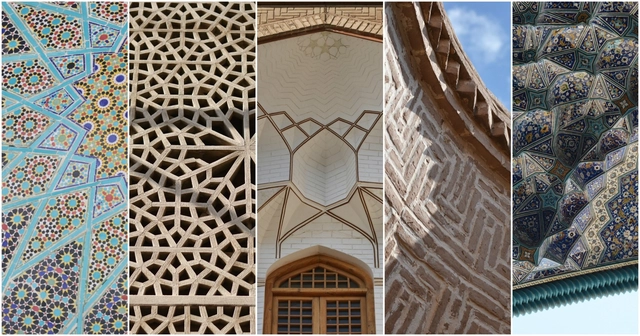
Iran’s geography consists largely of a central desert plateau, surrounded by mountain ranges. Due to the country being mostly covered by earth, sand, and rock, Iranian architecture makes fantastic use of brick or adobe elements. Most of the buildings seen in larger cities such as Tehran and Isfahan are constructed using similar brick-laying methods as can been seen in other parts of the world, but certain constructions, usually ones that date further back, contain incredible geometrical treasures. And it doesn’t stop there - old Iranian architecture often contains a layer of tiles over the brick constructions that can create just as mesmerizing geometrical wonders. The art of creating complexity by using many incredibly simple elements is one that has been mastered in Iran. In an architectural world where construction has become hidden by layers of plaster and plywood, we could learn a lot from the beauty of Iran’s structural geometry, where skin and structure are (almost always) one and the same.
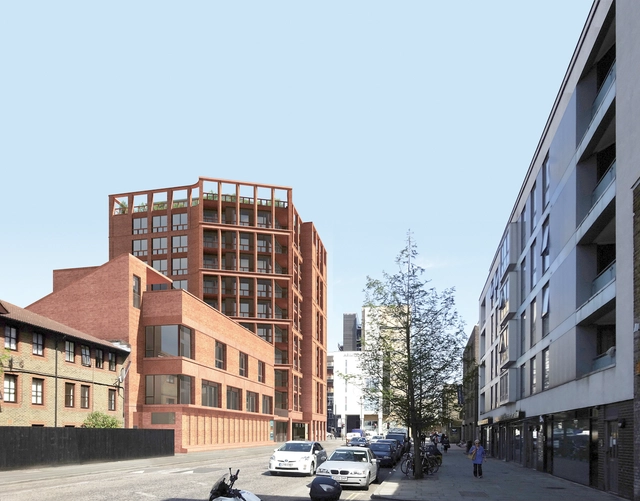
Looking east along Downham Road. Image Courtesy of Henley Halebrown
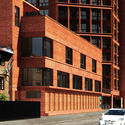
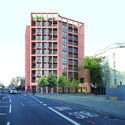
Henley Halebrown has released updates for their proposed mixed-use scheme in Hackney, London. 333 Kingland Road, previously occupied by a fire station, will soon be home to the Hackney New Primary School, commercial units, and dual aspect apartments. The scheme aims to address a need for school places and homes in London and to maintain a connection between learning and living in a dense urban environment.
As the common phrase attests, “history is written by the victors.” We therefore know that the story of the West is that of Europe and the United States, while the other actors in world history are minimized or invisible: it happened to the Chinese and Japanese during World War II, to the Ottoman Empire in sixteenth-century Europe, and to racial majorities in the common reading of Latin American independence. The same thing happens in architecture.
The current boom of the Global South is based not only on new work, but rather on the recognition of an invisible architecture which was apparently not worthy of publication in the journals of the 1990s. The world stage has changed, with the emergence of a humanity that is decentralized yet local; globalized, yet heterogeneous; accelerated, yet unbalanced. There are no longer red and blue countries, but a wide variety of colors, exploding like a Pollock painting.
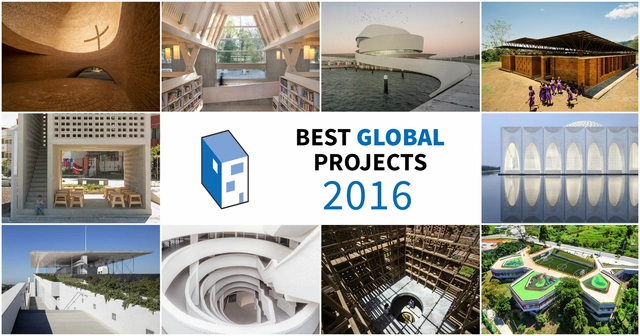
This serves as a preamble to consider the outstanding projects of 2016 according to the British critic Oliver Wainwright, whose map of the world appears to extend from New York in the West to Oslo in the East, with the exception of Birzeit in Palestine. The Global South represents more than 40% of the global economy and already includes most of the world’s megacities, yet has no architecture worthy of recognition? We wanted to highlight the following projects in order to expand the western-centric world view, enabling us to truly comprehend the extent of architectural innovation on a global scale.
The strength of Dutch Design Week (DDW), held annually at the end of October, lies primarily in product design. Although the event has expanded over the past five years to incorporate more fashion, graphics and architecture, small-scale industrial design has retained its preeminence. Many of the designers on show in this year's edition, however, have embraced the challenges of other design disciplines and allowed them to feed into their work. But where does product design meet architecture? Building materials and, most notably at the 2016 event, some really nice bricks. Rotterdam-based architect Alison Killing guides us through her top installations.
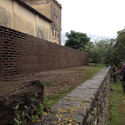
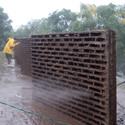
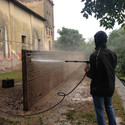
Using concrete and bricks made of raw mud, architects Solanito Benitez, Solano Benitez, Gloria Cabral, Maria Rovea and Ricardo Sargiotti built a wall able to be constructed by the two materials working in tandem. Once the concrete dries, the bricks are washed away, returning the mud back to its natural state, leaving spaces in the lines of concrete, like a kind of negative.
This artistic intervention arose from an invitation to participate in an art exhibition in Unquillo MUVA, Cordoba, Argentina from April 11 to May 3, 2014.
The wide range in which pieces of masonry can be arranged allows for multiple spatial configurations. Born in a furnace, the brick adorns and reinforces, protects and—to various degrees—brings natural light into spaces that need slight, natural illumination.
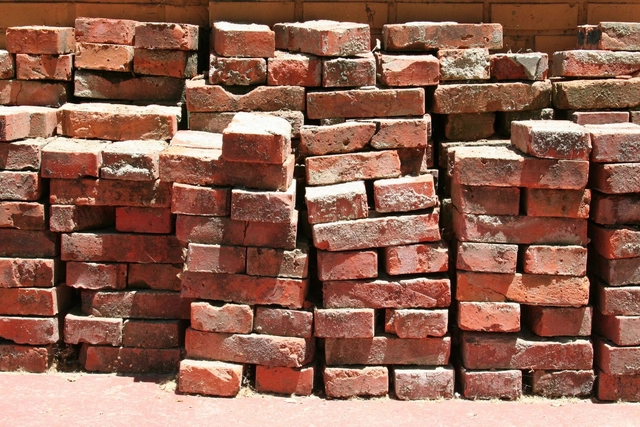
Throughout history, traditional brick-laying consisted of predetermined arrangement of parts, and lines of rope to guide the consistency and placement of each individual brick. But there are many other ways to exploit this multi-faceted, timeless material, so we've selected 16 projects that demonstrate the potential of the humble brick.
Below find 16 construction details from projects that use bricks in ingenious ways.
Thanks to a new robot named Hadrian X, we made soon be able to construct an entire brick house in just 2 days. Developed by the appropriately named Australian firm Fastbrick Robotics, the giant truck-mounted robot has the ability to lay up to 1,000 bricks an hour. Its innovation comes via the machine’s 30-meter telescopic boom, which allows the base to remain in a single position throughout the brick-laying process.
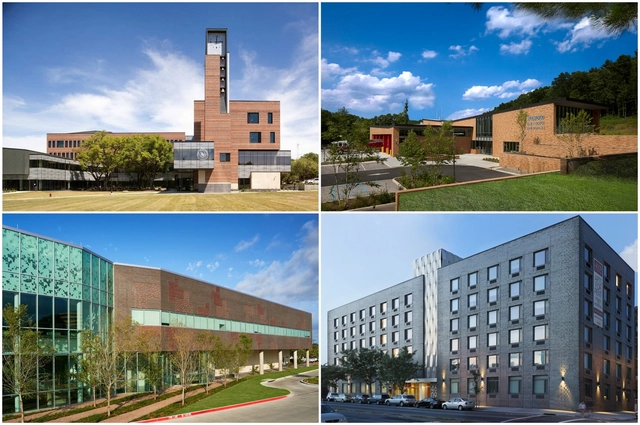
The Brick Industry Association (BIA) has announced the results of the 2016 Brick in Architecture Awards, given to “the country’s most visionary projects incorporating fired-clay brick.” This year, there were a total of 32 medalists with Best in Class winners in seven categories: Commercial, Educational (Higher Education), Educational (K-12), Healthcare, Municipal/Government, Residential (Multifamily) and Residential (Single Family).
“These winners demonstrate the best of brick’s aesthetic flexibility, and as a material made from abundant natural resources, it’s a perfect strategy in sustainable design,” said Ray Leonhard, BIA’s president and CEO.
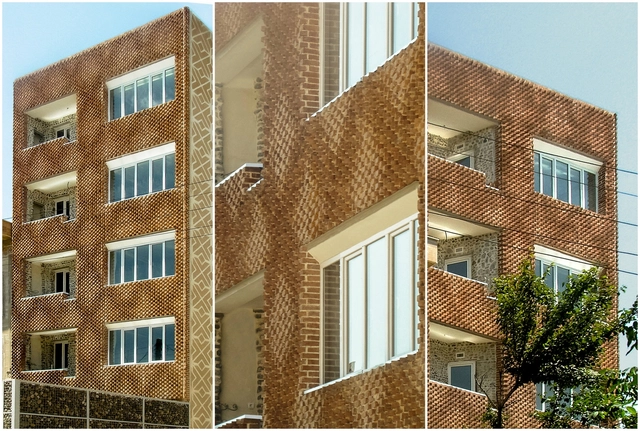
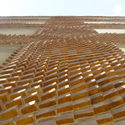
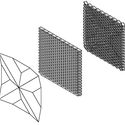
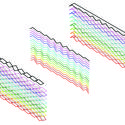
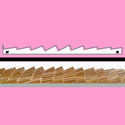
With their latest facade construction, Iranian architecture firm Sstudiomm explores the potential that brick can offer by utilizing parametric architecture. Instead of relying on unique construction elements for assembly on-site at a later date, in their new project (called, in full, "Negative Precision. On-Site Fabrication of a Parametric Brick Facade // A DIY for Architects") the firm considers how a simple mass-produced element like the brick can be assembled in unique ways by taking advantage of digital technology. While firms like Gramazio Kohler have already developed industrial methods of assembling brickwork following parametric designs, Sstudiomm aims for a more lo-fi approach, creating parametric brick walls using little more than the traditional construction methods found in Iran and a dose of ingenuity.
One man’s trash is another man’s building material. Researchers from the Royal Melbourne Institute of Technology (commonly known as RMIT University) have developed a technique for making bricks out of one of the world’s most stubborn forms of pollution: discarded cigarette butts. Led by Dr. Abbas Mohajerani, the team discovered that manufacturing fired-clay bricks with as little as 1 percent cigarette butt content could completely offset annual worldwide cigarette production, while also producing a lighter, more efficient brick.