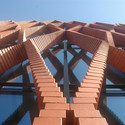
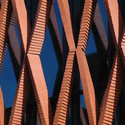
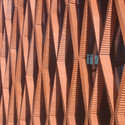
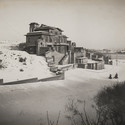
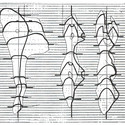
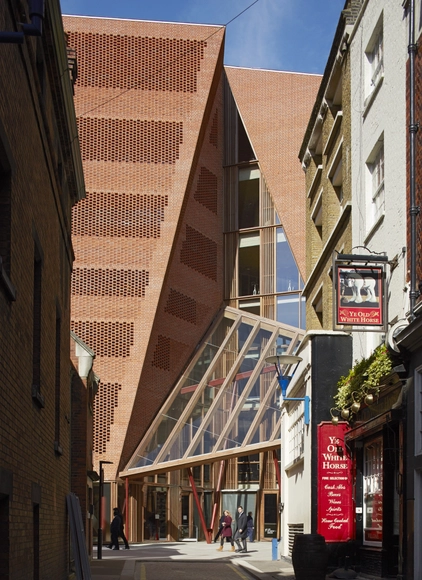
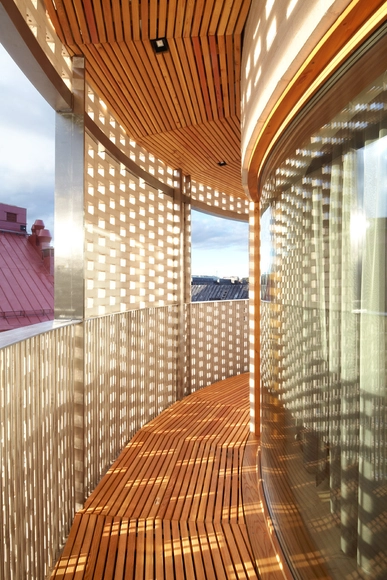
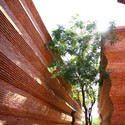
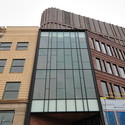
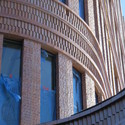
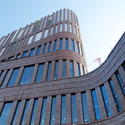
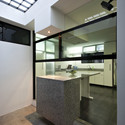
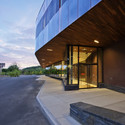
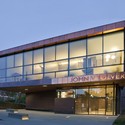
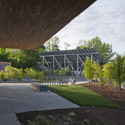
Advances in computers and fabrication technology have allowed architects to create fantastic designs with relative ease that in years past would likely require the labor of countless master craftsmen. Architecture firms like Gramazio Kohler Architects are known for their innovative approach to digital fabrication, adapting technology from a variety of fields. To create this stunning new brick façade for Keller AG Ziegeleien, Gramazio Kohler used an innovative robotic manufacturing process called “ROBmade,” which uses a robot to position and glue the bricks together.
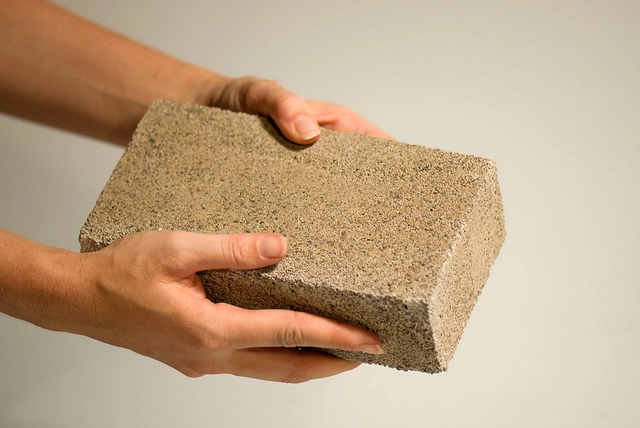
India has one of the fastest growing populations in the world and to accommodate it, a better building material is needed. Currently over 200 billion of the country’s traditional clay fired bricks are manufactured every year, resulting in numerous pollution and environmental problems. To address these issues, a team from MIT –- composed of students Michael Laracy and Thomas Poinot, along with professors Elsa Olivetti, Hamlin Jennings and John Ochsendorf -- has developed Eco-BLAC bricks: an alternative to traditional bricks that reuses industrial waste and is low-cost and low energy.
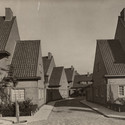
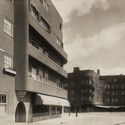
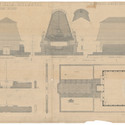
The Netherlands Builds in Brick is one of the latest exhibitions at Het Nieuwe Instituut (formerly the NAi) in Rotterdam. It seeks to modify the "assumed triumph of Modernism" in the interwar period, drawing upon two photographic collections from the Institute's extensive archives. The exhibition has been curated to highlight that brick remained the favoured construction material throughout the advocacy of the Modernist movement, even for experimental construction.
The Wienerberger Brick Award is a biannual architectural award that is presented to outstanding examples of modern and innovative brick architecture. In 2016, Wienerberger will present this internationally established award for the seventh time, and the award is now open for submissions. Architecture critics, journalists and for the first time also architects themselves can submit projects online until March 31, 2015. The official Brick Award ceremony will take place in Vienna in spring 2016.
The Award acknowledges innovative brick buildings of international quality that show the varied and diverse ways brick can be used in contemporary architecture. At the same time, the award, and in particular the accompanying architectural book, gives people with an interest in architecture, as well as experts, an overview of current developments and trends in international brick architecture with its remarkable range of applications.
https://www.archdaily.com/603902/brick-award-2016-call-for-entriesSponsored Post
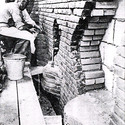
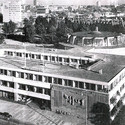
In 1954 British sculptor Henry Moore was commissioned to design and install a large wall relief into Joost Boks' new bouwcentrum (Construction Centre) in the Dutch city of Rotterdam. The project, pieced together with approximately 16,000 hand-carved Dutch bricks, stands as the sculptor's only work completed in the humble material. In a short documentary film produced by ARTtube, architectural historian Wouter Vanstiphout narrates the fascinating story behind Wall Relief No.1.
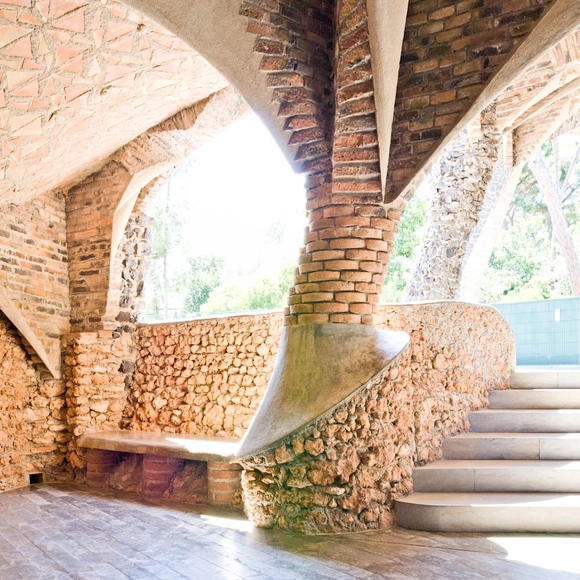
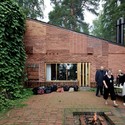
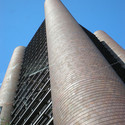
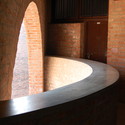
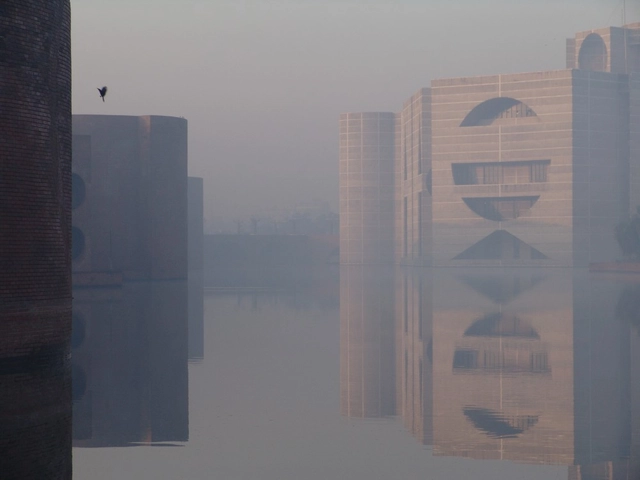
As one of the most ubiquitous forms of construction, it can sometimes be easy to overlook the humble brick. However, this prosaic building method can also be one of the most versatile materials available to architects, thanks to the experimentation of countless architects who, for centuries, have worked to create new forms of expression with the simple material. In this round up, we celebrate architects who, with their architectural classics, have expanded the possibilities of brick craft: Antoni Gaudí's fantastical vaulting at Colònia Güell and Alvar Aalto's experimental brick patterning at his house in Muuratsalo; the powerful brick piers of Kevin Roche and John Dinkeloo's Knights of Columbus Building and the Catalan vaults of Porro, Garatti and Gattardi's National Arts School of Cuba; and finally, what brick round up would be complete without the brick-whisperer himself - Louis Kahn and his all-brick fortress for the Indian Institute of Management.
The following news is presented by ArchDaily Materials, our new US product catalog.
The 2014 Wienerberger Brick Award Winners exemplify brick's potential in contemporary architecture, transforming the common brick into something spectacular. This year's jury featured 2012 Pritzer winner Wang Shu, who commented on the "spatial and secret" feeling of the Grand Prize Winning Kantana Film and Animation Institute. See all seven winners after the break.
Our friends at Mecanoo have shared a fascinating mini-documentary exploring the complex brickwork on display in their latest project in Boston's Dudley Square, the Dudley Municipal Center (nearing completion).
Called "Boston Bricks with a Dutch Touch," this documentary features interviews with everyone involved in the project - from construction workers to architects - and focuses on the difficulty of using brick in this elaborate manner. Enjoy the video above and check out some fantastic images after the break.
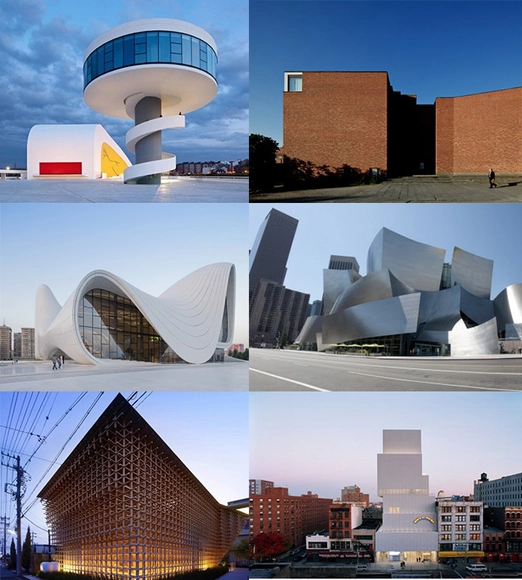
In case you missed it, we’re re-publishing this popular post for your material pleasure. Enjoy! To celebrate the recent launch of our US product catalog, ArchDaily Materials, we've coupled six iconic architects with what we deem to be their favourite or most frequently used material. From Oscar Neimeyer's sinuous use of concrete to Kengo Kuma's innovative use of wood, which materials define some of the world's best known architects?
A unique biotechnology start-up company have developed a method of growing bricks from nothing more than bacteria and naturally abundant materials. Having recently won first place in the Cradle to Cradle Product Innovation Challenge, bioMason has developed a method of growing materials by employing microorganisms. Arguing that the four traditional building materials - concrete, glass, steel and wood - both contain a significant level of embodied energy and heavily rely on limited natural resources, their answer is in high strength natural biological cements (such as coral) that can be used "without negative impacts to the surrounding environment."
Architects: Espaço Cidade Arquitectos Location: Lisbon, Portugal Architect In Charge: João Silva Vieira Project Year: 2010 Photographs: Courtesy of Espaço Cidade Arquitectos