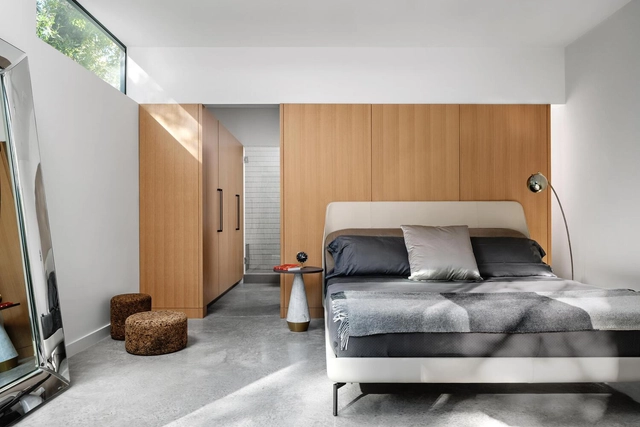
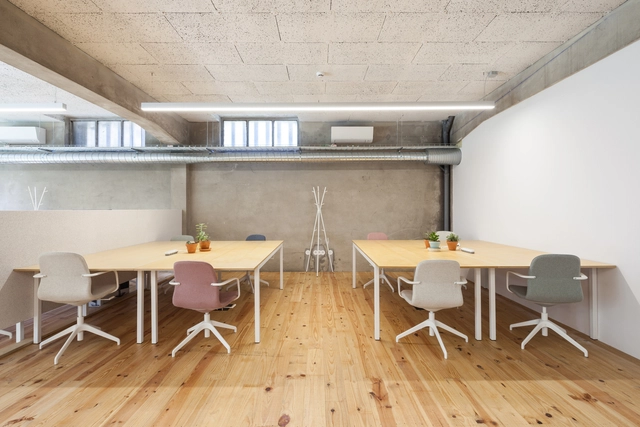
As our cities densify and building types become more and more mixed-use, we tend to spend a lot of time in noisy environments. When we think about acoustic comfort, we rarely think of places like restaurants, venues, and big offices; places with a lot of people, machinery, and background noise. The quality of sound can entirely change the experience of people in an interior space, and improving the space's acoustic quality relies on treating all surfaces, from walls to ceilings, and flooring. In this article, we will present a variety of solutions for ceilings, flooring, and walls, their different combinations, and a simple guide of how to apply them correctly in public spaces without compromising the aesthetic of the interior.
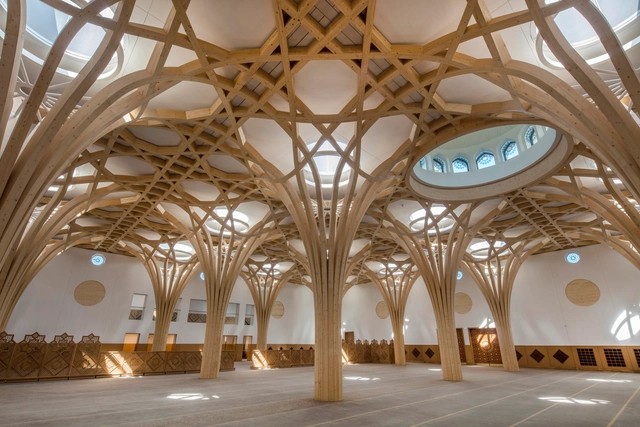
The Royal Institute of British Architects (RIBA) has revealed the six shortlisted buildings contending for this year's RIBA Stirling Prize. Celebrating its 25th year, the award is given to the United Kingdom's best new building. The selected buildings demonstrate "the innovation and ambition that lies at the heart of exceptional architecture", varying from a city mosque in Cambridge to a remote bridge in Cornwall and a vibrant gathering space in Kingston.
Since before the first industrial revolution, sociologists, historians, and urban planners have been addressing the relationship between the city and the countryside, but this debate has become more pressing nowadays with the spread of megacities, typically with a population of more than 10 million people. With more and more people living in urban areas, it is imperative to think of solutions for food production within cities, thereby making cities more independent from rural areas, which have historically been responsible for the supply of food to the entire planet.
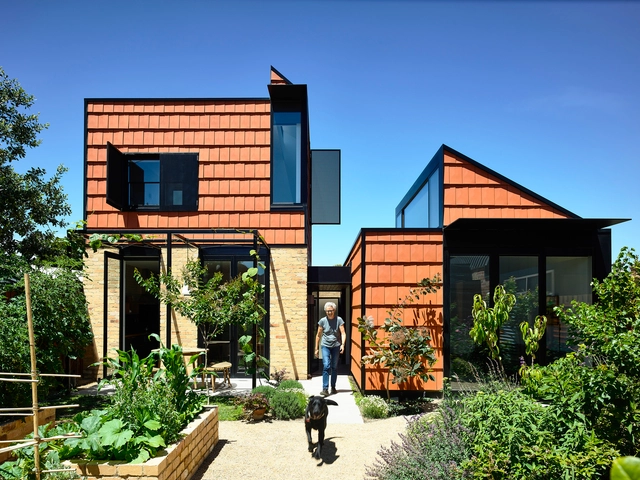
The idea that cities will become self-sufficient in food production in the near future is both unrealistic and naive. Nevertheless, small initiatives such as urban gardens, either at home or public gardens run by the community, might be a good starting point for a much bigger change in the future. Or perhaps they simply represent a desire to return to one's roots and achieve a slightly slower lifestyle.
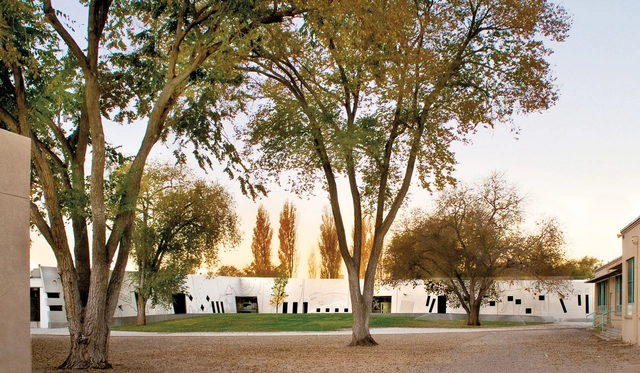
VALLE VISTA ELEMENTARY SCHOOL Suina Design + Architecture, founded by Elizabeth Suina of Cochiti Pueblo, conceived a much-needed addition to an existing 1952 structure in Albuquerque. The structure’s most salient feature is a concrete outdoor Learning Wall, gently tilted up and punctuated with geometric openings and patterns that relate to the school’s curriculum and various Chacoan motifs, such as the sun-cast Sun Dagger.. Image Courtesy of Suina Design + Architecture
In this week's reprint from Metropolis magazine, authors Theodore (Ted) Jojola and Lynn Paxson talk about embracing “place knowing” as a process to understand building and planning, and highlight modern achievements in Pueblo architecture.
The Pueblo people of the Southwest have been stewards of their lands for millennia. In contrast to the colonial and territorial experiences of many tribal nations, the Pueblos avoided being displaced from their homelands. This prevented many of their places from being erased. As such, their ancient worldviews still remain at the core of their planning and design. Nothing is so important as their imprint on the expression of architecture, especially its form and function.
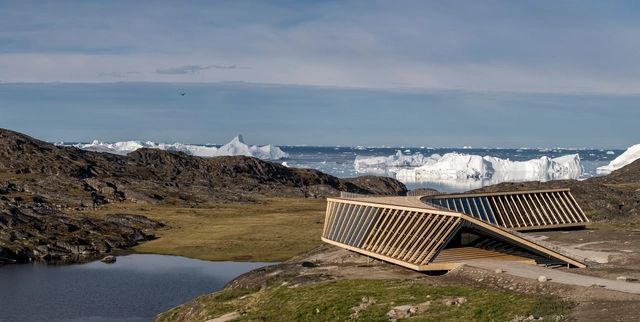
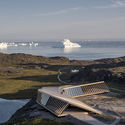
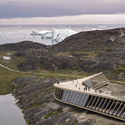
Nestled in the Arctic landscape of Greenland's UNESCO-protected wilderness, Dorte Mandrup Arkitekter has completed the Ilulissat Icefjord Centre, a research and visitor center that highlights the effects of climate change. The structure blends into the surrounding landscape, offering visitors a unique panorama of the Icefjord, while observing the detrimental consequences that climate change has on the environment.
The Covid-19 pandemic has been going on for over a year now, so people have consequently been traveling less, and tourism has slowed down all over the world. But that doesn't mean we still can't get to visit faraway places. Since the beginning of the lockdown, several museums and organizations have been preparing virtual tours that allow users to explore their spaces through digital immersion. With that in mind, here are four different ways for you to explore places without leaving your home.
Cities we live in today have been built on principles designed decades ago, with prospects of ensuring that they are habitable by everyone. Throughout history, cities have been catalysts of economic growth, serving as focal points for businesses and migration. However, in the last decade, particularly during the last couple of years, the world has witnessed drastic reconfigurations in the way societies work, live, and commute.
Today’s urban fabric highlights two demographic patterns: rapid urbanization and large youth populations. Cities, although growing in scale, have in fact become younger, with nearly four billion of the world’s population under the age of 30 living in urban areas, and by 2030, UN-Habitat expects 60% of urban populations to be under the age of 18. So when it comes to urban planning and the future of cities, it is evident that the youth should be part of the conversation.
“Equity” is a moving target. We who create architecture want our devotion to have a true forum of objective Equity. But motivations are not outcomes. How we judge design inevitably carries the baggage of “Style” and that makes universal equity in design apprehension impossible.
The Pritzker Architecture Prize released a special ceremony video honouring the 2021 laureates Anne Lacaton and Jean-Philippe Vassal. Previously held in person, each time at a different architecturally significant venue around the world, this year’s ceremony is the second pre-filmed event in the history of the Prize, following the one in 2020. The ceremony features filmed remarks from various speakers, among which are several jury members, Jury Chair Alejandro Aravena, the 2020 Prize recipients Shelley McNamara and Yvonne Farrell, as well as this year’s Laureates themselves. The video also pays tribute to the achievements of Lacaton and Vassal through footage of their built work.
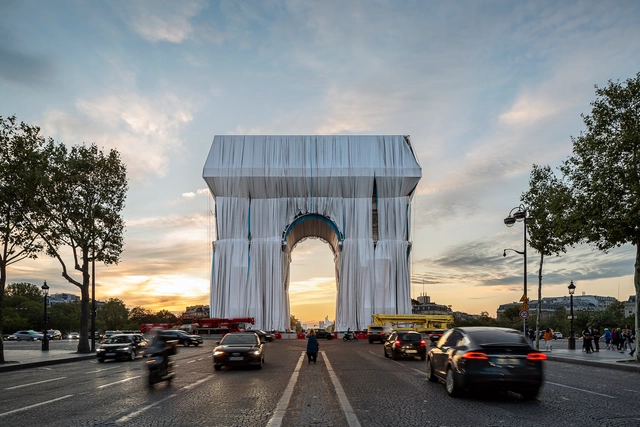
Work has just begun on the late Christo's unfulfilled intervention for the Arc de Triomphe in Paris. The first images by architectural photographer Jad Sylla highlight the wrapping up of the famous monument with 25,000 square meters of recyclable polypropylene fabric in silvery blue, and with 3,000 meters of red rope. Scheduled for September 18 until October 3, 2021, the temporary artwork ‘l’Arc de Triomphe, Wrapped’ will only remain on display for 16 days.
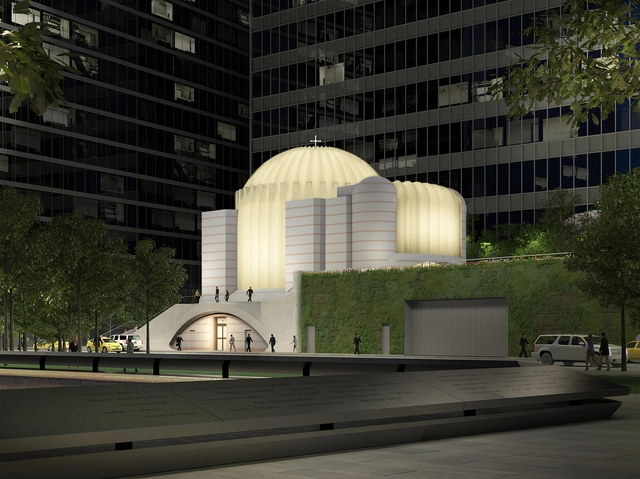
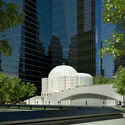
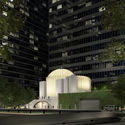
Spanish architect and engineer Santiago Calatrava is rebuilding World Trade Center’s St. Nicholas Greek Orthodox Church and National Shrine in New York City. The church, which was destroyed during the 9/11 attacks, began its reconstruction process in 2015, and is finally reaching completion in 2022. The new structure's design is inspired by a mosaic of Istanbul's Hagia Sophia Grand Mosque, formerly the Church of Hagia Sophia, which was one of the fundamental factors in defining the original architecture of the St. Nicholas Greek Orthodox Church.
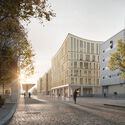
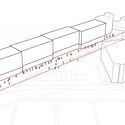
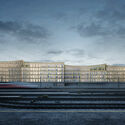
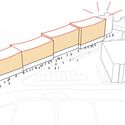
Henning Larsen has revealed the design for Landehof, a new office building activating an underused plot along a railway in the city of Augsburg in Germany. As part of a masterplan meant to develop the area around the city's central train station, the contemporary addition to the complex and textured urban fabric unfolds on a long and narrow plot adjacent to the railway tracks. The design takes cues from the surrounding historical architectural styles, serving as a gateway to the city centre.
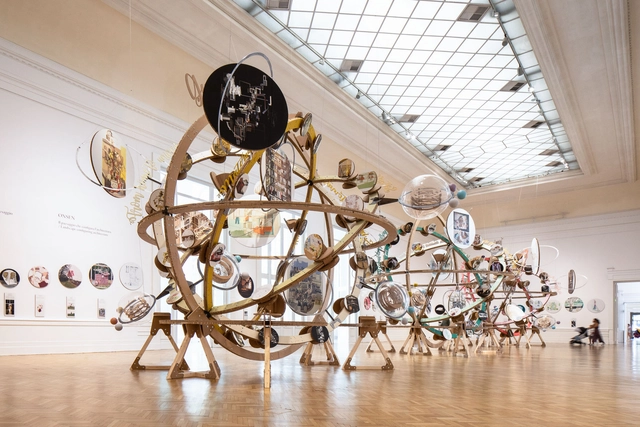
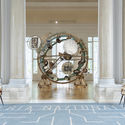
Curated by Spanish architect Izaskun Chinchilla Moreno, Cosmowomen. Places as constellations is an exhibition currently open at La Galleria Nazionale di Roma, Italy. Reflecting on the incorporation of women into architecture, Cosmowomen displays a series of projects developed by 65 Bartlett School of Architecture-alumni women architects from over 20 different nationalities.
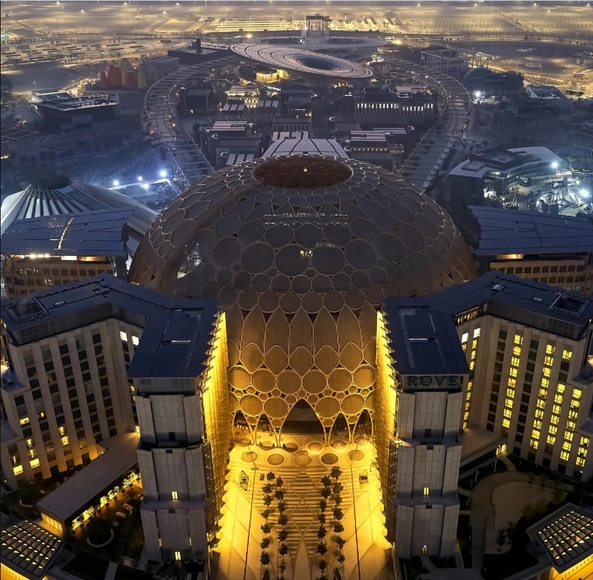
Al Wasl Plaza and Sustainability Pavilion. Image Courtesy of Expo 2020 Dubai
With Expo 2020 Dubai scheduled to debut in less than a month, new drone shots of the venue highlight water and garden features. Aiming to “explore the power of connections in shaping our world”, Expo 2020 Dubai will run from 1 October 2021 until 31 March 2022, under strict Covid regulations, after a year delay due to the worldwide pandemic.
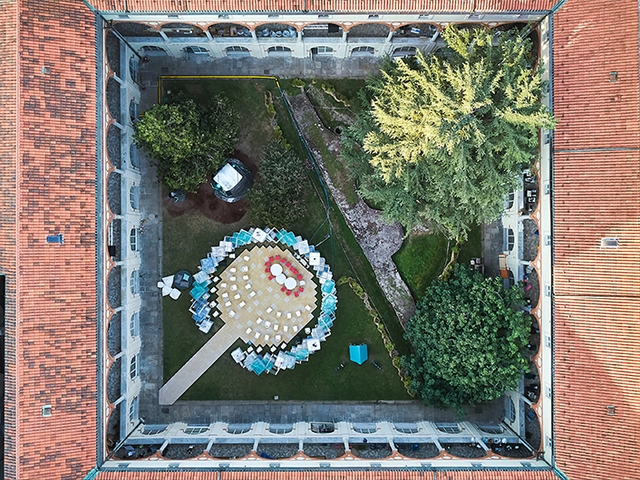
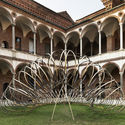
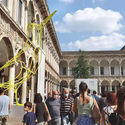
During the first week of September, Milan Design Week opened its doors to more than 60,000 architects, designers, artists, and craftsmen from all around the world to explore new design innovations and exchange ideas about the interior design, furniture, and lighting. In parallel to the event hosted at the Rho Fiera, interventions by world-renowned architects were installed across the city as part of the Fuorisalone.
The Fuorisalone program took place under the patronage of the Municipality of Milan, and started last April with a digital edition under the theme of "Forms of Living", taking a view on the questions that inspire and influence the future of the furniture and design. Read on to discover the top 5 outdoor installations along with their description.
Choosing a home's cabinetry and furniture is not only about function and storage space but also about visual appeal. Walk-in closets, which are normally located in the master bedroom, are a good example of this. These spaces were usually used only for storing clothes, but modern closets now incorporate more unique features, transforming them into more personal and functional amenities.
https://www.archdaily.com/968291/more-than-just-a-wardrobe-15-examples-of-walk-in-closetsEquipe ArchDaily Brasil
Modular system Mywall by Fantoni. Image Courtesy of Fantoni
As material technology becomes more advanced and the importance of health and wellbeing is taken more seriously, sculpting sound is now a consistent part of specifiers’ briefs in all sectors, from echo-free hospitality to clear and functional meeting rooms, and even transforming home offices or music rooms into headache-free sound vaults.
Five emerging architecture studio profiles from Switzerland, France, the Netherlands, Austria, the UK, and Slovakia have been chosen by New Generations, a European platform that analyses the most innovative emerging practices at the European level, providing a new space for the exchange of knowledge and confrontation, theory, and production. Since 2013, New Generations has involved more than 300 practices in a diverse program of cultural activities, such as festivals, exhibitions, open calls, video interviews, workshops, and experimental formats.



























.jpg?1631531492 "Courtesy of Expo 2020 Dubai")