Skidmore, Owings & Merrill (SOM) and Brookfield Properties' Manhattan West, a six-building project, has opened to the public. Nestled in the heart of New York City’s Far West Side, the mixed-use development aims to link several New York neighborhoods and transform unutilized spaces above rail lines into new dynamic destinations.
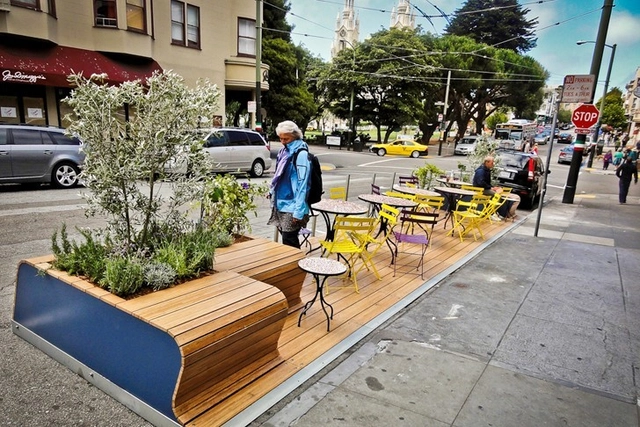
Rebar’s “walket” a prototype parklet system deployed in San Francisco’s Mission district in 2009. / Rebar. Image Courtesy of The Dirt
On a clear fall day in 2005, a group of friends and collaborators from the art collective Rebar commandeered an 8-foot-wide by 20-foot-long metered parking space in downtown San Francisco. This two-hour guerilla art installation evolved into Park(ing) Day, a global public art and design activism event that has been celebrated every year since. In 2009, Rebar and other design studios were approached by the City of San Francisco to prototype a more permanent version of Park(ing) Day. In response, we created one of the world’s first parklets in San Francisco (we called our version walklet), and through the diligent efforts of Andres Power in the Mayor’s Office and City Planning, San Francisco’s pioneering parklet program was born.
https://www.archdaily.com/968977/pandemic-era-street-spaces-parklets-patios-and-the-future-of-the-public-realmJohn Bela
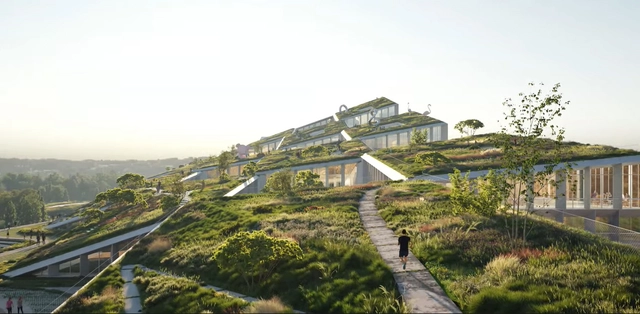
Courtesy of Bucharest Studio's Big Fuse Valley Animation on Youtube
BIG has collaborated with global technology platform for luxury fashion Farfetch and Portuguese real estate developer Castro Group to create "Fuse Valley", a purpose-built urban fashion village on the slopes of the Leça River in Porto, Portugal. The platform's newly unveiled HQ will feature 12 uniquely-designed interconnected buildings that represent the different elements of the company’s organization. The project is set to break ground by early 2023, and open its doors in 2025.
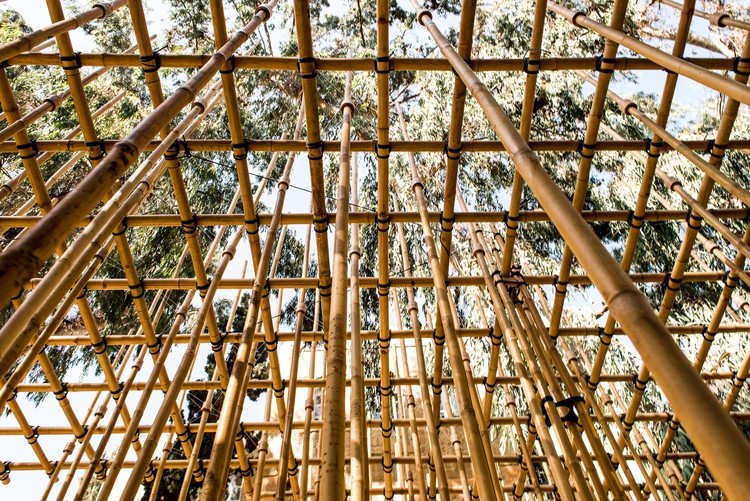
It is difficult to find someone who never played LEGO as a child. What if, like LEGO's, we thought of buildings as great assembling games? U-Build is a modular wooden construction system developed by Studio Bark to be easy to build, pleasant to inhabit, and simple to deconstruct at the end of its useful life. The system removes many of the difficulties associated with traditional construction, enabling individuals and communities to build their own homes and buildings. The system uses precision CNC machining to create a kit of parts, allowing the structure of the building to be assembled by people with limited skills and experience, using only simple hand tools.
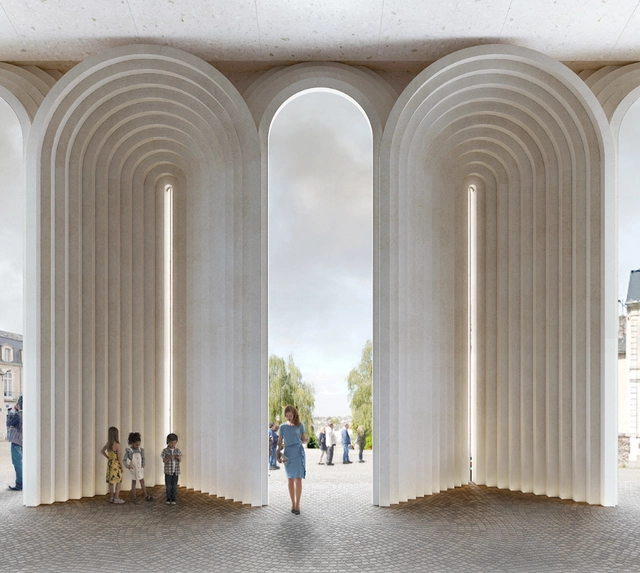
Kengo Kuma was asked to preserve the western portal of the Cathédrale Saint-Maurice in Angers, France, to protect 12th and 17th century polychromatic sculptures displayed within the historic structure. The proposed design creates a "harmonious dialogue" with a subtle contemporary arched intervention that preserves its medieval architectural heritage and pays tribute to the original builders' regulatory framework and unified proportions. Construction of the new arched portals have begun and are expected to be complete in 2024.
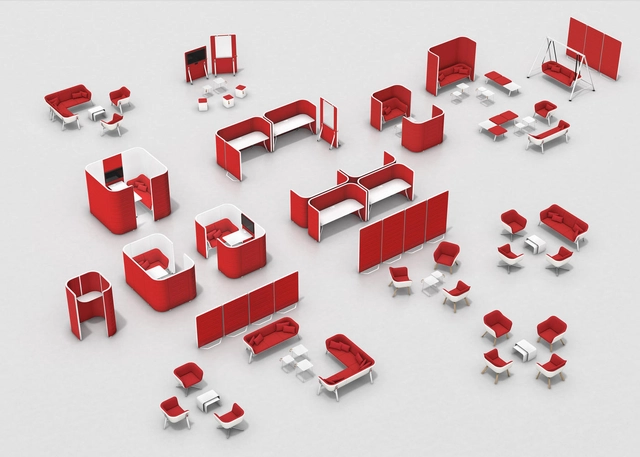
Office work used to only be done one way. You would sit at a desk all morning, then try not to fall asleep in the afternoon meeting. However, from continent-crossing video chats to team meetings in the park, modern workplaces are using flexible workspaces and practices to lower costs but raise creativity, production, and morale in the workforce.
Employees are now able to choose which working style does the business for them, and product manufacturers are creating simple but ingenious collections of modular, flexible furniture to suit any style and type of workspace including:
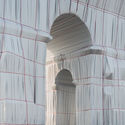
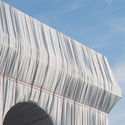
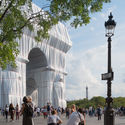
After almost 60 years of its initial ideation, Artists Christo and Jeanne-Claude’s temporary installation, the complete wrapping of L’Arc de Triomphe in Paris has opened to the public on September 18th, attracting thousands of tourists and locals. In this new photoseries, photographer Jared Chulski captures the wrapped monument, focusing on the details of the temporary intervention and how it compliments the city's urban fabric.
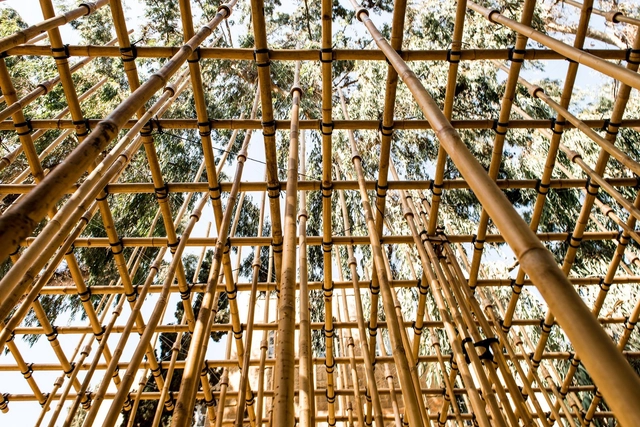
The construction industry is known to be one of the most polluting industries on the planet, but we often find it difficult to associate the role of the architect and urban planner with this industry, thus avoiding the responsibility of being involved in one of the most harmful production chains in the world. Therefore, it is imperative to emphasize the importance of questioning not only the materials used in the projects but also the manufacturing systems involved.
Edificio ZETA en Buenos Aires, diseñado por ODA. Image Cortesía de ODA
ODA, the New York-based architecture office, has recently unveiled its design for Paseo Gigena, a former parking lot that will be transformed into a mixed-use project and a public park in Buenos Aires. Around the same time, ODA has also announced the beginning of the construction phase of its first residential venture in the same city: The ZETA building.
Located in the Belgrano neighborhood, next to the modern structure of the University of Belgrano and facing the historic mansion that houses the Australian Embassy, the 126-unit project seeks to "reimagine the language of residential buildings in Buenos Aires", according to the architects.
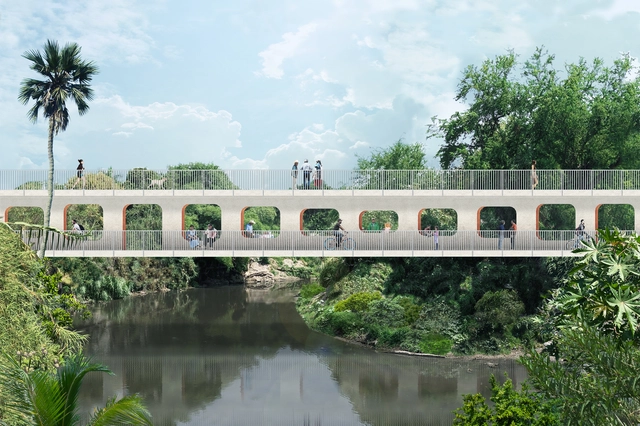
OMA New York has designed a new 145-meter pedestrian bridge over the Apatlaco River in Jojutla de Juárez, Mexico, as part of a larger reconstruction effort by Infonavit (National Workers’ Housing Fund Institute) following the 2017 earthquakes.
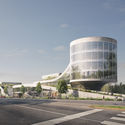
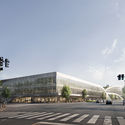
Zaha Hadid Architects has ranked first in a design competition for the redevelopment of the Vilniusrailway station complex and surrounding area in Lithuania, with its ‘Green Connect’ proposal. Generating an integrated transportation hub for the 21st century with new civic spaces enveloped by nature, ZHA’s project is aligned to the city’s ongoing sustainability agenda.
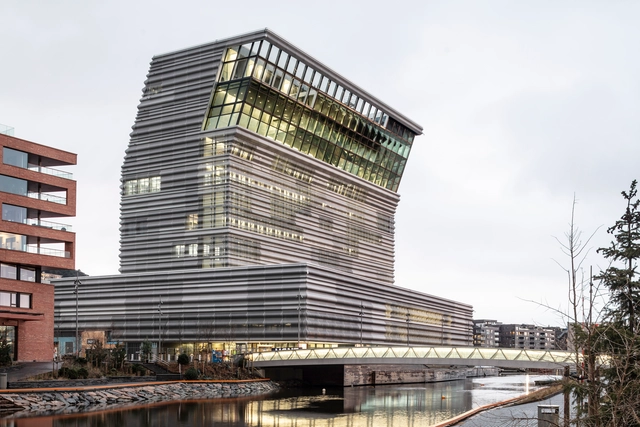
After being awarded with the top prize at the Munch Museum Competition in 2009, Spanish architecture firm Estudio Herreros has finally completed the construction of the museum and will open its doors on October 22, 2021. The long-awaited museum will showcase a rich collection of Norwegian heritage and culture and thousands of artworks by artist Edvard Munch, as well as present a contemporary museum concept that highlights architecture's urban role and historical responsibility of Oslo and the nation as a whole.
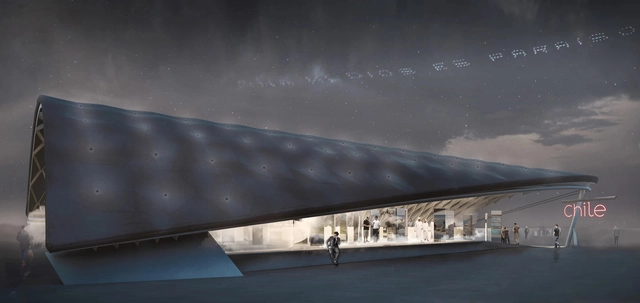
The proposal consisted of traveling a modular oak lamella shed to Dubai, originally built in Chile back in the mid-twentieth century. At the time of its official presentation in 2019, the architects defined the project as "a primitive mark on the ground, as nomadic tribes have done for centuries in this now globalized desert [Dubai]. This physical and cultural dimension is necessary to adapt the pavilion as a friendly and austere space."
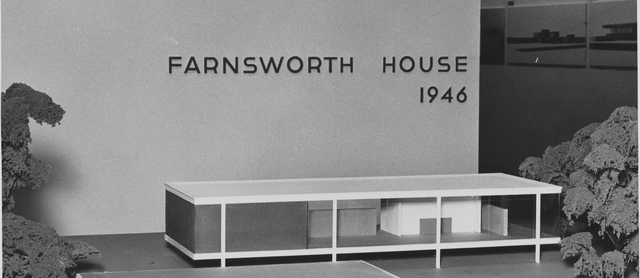
In this week's reprint, author Mark Alan Hewitt talks about models and their importance. "For those of us lucky enough to have grown up during the 1950s and ’60s, models were hot stuff—and not just the kind that statement may bring to mind", he states. Going back to the realistic models of the 70s, similar to today's virtual renderings, this essay retraces their history and the artists that produced them.
https://www.archdaily.com/969074/the-allure-and-importance-of-architectural-modelsMark Alan Hewitt
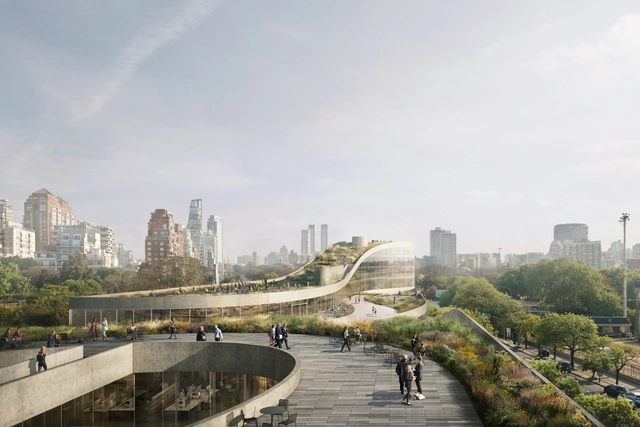
Paseo Gigena, diseñado por ODA. Image Cortesía de ODA
The old structure called Playa Gigena, in honor of the equestrian of the same name, located between the hippodrome and the Rosedal de Palermo in Buenos Aires, will now be converted by ODA into a Class A office building and a public park including cafes, restaurants, shops, and a covered parking lot. The partial demolition of the old parking lot has begun on June 28th.
Designed by the American architecture office ODA, the next Paseo Gigena will be the firm's first mixed-use project in the city of Buenos Aires city. The team involved in the process also includes the participation of Aisenson studio, Inscape Landscape, Coinsa, and the developer BSD Investments, to which the government has granted the concession of the property known as Ámbito Gigena, for a period of 15 years.
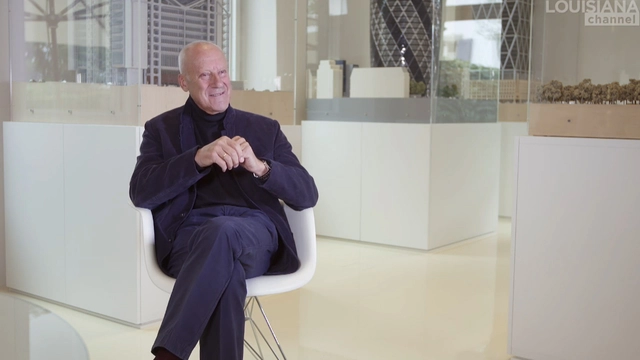
The Royal Institute of British Architects (RIBA) has announced that Pritzker Laureate Lord Norman Foster will chair the 2021 Stirling Prize jury. The jury will also include Simon Allford, RIBA President, architect Annalie Riches, 2019 RIBA Stirling Prize winner, and artist Dame Phyllida Barlow, advised by architect and sustainability expert Mina Hasman.
In Mendoza, Argentina, the digital fabrication research lab Node 39 FabLab created a frame loom structure made of digitally cut wood to help indigenous people in the central region of the country weave and create their traditional patterns. In the state of Ceará, northeast Brazil, a study entitled "Artífices Digitais" (Digital Artisans) by the Federal University of the State of Ceará used digital fabrication tools, namely 3D printing, to produce digital models, like digital prosthetics, to restore the damaged parts of an altarpiece of the high altar of the Mother Church in the city of Russas.


.jpg?1632905825&format=webp&width=640&height=580)
.jpg?1632905809 "© Jakob Dahlin")
.jpg?1632905848 "© Lucas Blair Simpson © SOM")

.jpg?1632905796 "© Fadi Asmar © SOM")
.jpg?1632905825)

.jpg?1632815641 "© Lucian R, courtesy of BIG – Bjarke Ingels Group")

.jpg?1632815654 "© Lucian R, courtesy of BIG – Bjarke Ingels Group")
.jpg?1632815638 "© Lucian R, courtesy of BIG – Bjarke Ingels Group")














.jpg?1632473481&format=webp&width=640&height=580)
.jpg?1632473680 "© Negativ")
.jpg?1632473515 "© Negativ")
.jpg?1632473524 "© Frontop")
.jpg?1632473481)