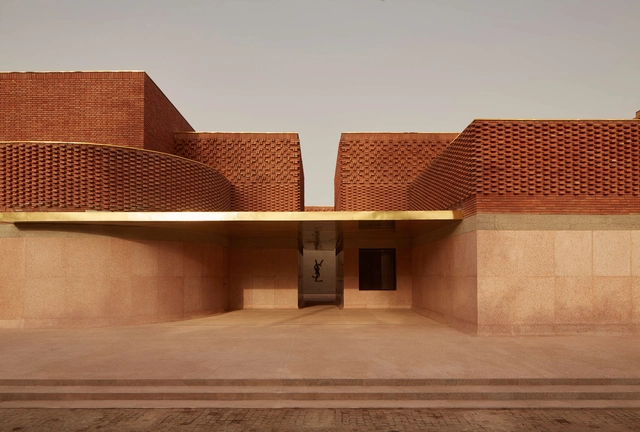
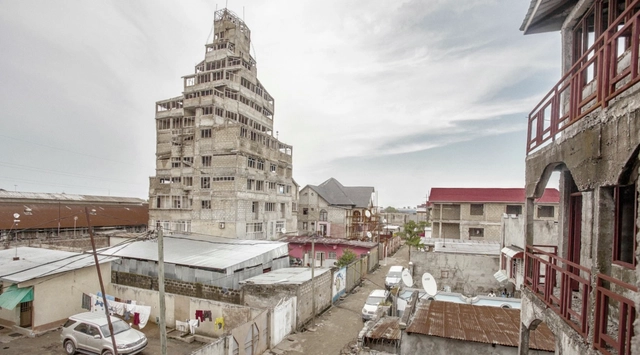
When we look at African architecture, we see the architectural diversity of a continent which has been shaped and moulded into its present form by a combination of internal and external factors. When we look at African architecture, there is also a tendency for certain regions to take precedence over other parts of the continent. The Tropical Modernist works of Maxwell Fry and Jane Drew in Ghana and Nigeria, for example, are extremely well documented. So is the extremely well-preserved colonial-era architecture of the Eritrean capital of Asmara. Yet, there seems to be parts of the continent that “slip under the radar” in African architectural conversations – and the book Architectural Guide: Sub Saharan Africa is a welcome addition to African architectural scholarship.
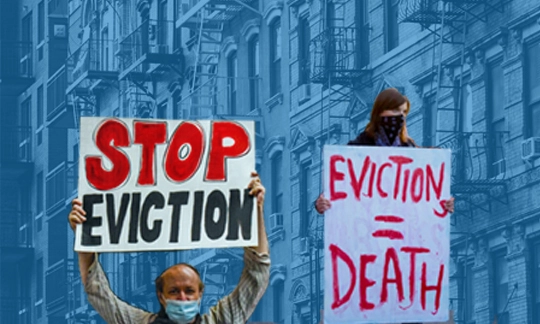
One of the big economic factors of the COVID-19 pandemic has been the issue of tenant evictions and rent moratoriums. As millions of people quickly lost their jobs, it meant that they began to struggle to pay their rents. Now, as the economy slowly begins to recover and some return to work, there’s been pushback on the moratoriums, with landlords and tenants being split on how to move forward with the future payments. Tenants still can’t pay their rent and landlords themselves are burdened by the lack of income. But what this tug of war really sheds light on is how out of reach the costs of living have become in some of the densest cities, and how housing in some ways has been seen as an amenity, not a necessity or a basic right- even in a global pandemic.
Architecture 2030 is calling on all architects, engineers, planners, and individuals involved in the building sector worldwide to design all new projects, renovations, landscapes, cityscapes, and infrastructure to be zero carbon starting now.
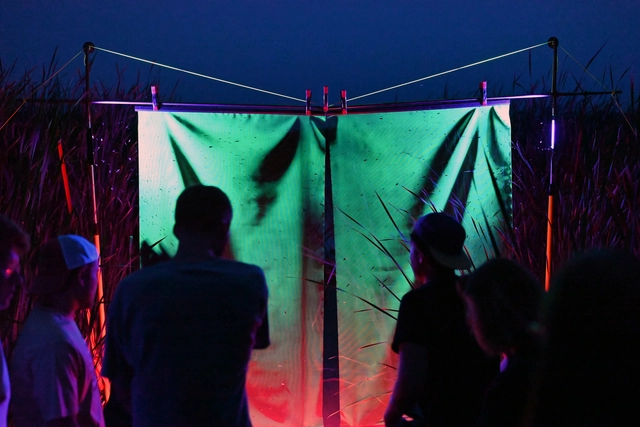
Artist collective Space Saloon recently completed the inaugural Public Art and Ecology Artists-in-Residence in the Okoboji region of Northwest Iowa. Observing local landscapes and diverse ecosystems, the team created a series of temporary installations, site-specific sculptures and multi-species performances. Working in association with Imagine Iowa Great Lakes and the Iowa Lakeside Lab, the process led to a series of public events reimagining how to engage regional ecologies.
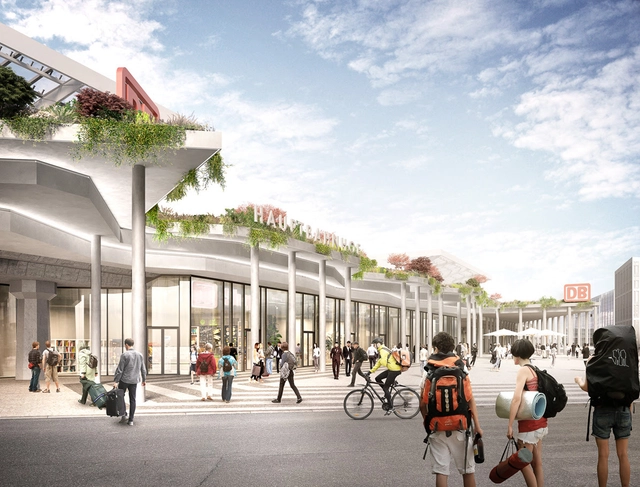
J. Mayer H. has won a competition to design the new façade of Cologne Main Station on Breslauer Platz in Germany. The design proposal frames the sides of the rail station with an all-around façade that offers an innovative use of space by making the best of the site's circulation and natural resources. The intervention will feature rooftop landscaping with local flowers and greenery, rainwater collection, protection from rain, wind, and sunlight, and a visual emphasis on the station's points of access.
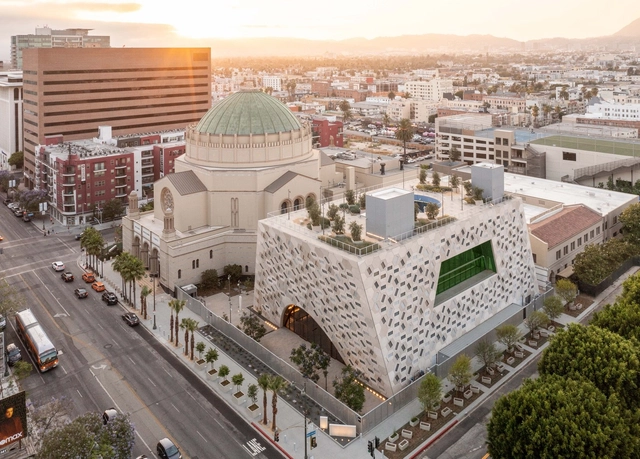
Courtesy of OMA New York, Photography by Jason O’Rear
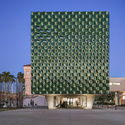
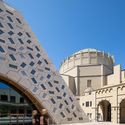
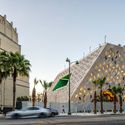
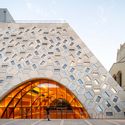
OMA / Shohei Shigematsu has completed its Audrey Irmas Pavilion at Wilshire Boulevard Temple, the firm’s first commission from a religious institution and first cultural building in California. Expected to open in January 2022, “the new 55,000 square foot Pavilion is a response to the Wilshire Boulevard Temple’s vision for its campus to create a much-needed space to convene”.
Questioning the new now, especially with the new challenges of Covid-19, around the world, cities are advocating for structural change and collective action. Berlin questions, an annual, multi-day conference and a platform for transdisciplinary dialogue, in its 2021 edition “Metropolis: The New Now”, tackled the immediate present, creating a place for debate. Dedicated to local solutions to global challenges, the event took on a hybrid format, at various locations in Berlin and online, resembling the world we live in.
ArchDaily had the chance to meet up with the winner of the Iconic Awards 2021 in the Architects of the Year category Dorte Mandrup, architect, founder, and creative director of Dorte Mandrup Arkitekter at Berlin Questions, to discuss the firm’s latest project in the German capital, the Exile Museum and to reflect on her career and visions.
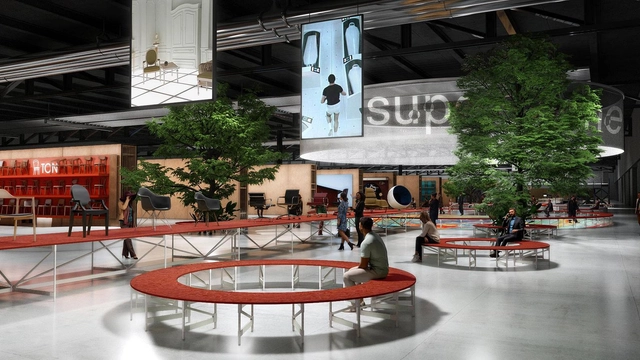
After a year of absence in light of the pandemic, Milan Design Week, one of the most anticipated design events to take place in Italy, will finally open its doors to visitors. From the 5th to the 10th of September, more than 350,000 architects, designers, artists, and craftsmen from all around the world will have the chance to explore new design innovations and exchange ideas about the interior design, furniture, and lighting. During the week-long event, Salone del Mobile, the awaited furniture and interior design event of the year, will be hosting local and international exhibitors at the Fiera Milano, Rho, along with interventions by world-renowned architects across the city.
ArchDaily will be attending the Salone del Mobile so stay tuned for exclusive interviews and collaborations, and read on to discover what to expect during the week-long exhibition and how architects are taking part of the event.
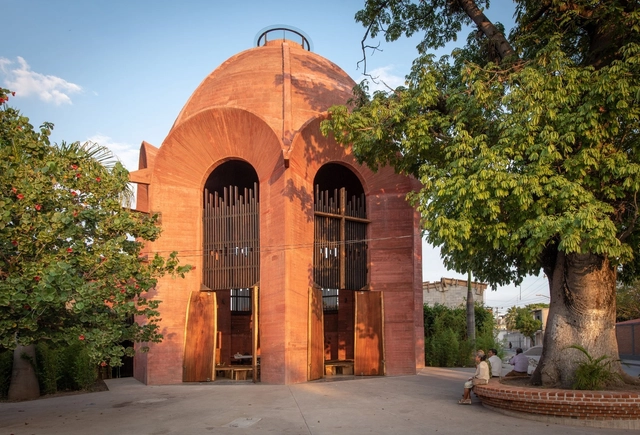
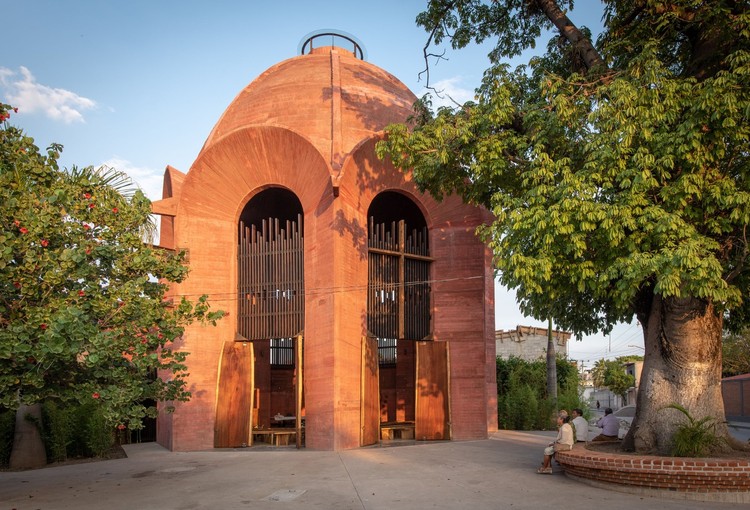
Morelos is a state nestled in the south-central region of Mexico, surrounded by the states of Puebla, Guerrero, Estado de México, and Mexico City. With just over 4,893 km² of territory, it's Mexico's second smallest state. It's capital and largest city is Cuernavaca.
D Residence. Image Courtesy of Jemma Chidiac Achitects _ By JPAG.co
This week’s curated selection of Best Unbuilt Architecture highlights private residential projects submitted by the ArchDaily community. From futuristic private retreats on the coast of Hawaii to a mini-housing concept on the rocky cliffs of Montenegro, this article explores residential architecture and presents projects submitted to us from all over the world.
Featuring a secluded private residence that sits between a Persian mountain and river, an interior renovation of an 80's Mediterranean house, and a minimalist forest retreat, this round-up explores the diversity of private homes and how each design responds to its site's topography, context, and to the occupants spatial needs. The selection also includes villas in Lebanon, Iran, Tanzania, Netherlands, Ivory Coast, Kosovo, and Vietnam.
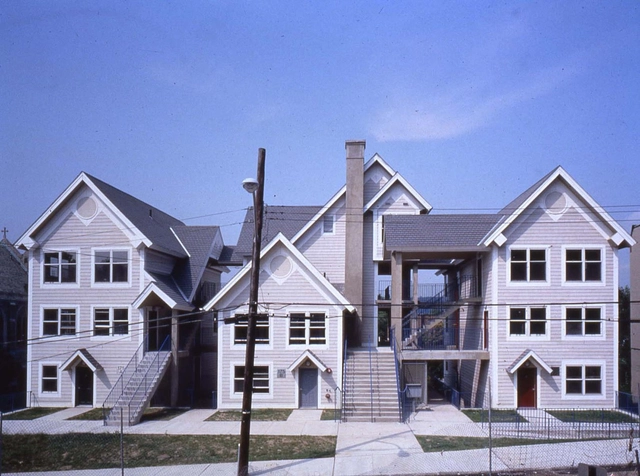
Courtesy of Duo Dickinson Cephas Housing, Yonkers, New York
In the 14th century, Geoffrey Chaucer wrote “Familiarity breeds contempt”. By definition “local” is “familiar”. Why are humans so thrilled to go beyond the familiar, the local, and reach for what is new, universal, and salvational? The word “local” has the weight of true value, like “density” or “sustainable” But the lure of connection between all humans is powerfully seductive, and that desire to connect almost always falls short of our hopes.
CRA-Carlo Ratti Associati has merged architecture with urban agriculture in the firm's newly-unveiled Jian Mu Tower in Shenzhen, China. The 218-meter high building incorporates a large-scale vertical hydroponic farm across its entire facade, producing vegetation that can feed up to 40,000 people per year. The 51-storey tower will also include housing offices, a supermarket, and a food court with inner gardens for recreation and social gatherings.
Videos
Brainport Smart District Master Plan. Image Courtesy of UNSense
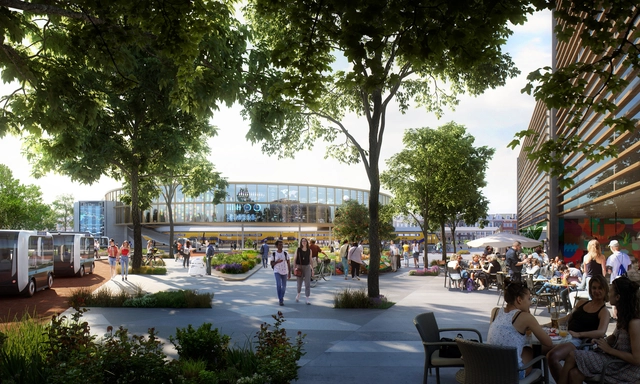
UNStudio has recently published a report exploring the broader scope of community building and placemaking in the post-pandemic urban environment. Through examples from their practice, UNStudio highlights various design strategies currently incorporated in architecture and urban planning that cater to the universal and crucial need to connect socially. In addition, the practice stresses the importance of “ third spaces” and human-scale connectivity, as well as the blending of digital and physical spaces of interaction.
A building stands out along the maritime walkway in Palma, Mallorca's capital. Designed by José Ferragut Pou and completed in 1960, the building was a poster child for the modern architectural movement sweeping the globe at that time. Today, like many of its brethren, it stands in abandoned disrepair.
Lluís Bort is the Spanish architect and photographer behind "Empty Architecture," a photographic compilation of abandoned buildings from throughout the island of Mallorca, Spain.
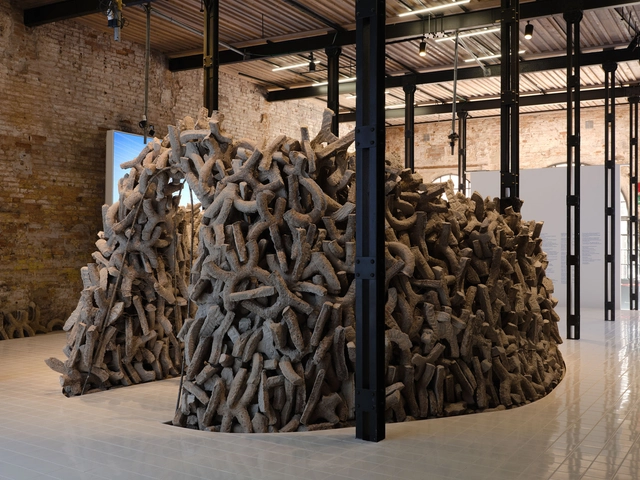
Few materials are as timeless, durable and beautiful as terracotta. With a range of inherent properties, terracotta is being specified to redefine building envelopes. Used for its many colors and textures, as well as its flexibility, this ceramic can be constructed as cladding, rain screens and a variety of components. Dating back to the Babylonians, terracotta has been used throughout history, and it continues to be a material selected for diverse building types around the world.
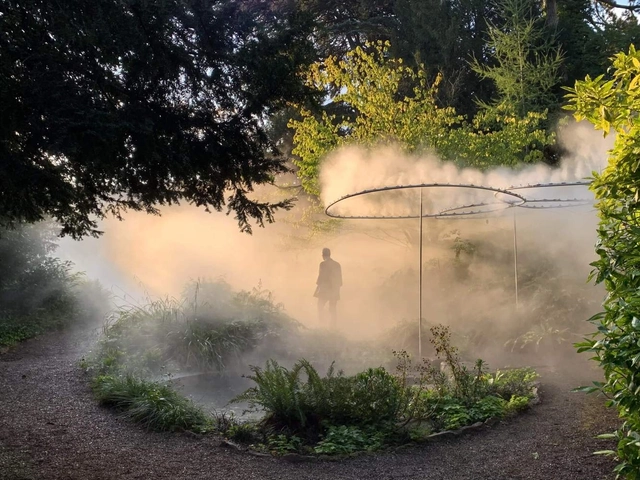
Design consultancy office AUTHOS and Swiss multidisciplinary Interactive Designer Stella Speziali have collaborated to create a unique spatial intervention at the Zurich Design Biennale 2021. Titled NEBULOSUS, the installation uses mist and augmented reality as an immersive and intangible 'structure' that changes the spatial boundary of Zurich's botanical garden and creates and explorative experience for visitors.






.jpg?1630568377 "Courtesy of Bloomimages")
.jpg?1630568367 "Courtesy of Bloomimages")










.jpg?1630414739&format=webp&width=640&height=580)

.jpg?1630414689 "D Residence. Image Courtesy of Jemma Chidiac Achitects _ By JPAG.co")
.jpg?1630414739)

.jpg?1630490207 "© Henry-Fussell Hitchcock, Jr and Philip Johnson")
.jpg?1630490219 "Courtesy of Weißenhofsiedlung Stuttgart")
.jpg?1630490299 "Courtesy of Bauhaus, Dessau, Germany")

.jpg?1630396129&format=webp&width=640&height=580)
.jpg?1630396086 "Courtesy of CRA - Carlo Ratti Associati")
.jpg?1630396078 "Courtesy of CRA - Carlo Ratti Associati")
.jpg?1630396021 "Courtesy of CRA - Carlo Ratti Associati")
.jpg?1630396025 "Courtesy of CRA - Carlo Ratti Associati")
.jpg?1630396129)