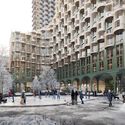
For more than a century, a street market known as ‘The Blue’ was the beating heart of Bermondsey in Southeast London. On Saturdays gone by, hundreds flocked to the historic neighborhood, a site with roots reaching back to the 11th century when it was once a pilgrimage route to Bermondsey Abbey. Market punters used to sample goods from more than 200 stalls that famously sold everything under the sun. “You can buy anything down The Blue” was the phrase everyone went by.
First Place. Image Courtesy of Galiasgar Kamal Tatarian State Academic Theatre
The Open International Competition for the Development of an Architectural Concept for the Galiasgar Kamal Tatarian State Academic Theatre has announced its results. The consortium including Kengo Kuma & Associates was granted the first place, while the second place went to a proposal led by Asif Kahn Studio and the third place to Coop Himmelb(l)au and his team.
Graduating with an architecture degree is often met with the expectations of working a 9-5 job at an office. However, the reality is that many fresh graduates are venturing into diversified careers and exploring fields such as architectural photography, writing, rendering, set design, and project management. In this Editor's Talk, ArchDaily's Founder and Editor in Chief, Director of Software Product Development, Managing Editors, and Social Media Editor share their experiences of graduating with a Bachelor's Degree in Architecture then finding themselves exploring different, yet very complimentary career paths post graduation, proving that there is a lot more to the architecture practice beyond designing built spaces.
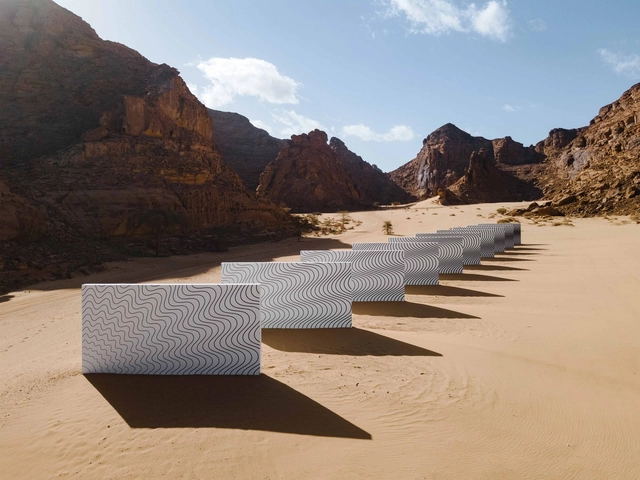
As part of the Desert X international contemporary art exhibition, the second edition of the Desert X AlUla features 15 contextual installations across the Saudi Arabian desert that explore "ideas of mirage and oasis". This year's exhibition is curated by Reem Fadda, Raneem Farsi, and Neville Wakefield, under the theme of Sarab (arabic for 'Mirage'), and invites artists to address the history and culture of the desert, its contemporary significance, and the dichotomy between the natural and man-made world.
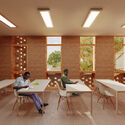
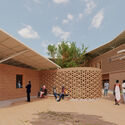
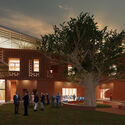
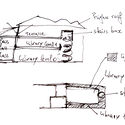
Construction began at the Goethe Institute in Dakar, designed by Kéré Architecture. The project is the first purpose-built space for the German cultural association and exchange centre in its over 60 years of global activity. Located within a residential area and a lush garden, the two-storey structure is shaped by the canopy of trees on-site and is being built using bricks made of laterite, a residual local rock with insulating qualities that help to passively regulate the indoor climate. The project will provide spaces for a wide array of activities, ranging from exhibitions and language courses to concerts and gatherings, all while building on the cultural landscape of Senegal.
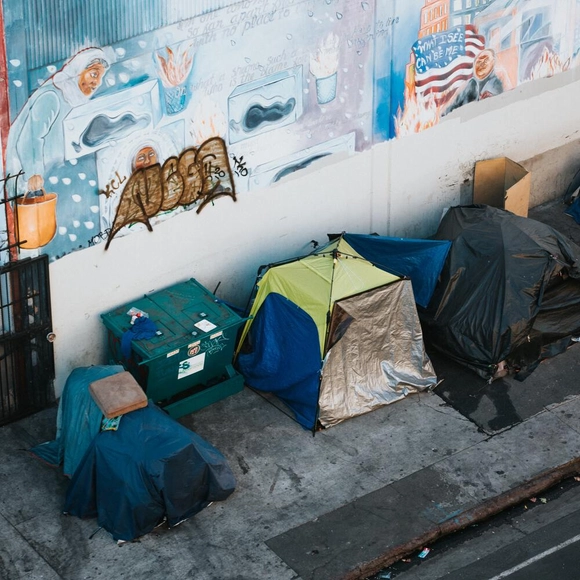
An architectural project conceived from the neoliberal system can only be hostile. That's what Father Júlio Lancellotti, an active figure in actions to support homeless people in São Paulo, says. His work at the head of Pastoral do Povo da Rua has deservedly received the attention of national and international media, as well as being frequently published on his own social networks, drawing the attention of the public and authorities to urgent issues of inequality, invisibility of the most vulnerable and the hostility of our architecture and public spaces.
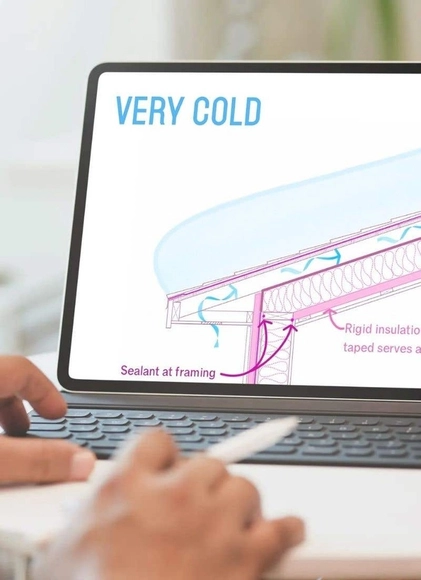
It is difficult to measure, observing a completed building, the amount of work, resources and knowledge that were deposited there. All decisions made influence in some way the performance of the building and its durability. As for the execution details, not all architects allow the dissemination of their constructive solutions. There are professionals, however, who go against the grain and focus on disseminating knowledge, identifying common design decisions that can lead to pathologies (such as leaks, rot, corrosion, mold and odors) and more economical ways to avoid them. This is the idea behind Building Science Fight Club, an Instagram profile whose purpose is to explain some issues and critically analyze certain constructive details and ways of installing materials. We spoke with Christine Williamson, creator of the platform, about her journey. See the full interview below:
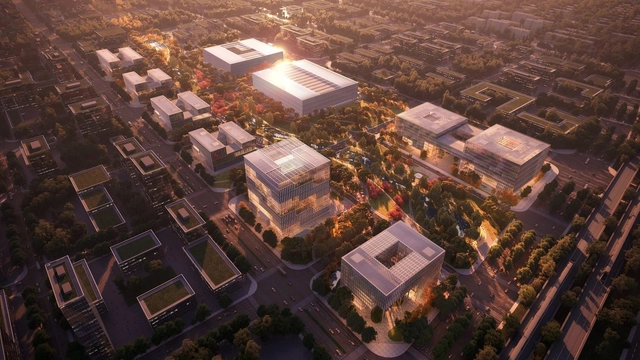
Gerkan, Marg and Partners (gmp Architects) have won the design competition for global smartphone producers Xiaomi's headquarters in Changping Future Science City in Beijing. Titled “Mi Cube”, the project reflects the company's philosophy of “Smart Technology, Minimalist Design” through an architecture that combines a geometric and structured facade with a multifaceted and dynamic interior sequence of spaces.
OPEN recently revealed the design of Sun Tower, a new landmark structure for the Chinese coastal city of Yantai. The project echoes the area's characteristic Ming dynasty watchtowers and proposes a cultural facility that re-establish the visitor's connection with nature. Comprising a semi-outdoor theatre, an exhibition space, a library and an observation deck at the top referred to as the "phenomena space", the structure is intended as a place "of reflection and contemplation".
The side setbacks configure the distance that must be between the building and the side boundary of the land. Master plans, building codes or zoning laws determine the minimum clearance that must be observed to ensure that the building takes advantage of better aeration, sunlight and permeability. Although this feature brings several qualities to the built environment, many people do not know how to take advantage of the space given by the setback and, often, it becomes just a passageway.
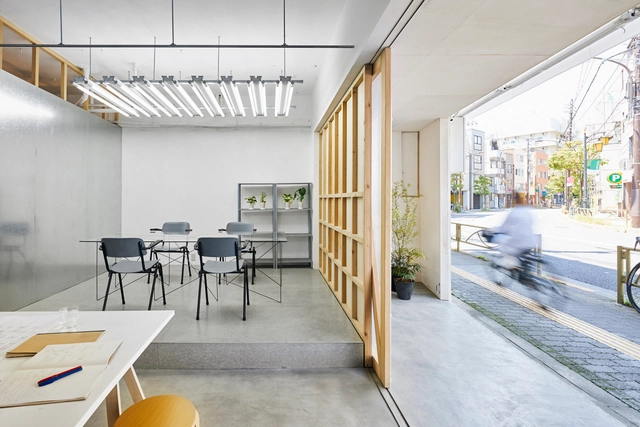
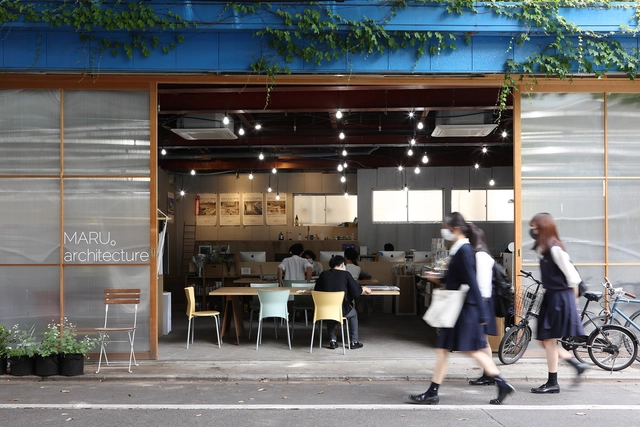
As the discourse about the way we work continues past the original pandemic concern and past the hybrid, remote, or what was once called traditional office space; employers and employees alike are still revisiting mental comfort requirements of a post-pandemic worker. While there are many types of work environments and worker needs that have to be addressed separately (besides the white-collar or knowledge worker), from a design and policies front; one particular, newborn model has been popping up in recent years, thus far seen through some unique, smallscale yet norm challenging Japanese offices.
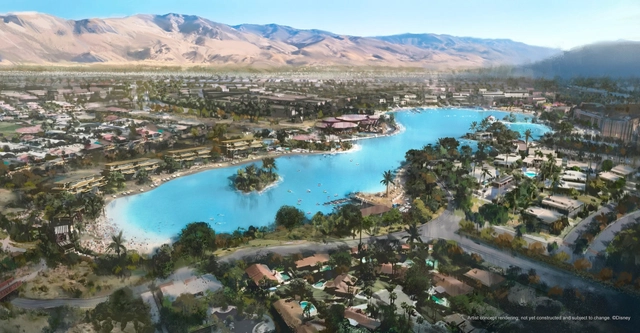
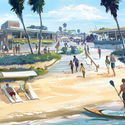
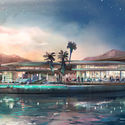
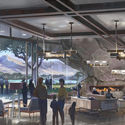
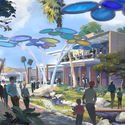
Disney, the multinational entertainment and media conglomerate announced its new addition to its Signature Experiences Program. Titled "Cotino", part of its new Storyliving by Disneyventure, the master plan is Disney's first master-planned community project, and will feature distinctly-designed housing units and neighborhoods, along with commercial and civic amenities and man-made beaches in the heart of Rancho Mirage, California's Coachella Valley.
A consortium comprising developers Dream Unlimited and Great Gulf together with lead architects Alison Brooks Architects, Adjaye Associates, Henning Larsen and landscape design practice SLA were selected to develop Toronto's Quayside into a new neighbourhood containing affordable housing, robust public spaces and new business opportunities. The design for the 4.9 hectares site on Toronto's waterfront proposes over 800 affordable housing units, together with an 8,000 square-metres forested green space and an urban farm, accompanied by arts venues and flexible educational spaces.
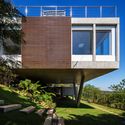
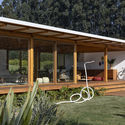
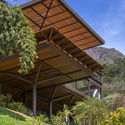
The strategy of raising houses off the ground gained popularity in the 1920s when Le Corbusier announced structures on pilotis as one of the 5 points of modern architecture. A great contribution, especially in the urban issue, as it enables the creation of a free space with greater connection between the public sphere of the street and the private sphere of the building. His iconic Villa Savoye is a paradigmatic example of the use of pilotis that preserves the natural terrain and, as Le Corbusier himself said, places the house on the grass like an object, without disturbing anything. In addition, the pilotis also served as a strategy for the flow of vehicles, which can be seen in Lina Bo Bardi’s equally emblematic Casa de Vidro and its slender steel tubes. Arranged in a modulation of four modules in width by five in depth, they maintain the house as a transparent floating box in the midst of nature, respecting the terrain and assisting in the building's thermal comfort by allowing air circulation.
‘’We’re in a seismic area. Beirut has been buried seven times, so it has to resist any earthquake, and that’s why it also resisted the explosion in the port,’’ expresses Lina Ghotmeh in conversation with Louisiana Channel, in regards to the Stone Garden. A building constructed with resilience in mind, in a city that has been buried within rubble and rebuilt multiple times.
Lina Ghotmeh was interviewed by Marc-Christoph Wagner at her studio in Paris in November 2021. Renowned for her Humanist approach to Architecture, the Stone Garden offers a very personal relationship as the first building to be constructed in Ghotmeh’s hometown of Beirut. Positioned on the edge of the city center, it is very much a form of vernacular architecture echoing the lives of the people who reside here.
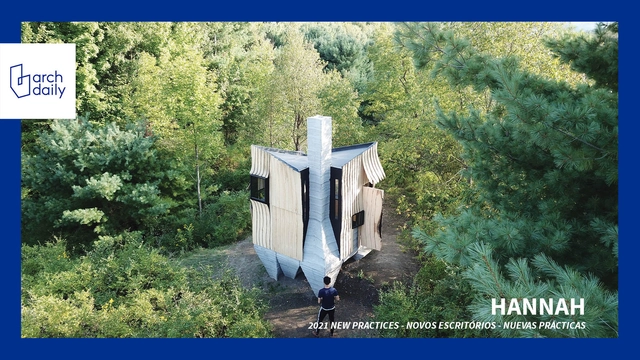
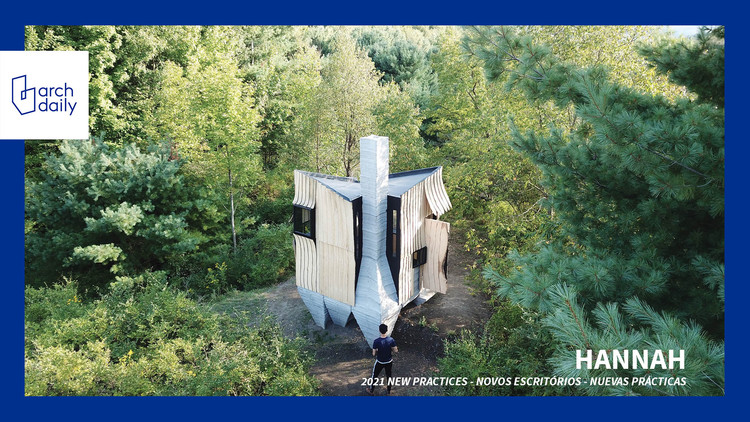
HANNAH Office is a US-based experimental research and design studio whose work focuses on advancing architecture and contemporary construction practices by examining the possibilities of new digital routines and fabrication technologies. Selected as one of Archdaily's Best New Practices of 2021, HANNAH Office was founded in 2012 by Leslie Lok and Sasa Zivkovic and constitutes a platform for exploring technology and material methods across a variety of scales, from furniture to urbanism in search of new design outcomes.
As part of their ‘Essence of Design’ programme, the Hong Kong Design Institute (HKDI), Hong Kong Institute of Vocational Education (IVE), and the HKDI Gallery present “Zaha Hadid Architects: Vertical Urbanism”, an online exhibition that showcases ZHA's innovations in architecture through a display of technical drawings, computer-generated visualizations, architectural models, video projections, and VR experiences. The immersive exhibition is now online and enables visitors to explore the world of ZHA, offering them an insider look into the details of the office's formative projects.
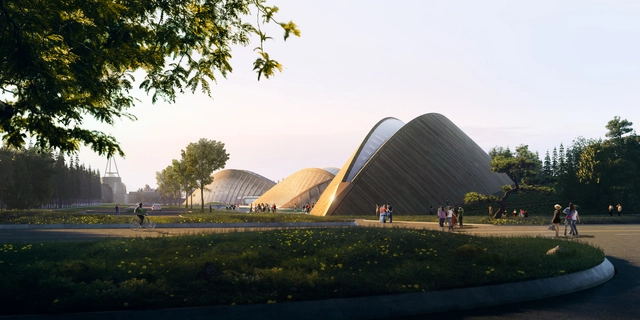
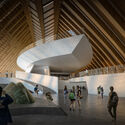
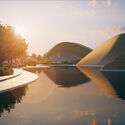
MAD Architects unveiled the design for the Sanxingdui Ancient Shu Cultural Heritage Museum, a project meant to immerse visitors in the still largely unknown Shu civilization. Comprising a series of curved wooden structures scattered within the existing environment of dense greenery and clear waters, "The Eyes of Sanxingdui" weaves together architecture and landscape into a cultural public space.




.jpg?1645609455&format=webp&width=640&height=580)


.jpg?1645609455)
.jpg?1645602665 "ArchDaily Product Development Team. Image Courtesy of Soledad Sambiasi")















.jpg?1642689075 "Casa Redux / Studio MK27 - Marcio Kogan + Samanta Cafardo. © Fernando Guerra | FG+SG")




.jpg?1645172274&format=webp&width=640&height=580)


.jpg?1645172274)