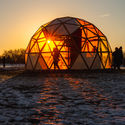
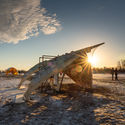
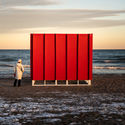
Courtesy of UN-Habitat and Global Utmaning/ Edited by ArchDaily
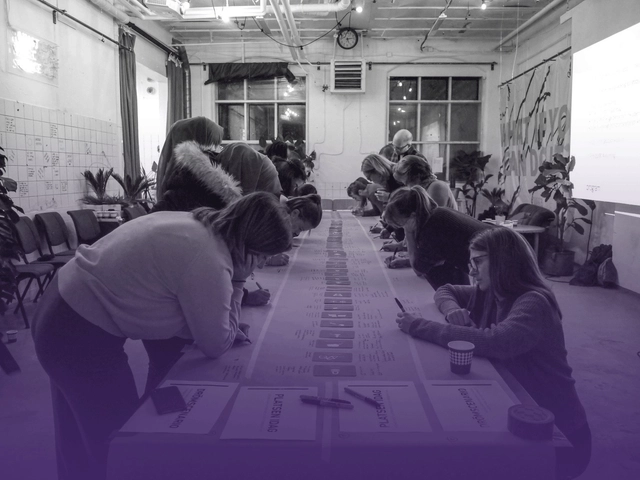
The built environment destined for everyone is still, to this day, not envisioned by everyone. Last year on Women’s day, we stated that “the battle for equality is far from over”. Highlighting continuously women architects and gender-related topics, this year, ArchDaily is turning the tables and seeking guidance from our audience. We highly value our reader's opinions, and now more than ever, we are seeking your input, to reach more realms and shed light on unfamiliar female figures to the international scene.
In your opinion, who are the female architects missing from our platform? Help us put the spotlight on women implicated in the built environment and nominate major female characters from across the globe, so that we can adjust the narratives, feature their work, and share knowledge and tools for a more inclusive world. These women can belong to any part of history: from young upcoming forces to established individuals or firms to figurines that were part of architecture's history. They can also have diverse professional backgrounds, from architects, planners, designers, to builders and decision-makers, all profiles involved in shaping the environment that surrounds us are eligible.
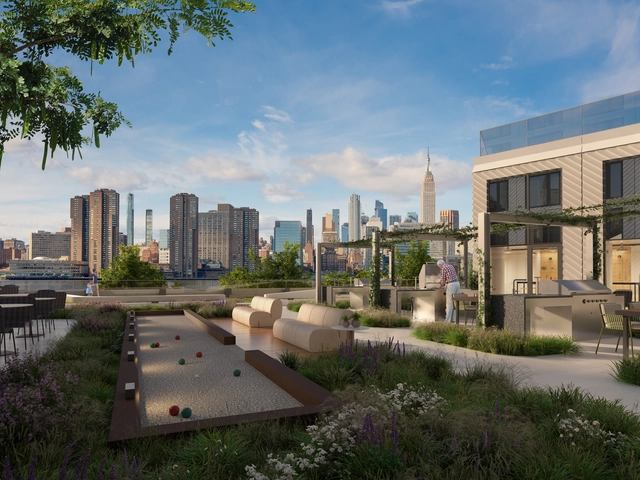
As OMA New York / Jason Long's Greenpoint Landing residential towers near completion, new renders have been released that showcase the amenities, interior spaces, and landscape of the project. Developed by Brookfield Properties and Park Tower Group, the Eagle + West Towers feature 745 units of mixed-income housing, 8,600 sq. ft. of retail space, along with recreational amenities such as a pool, lounge, gym, workshops, and test kitchen.
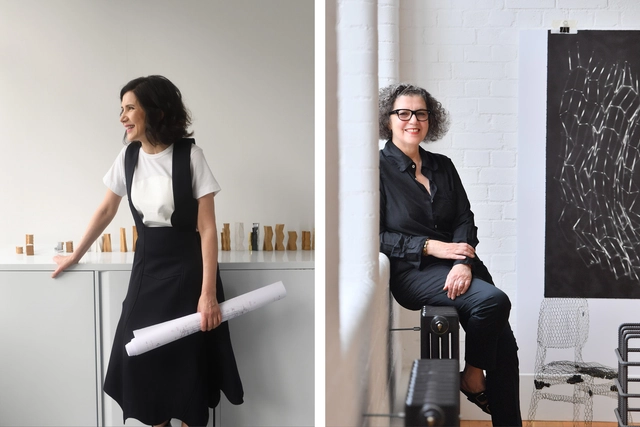
Farshid Moussavi (photograph: Anne Purkiss) and Mona Hatoum (credit: The Japan Art Association / The Sankei Shimbun / Mizuho Miyazaki). Image Courtesy of Architectural Review
Farshid Moussavi and Mona Hatoum have been named this year's recipients of the Jane Drew and Ada Louise Huxtable Prizes, two awards celebrating women's contribution to the architecture profession and the broader architectural culture. The 2022 Jane Drew Prize commends Farshid Moussavi for her achievements as architect, educator and writer, while artist Mona Hatoum, whose works take on an architectural scale, was awarded the Ada Louise Huxtable Prize in recognition of her significant contribution to architecture.
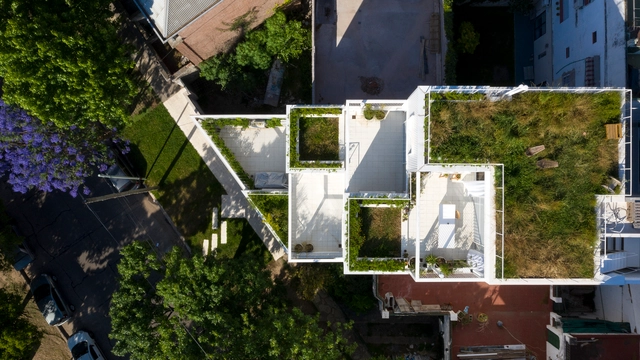
Over the last couple of years, terraces have become an important part of urban life, acting as a refuge, a space for enjoyment and gathering, for contemplation or as an outdoor workspace. As a result of periods of confinement around the beginning of the Covid-19 pandemic, these outdoor spaces where people can exercise, connect with nature, study or work, have become particularly popular with those living in large cities.
Scandinavian interiors and products have had an affinity with design excellence for the better part of a century. Although the local landscape is one of doubtless natural beauty, it remains frustratingly covered in darkness for a large portion of the year.
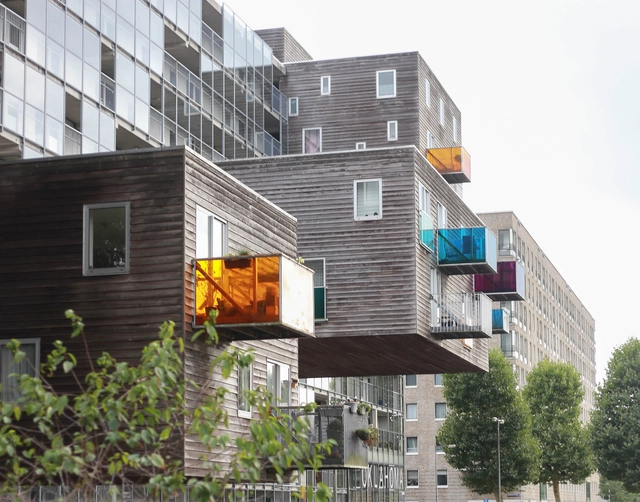
Amsterdam is one of the most beautiful cities in Europe. Its origins lie in the 12th century when fishermen living along the banks of the River Amstel built a bridge across the waterway near the IJ, then a large saltwater inlet. Most of the city’s territory is below sea level and therefore it lies on land that has been reclaimed from the water.
Amsterdam is all about practical urban planning, amazing cycling infrastructure, tulip-lined canal bridges, and old merchant houses that tilt at impossible angles. I visited Amsterdam again last year and discovered some new places.
Tsz Yan Ng is a Michigan-based firm principal, professor, researcher, and artist whose interdisciplinary and collaborative work seeks to challenge and improve upon modern fabrication and manufacturing practices. “We haven’t changed the way we build in so long,” Ng said. “We need to think of it more productively—not just economically—but as a collection of different voices. Architecture is a global ecosystem of people, where the sum is greater than the parts.”
In this powerful new visual from Spirit of Space, we are introduced to Ricardo Bofill’s headquarters ‘The Factory’ or La Fábrica, Taller de Arquitectura. Once a disused and decaying cement factory from the turn of the century, with 30 silos, machine room, and galleries, it is now a significant transformative project, satisfying the Architect's longing for space via adaptive reuse.
A haven in the urban sprawl, engulfed by a floury of palm, olive, and eucalyptus trees. Spirit of Space visits the former hive of activity, now a tranquil mid-city refuge, an immense contrast to the industrial grime that used to reside here. Through moving pictures and multi-sensory experiences it explores the Brutalist form; a concrete shell… a skeleton intertwined with nature itself.
This week’s curated selection of Best Unbuilt Architecture highlights competition-winning projects submitted by the ArchDaily Community. From large scale urban developments to interventions in the landscape, from housing projects to educational spaces and commercial buildings, this article showcases a variety of design approaches, programs and scales. The proposals featured are the results of local and international competitions, either creative concepts or projects currently in progress.
The competition-winning entries include a range of different projects, designed by both new practices and established firms. are a few of this week's highlights. A "city within a city" urban development in Ukraine, an EV station design in Canada that reinterprets the traditional typology of highway rest areas, a sustainable housing block in Finland and a clubhouse in the landscape of New Zealand are some of this week's highlights.
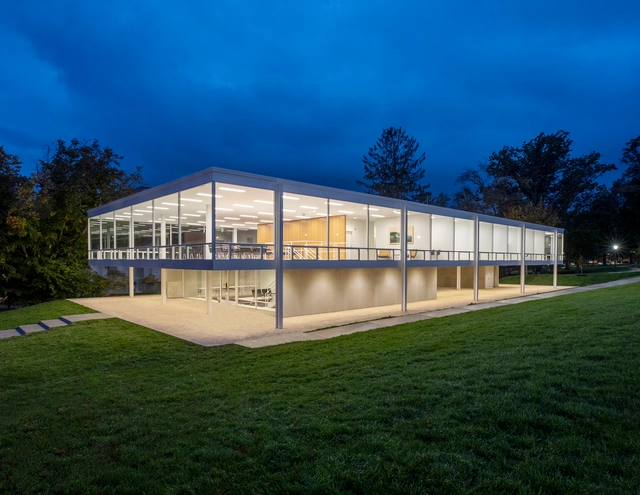
Indiana University inaugurated a new shared facility for the Eskenazi School of Art, Architecture + Design, which materializes a recently rediscovered design by Mies van der Rohe. The 1952 project intended for a fraternity house on the same IU Bloomington campus was entrusted to New York-based firm Thomas Phifer and Partners to be adapted to contemporary building codes and its current academic function while preserving the intended architectural aesthetic. The two-storey, 930 square meter building has officially opened to students and faculty.
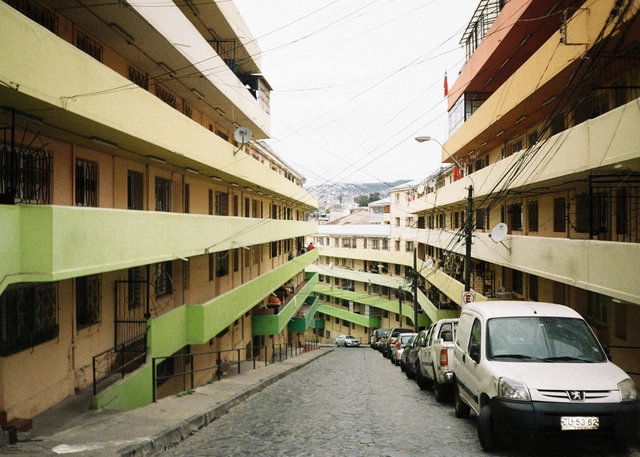
Capturing an image has become spontaneous and immediate. While mobile photography maintains quality, it loses the ritual of taking a picture, i.e. thinking about an image while walking through a new city or the framing possibilities for a building from your point of view. In short, each image is the result of focus, aperture, exposure and the characteristics of the space. Travelling with a 35mm camera sets your limits, some say it is the closest lens to the human eye, others say it is too narrow to capture a building from the outside, but no doubt it all depends on your judgement and the capabilities of the equipment at your disposal.
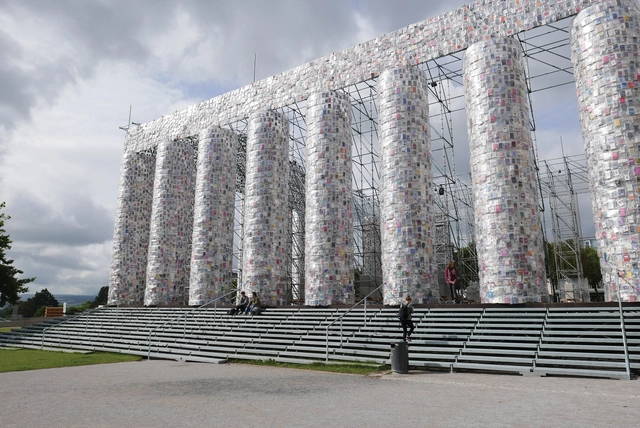
Marta Minujín, Parthenon of Books, Dokumenta 14, Kassel, Germany, 2017. Image by Anne-Catrin Schultz.. Image Courtesy of Real and Fake in Architecture–Close to the Original, Far from Authenticity?
The term “fake” has been in the media frequently in the early 21st century, referring to headlines and fictional statements that are perceived as real and are influencing public opinion and action. Replacing the historically more common term “propaganda,” fake news aims at misinformation and strives to “damage an agency, entity, or person, and/or gain financially or politically, often using sensationalist, dishonest, or outright fabricated headlines.” Tracing fake news and differentiating “real” information from personal opinions and identifying intentional (or unintentional) deceit can be complicated. It is similarly complex to trace the duality of fake and real in the built world. To explore the larger context of fake statements in architecture and environmental design, a look at the definition of fake and related terms might be necessary.
Recently, the Nobel laureate economist Paul Krugman wrote in the New York Times about the causes of unaffordable housing in New York City. He blamed the crisis on a few things, including a powerful financial “monoculture” in the city, NIMBYs, and the city itself blocking new construction. That last element, however—that the city blocks new construction—is an increasingly popular myth that needs examination.
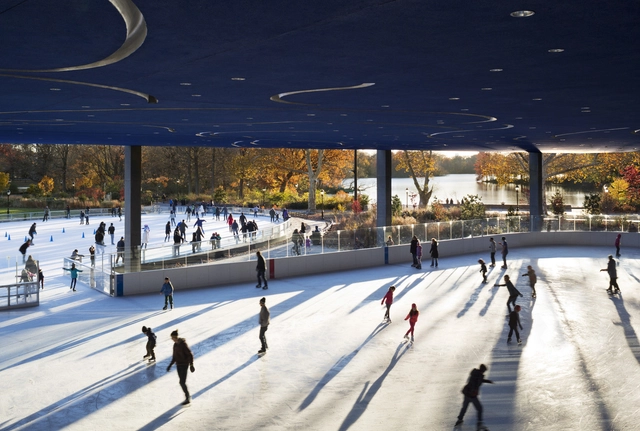
Skating and ice rinks combine temperature, atmosphere and structure together. Between sports and leisure, these spaces are designed around experience and time as some of the most interactive public spaces. As an architecture of recreation and play, skating centers also host a variety of sports. Today, the architecture of skating encompasses a range of programs and formal approaches that define some of the most iconic and social activities.
Seven decades after designing Lever House, SOM returns to the iconic modernist building to resume its restoration, continuing its long-lasting stewardship of the project. SOM previously revisited the building in 2001, restoring its façade using high-performance materials while preserving the original architectural image. This time, the intervention concerns the ground floor and the third level terrace, as well as the mechanical systems, to significantly improve the building’s energy performance. When complete in 2023, the renovation will become an important example of extending the life of the midcentury built environment.
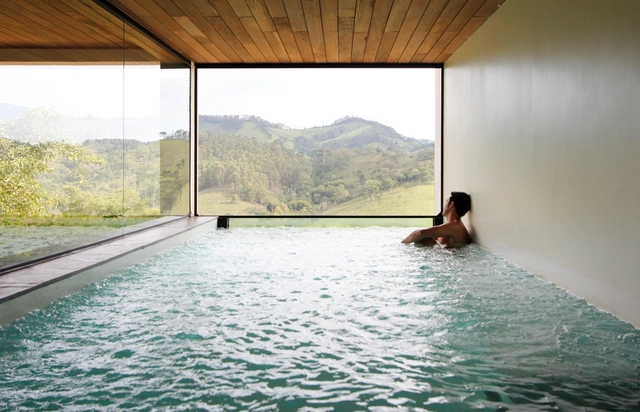
Big cities and the troubled routine of urban life increasingly reveal the need for moments of relaxation aimed at physical and mental health. This concern has become more evident after the long quarantine periods of the Covid-19 pandemic, when disconnecting from routine became even more difficult. Thus, in recent years, more and more people have been looking for activities and places that provide this rest.




.jpg?1645882224 "design for Houston Ismaili Centre . Image Courtesy of Farshid Moussavi Architects")


.jpg?1645556927)




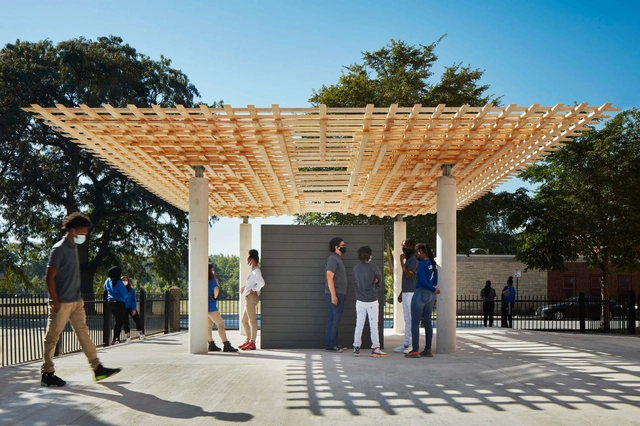


.jpg?1646040749 "SOM Explores Future Timber Construction Methods at the 2021 Chicago Biennial. Image © Kendall McCaugherty © Hall+Merrick Photographers")
.jpg?1646040755 "SOM Explores Future Timber Construction Methods at the 2021 Chicago Biennial. Image © Kendall McCaugherty © Hall+Merrick Photographers")


.jpg?1645540015 "La Fábrica, Ricardo Bofill Taller de Arquitectura. Image Courtesy of Ricardo Bofill")
.jpg?1645655249 "Courtesy of Ricardo Bofill")
_%C2%A9_Richard_Powers.jpg?1645655222 "La Fábrica, Ricardo Bofill Taller de Arquitectura. Image © Richard Powers")
.jpg?1645655255 "Courtesy of Ricardo Bofill")


.jpg?1645781972 "Green field Factory of Karupannya Rangpur Ltd., by Nakshabid Architects. Image © Junaid Hasan Pranto")
.jpg?1645781751 "Red Deer College Polytechnic Student Residence, by Reimagine Architects Ltd. . Image © Cooper & O'Hara")
.jpg?1645782629 "Huaira, by Diana Salvador - Javier Mera. Image © jagstudio")