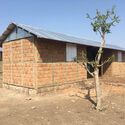
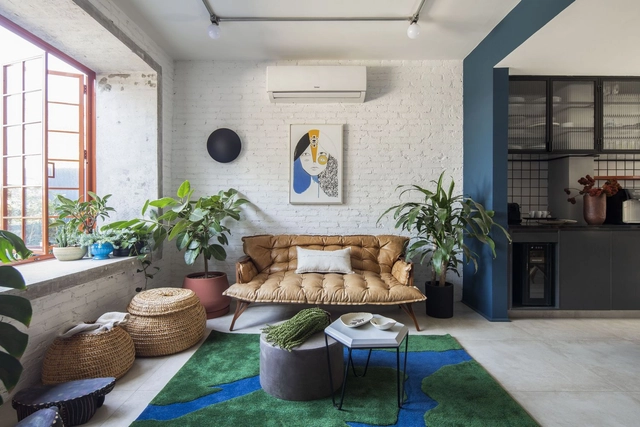
Pipes, wiring and ducts of different materials in walls, ceilings and roofs make up all the spaces we walk through and inhabit. They represent the set of networks and equipment necessary for the development of life in our buildings, providing services such as water, electricity or gas, among many others. According to the regulations in each country and the use defined in each space, the installations can be left visible, giving a certain character and aesthetic to interior spaces.
Take a second to imagine a building or a room. Chances are you are envisioning flat rectangular surfaces and straight lines. Whether it be walls, beams or windows, most architectural elements come in standard and extremely practical orthogonal shapes. However, the pandemic has shed light on designs that are not only functional, but also that improve our mood and well-being. In that sense, the power of curved, free-flowing surfaces is unmatched, which explains why they have been making a comeback as a modern design trend. Adopting beautiful nature-inspired shapes, organic curls and bends energize rooms and make users feel good. In fact, neuroscientists have shown that this affection is hard-wired into the brain; in a 2013 study, they found that participants were most likely to consider a space beautiful if it was curvilinear instead of rectilinear. In short, humans love curves.
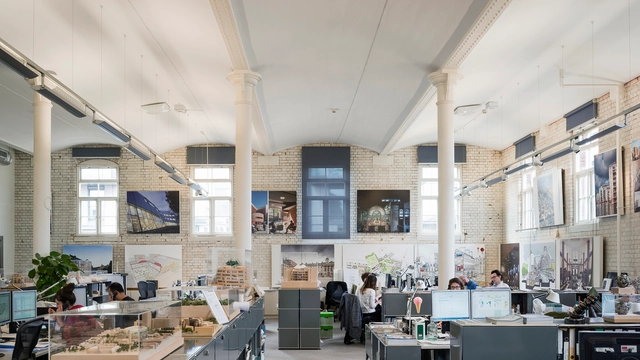
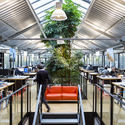
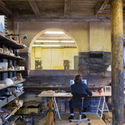
Moving forward with his "ultra-marathon of photoshoots", architectural photographer Marc Goodwin is putting together an Atlas of Architectural Atmospheres by Arcmospheres, a project that seeks to document diverse architecture and design studios from around the world. Since 2016, the architectural photographer has been traveling "far and wide to capture the atmospheres of architecture studios in order to produce an online and print resource for the architecture community", and after a two-year hiatus due to the pandemic, Goodwin resumed his project with an exploration of Berlin's architecture offices, capturing the work environment of renowned firms such as Hesse, LAVA, JWA, and FAR frohn&rojas, to name a few.
Shigeru Ban Architects designed a wellness retreat on Japan’s Awaji Island. The project features a bridge-like wooden structure suspended above the lush landscape, providing visitors with a zen experience. The Vierendeel timber girder allows for a 21-metre span and a significant cantilever on one end of the 90-metre long structure. The Zenbo Seinei retreat, which will focus on meditation and healthy food, is currently under construction and is set to open this spring.
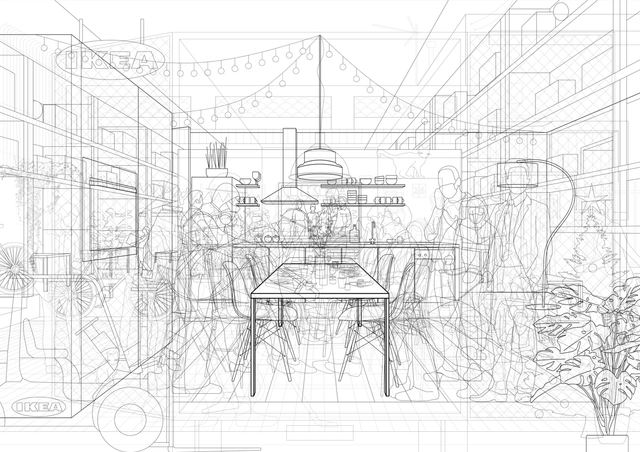
Poner la mesa. Image Cortesía de Florencia Köncke y Paula Olea Fonti
Setting the Table is an illustrated reflection by architects Florencia Köncke and Paula Olea Fonti. In the following paragraphs, the authors develop a first approach to the study of the table as "the centre of our notion of domesticity"(1). In the relationship between space, objects and people and as a social catalyst for gathering and exchange.
https://www.archdaily.com/977914/setting-the-table-from-the-ordinary-table-to-the-extraordinary-tableFlorencia Köncke + Paula Olea Fonti
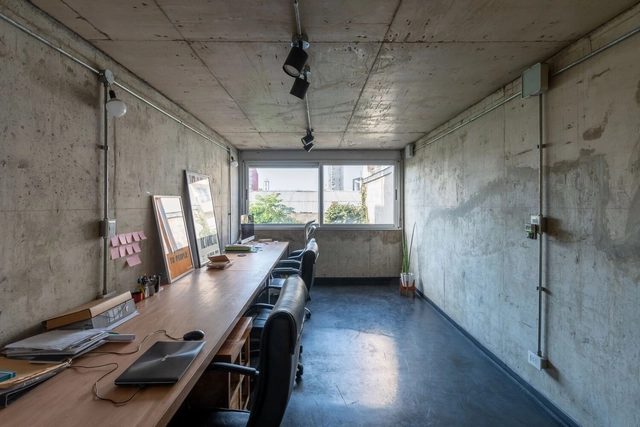
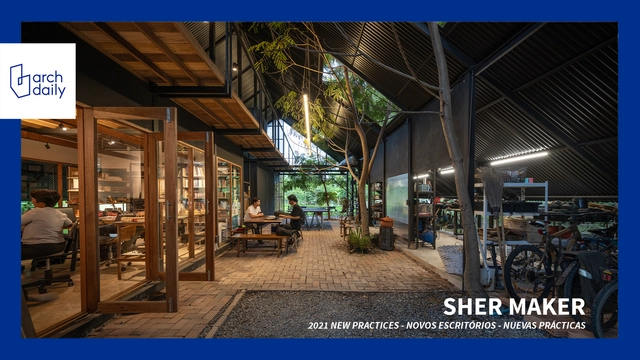
The culturally-significant town of Chiang Mai, northern Thailand, is an area of rich history and religion, preserving traces of walls, moats, and temples from a past that dates back to the 13th century. Between its lush trees and scenic landscapes sits architectural design studioSher Maker's workshop and office, a locally-sourced space that accentuates the process and meaning behind building construction. Their workspace is no different than their portfolio; having an interest in the origins of architectural formations, the context of local materials and technologies, as well as the atmosphere that surrounds the building both physically and atmospherically, the team translated their design approach to create their own working space.
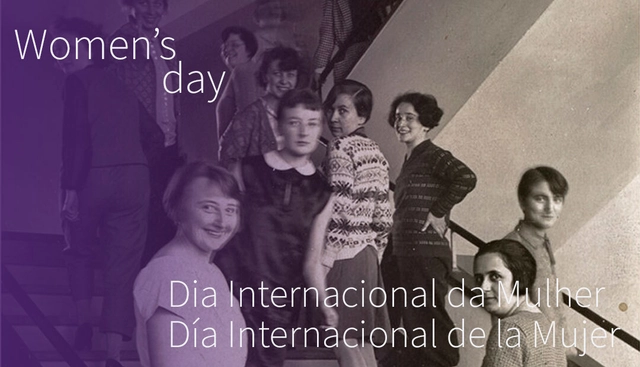
While women make up an equal part of the population, they are not equally represented when imagining, planning, designing, and constructing the built environment around the globe. Thriving to rebalance forces and close the gap of gender inequality, the world is moving slowly but surely into a more diverse, equitable, and inclusive future. Looking back at 2021, this year has seen the selection of Lesley Lokko as curator of the 2023 Venice Biennale, Anne Lacaton winning with her partner Jean-Philippe Vassal the 2021 Pritzker Prize, the 6th woman to ever receive the award, and the MAXXI Museum celebrating the transformative role of female architects in the profession's evolution over the last century.
The 2022 Women's International Day, according to the UN is centered on “Gender equality today for a sustainable tomorrow”, focusing on females involved in building a sustainable future, while the official platform of the 8th of March is concentrating its efforts on breaking the bias and eliminating discrimination. Recognizing every single day the female force that shapes the built environment, ArchDaily on the other hand, turned to its global audience this year, seeking input to shed light on even more women architects, from the four corners of the world. Always trying to reach new realms, this selection of 25 professionals is looking to adjust the historical narrative by highlighting pioneers of the field, to present established practitioners molding the world we live in, and to share profiles of activists and scholars, implicated in change.
Foster + Partners has been chosen by Masterise Homes to serve as Architectural Advisors for the development of The Global City, an all-inclusive neighborhood in Ho Chi Minh City, Vietnam and the first of its kind in the country for the architecture office. The practice will provide innovative and sustainable design solutions for a fully-integrated master plan that features a full range of facilities, residential units, and connections to highways, major roads, and metro lines.
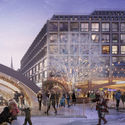
Paris City Council granted final approval to Gustafson Porter + Bowman's landscape design for the Eiffel Tower site. The project is the result of a 2019 international competition that sought to redesign the 2-kilometre axis leading up to the Eiffel Tower, connecting Place du Trocadéro, Palais de Chaillot, Pont d'Iéna, Champ de Mars and the Military Academy. The landscape plan redefines this iconic green space in Paris by increasing green areas by 35% and adding over 200 new trees, in addition to pedestrianizing the Iena bridge.
Nowadays, the role of architects exceeds the limits of construction, reaching fields that are often unthinkable, but which nonetheless demonstrate a close relationship with the profession. If we go back in time, the fact is that many buildings, houses, monuments and even cities have been built intuitively without urban planning or renowned architects. Undoubtedly, today's architects are facing a great challenge that goes beyond demonstrating our skills and knowledge and extends to other areas that involve us, but we still don't know it. So we ask ourselves, what will be the profile of the architect of the future?
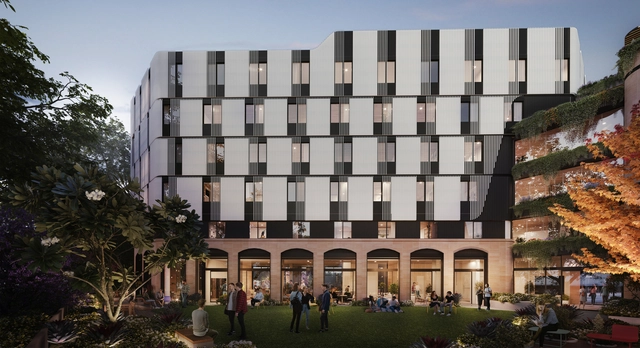
John Chapman House. Image Courtesy of Plus Architecture
Student housing takes on many forms around the world, but most commonly, it’s envisioned as close quarters in a bleakly designed dormitory. While prospective students choose universities based on academic rigor, athletic programs, extracurricular activities, and future career opportunities, they’re now wanting to know what living on and off-campus will be like- and it has forced designers to rethink the traditional designs of dormitories into something more innovative that better reflects what students want (and expect) in their university homes.
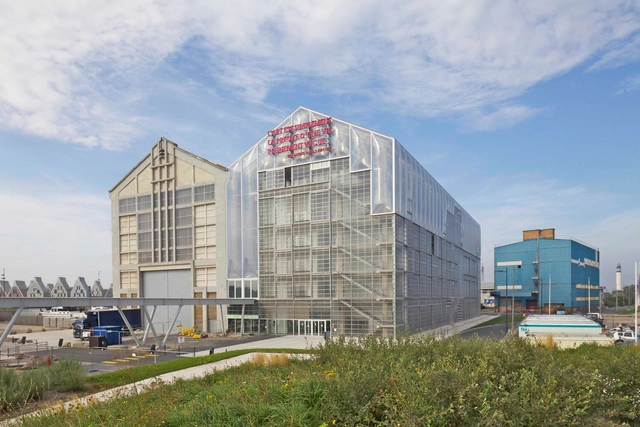
FRAC Nord-Pas de Calais- Anne Lacaton and Jean-Philippe Vassal . Image Courtesy of Philippe Ruault
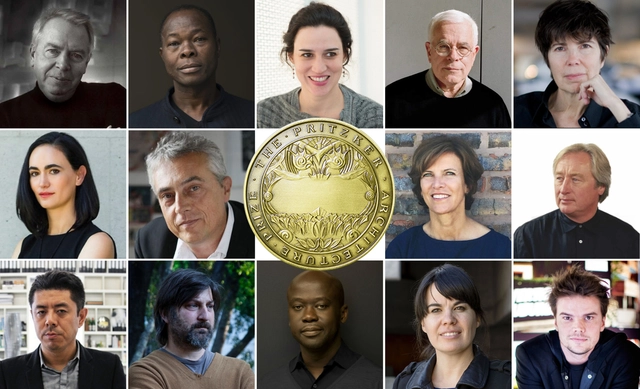
The "2022 Pritzker Architecture Prize Laureate will be announced on March 15th at 10 am EST", states the official website of the Prize. Architecture's most relevant recognition is set to reveal its laureate(s) next week, aligned with the usual March announcement. “Architecture’s Nobel Prize” has been honoring every year, since 1979, a living architect or architects with significant achievements to humanity and the built environment.
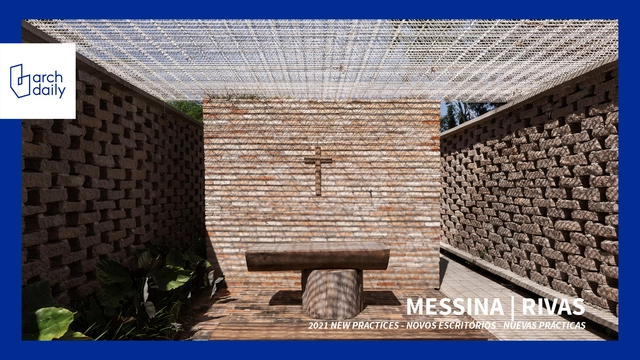
The act of designing implies not only drawing, but building. It carries – or should carry – with it the same rigor and complexity as the execution on the construction site. That's what Francisco Rivas and Rodrigo Messina believe, partners at messina in | rivas, a São Paulo-based firm that has already gained national and international recognition, also selected among the best new practices of 2021 by ArchDaily.
Formed by a Brazilian and an Argentine who met in Paraguay while working at Gabinete de Arquitectura, the office is known for works such as The Chapel Ingá-Mirim, finalist for the Instituto Tomie Ohtake AkzoNobel Architecture Prize 2020 and the Oscar Niemeyer Prize 2020, and São Roque Sauna. More recently, it was elected the winner of the competition for the Maritime Museum of Brazil with the Argentine office Ben-Avid.
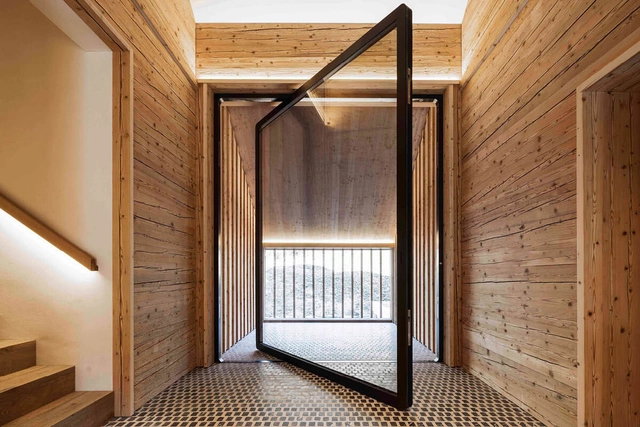
Exterior doors provide a sense of security and define first impressions, which is beautifully demonstrated in the pivot door presented above (designed and crafted in Europe by Air-Lux). On the other hand, inside of a house, interior doors are capable of generating privacy, buffering noise, separating rooms and enhancing a room’s architecture. Therefore, in order to fulfill these needs – and considering that they are used multiple times a day – interior doors must be durable and timeless without sacrificing beauty and style. Among all the options that meet these criteria, pivot doors stand out because of their elegant movement, aesthetics and versatility. With a sleek contemporary design that exceeds the regular function of a traditional door, these swinging doors rotate on a vertical axis with nearly invisible hardware, taking on any type of décor, use and measurement with endless creative possibilities.
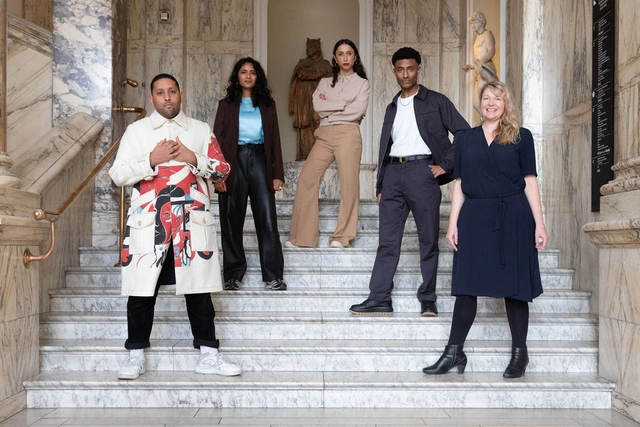
Pictured (from left) are: Joseph Henry, Meneesha Kaur Kellay, Sumitra Upham, Jayden Ali and Sevra Davis (Director of Architecture Design Fashion at the British Council). Image Courtesy of British Council
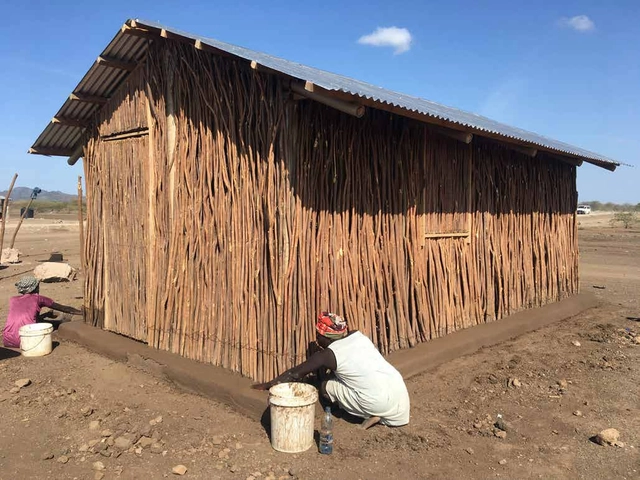
Since 2017, UN-Habitat, together with Shigeru Ban Architects, Philippe Monteil and the NGO Voluntary Architects' Network, developed several shelter typologies for a pilot neighborhood in Kalobeyei Settlement in Kenya. The Turkana Houses are meant to house South Sudanese and other refugees living in Northern Kenya who could not return to their original villages due to endless civil wars and conflicts. Unlike typical refugee shelters, these structures were meant to provide a home for long periods of displacement and the four typologies developed are informed by the extensive experience of Shigeru Ban Architects with disaster relief projects and the local building techniques of local people.
In apartments and small houses, the rest and entertainment spaces tend to share the same environment, making the living room fully oriented towards the television. But what to do when television is removed from space? Here are ideas on how to organize the living room without having the television as the main object of the room.








.jpg?1646659724 "Courtesy of Sher Maker")