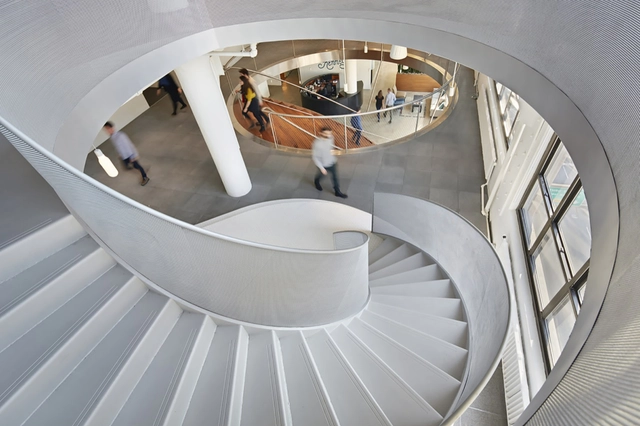
Since we spend most of our waking hours in buildings, shouldn't they be designed to encourage a healthy lifestyle? It turns out there are many ways in which architects can design spaces that encourage us to exercise as part of our daily routine. Likewise there are many design features that often dissuade people from physical activity. For example, while a dark or secluded staircase may be off-putting, centrally located and open staircases tend to be used even more than elevators. Find out how buildings can serve as our personal trainers in this article from Fast Co. Design, “How To Keep Our Buildings From Making Us Fat.”
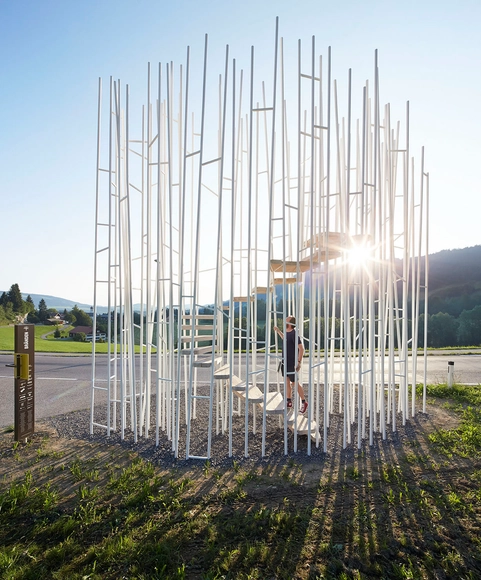
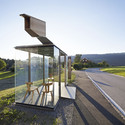
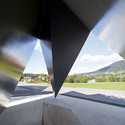
Hufton + Crow's brilliant photography captures the inimitable originality and sensational quality of the uniquely crafted pavilions embedded within the Austrian landscape. Immerse yourself in Krumbach and check out the latest images after the break.
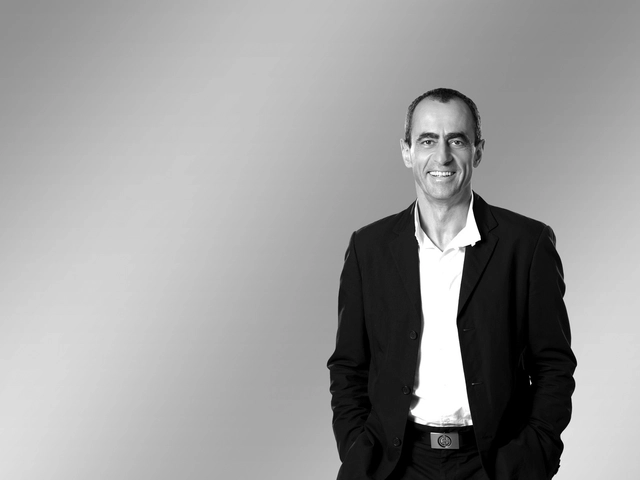
Following the recent announcement of Aedas' demerger into two separate companies - one retaining the Aedas name and the other now known as AHR - we spoke to Keith Griffiths, Chairman of Aedas' global board and a practicing architect for close to three decades. The company, which was recently ranked by the Architects' Journal as the 5th largest and most influential practice in the world, have now moved their head office to London's Chandos Place and are championing a new approach to urban regeneration in the UK's capital. Alongside discussing how an international practice of Aedas' scale successfully operates, Griffiths offered his insight into how the future looks for European cities based on a tried and tested Asian model of densification.
To find out how Aedas approach sustainability in flourishing Asian markets, as well as the significance of the 'urban hub' typology for London's metropolitan future, read the interview in full after the break.
Videos
Arrette Scale: perspective. Image Courtesy of Arrette Scale
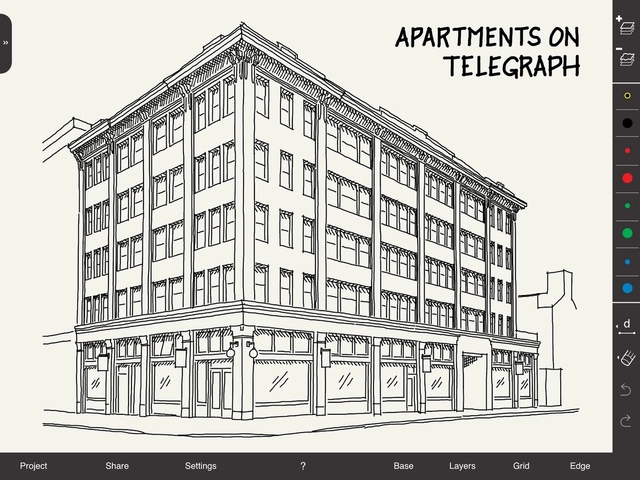
Building upon our Top 10 Apps for Architects, this collection brings together some of the best quality and most valued technical apps for designing, sketching, calculating and collaborating. Although the majority of those featured here are designed solely for the iOS platform, every time we collate lists such as these it's clear that more and more high quality apps for the Android and Windows platforms are being developed. From condensed versions of large scale software packages that architects and designers use every day, to blank canvases to scratch ideas down onto, you might just find an app that could improve the way you work.
Arguing that the previous thirteen Biennales have, "more or less, tried to predict what is going to happen over the next five years," "Rem Koolhaas has changed the paradigm:" Rem's Biennale is about "the past of the present". Jencks, who describes Koolhaas as "the Corbusier of our time", suggests that his Biennale is about analysis rather than total synthesis. He has, however, "shown that research can be creative."
The results of the Royal Institute of British Architects (RIBA) Future Trends Survey for May show that the Workload Index among UK practices was slightly down in comparison to April (from +35 to +33) with the recovery in confidence levels remaining consistently "very strong" across the country. Although last month's survey showed London as the region with the brightest outlook, confidence levels reported by architects in Wales and the West topped the index with a balance figure of +49. Workload forecasts in the private sector, public sector and community sector have all significantly increased.
London based Heatherwick Studio have won a competition to design a Learning Hub at Nanyang Technological University, Singapore. The construction of the Hub, part of a £360 million scheme, will be the first redevelopment of its campus in twenty years. Having already won the BCA Green Mark Platinum Award for Sustainability from the Singaporean Government, the design seeks to redefine the aspiration of a university building. Within this new context the purpose of the university is to "foster togetherness and sociability" so that students can meet and learn in a space that encourages collaboration.
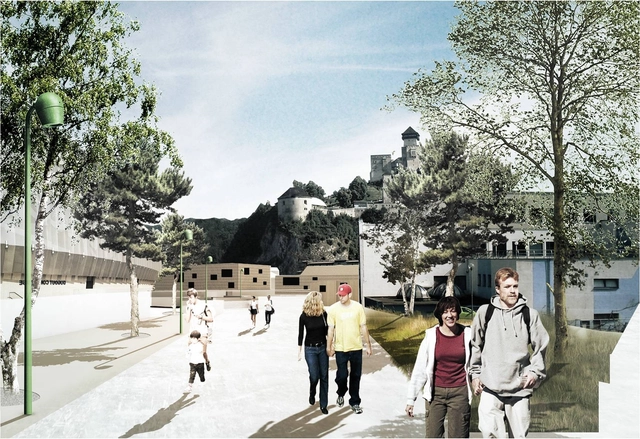
Swedish based Mandaworks + Hosper Sweden have recently won an international competition to find the "best comprehensive urbanistic proposals for connecting the city centre of Trenčín with both waterfronts of the River Váh." The winning scheme - Tracing Trenčín - "is not a proposal which is noticeably stunning" but is, according to Thomas Matta, deputy chair of the jury, "considerate to the existing structure of the historic core of the city."
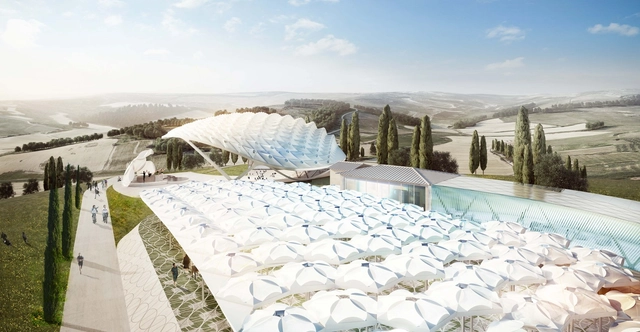
An aerial view of the park's canopies. Image Courtesy of Asymptote Architects
Asymptote Architecture has been commissioned to design a park with a collection of cultural buildings on the outskirts of Peccioli, Italy. Called the “Parco Degli Angeli," Italian for Park of Angels, this urbanized complex will be carefully grafted into the picturesque Tuscan countryside to create a dialogue with the surrounding farmland and historical sites. The park will include museums, interactive sculpture installations, and an amphitheater that can host 800 people.
The typical skyscraper is a nondescript tower constructed of a steel frame and glass curtain wall. Architects from the firm Fundamental are challenging this convention with “New York Tomorrow,” a proposal that earned them a runner-up place in Metropolis Magazine’s Living Cities Competition. This progressive design weds revolutionary structural technology with a unique programmatic layout to draw people from all walks of life to the city of New York.
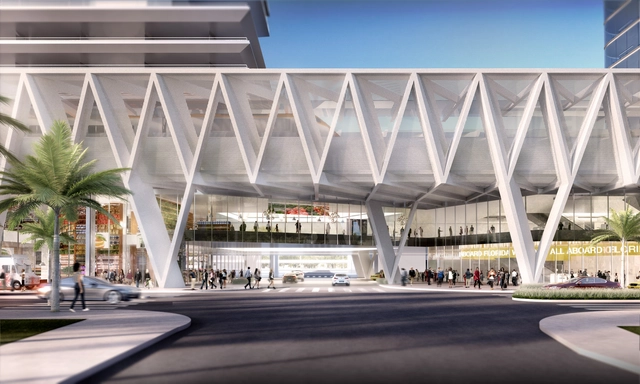
SOMrecently revealed its design for the West Palm Beach hub of All Aboard Florida’s passenger rail line. The terminal will be one of three (Miami, Fort Lauderdale, and West Palm Beach) that connects more than 235 miles of rail lines crossing the state of Florida. With the Sunshine State close to becoming the third biggest in the union in terms of population, these stations will serve as a welcome travel alternative to crowded highways. The Miami station alone is expected to serve about 12 million visitors. The stations will also host retail outlets and restaurants, making them cultural landmarks within their respective cities.
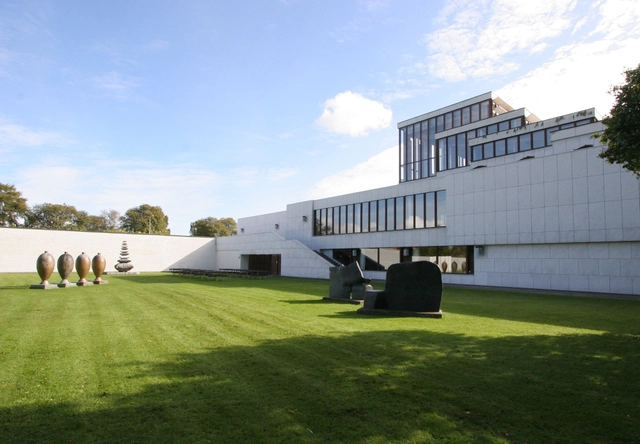
Erik Møller Arkitekterhas been commissioned to modernize Alvar Aalto’s white marble Kunsten Museum of Modern Art in Denmark. As reported by BDOnline, the £14 million renovation will restore parts of the listed museum, as well as transform the building’s basement into a new 600 square meter exhibition space.
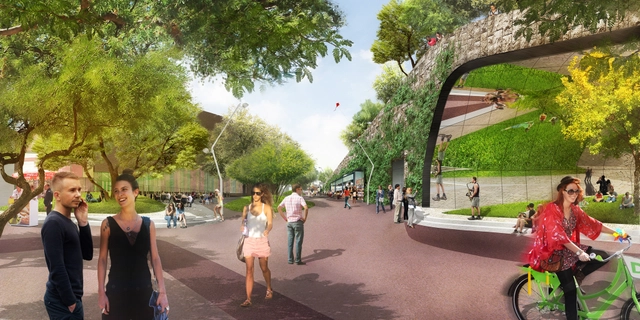
Within a decade, the city of Phoenix, Arizona will transform a 32-acre downtown urban park into a vibrant cultural hub. Spanning over one half mile of U.S. Interstate Highway 10, the recently-approved, competition-winning masterplan was envisioned by New York's !melkand locally based WEDDLE GILMORE black rock studio.
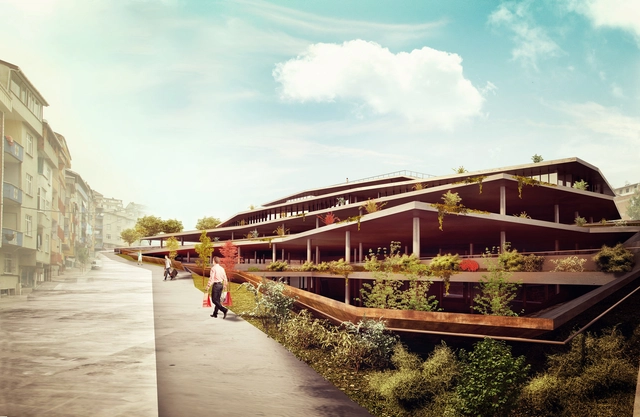
A marketplace is typical for most Turkish city districts. They provide a point of cohesion for the community, acting as an economic hub, a landmark, and an impromptu park. In the rapidly developing Sultangazi district of Istanbul, however, such a public place has yet to be seen. To remedy this, Suyabatmaz Demirel Architects have recently proposed a combination market hall and car park for the middle of this populous residential area.
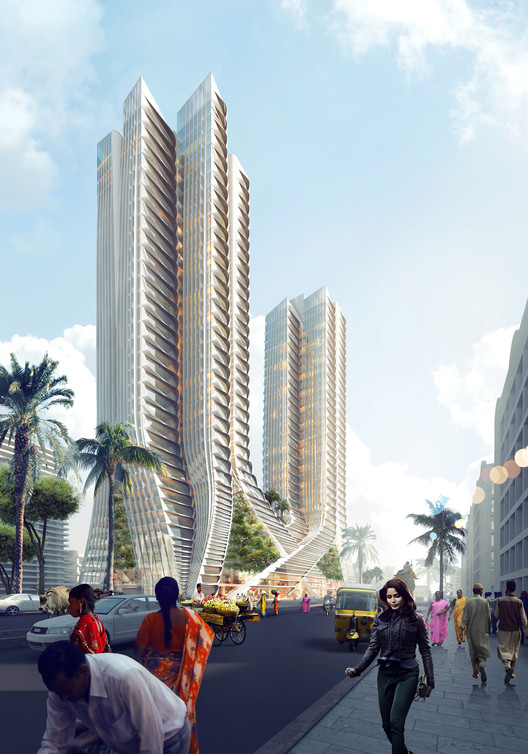
Construction has begun on 3XN’s first project in India. Aesthetically inspired by local foliage, the 136-meter “Grove Towers” are designed to interweave at their base, much like the roots of the native mangrove trees. These lower, “interwoven” floors will house retail establishments, while the upper floors will be given over to residential units.
The Hamedanian, a proposal by CAAT Studio in collaboration with TTBP, seeks to design a large scale commercial complex in the centre of one of the oldest streets in the Iranian city of Isfahan. If built, the mixed use development, half which is parking facilities, would feature commercial and office space.
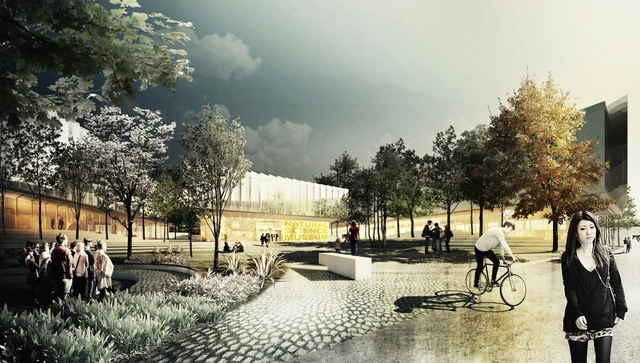
The winners of the international competition to design Berlin's new Natural Science Museum have been announced. The brief, which called for a large scale iconic building in the heart of the German capital, offered the opportunity for architects and students to design in a city founded in the 13th century.
Understanding that natural science museums are often simply seen as places for public spectacle, the organization behind the competition wanted to ensure that the "importance of the museum's specimen collections for documenting historical and present-day patterns of biological diversity cannot be overstated."
See the winning entry, along with the runners up, after the break.
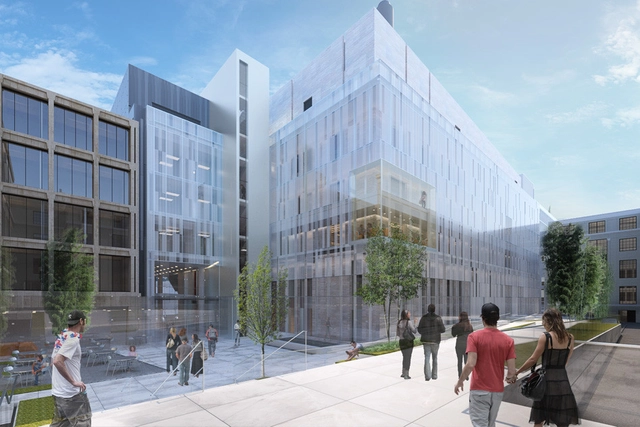
Boston-based practice Wilson Architectshas been commissioned by the Massachusetts Institute of Technology (MIT) to design a state-of-the-art research hub for nanoscience and nanotechnology: MIT.nano. Centrally located at the heart of MIT, the new glass-encased, four-story structure will house two floors of high-performance cleanrooms, as well as imaging and prototyping facilities that are all designed to foster innovation through cross-discipline collaboration.