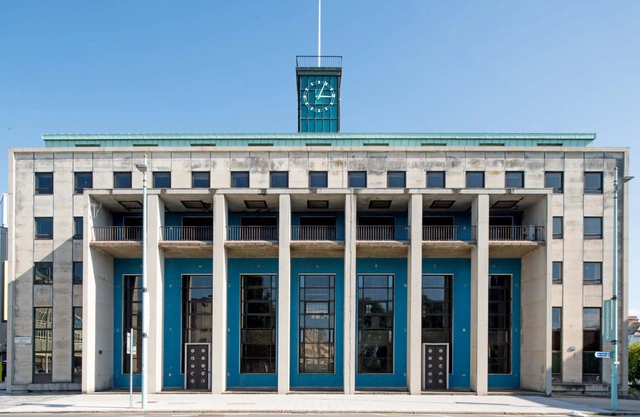
The term “mid-century modern” conjures up images of a sharp-suited Don Draper, slender teak cabinets, and suave chairs from Scandinavia. That is, at least, one perspective of the design movement and a view more of 1950s-era Manhattan offices than anything else. But in Britain, mid-century modernism manifested as something slightly different, coming in the form of schools, cathedrals, housing, and an era-defining festival, all eloquently described and illustrated by the prolific architectural historian Elain Harwood in Mid-Century Britain: Modern Architecture 1938-1963.









.jpg?1592208513&format=webp&width=640&height=580)






.jpg?1555354131&format=webp&width=640&height=580)
.jpg?1555354121 "© Erieta Attali")
.jpg?1555354162 "© Erieta Attali")

.jpg?1555356897 "© Erieta Attali")
.jpg?1555354131)