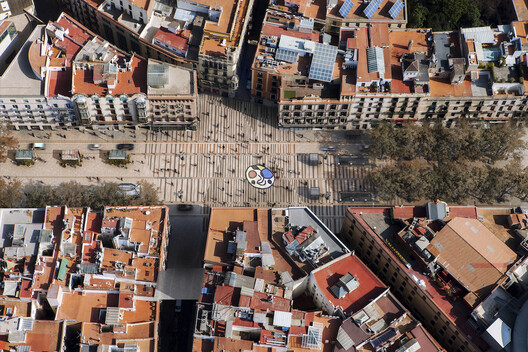
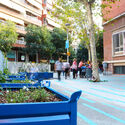
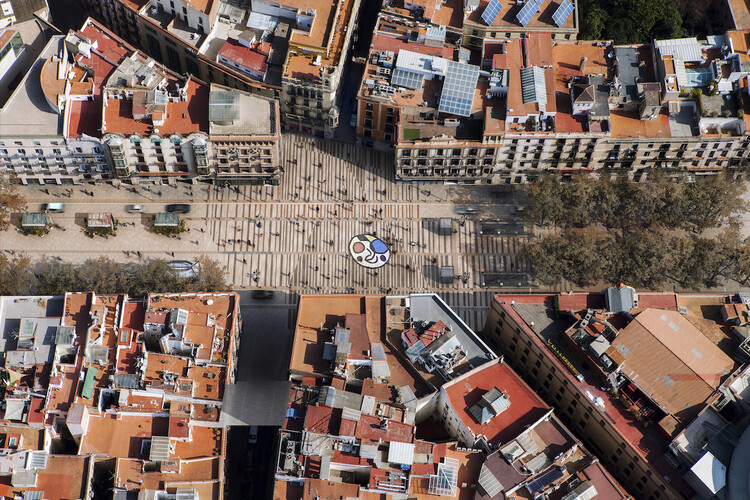
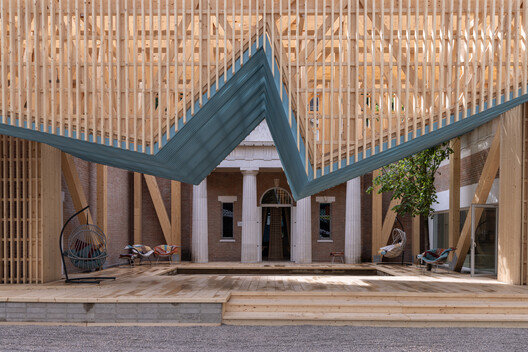
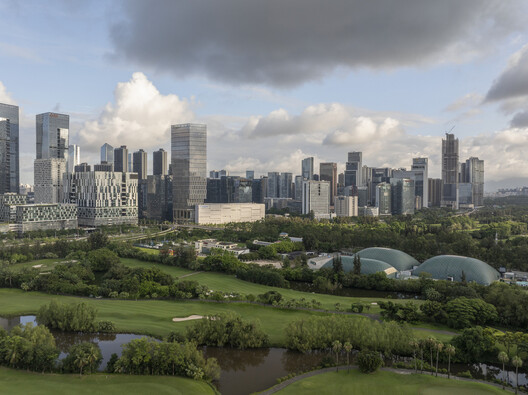
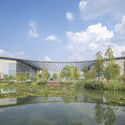
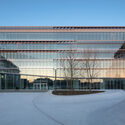
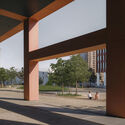
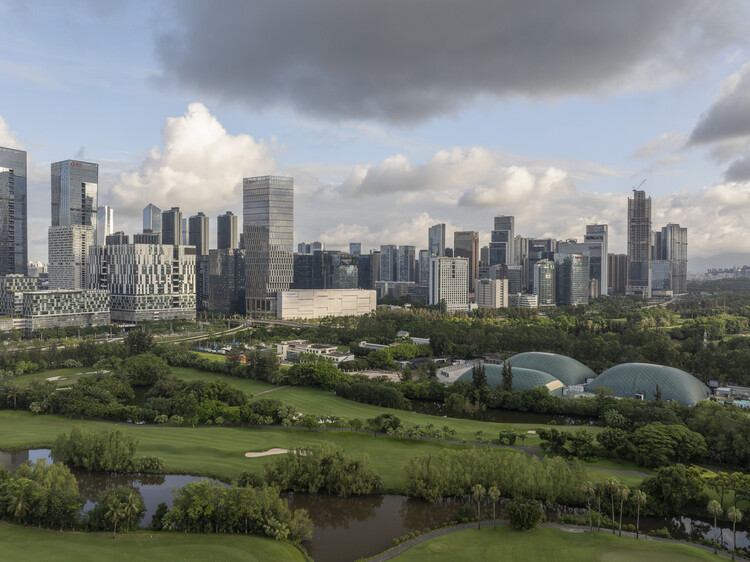
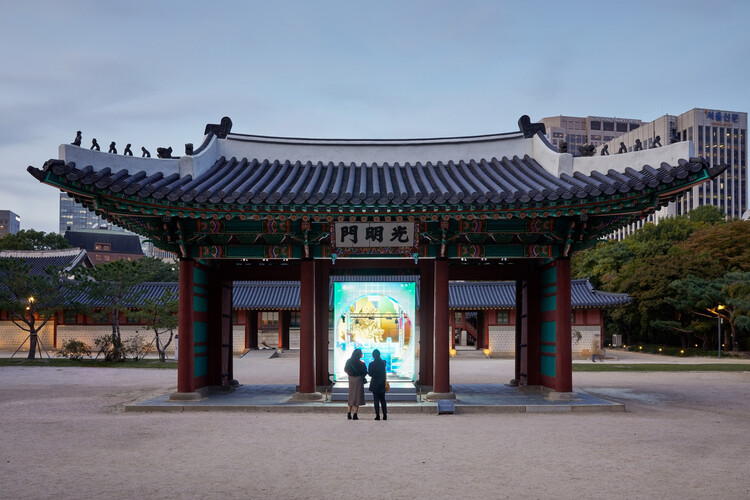
The North Gate of Taipei, also known as Beimen, stands not only as a reminder of the city's complex history but also as a witness to the changing urban landscape around it and its shifting attitudes towards the urban spaces bordering heritage buildings. Initially a Chinese imperial frontier, spared from demolition during the Japanese colonial dominion, crowded by overpasses and highways in the postwar modernization efforts, it has recently regained its prominent status through the development of the plaza that now frames it. The gate's resilience through shifting urban priorities and architectural policies tells a story of heritage preservation not only through the built form, but also through the open spaces framing it.
Architecture firm HENN has launched CarbonBudget, a digital tool that calculates project-specific CO2 budgets for buildings. The new platform, free of charge, is a contribution for designers to help reach the 1.5°C target, a global goal from the Paris Agreement to limit long-term global warming to 1.5°C above pre-industrial levels. As the construction industry is responsible for around one-third of global CO2 emissions, architectural design decisions can effectively contribute to containing global warming. The tool is designed to calculate whether the emissions of a building project located in Europe are compatible with the Paris Agreement target, based on specific inputs such as location and building area. The new platform joins other projects from international offices such as MVRDV NEXT's CarbonSpace, Grimshaw's Minoro, and Henning Larsen's OpenDetail, addressing decarbonization through shared digital information.
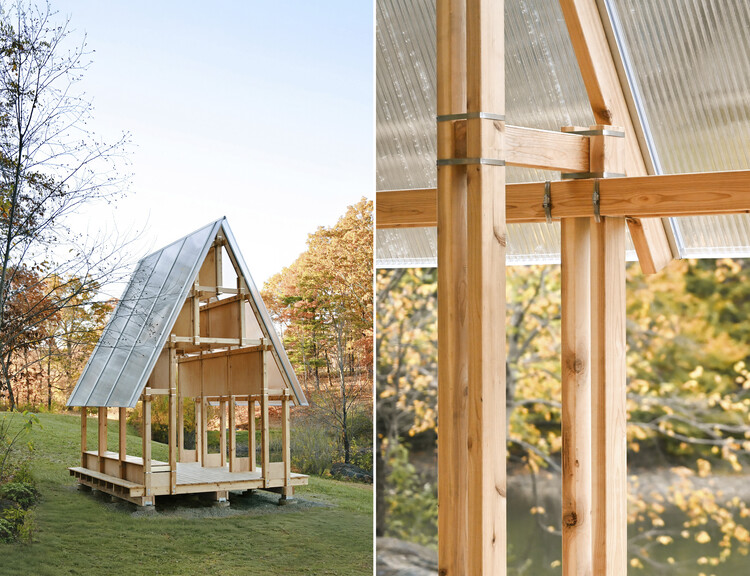
In the face of the climate crisis and within the framework of the United Nations Sustainable Development Goals, the reuse of materials has become prominent in the fields of construction and architecture in recent years. From "urban mining" to life cycle assessments (LCAs), professionals, organizations, and researchers are exploring different solutions and strategies to address the same overarching challenge. Project (Un)Build is a research initiative developing reversible timber construction methods that use straps and friction pads to facilitate material reuse. It contributes to the ongoing debate and reflection on the act of building itself.
Acoustic design is often associated with permanent building elements, such as walls, roofs, ceilings, and insulation systems, which help control how sound travels through a space. However, not all noise sources or environments are permanent. A construction site changes as work progresses; machinery is replaced or relocated from one area to another; an industrial space may incorporate new equipment; and a temporary work area may emerge in a space that was never designed to accommodate it. Acoustic conditions are not static—they change over time and require solutions that can respond to these transformations. So, what happens when acoustic control becomes a flexible strategy?
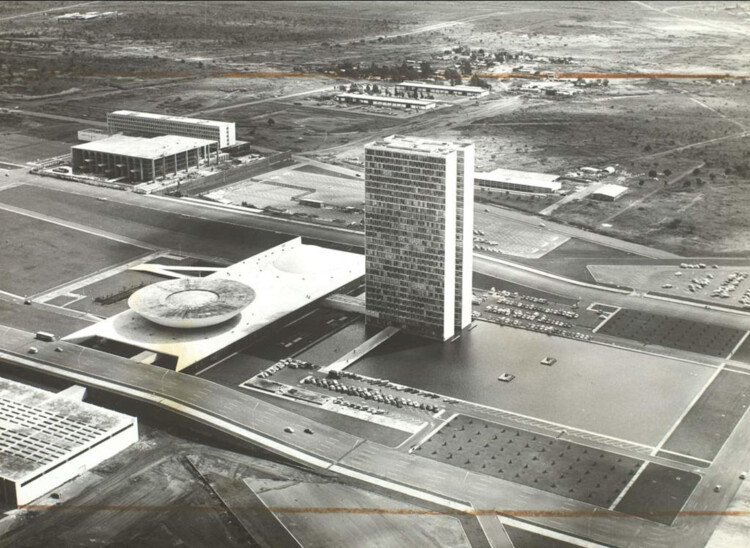
Palacio do congreso Nacional Brasilia. Image via Wikimedia Commons (Public Domain)
A different social order is easier to imagine when it sits far from the one that already exists. In Latin America, that distance has often been territorial. Parts of the region have repeatedly been treated as places where another world could begin. These places were never empty.
For architects, this idea has a familiar starting point: the plan. Seen from above, a territory can look like a clean sheet, ready for an axis or a grid. At eye level, the same ground is already full of people and the paths they use.
Ammodo Architecture will launch the first edition of Ammodo Architecture Days in Amsterdam on November 9 and 10, 2026. Organized by Ammodo Architecture, a programme of the Ammodo Foundation, the event will bring together architects, landscape architects, urban planners, artists, communities, collectives and multidisciplinary design teams, alongside recipients of the 2024 and 2025 Ammodo Architecture Award. Taking place at Westergas, a former industrial complex now used as a cultural and public venue, the invitation-only two-day programme will combine a symposium, exhibition, publication launch and award ceremony, creating a setting for exchange between practices working across different geographic, cultural and disciplinary contexts.
Obra Blanca, the exhibition of finishes and design products for architecture, will celebrate its seventh edition from October 13 to 15, 2026, at Expo Santa Fe in Mexico City. Conceived for the architecture and interior design community, this initiative combines an innovation showcase with an international lecture program to shape the Obra Blanca Experience: three days of connection, knowledge, and immersion in the architectural finishes and design products sector.
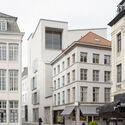
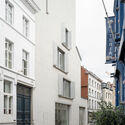
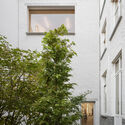
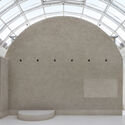
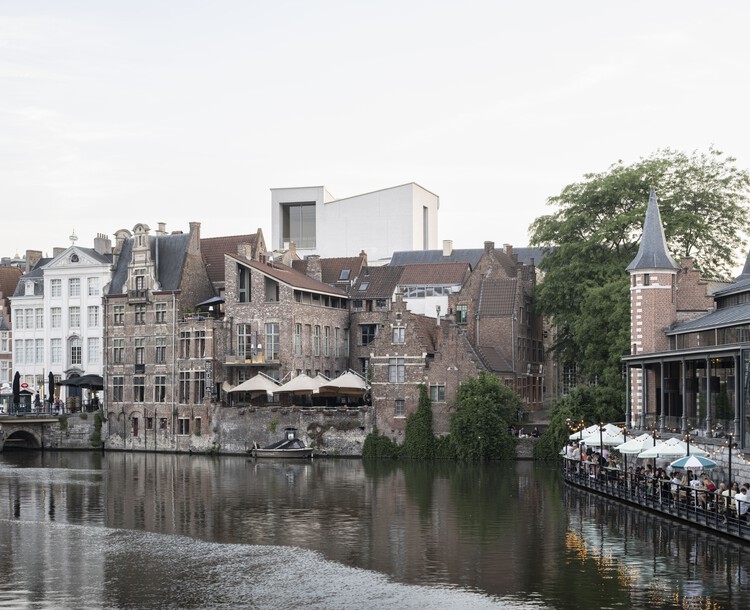
In November 2019, London-based Carmody Groarke and Ghent firm TRANS architectuur | stedenbouw, now known as ATAMA, won the Baumeister international competition to design an extension for Design Museum Gent, Belgium's largest design museum, located in Ghent's historic center. At the time, the museum comprised three buildings: the eighteenth-century Hotel de Coninck, the Leten House, with a sixteenth-century core, and a 1992 wing. After four years of renovation and expansion, the museum reopened on October 3, 2026, within the UNESCO World Heritage city center. The project combines the restoration of these historic buildings with a new wing designed by Carmody Groarke and ATAMA, alongside the restoration work led by RE-ST architectenvennootschap. The museum's collection spans design objects from the fourteenth century to the present, and the renewed building adds spaces for lectures, workshops, exhibitions and events, framing design as something visitors can use and engage with directly rather than only view.
Videos
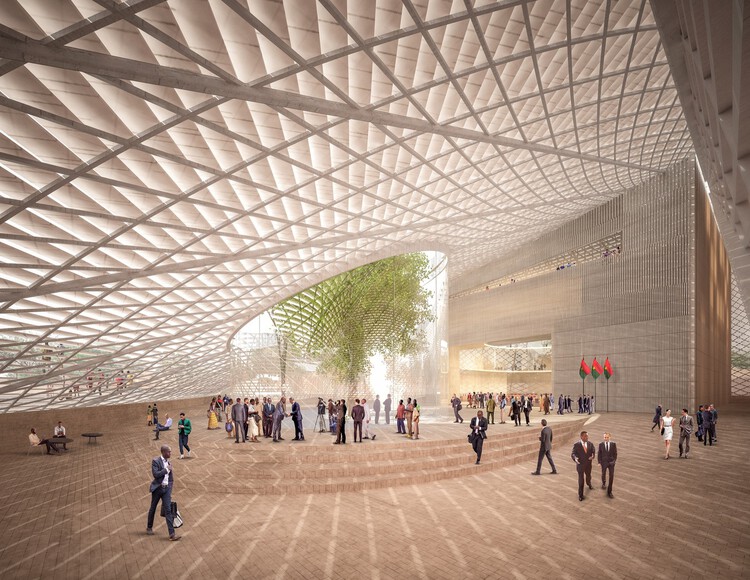
Interior of Burkina Faso National Assembly. Image Courtesy of Kéré Architecture.
"Take your dream suppressants." The opening line in Wanuri Kahiū's Pumzi, directed at our protagonist Asha, enforces the order of severing ties with hopeful futures and ancestral memories in pasts shared to compel her focus on the perpetual present in the Maitu Community's heterotopia of an enclave. The bird's-eye view shot of the Maitu reveals a sterile, drone-like structure with a panoptic sphere at its center where normal human behavior is medicalized. The layout is built around closed-loop recycling systems as apt as a self-sufficient organism, designed to escape the toxic environment of a sickly Earth, where every pipe and corridor is engineered to harvest human excretion for water generation, thereby absorbing the roles of nature and state both. The community's architecture perfectly translates the film's message with its physicality.
Across folklore, film, and art, the same move recurs: architecture translates an elsewhere, whether ancestral, spiritual, or speculative, into form that can be seen or entered. The sections below follow that translation from the Kasubi Tombs to Kizazi Moto, and show that the elsewhere is a way of reading the present.
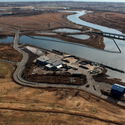
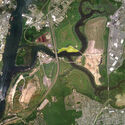
In 1948, Robert Moses established the Fresh Kills Landfill on the western shore of Staten Island. The site, chosen for its remote marshland and cheap land value, was meant to be temporary, but by 1955 it was the largest landfill in the world, receiving up to 29,000 tons of refuse per day at its 1991 peak. By 2001, after more than fifty years of continuous operation, Fresh Kills covered 2,200 acres, roughly three times the area of Central Park, and was, unspectacularly, visible from space. When it started, Moses didn't expect to design a dump but, without calling it that, a new landform with four artificial hills rising up to sixty meters above sea level built entirely from the accumulated residue of eight million daily lives.
That landform is now, slowly, becoming a park. James Corner Field Operations won the international design competition launched by the city in 2001, producing a master plan calledLifescape that will take thirty years to complete. The landfill's four mounds are being capped, planted, and gradually opened to the public. Methane from decomposing waste is captured and fed into an energy system as the wetlands are being restored around the engineered hills. Evidence of New York's consumption transformed into a feat of ecological engineering and an act of institutional memory management (a way of making a city's most embarrassing landscape slowly look like something it was always meant to be).
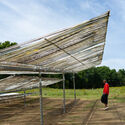
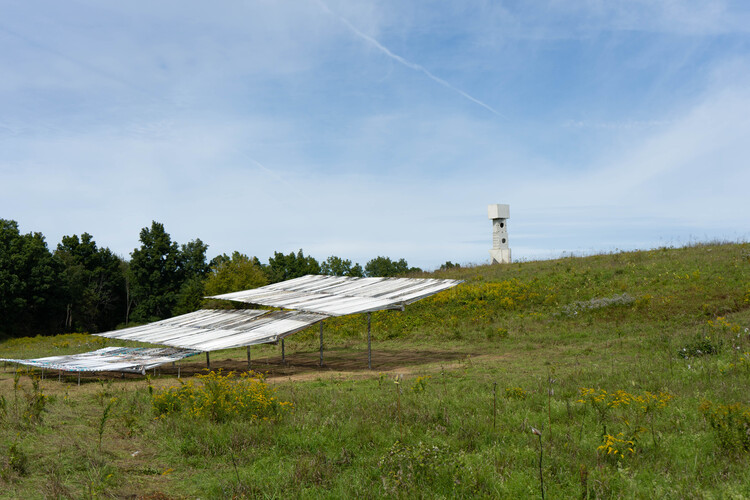
Limbo Engawa, 2026. Steel, salvaged billboard tarpaulin. Co-commissioned by Art Omi and Limbo Museum. Image Courtesy of Art Omi. Photo: Nadia Boyea
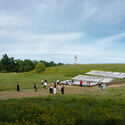
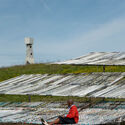
Art Omi and Limbo Museum have presented Limbo Engawa, a two-part site-specific installation by TAELON7, led by architect Juergen Benson-Strohmayer. First presented at Limbo Museum in Accra, Ghana, on March 12, 2026, the project was reconfigured for Art Omi's Sculpture & Architecture Park in Ghent, New York, where it opened on September 19, 2026. Developed as a joint commission between the two institutions, the project uses a modular architectural system to explore how spaces for gathering and exchange can respond to different landscapes, climates, and cultural contexts.
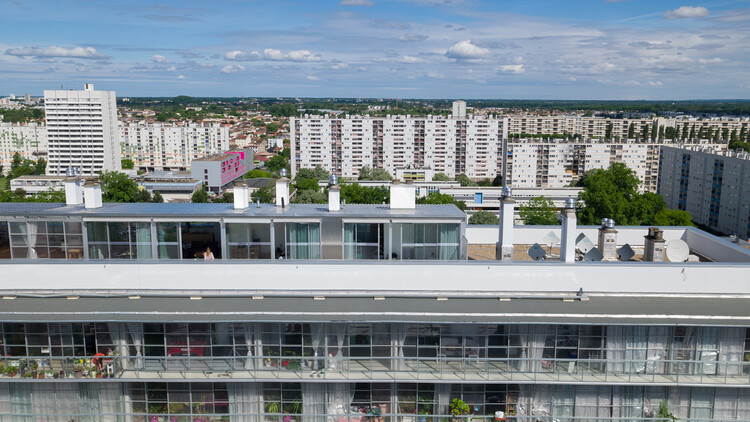
Transformation of 530 dwellings / Lacaton & Vassal + Frédéric Druot + Christophe Hutin architecture. Image Courtesy of Philippe Ruault
The International Union of Architects designates the first Monday of October as World Architecture Day each year, aligning it with the United Nations' World Habitat Day. This year, both occasions are drawing attention to the global housing crisis as a fundamental element of human dignity, inclusion, and well-being. The UIA's motto reads: "Housing is a Human Right. Build It." The organization calls on architects to contribute to advancing equitable access to housing through design, research, and advocacy. From a holistic perspective, the crisis consists not only of a shortage of residential buildings, but of multiple, interconnected barriers to accessing an adequate place to live. The challenge calls on the dual nature of the architect's work: the capacity for abstract design thinking, and the practical knowledge to transform material reality. For architecture to make the right to housing a reality, both capacities must be put into practice: building new governance structures, different models of shared ownership, designs for alternative forms of cohabitation, and new, environmentally sustainable construction systems.
Cortesía de La Feria De Diseño Medellín powered by idd cologne
The 13th edition of La Feria De Diseño Medellín, powered by idd cologne, highlighted an evolution extending far beyond scale: over three days, Plaza Mayor brought together design, architecture, interior design, business, and knowledge on an increasingly international platform. Welcoming over 18,500 visitors and more than 22,000 participants across the city's broader ecosystem, the fair connected professionals, brands, and buyers around new ways of designing, specifying, and inhabiting spaces.
"Let us take a hard look at the facts." With this direct and hardly reassuring sentence, the director of the Office of Civil and Defense Mobilization opened The Family Fallout Shelter, a 32-page manual published by the U.S. government in 1959 amid Cold War tensions. The document taught families how to build shelters capable of protecting them from radioactive fallout after a possible nuclear attack and, through technical drawings and sketches, outlined solutions using concrete blocks, walls filled with earth or sand, underground structures, and ventilation systems. It was a survival manual that, in many ways, also functioned as a construction manual.
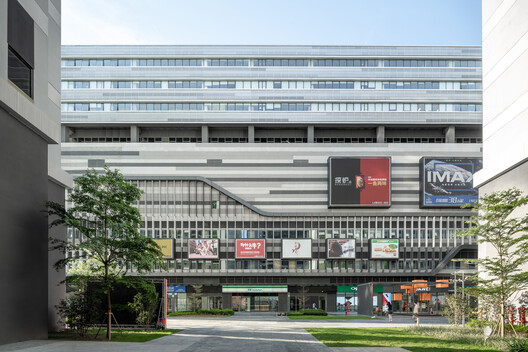
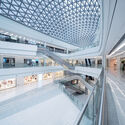
In many Asian cities, the summer climate can increasingly be experienced from a distance. In Hong Kong, it is possible to move from an apartment tower through a podium mall, enter the Mass-Transit-Railway system (MTR), arrive beneath another commercial complex, and continue through enclosed footbridges or underground passages while encountering remarkably little of the atmosphere outside. Heat, humidity, rain, and seasonal variation remain present, but they can be largely bypassed through a continuous network of conditioned interiors.
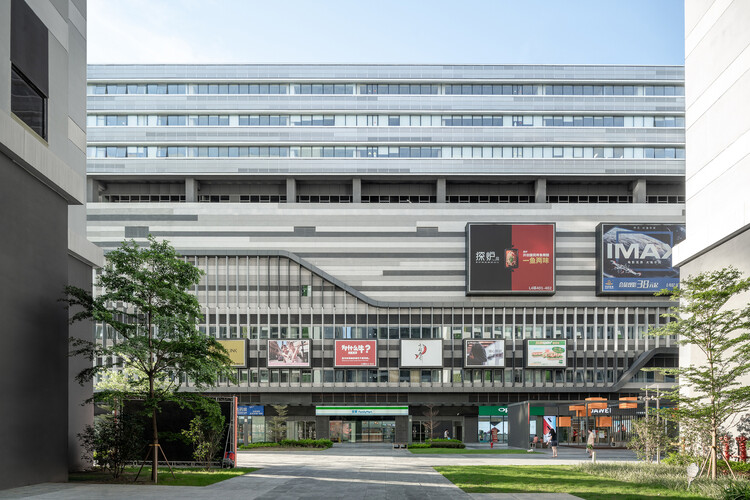
Over several decades, air-conditioning has expanded from a technology for cooling individual rooms into an infrastructure capable of producing an alternative urban environment. This has been particularly visible in parts of East Asia and South East Asia, where transit-oriented development frequently combines railway stations, shopping centres, housing, offices, and other everyday services within interconnected complexes. The Railway plus Property model has helped institutionalize this relationship between transport and development, creating districts where movement through the city is often inseparable from movement through privately managed interiors.
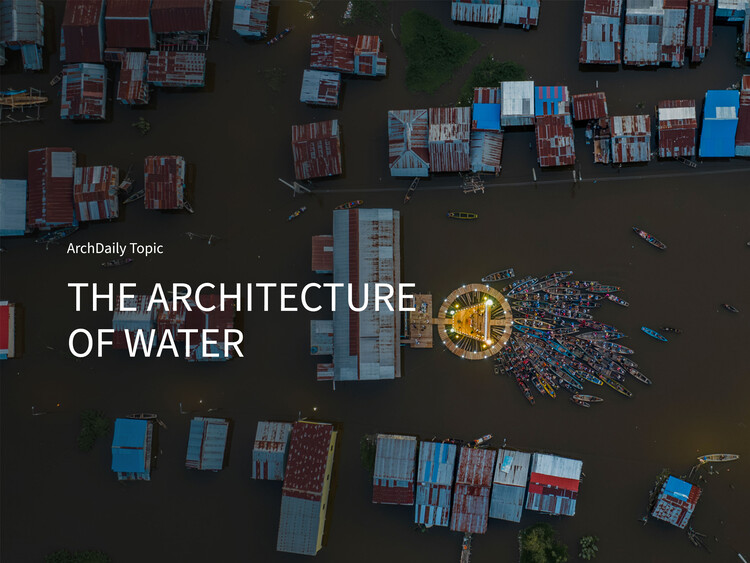
Water is life. Animals, plants, fungi, and bacteria all depend on it: water structures their cells, carries their nutrients, and hosts the chemistry that keeps them alive. Even the rare exceptions confirm the rule. Some seeds and spores can lose nearly all their water and enter a dormancy so deep that their metabolism almost stops, yet it is water that brings them back. In the most literal sense, water connects us.
But it also divides us. Every year, thousands of people leave North Africa in overcrowded boats bound for Lampedusa, seeking better living conditions in Europe; more than 30,000 have died or gone missing in the Mediterranean since 2014. Water draws borders and controls flows. Before the war on Iran began in February 2026, the Strait of Hormuz carried around 25% of the world's seaborne crude oil, with effects felt in fuel prices far from the Gulf. Water also sits at the center of the environmental debate, where its excess can be as lethal as its absence. Severe floods increasingly strike countries that have contributed least to global emissions, while the largest polluters remain better equipped to resist. If water is life, it can also mean death. Ultimately, water is political.
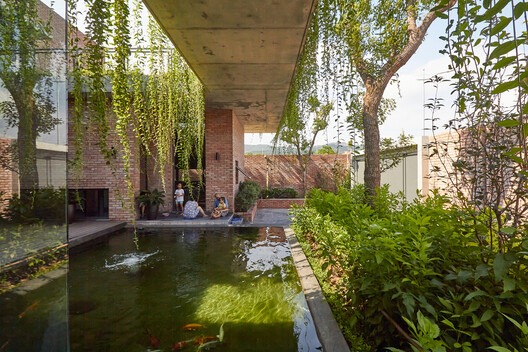
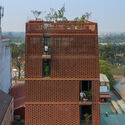
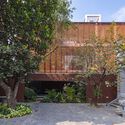
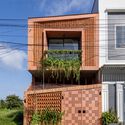
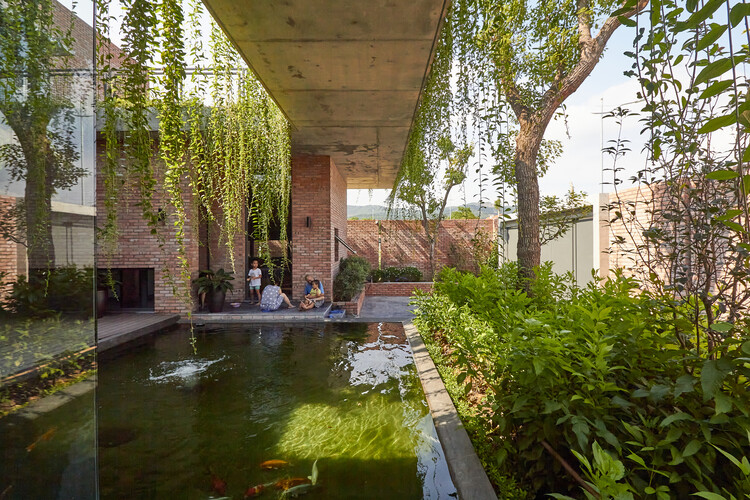
Contemporary Vietnamese residential architecture stands out for its deep sensitivity to local microclimates and context. Detailed studies of weather patterns consistently drive strategic design decisions, resulting in buildings that act as adaptive shelters. Facing conditions that range from scorching summers to dry, cold winters, along with frequent exposure to heavy rains, storms, and floods, architects adopt protective facade elements and multi-layered spatial configurations to shield interior spaces from harsh environmental factors.
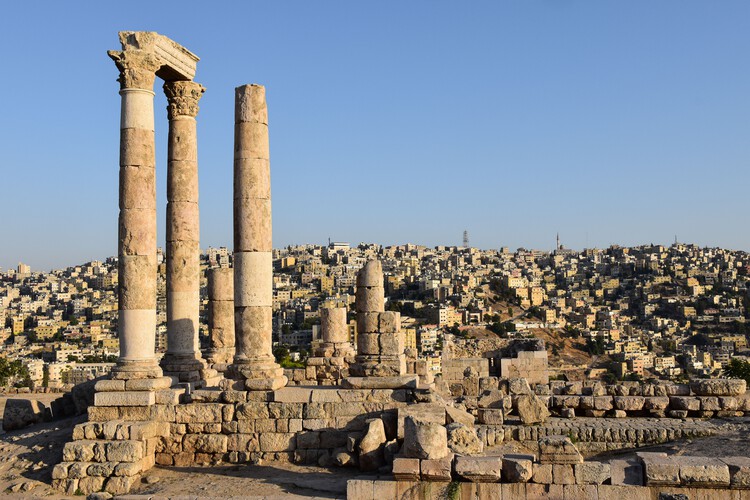
Following its last edition in 2019, Amman Design Week returns from October 2-17, 2026, bringing more than 220 designers and participants together across exhibitions, installations, public-space projects, talks, workshops, and performances in Jordan. The fourth edition unfolds across Ras El Ain, Jabal Al Lweibdeh, Jabal Amman, Iraq Al Amir, and, for the first time, Aqaba. Founded by Her Majesty Queen Rania Al Abdullah in 2016, the event returns under the theme "Accumulations," looking at how materials, memories, knowledge, labor, and everyday practices gather over time and become part of the places people inhabit. The theme also gives the 2026 edition a clear relationship with the city itself.
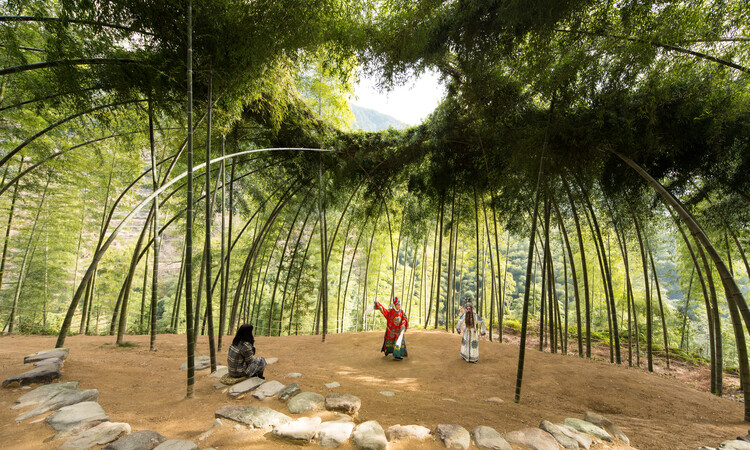
Xu Tiantian is the founding principal of DnA_Design and Architecture, an interdisciplinary practice that addresses both the physical and social dimensions of the contemporary living environment, across scales. Born in 1975 in Fujian, China, she received a Master of Architecture in Urban Design from the Harvard Graduate School of Design and a bachelor's degree in architecture from Tsinghua University in Beijing. Her recent work focuses on rural revitalization through a strategy she describes as "architectural acupuncture," understood as small-scale, site-specific interventions designed to activate local culture, agriculture, and tourism. These interventions, primarily concentrated in China's rural regions, have been recognized by UN-Habitat as a global model for urban–rural integration. In this interview with Louisiana Channel, she reflects on the role of the architect, questions architecture itself and the concept of beauty, explains her working methodology, and emphasizes the spatial dimension of nature.
The most innovative and impactful design projects arise from the intersection of different fields. The architecture community has always borrowed from, or been inspired by, other forms of cultural production such as film, photography, literature, and theatre. In the theatricality of Baroque churches and the cinematic sequences of contemporary museums, architects have looked beyond the building itself to understand how space can shape a story and construct an experience.
Worldbuilding takes this one step further. Instead of designing only the architecture of a place, it asks architects to establish the social rules, narratives, technologies, economies, atmospheres, behaviors, and relationships that make that place believable. Rather than beginning with, "What should this building look like?", worldbuilding suggests beginning with, "In what kind of world would this building make sense?"
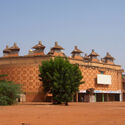
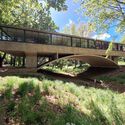
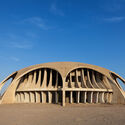
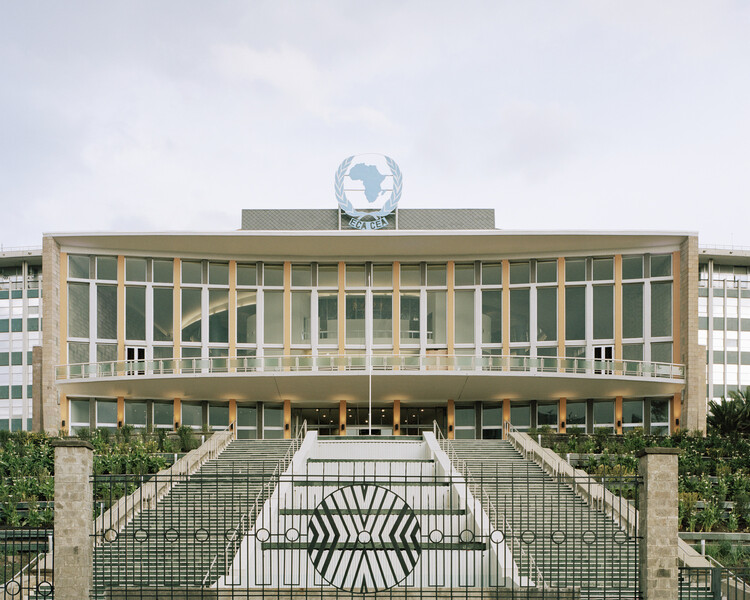
What makes a building worth preserving? Age is the most common answer, but not always the best one. A building from the 1950s or 70s may carry as much historical significance as a medieval cathedral; it simply demands a different framework, one that weighs political context, cultural meaning, and architectural innovation over the mere passage of time. This is especially true for modernist architecture across the so-called Global South, where the movement took on unique forms of expression.
It is precisely this conversation that ArchDaily and World Monuments Fund are now opening together. WMF brings on-the-ground conservation expertise across the world, and ArchDaily brings the editorial capacity to contextualize that work and connect it to a global audience. The goal is to do both at once: preserve places and tell their stories, shaping how modernist heritage is understood far beyond the field of preservation itself.