1. ArchDaily
  2. East Asia

East Asia: The Latest Architecture and News

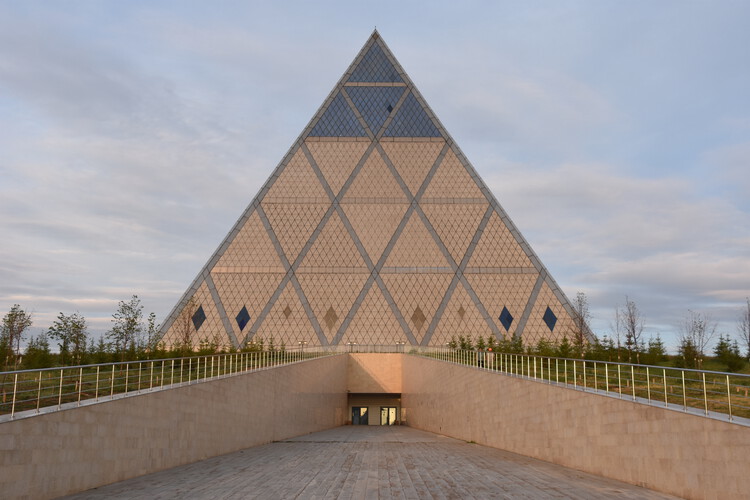
Building a National Image: Architecture, Capital, and Political Power

Subscriber Access | 
Audio available

The Pyramid of Tirana opened as a museum to Enver Hoxha in October 1988, three years after his death and three years before the regime collapsed. In the decades that followed, it served as a radio station, a conference venue, a nightclub, and a base for NATO during the Kosovo war. In 2023, MVRDV reopened it as a park and technology school, adding steps to the façades so that the building could be walked over. The inauguration was timed to the Western Balkans Summit on 16 October, a date that some critics pointed out was Hoxha's birthday. Two projects of national self-definition, thirty-five years apart and built on opposite political premises, have used the same structure.
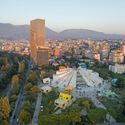
Building a National Image: Architecture, Capital, and Political Power - Imagem 1 de 4Building a National Image: Architecture, Capital, and Political Power - Imagem 2 de 4Building a National Image: Architecture, Capital, and Political Power - Imagem 3 de 4Building a National Image: Architecture, Capital, and Political Power - Imagem 4 de 4Building a National Image: Architecture, Capital, and Political Power - More Images+ 15

Micro-Ecosystems: South Korea's Answer to High-Density Mixed-Use Living

Subscriber Access | 
Audio available

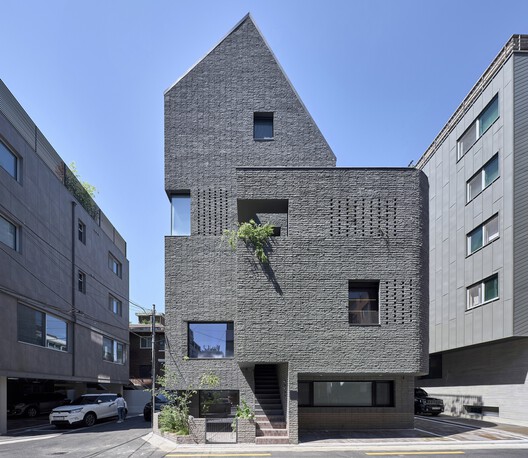
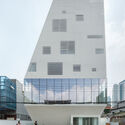
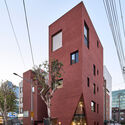
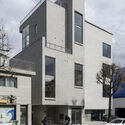
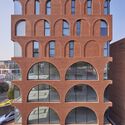
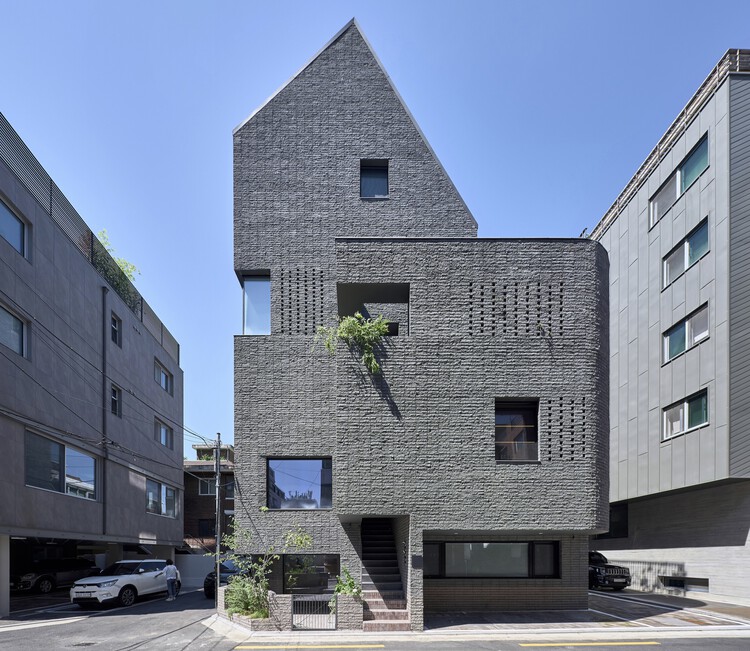
With over 80% of its population living in urban centers and a national density exceeding 500 people per square kilometer — soaring to over 15,000 in SeoulSouth Korea faces intense competition for usable land. In response, contemporary Korean architecture offers compelling examples of mixed-use interventions that negotiate tight urban lots to blend public engagement with high-efficiency utility. By vertically stacking distinct programs, integrating public art centers, corporate headquarters, and commercial hubs alongside residential and other functions, these multi-layered developments transform spatial constraints into dynamic urban interfaces.

Micro-Ecosystems: South Korea's Answer to High-Density Mixed-Use Living - Image 1 of 4Micro-Ecosystems: South Korea's Answer to High-Density Mixed-Use Living - Image 2 of 4Micro-Ecosystems: South Korea's Answer to High-Density Mixed-Use Living - Image 3 of 4Micro-Ecosystems: South Korea's Answer to High-Density Mixed-Use Living - Image 4 of 4Micro-Ecosystems: South Korea's Answer to High-Density Mixed-Use Living - More Images+ 6

Design Ethos of Subtraction and Addition: 10 Adaptive Reuse Projects for Commercial and Social Spaces in Asia

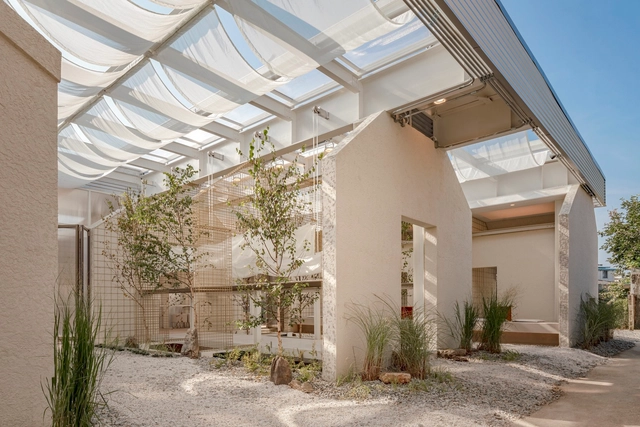
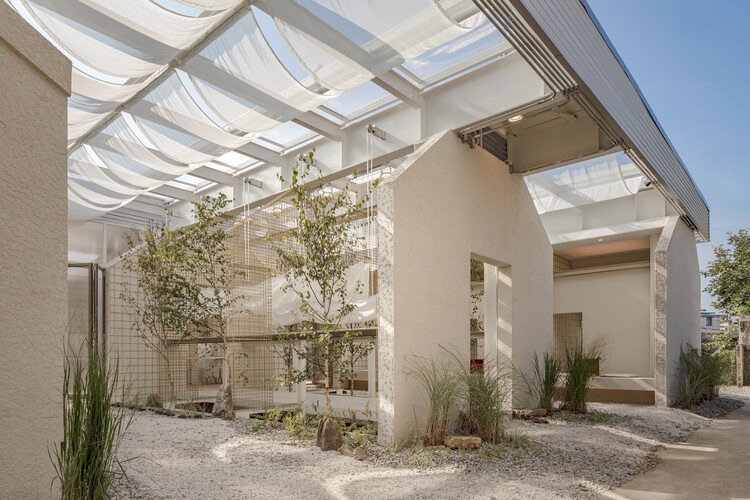
While adaptive reuse has been increasingly acknowledged as a vital architectural strategy worldwide, its discourse and implementation in Asia are still expanding—driven by growing ecological awareness and a shifting understanding of architectural knowledge. Rather than accelerating a developmentalist model centered on demolition and new construction, architects today are confronted with a different approach to the built environment: treating the existing structure as a resource—an archive of materials, spatial organizations, and informal histories.

Adaptive reuse is often associated with the preservation of historic buildings and culturally significant heritage. Yet the vast field of seemingly 'less-valued' structures—abandoned houses, standard yet old dwellings, non-conforming office buildings, and overlooked urban voids—has become ground for experimentation. These sites challenge architects and designers to reconsider prevailing standards of efficiency and market-driven development, and to imagine spatial and ecological practices that avoid the continual loss of embodied material and cultural knowledge inherent in constant rebuilding.

Design Ethos of Subtraction and Addition: 10 Adaptive Reuse Projects for Commercial and Social Spaces in Asia - SustainabilityDesign Ethos of Subtraction and Addition: 10 Adaptive Reuse Projects for Commercial and Social Spaces in Asia - SustainabilityDesign Ethos of Subtraction and Addition: 10 Adaptive Reuse Projects for Commercial and Social Spaces in Asia - SustainabilityDesign Ethos of Subtraction and Addition: 10 Adaptive Reuse Projects for Commercial and Social Spaces in Asia - SustainabilityDesign Ethos of Subtraction and Addition: 10 Adaptive Reuse Projects for Commercial and Social Spaces in Asia - More Images+ 29