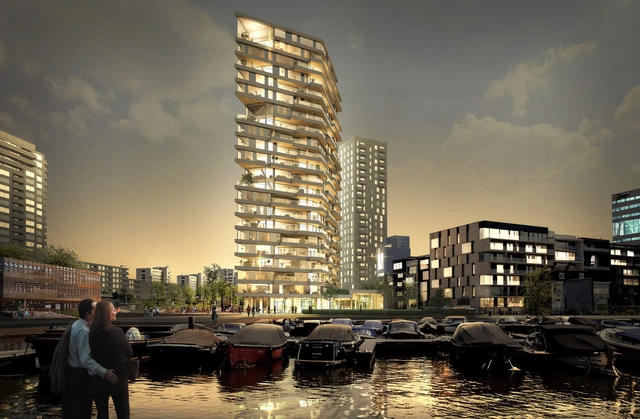
Rendering of HAUT. Image Courtesy of Team V Architectuur
Across the globe, tall wood structures have begun transforming the world of skyscrapers and high-rise buildings, ushering in an important shift to an architectural practice that has traditionally been dominated by steel and concrete. Typically defined as wood-constructed buildings over 14 stories or 50 meters high, the past six years have seen over 44 tall wood buildings built or underway around the world. Notable examples include Michael Green Architecture and DLR Group’s T3 and Team V Architectuur’s upcoming 73 meter residential tower HAUT.
https://www.archdaily.com/924341/could-tall-wood-construction-be-the-future-of-high-rise-buildingsLilly Cao
Architecture can be many things, also queer. Alongside many other transgressing words that carry different meanings and perspectives, this term triggers new insights into society and questions how we create architecture and urban planning projects, including their programs and activities. If there is any statement about how architecture should be done, if there is any conviction about what it represents, we wish here to avoid knowing what it is and be able to question its traditions to broaden the profession, its meanings, and social representation.
The history of Puerto Rico is reflected in its cities. The territory’s architecture has evolved from simple structures made of wood and thatch to monumental modern works. Shaped by both internal and external forces across its varied landscapes, Puerto Rico’s diverse styles represent over 400 years of Spanish rule and over 100 years as an unincorporated territory of the United States. Today, the island’s modern architecture reflects its multicultural background.
Four emerging architecture studio profiles from Italy, Switzerland, UK, USA, India, and Brussels have been chosen by New Generations, a European platform that analyses the most innovative emerging practices at the European level, providing a new space for the exchange of knowledge and confrontation, theory, and production. Since 2013, New Generations has involved more than 300 practices in a diverse program of cultural activities, such as festivals, exhibitions, open calls, video interviews, workshops, and experimental formats.
The Media Architecture Awards are handed out to the best projects in the integration of displays, interactive installations and other media into architectural structures, such as facades and urban screens. The winners will be announced at the Awards Ceremony on July 2 (15:30-16:30 CEST). The award ceremony will be live-streamed. In the coming weeks, the three nominations in each of the five categories will be revealed here on ArchDaily.
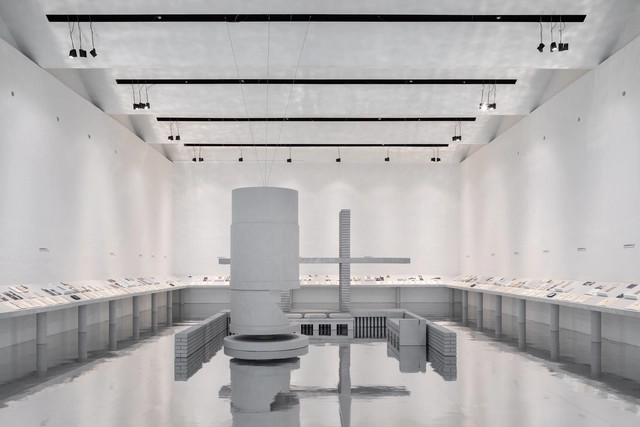
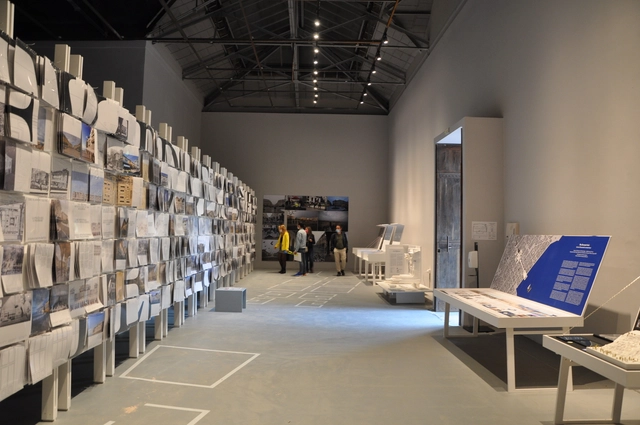
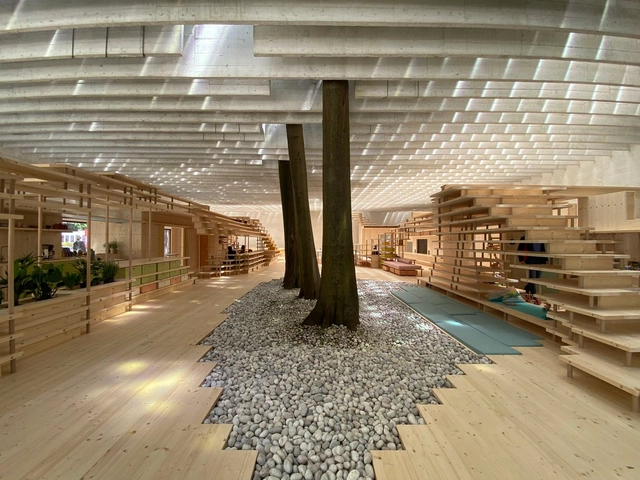
Over the past couple of weeks, we have seen how countries have responded to “How will we live together” in 115 different ways. Some studied the environment and how to sustain it, while others explored how they can create a safe space for refugees and citizens to coexist. In this roundup, we are concluding the list of national pavilions displayed at the 17th International Architecture Exhibition – La Biennale di Venezia, and highlighting how they answered curator Hashim Sarkis' question.
Energy codes around the world get stricter every year, architects need to prepare for various challenges ahead. The first step is to understand the key metrics needed to conduct early-stage analyses and collaborate across various teams. With buildings responsible for 39% of total carbon emissions, the design practice is evolving to bake in data-driven energy efficiency. This change is leading architects to quickly become building performance experts and create spaces that are high performance and healthy for occupants.
https://www.archdaily.com/963003/sustainable-building-design-top-5-metrics-every-architect-should-knowSponsored Post
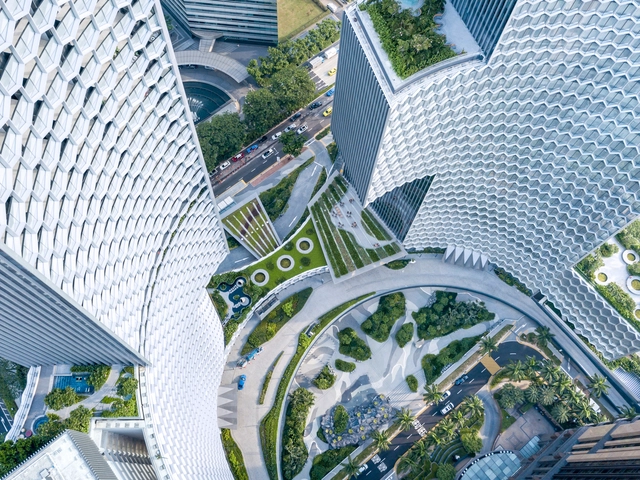
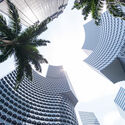
Büro Ole Scheeren'DUO Twin Towers project has been awarded CTBUH's 2021 Urban Habitat Award, which acknowledges the design's significant contribution to its urban context. Completed in 2018, the project restructures a previously disjointed and neglected part of Singapore, creating a dynamic place that enables social interaction. The award confirms the studio's socially and environmentally responsible approach to design. New footage by photographer Iwan Baan captures the DUO's silhouette and elevated landscape, hinting at the project's careful consideration of its urban and civic context.
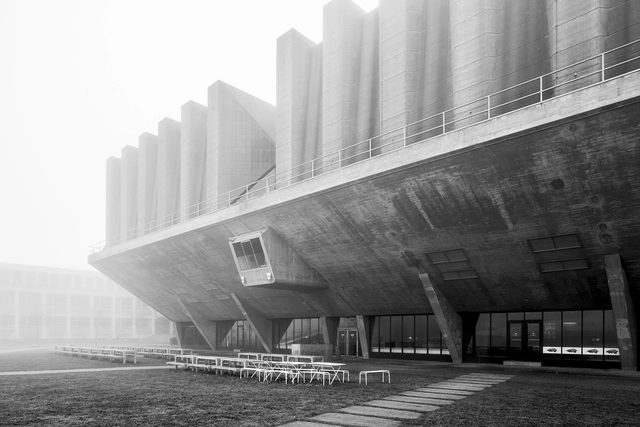
In his book “The New Brutalism in Architecture: Ethical or Aesthetic?,” Reyner Banham establishes what he deems the semantic roots of the term 'Brutalism,' explaining that it comes from one of the " indisputable turning points in architecture, the construction of Le Corbusier's concrete masterpiece, la Unité d'habitation de Marseille. It was Corbusier's own word for raw or rough-cast concrete, "Béton brut," that made Brutalism a mainstay in architectural jargon and, in many ways, the term, as well as the architecture it described, flourished." In the book, Banham highlights the historical milestone marked by Corbusier's Unite d' Habitation and the socio-political context that shaped it. In steel-starved post-World War II Europe, exposed concrete became the go-to building material within the burgeoning Brutalist movement, which quickly defined itself by its bare-bone, rugged surfaces and dramatic, geometric shapes.
The 2021 edition of La Biennale di Venezia also includes 112 participants in competition from 46 countries, with 60 national participants in the Giardini, at the Arsenale, and in the historic city center of Venice, Italy. Moreover, the international exhibition welcomes three countries, being part of the most important architectural biennale of the world for the first time: Grenada, Iraq, and Uzbekistan.
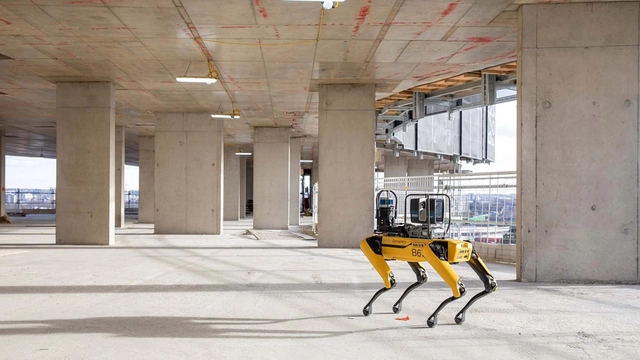
Spot on a Foster+Partners construction site. Image Courtesy of Foster+Partners
For several years, the construction sector has been facing a labour shortage, generating a growing interest in automation. The health crisis has only exacerbated the trend, prompting automation companies to turn their focus from car manufacturing to the construction industry, for which automation is expected to grow up to 30% within the next few years. The following explores present capabilities and future possibilities of automation within the construction process, its integration within the mainstream practice and the impact on design.
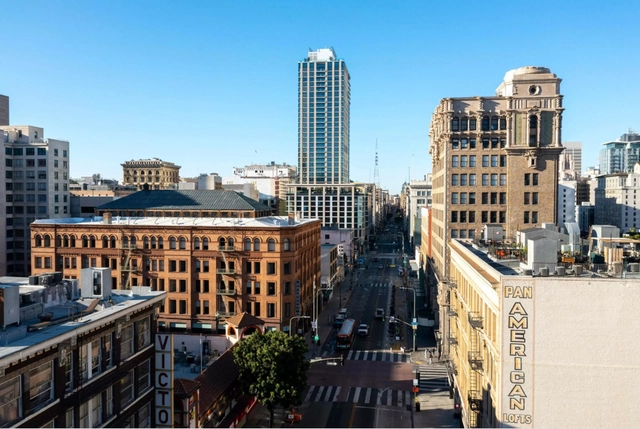
Perla on Broadway is the first new high-rise to be constructed in Los Angeles’s Broadway Theater District. Designed by CallisonRTKL, the tower will be the first addition within the district in over a century. Matt Hickman explores the latest addition to Downtown L.A.'s skyline in a piece originally published in The Architect's Newspaper.
Responding to “How will we live together” in 115 different ways, the 2021 Venice Architecture Biennale welcomed, physically, the large public, on May 22nd, 2021. Opening up furthermore to the world, the timeless yet context-sensitive theme engendered a collective imaginary, highlighting a world that would rather come together than stay apart. Building an architectural narrative of the present that reflects on a resilient future, the interrogation, first asked in 2019, gained more relevance with the pandemic that paused the world for a while. With a lot of optimism and love for the craft, the architectural exhibition opened its doors to a longing public and revealed recurring qualities in the showcased interventions.
The Second Studio (formerly The Midnight Charette) is an explicit podcast about design, architecture, and the everyday. Hosted by Architects David Lee and Marina Bourderonnet, it features different creative professionals in unscripted conversations that allow for thoughtful takes and personal discussions.
A variety of subjects are covered with honesty and humor: some episodes are interviews, while others are tips for fellow designers, reviews of buildings and other projects, or casual explorations of everyday life and design. The Second Studio is also available on iTunes, Spotify, and YouTube.
This week David and Marina are joined by Archie Lee Coates IV, a Co-Founder of the extremely multi-disciplinary design studio PLAYLAB. Archie discusses the evolution and future of PLAYLAB, naïveté in design and art, social equity in design practices and design, believing in humanity, design office as permeable amoeba, working with Virgil Abloh for the Louis Vuitton Show, and more.
The Media Architecture Awards are handed out to outstanding projects at the intersection of architecture, urban design and planning, media, art and interaction design. The winners will be announced at the Awards Ceremony on July 2 (15:00-16:15 (CEST). The award ceremony will be live-streamed. In the coming weeks, the three nominations for each of the five categories will be revealed here on ArchDaily.
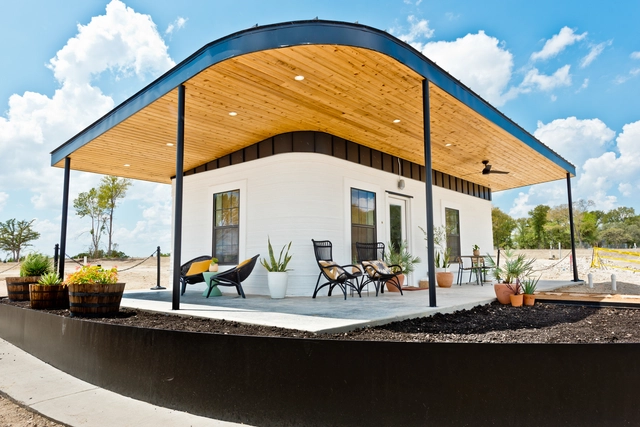
The viability of 3D Printing in architecture – has, at the very least – seen a seismic shift over the past few years. Usually relegated to prototypes or conceptual models, 3D Printed building designs are increasingly being actualised as physical projects. In 2013, WinSun, a Chinese company – was able to print 10 houses in a 24-hour period, becoming one of the first companies to achieve this feat using 3D Printing technology. More recently, in 2018, a family in France became the first in the world to live in a 3D Printed house. The city of Dubai is also seeking to have a quarter of its buildings be 3D Printed by 2025. These examples display the upwards category of this technology, and how it is very likely, as the years go by, this automation of building fabrication is even more integrated into the construction process than it is right now.
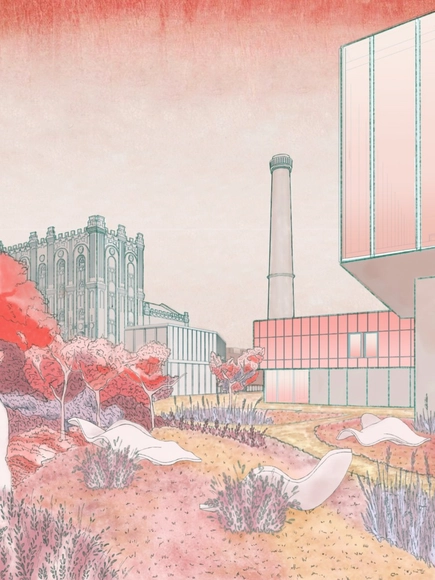
The CANactions youth competition was launched in 2009 by the Dessau Institute of Architecture (DIA / Germany) and CANactions School. The competition has become a professional "path to Europe" for Ukrainian students and young professionals. Since its launch, more than 1,200 projects have been received, among which 129 finalist projects have been selected by members of the international jury. This year's winner was Dmytro Yahodin with a reconstruction proposal for the Rikhert brewery in Kyiv.
https://www.archdaily.com/963148/reconstruction-proposal-for-an-abandoned-brewery-wins-the-2021-canactions-youth-competitionArchDaily Team
The first house ever built in the United States made entirely out of only concrete and glass is no longer standing. It was demolished in 1999, but that doesn’t mean we can’t visit it virtually to witness what it would have been like to be inside. This video and link below focuses on a single house — the Lincoln House — designed by Mary Otis Stevens to resurrect and explore. It uses the program Enscape to walk through the building and resurrect the experience of what it would have been like to be inside. The video offers a timeline to contextualize the role of the house in the career of the architect and the evolution of Brutalism in Architecture, an analysis of the building, and initial reactions to walking through the building for the first time. What magic and other lessons are lurking in the design, hidden until we could experience it?
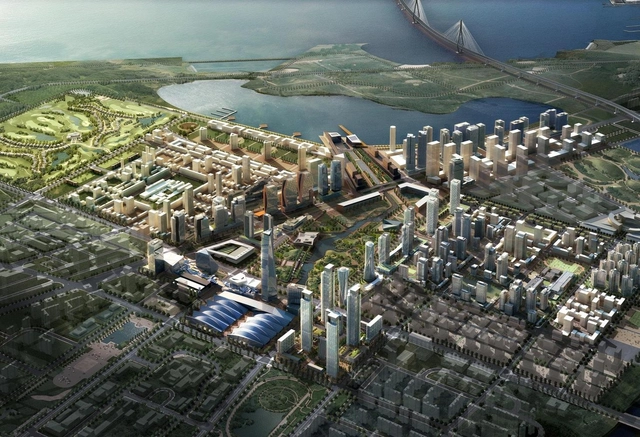
What does it take to build a smart city from nothing? Or maybe the better question is, what does it take to build a smart city from nothing and make it successful? For over a decade, architects and urban planners worked hand in hand to create Songdo, a brand new business district that sought to represent South Korean advancements in technology and infrastructure. Songdo was once a model for how we would live in cities of the future- but now, the reality of what this smart city quickly became has us rethinking how the combination of technology and community might have gone wrong.
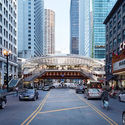
Skidmore, Owings & Merrill (SOM) and TranSystems are redesigning one of Chicago busiest and oldest elevated rail networks. The Chicago State/Lake Station's new design offers improved accessibility, safety, and comfort to all passengers, and respects the surrounding historic fabric of the downtown area. The proposed design includes wider platforms, a hovering glass canopy, a new fly-over connection bridge, elevators, and street level enhancements.
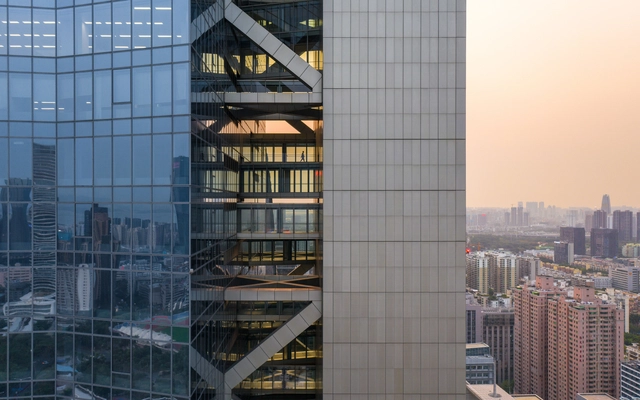
With its Shenzen project, design firm Morphosis reimagines the skyscraper typology, maximizing the flexibility of the floor plan through a detached-core scheme that shifts circulation, services and amenities to the building's exterior. Using a pioneering structural system, the project's spatial configuration diversifies the interiors' functional possibilities while reshaping the circulation routes within the building, with glass sky-bridges and large-scale steel braces knitting the core to the tower's main body. Completed in 2018 with a gradual opening that continues into 2021, the 359.8-metre tower is currently the tallest detached-core building in the world.
The Federal Secretary of Culture and the National Institute of Fine Arts and Literature (INBAL) present the exhibit, titled Desplazamientos (Displacements), which will represent Mexico in the 17th International Exhibition of Architecture-The Biennale of Venice, taking place from May 22 to November 21, 2021 in the Venetian Arsenal. The exhibition aims to redefine the way that Mexico participates in this distinguished space, one of architecture's global stages and a platform for countries to share their cultural heritage. The Mexican pavilion, titled Displacements, is the result of a dialogue between the representatives of the 12 chosen projects and the the curatorial team as a part of the process to transform the pre-established theme of the Venice Biennale and to formulate a dialogue through spatial, artistic, and constructive demonstration.
https://www.archdaily.com/962748/focusing-on-architecture-as-process-rather-than-an-abstract-object-interview-with-elena-tudela-curator-of-the-mexican-pavilion-at-the-2021-venice-biennaleArchDaily Team















.jpg?1622015464&format=webp&width=640&height=580)
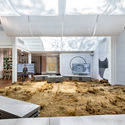
.jpg?1622029620 "Argentina: La casa infinita by Gerardo Caballero. Image © Laurian Ghinitoiu")
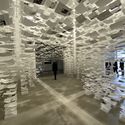
.jpg?1622015439 "Germany: 2038. The New Serenity by 2038. Image © Laurian Ghinitoiu")
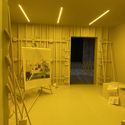
.jpg?1622015472 "Mexico: Desplazamientos / Displacements by Isadora Hastings, Mauricio Rocha, Elena Tudela. Image © Laurian Ghinitoiu")
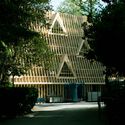
.jpg?1622015529 "Spain: Uncertainty by Domingo Jacobo González Galván, Sofía Piñero Rivero, Andrzej Gwizdala, Fernando Herrera Pérez. Image © Laurian Ghinitoiu")
.jpg?1622015464)









.jpg?1623397042&format=webp&width=640&height=580)
.jpg?1623397062 "Courtesy of Skidmore Owings & Merrill")
.jpg?1623397056 "Courtesy of Skidmore Owings & Merrill")
.jpg?1623397051 "Courtesy of Skidmore Owings & Merrill")
.jpg?1623397042)