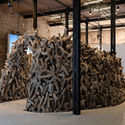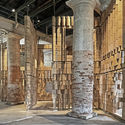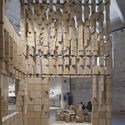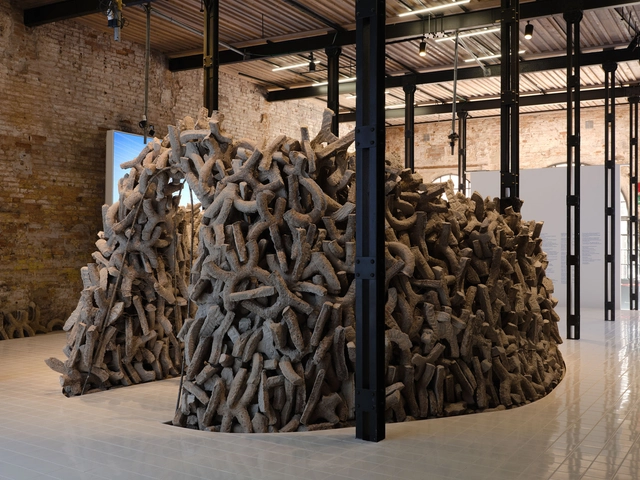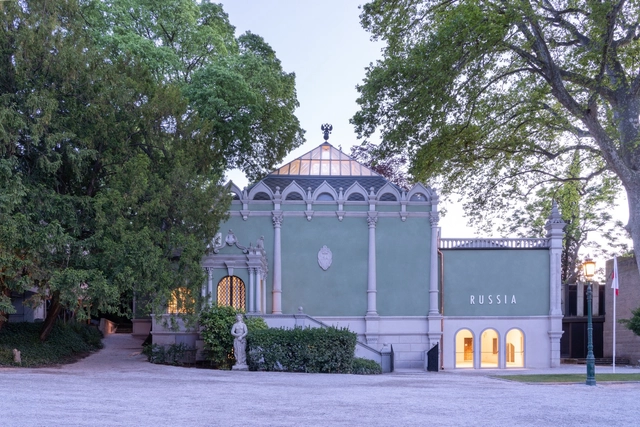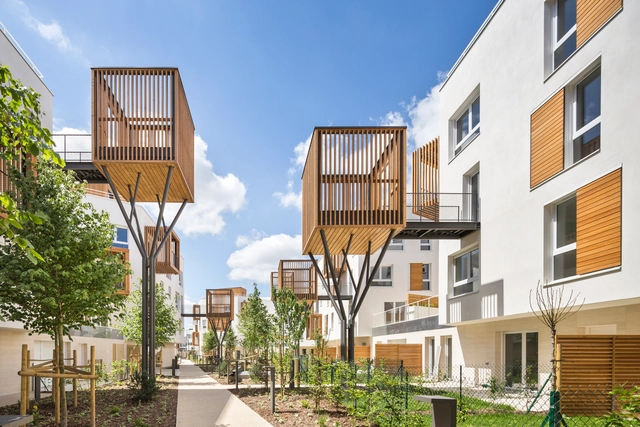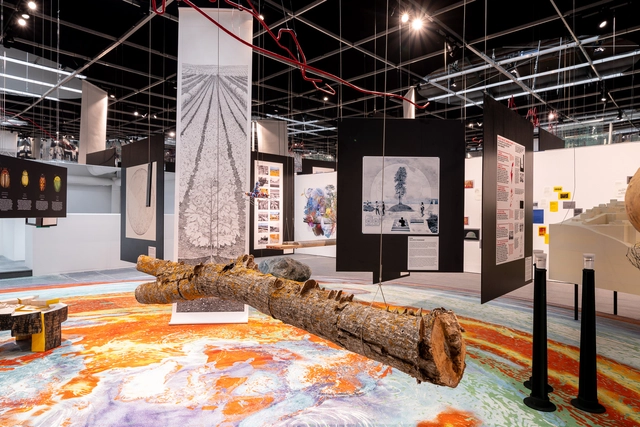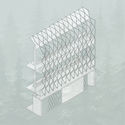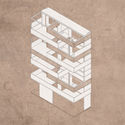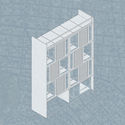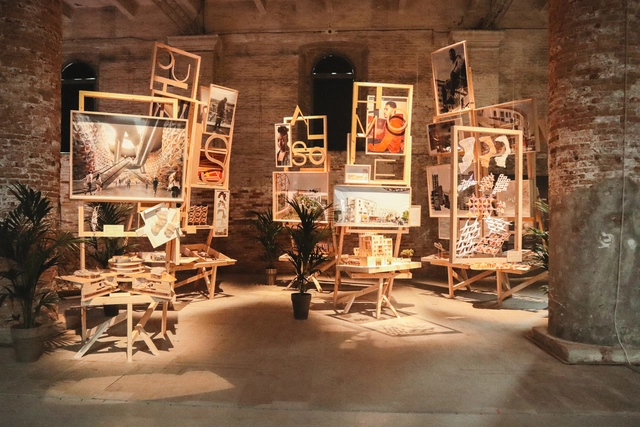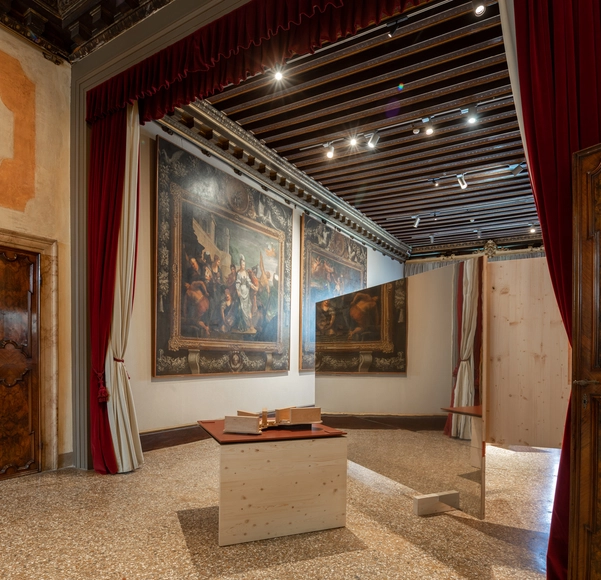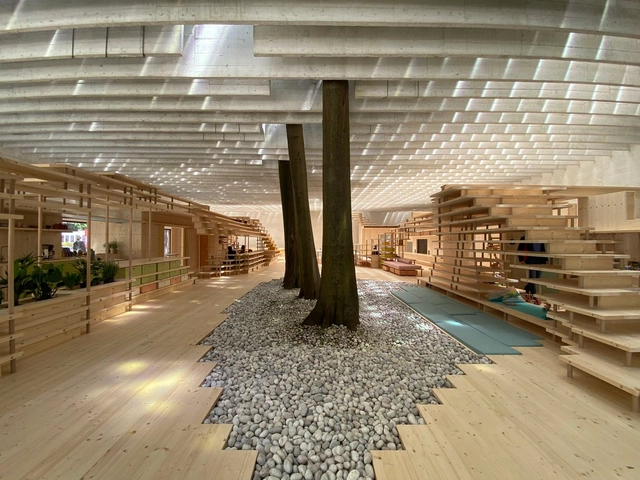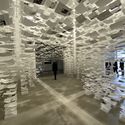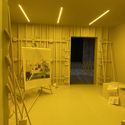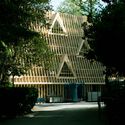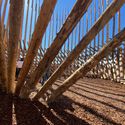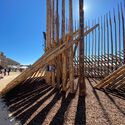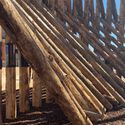
Spanish Pavilion. Image Courtesy of Spanish Pavilion
Despite a year-long postponement and strict pandemic regulations, the 17th International Architecture Exhibition of La Biennale di Venezia has finally come to an end with over 300,000 visitors, exceeding the previous edition. Titled "How Will We Live Together", the 2021 edition of the event featured 112 participants and 60 national participations hailing from 46 countries, displayed across the Giardini, Arsenale, and the streets of Venice from May 22nd to November 21st, 2021. UAE's Wetland by curators Wael Al Awar and Kenichi Teramoto took home the Golden Lion for Best National Participation, for presenting an innovative contextual alternative to cement, one of the key emitters of the world's carbon dioxide.
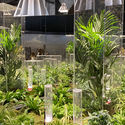
Peruvian architectural firm leonmarcial arquitectos has been invited to take part of the 17th Venice Architecture Biennale with an installation at the Arsenale as part of the "As New Households” exhibition space. Titled Interwoven, the installation encourages the action of sharing and celebrates the exchange between homes and their environments through architecture.
Videos
‘Carbon to Rock’ en la Biennale Architettura 2021. Fotografías: Raul Betti y Adolfo Guiard Torre-Marín. Image Cortesía de Igneous Tectonics
Climatic conditions throughout the world are changing and with extreme temperatures and scarce resources becoming the norm, architectural materials and techniques are having to innovate to prepare for the future.
'Carbon to Rock' is an installation by IGNEOUS TECTONICS (Cristina Parreño and Sergio Araya) being presented in the 2021 Venice Biennale that highlights volcanic rock as a promising material in the global push to mitigate climate change.
“We need a new spatial contract." This is the call of Hashim Sarkis, curator of the Venice Biennale 2021, as an invitation for architects to imagine new spaces in which we can live together. Between a move towards urban flight and global housing crises, the growth of more low-rise, dense developments may provide an answer in the countryside. Turning away from single family homes in rural areas and suburbs, modern housing projects are exploring new models of shared living in nature.
The 17th Venice Architecture Biennale invited architects to ponder the question “How will we live together”, eliciting various answers and interpretations. The International Exhibition unfolding in Giardini, the Arsenale and Forte Maghera presents 113 participants in the competition, coming from 46 countries, whose contributions are organized into five scales: Among Diverse Beings, As New Households, As Emerging Communities, Across Borders, and As One Planet. The following participants explore a variety of subjects, prompting a holistic re-evaluation of the collective in relationship with issues ranging from the urban and natural environment to climate action or the relationship with other species.
Can architecture foster better relationships between people, creating an equalized and respectful use of space? Can tools be designed that strengthen the bonds between humans and objects? BAAG (Buenos Aires Arquitectura Grupal) studio explores the architectural elements that mediate between people and objects, the natural and artificial, public and private, individual and collective, and humans and other living things.
How does systemic thinking and generative design contribute to new forms of convivence? Can they become tools to connect tradition and identity in a modern way? Can they help to design customizable architectural strategies that offer locally accessible solutions? Can they contribute to the creation of dignified spatial experiences that can be replicated on a mass scale?
Other than the contribution of national participations, the 2021 Venice Architecture Biennale invites architects and researchers to exhibit their work between the Central Pavilion at the Giardini, the Arsenale, and Forte Marghera, seeking to answer the general theme of “How will we live together?”, set by curator Hashim Sarkis. With 113 Participants from 46 countries, and an increased representation from Africa, Latin America, and Asia, these architectural contributions underline worldwide and contextual challenges as well as present multidisciplinary and inventive solutions.
The 17th International ArchitectureExhibition, running from 22 May to 21 November 2021, divides these projects amongst the following titles: Co-Habitats, Stations, Among Diverse Beings, As New Households, As Emerging Communities, Across Borders, and As One Planet, How Will We Play Together? After having explored the recurring qualities observed in the national pavilions, this feature highlights the rest of the interventions through the lens of Laurian Ghinitoiu.
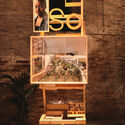
Benedetta Tagliabue - Miralles Tagliabue EMBT participates in the 17th International Venice Architecture Biennale with an installation detailing the design thinking behind Plateau Central Masterplan at Clichy-Montfermeil, Paris. Entitled Living within a Market - Outside space is also Home, the exhibition showcases a series of models, drawings, prototypes and collages which illustrate the principles of community building and social integration that underline the project. The installation also brings to Venice a display structure designed by Enric Miralles in 1996, reproduced for the first time this year for the Miralles series of exhibitions in Barcelona.
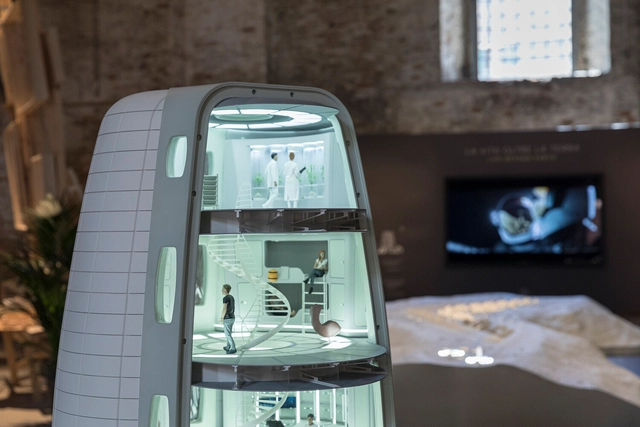
Invited to participate in the 17th International Venice Architecture Biennale, Skidmore, Owings & Merrill (SOM) exhibits Life Beyond Earth, a vision for a Moon Village. Developed together with the European Space Agency (ESA), the installation presents a proposal for a sustainable ecosystem that would support human presence on the Moon, exploring the opportunity of expanding the scope of architecture. The project reaffirms the importance of space exploration while also highlighting its potential to advance knowledge that would help address issues on Earth.
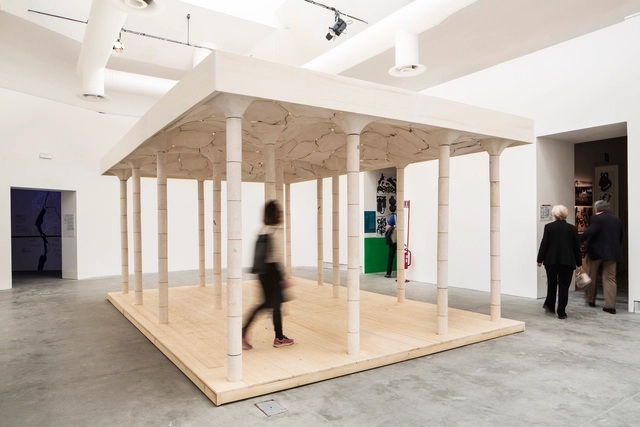
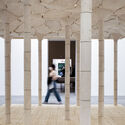
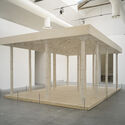
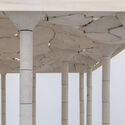
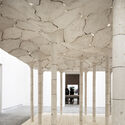
Having been invited to participate in the 17th International Venice Architecture Biennale, architecture and design practice AAU ANASTAS presents the exhibition All-Purpose, which translates the craftmanship of stone into a new form of contemporary architecture. Exhibited within the Giardini, the structure featuring an undulating parametrised stone slab supported by thin, slender columns is a material exploration that builds on the Palestinian construction tradition to create a new architectural discourse around stone.
The 17th Venice Architecture Biennale is currently unfolding, and its 60 national pavilions reveal a wide range of answers to the question "How will we live together". This year's edition restates the Biennale's role as a platform for inquiry, prompting a collective re-evaluation of pressing issues such as migration, inequality, climate change or the role of technology. While in Venice, Archdaily met virtually within the Korean pavilion with curator Hae-Won Shin, as the pandemic prevented the exhibition's creators to be present at the Biennale. The conversation explored the thinking behind "Future School" and how it creates a framework for collective learning and exploration.
In Conflict, the Portuguese Official Representation at the 17th Architecture International Exhibition La Biennale di Venezia, 2021, is co-curated by Carlos Azevedo, João Crisóstomo, and Luís Sobral of depA architects, and Miguel Santos. The exhibition addresses public spaces as arenas of conflict, understood as the action of opposing forces translated as dissension. In Conflict responds directly to the question 'How will we live together?' posed by Hashim Sarkis, curator of the Biennale Architettura, and is based on seven architectural processes involving collective dwellings that were the subjects of broad media coverage and public involvement.
The 2021 edition of La Biennale di Venezia also includes 112 participants in competition from 46 countries, with 60 national participants in the Giardini, at the Arsenale, and in the historic city center of Venice, Italy. Moreover, the international exhibition welcomes three countries, being part of the most important architectural biennale of the world for the first time: Grenada, Iraq, and Uzbekistan.
Responding to “How will we live together” in 115 different ways, the 2021 Venice Architecture Biennale welcomed, physically, the large public, on May 22nd, 2021. Opening up furthermore to the world, the timeless yet context-sensitive theme engendered a collective imaginary, highlighting a world that would rather come together than stay apart. Building an architectural narrative of the present that reflects on a resilient future, the interrogation, first asked in 2019, gained more relevance with the pandemic that paused the world for a while. With a lot of optimism and love for the craft, the architectural exhibition opened its doors to a longing public and revealed recurring qualities in the showcased interventions.
The 17th Venice Architecture Biennale invited architects to ponder the question “How will we live together”, eliciting a variety of answers, readings and interpretations. The International Exhibition unfolding in Giardini, the Arsenale and Forte Maghera presents 112 participants in the competition, coming from 46 countries, whose contributions are organized into five scales: Among Diverse Beings, As New Households, As Emerging Communities, Across Borders, and As One Planet. Answering “How will we live together as a community? “ is Chilean office ELEMENTAL and Archdaily met in Venice with Alejandro Aravena to discuss the idea behind the project KOYAÜWE, which creates a space that recovers the tradition of parleys, as a means to address the historical Chilean-Mapuche conflict.