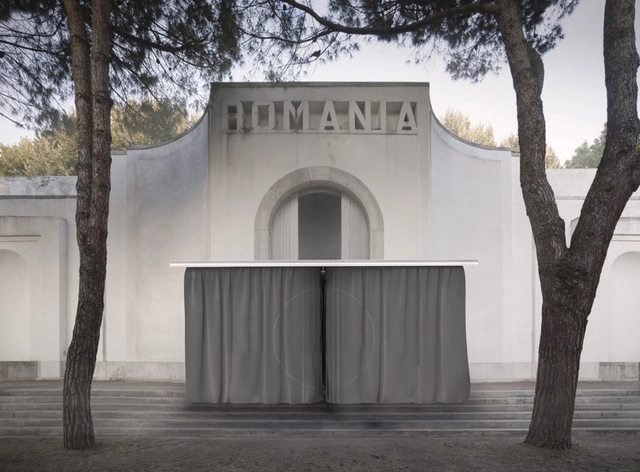
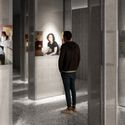
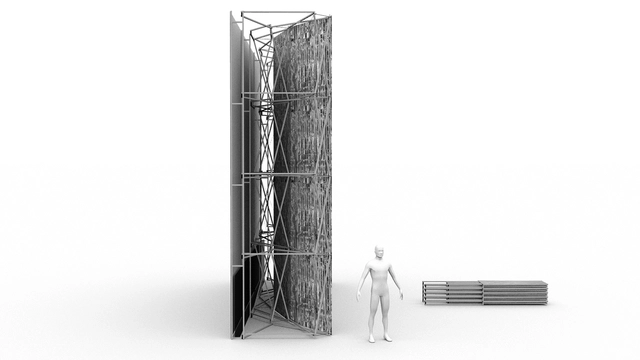
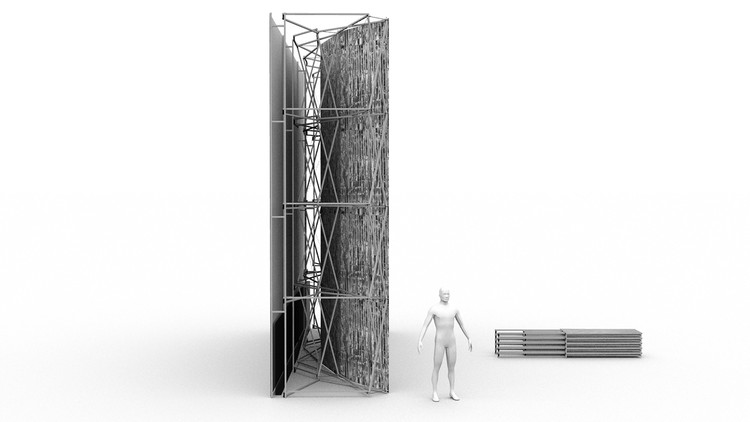
Romania’s contribution to the 17th Venice Architecture Biennale showcases a new perspective on mass migration, a phenomenon with a wide array of causes, ranking high on the international public agenda. Titled Fading Borders and curated by architects Irina Meliță and Ștefan Simion, the exhibition explores the challenges and opportunities of migration and its consequences on the built environment. Using Romania as a study case, where three million people have left the country in the last decade in pursuit of a better life abroad, the curatorial project frames a conversation around the role of architecture in the successful management of the migration phenomenon, as territorial boundaries continue to fade around the globe.
Videos
Toronto's Dundas and Ossington intersection, re-imagined as 1962 Baltimore by special effects studio MR. X for the film The Shape of Water. Image Courtesy of The Canadian Pavilion
Canada’s contribution to the 17th Venice Architecture Biennale explores Canadian cities’ established “career” in cinema as stand-ins for the world’s metropoles, raising questions of authenticity, architectural identity and the collective understanding of the built environment. Curated by David Theodore of McGill University and realized by Montréal architecture and design practice T B A / Thomas Balaban Architect, the exhibition Impostor Citieshighlights the diversity and versatility of Canada’s cityscapes as portrayed on film.
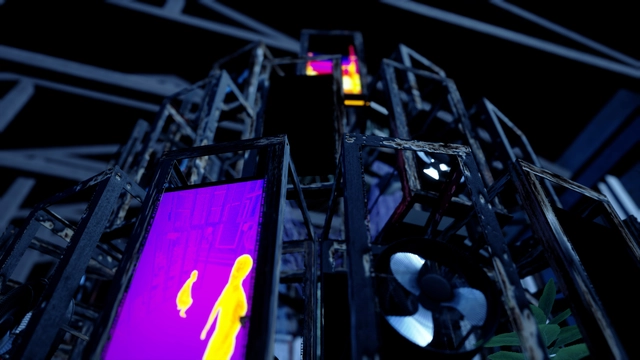
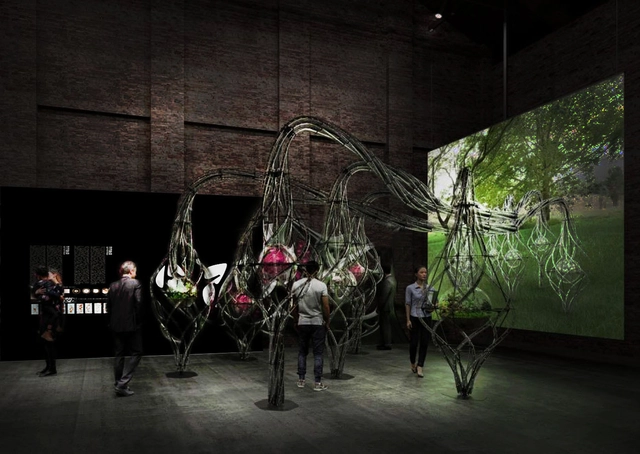
For this edition of the Venice Architecture Biennale, the Irish Pavilion focuses on data technologies and their presence within the physical landscape, exploring the cultural end environmental implications of data production and consumption. Titled Entanglement and curated by the multidisciplinary research and design collective ANNEX, the exhibition challenges the presumed immateriality of the Cloud, highlighting the infrastructure of data production and its impact on everyday life while also examining Ireland’s role in the evolution of global communication.
A sneak peak of Uncertainty, the highlight of the Spanish Pavilion at the 2021 Biennale of Venice taking place from May 22 to November 21 of this year.
“Playground, Artifacts for Interaction” by Felipe Ferrer will be featured in the Peru Pavilion in the 2021 Venice Biennale of Architecture. The project was the winner of the Curatorial Competition held by The Cultural Patronage of Peru that aimed to highlight how fences and gates shape our understanding of public spaces.
Kazuyo Sejima - Photo by Aiko Suzuki . Image Courtesy of La Biennale Architettura 2021
The Board of Directors of the 2021 Venice Biennale has appointed Kazuyo Sejima as president of the international jury, in charge of awarding mainly the Golden Lion for Best National Participation, the Golden Lion for the Best participant, and the Silver Lion for a promising young participant. In addition, they have also selected four other jury members from Peru, Lebanon, Ghana-Scotland, and Italy. The Awards Ceremony will take place in Venice on Monday, August 30th, 2021.
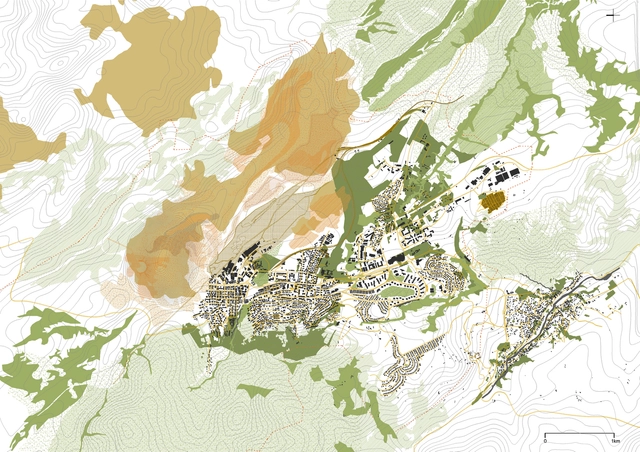
The Serbian contribution to the 17th Venice Architecture Biennale explores the connection between a city's economy and its urban structure -that the curatorial team defines as the life-work relationship- investigating the prospective futures of mono-functional industrial cities. Titled 8th Kilometer and developed by MuBGD, the exhibition uses the mining town of Bor, located in eastern Serbia, as a study case for how economic activities have not only shaped the urban environment but the forms of collectivity connected to it.
The Croatian Pavilion for the 17th Venice Architecture Biennale explores how repurposing architectural elements reshapes the individual’s relationship with space and constructs a new place of encounter. Titled Togetherness / Togetherless, the project curated by Idis Turato is a spatial composition of ready-made elements, which are given new meanings and functions, developing a new perspective on architectural space and enabling a temporary community.
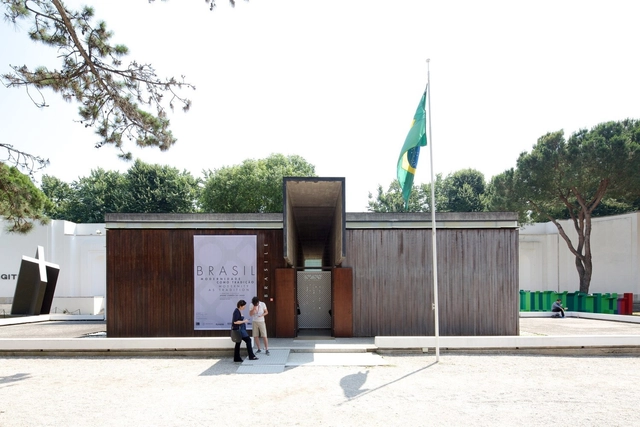
Entitled utopias of common life, Brazil's official participation in the 17th Bienalle Architettura 2021 is curated by the collaborative studio Arquitetos Associados and the visual designer Henrique Penha. The exhibition at the Brazilian Pavilion in the Giardini, in Venice, begins by mapping utopias that exist on Brazilian soil, from the Guarani world vision of a Land Without Evil to contemporary times, highlighting a few singular moments among them.
Conceived before the Covid-19 pandemic, which has temporarily suspended the possibility of physical proximity in a large part of the world, the proposal gains new meanings in the current context and dialogues with the overall theme, by curator Hashim Sarkis: How Will We Live Together?
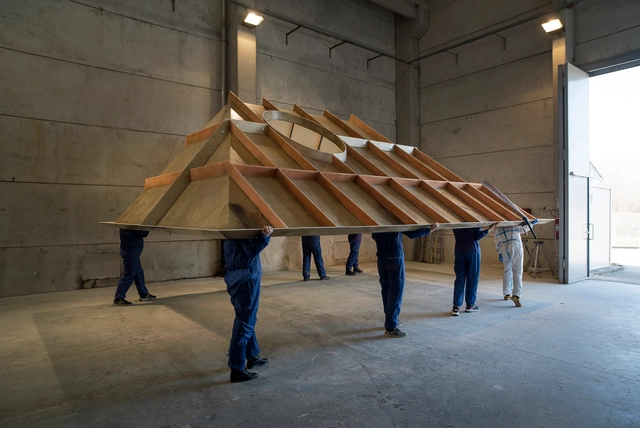
For this year's edition of the Venice Biennale, the Japan Pavilion invites visitors to reflect on the movement of goods fuelling mass consumption and rethink sustainability and reuse in architecture. Titled Co-ownership of Action: Trajectories of Elements, the project curated by Kadowaki Kozo involves dismantling an old wooden Japanese house and transporting it to Venice to be reconstructed in a new configuration with the addition of modern materials. The exhibition exemplifies how old materials could be given an entirely new existence by putting the current movement of goods in the service of reuse rather than consumption.
The Italian Pavilion for the 17th Venice Architecture Biennale explores the capabilities for transformation and adaptation of Italian communities in an attempt to define tangible solutions to current global challenges. Titled "Resilient Communities", the exhibition curated by Alessandro Melis presents Italian research and innovation across many fields, exploring ideas for improving the conditions of the built environment and addressing climate change, with the hope of defining the building blocks for a sustainable future.
The Hungarian Pavilion at the 17th Venice Biennale explores the often challenging socialist architecture and looks at how this heritage could be reconsidered and given a new future. Titled Othernity – Reconditioning our Modern Heritage, the exhibition curated by Dániel Kovács presents twelve iconic modern buildings of Budapest and the visions of twelve architecture practices from Central and Eastern Europe for their reconditioning. The Hungarian Pavilion's project looks into how architecture can build on its past to foster resilience, sustainability and strong cultural identities.
For the 17th International Architecture Exhibition of La Biennale di Venezia, Finland's Pavilion revisits a moment in local history when a refugee crisis led to new ways of building and a reconfiguration of domestic space, which ended up influencing different places around the world. Titled New Standards, the exhibition curated by Laura Berger, Philip Tidwell and Kristo Vesikansa presents the story of Puutalo Oy, an industrial enterprise specialized in prefabricated wooden buildings that set new standards for residential design in the 20th century and created Finland's most widespread architectural export.
Hotel Podgorica, architect Svetlana Kana Radevic, unknown photographer, archive of Pobjeda. Image Courtesy of APSS Institute
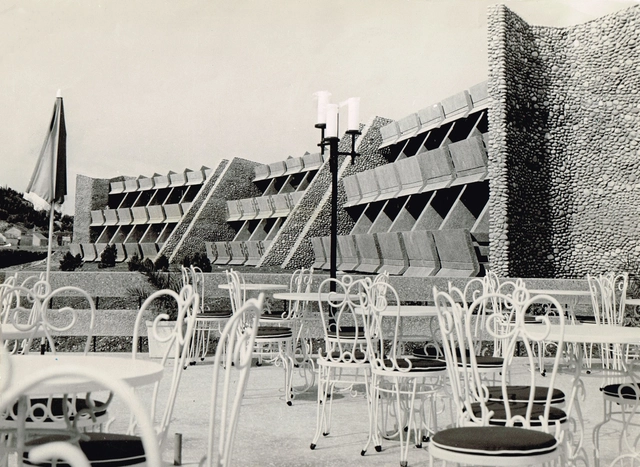
Part of the Collateral Events of the 17th International Architecture Exhibition, the extensive built work of Yugoslav architect Svetlana Kana Radević (1937-2000) is brought to light from May 22 until November 21 at the Palazzo Palumbo Fossati. Entitled “Skirting the Center: Svetlana Kana Radević on the Periphery of Postwar Architecture”, the exhibition curated by Dijana Vucinic and Anna Kats, aims to highlight the architect’s work and expand her representation.
Titled "American Framing", the United States pavilion at the 17th International Architecture Exhibition – La Biennale di Venezia, will explore the omnipresence and creative power of wood-framed construction in American architecture, an overlooked structural element. Curated by Paul Andersen and Paul Preissner, the exhibition will be on display at the Giardini della Biennale from May 22 through November 21, 2021.
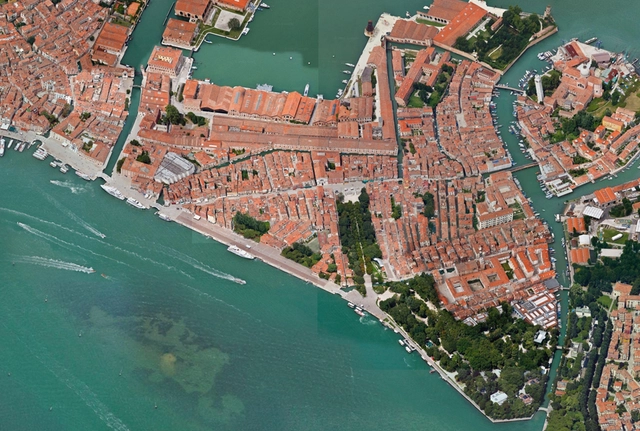
Vista aérea de Venecia. Image Cortesía de Ministerio de las Culturas, las Artes y el Patrimonio de Chile
With the submission of "Reparation: Architecture of Action and Everyday Experiences," Chilean architect Emilio Marín will curate the Chilean exhibit at this year's Biennale of Venice, as announced by a spokesperson for the Ministry of Culture, Art, and Heritage.
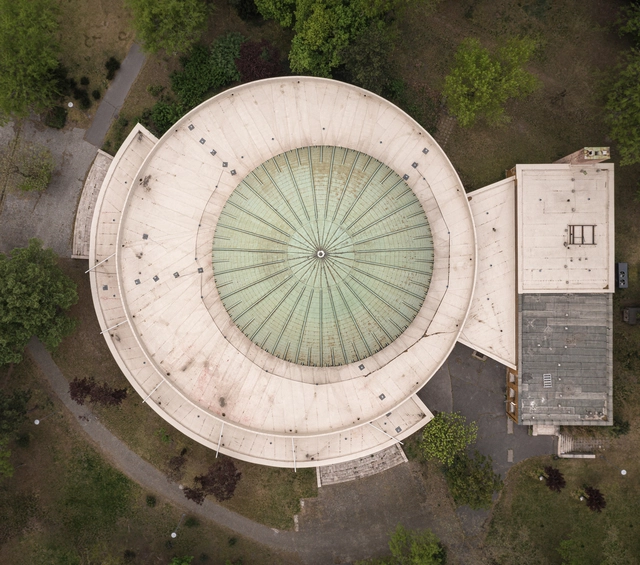
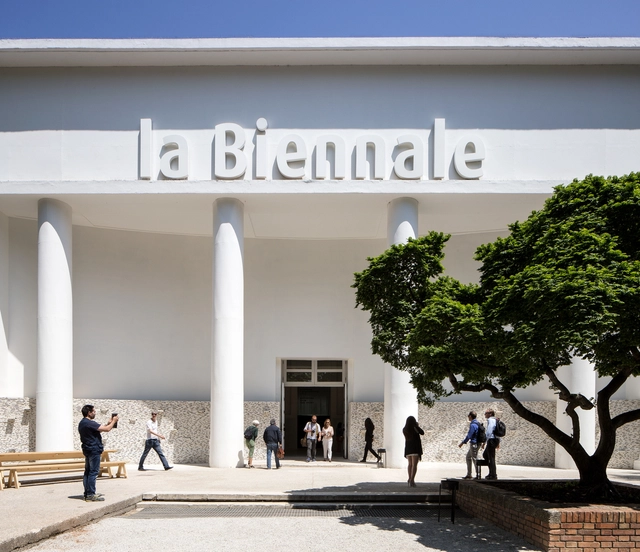
Padiglione Centrale Giardini_Photo by Francesco Galli. Image Courtesy of La Biennale di Venezia
La Biennale di Venezia is presenting for the first time an exhibition curated by all the Directors of the six Artistic Sectors from Art, Architecture, Cinema, Dance, Music, Theater. It will also be live-streamed on July 15th, 2020, at 2:30 pm (Italian time).