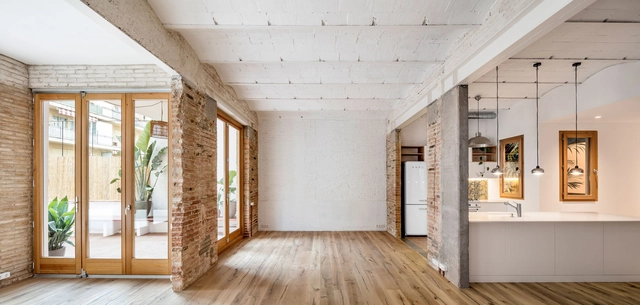
The choice of Lacaton & Vassal to receive the 2021 Pritzker Prize was, above all, emblematic. Under the mantra “never demolish, never remove or replace, always add, transform and reuse”, the French duo built a career focused on renovating buildings, providing them with spatial quality, efficiency and new programs. Their approach contrasts with most of the architecture we are used to honoring: iconic, imposing and grandiose works. It also contrasts with the notion of the tabula rasa, of building and rebuilding from scratch, so well represented in Le Corbusier's Ville Radieuse, and which has fascinated architects and urban planners ever since.
Whether because of the sustainability demands currently in vogue, or simply because there are already enough buildings around the world, the task of rehabilitating spaces and buildings has been seen as an important driver of change. The focus is generally to center efforts on interior spaces, paying special attention to the environmental quality and comfort of the inhabitants, in addition to adapting the uses to contemporary demands. The main question revolves around how to update (and even automate) the buildings of the past to adapt to new needs for efficiency, sustainability and well-being.
Award-winning imagery from ASAI. Project: Tyndall Air Force Base. Date: 2020. Image Courtesy of SketchUp
Creating a compelling visualization that communicates your design intent and gets stakeholders on board is no easy feat. While designers have plenty of visualization tools to deploy— from powerful rendering engines to the simplicity of pen and paper — there’s no one-size-fits-all approach to visualization. As your design evolves, you may need multiple renderings at various levels of detail.
According to Jim Kessler, Director of the Visual Media Group at Jacobs, "When a design is in flux and conversations with the clients are taking place, a photorealistic rendering signals completion of the project and that design changes are no longer possible. Whereas, a non-photorealistic rendering visual suggests a sense of flux and has a huge artistic element to it, which architects gravitate towards."
Peruvian architectural firm leonmarcial arquitectos has been invited to take part of the 17th Venice Architecture Biennale with an installation at the Arsenale as part of the "As New Households” exhibition space. Titled Interwoven, the installation encourages the action of sharing and celebrates the exchange between homes and their environments through architecture.
For the 2021 Milan Design Week, Kengo Kuma Associates designed a bamboo installation that merges form, materiality and music, creating a multisensory experience. Created in collaboration with smart device manufacturer OPPO, Bamboo (竹) Ring :|| Weaving a Symphony of Lightness and Form answers the "Creative Connections" theme by merging architecture and music, as well as craftsmanship and technology.
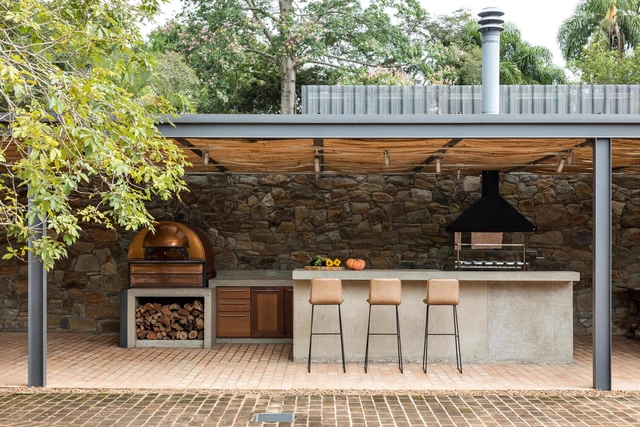
Meals have always been bonding and bringing people together to eat. Sitting around a table or preparing food becomes even more enjoyable in spaces that focus on comfort and well-being. Moreover, cooking with different techniques can add a unique flavor to the experience, especially when it comes to wood-burning stoves, barbecue grills, and wood-fired pizza ovens.
Placebo tube up 46 by Modular Lighting Instruments. Image Courtesy of Modular Lighting Instruments
We know that lighting is probably one of the most powerful means of influencing the perception of a space in terms of its geometry. Only through light does color become color, and matter becomes relevant.
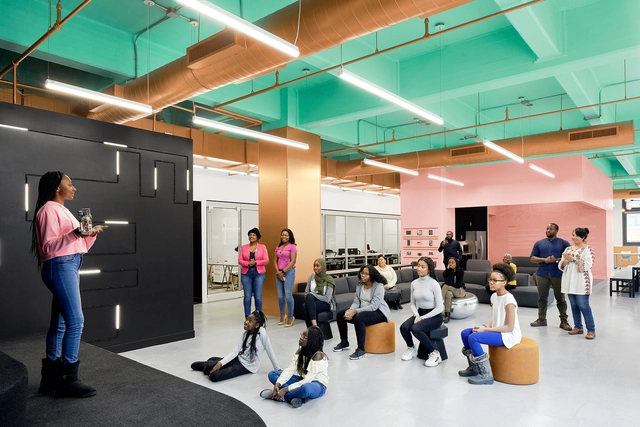
Last year, architect Danish Kurani completed a new tech lab in New York City in partnership with Black Girls Code. As a place where young women from all over New York can come together to learn about technology, the revamp project includes 3,900 square feet of space at Google’s New York offices that were turned into a tech exploration lab.
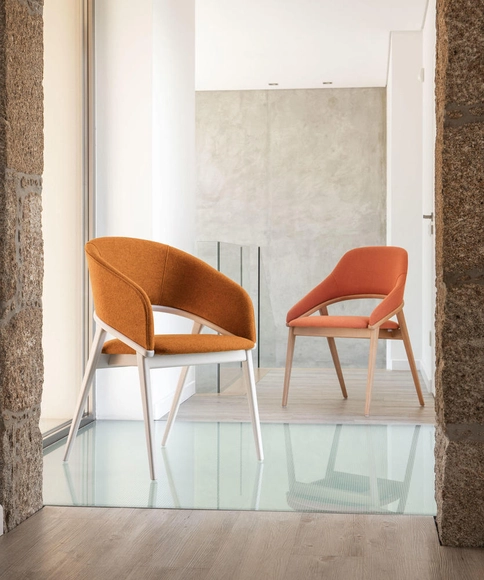
Fenabel’s designs match lasting elegance with super durability. Image Courtesy of Fenabel
Contract furniture that counters the radical changes of our time with elegant design and optimal functionality is what Portuguese specialist Fenabel offers. Discover their new collection at supersalone, Hall 03 k18.
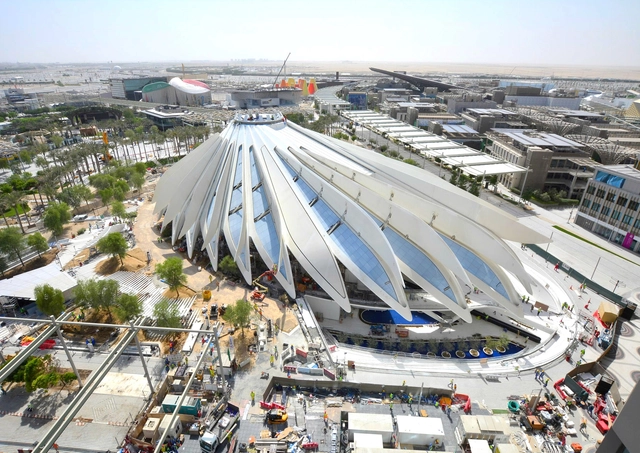
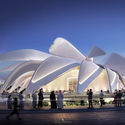
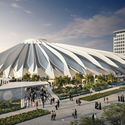
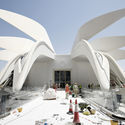
Spanish architect and engineer Santiago Calatrava has unveiled the design of the UAE Pavilion at Expo 2020 in Dubai, UAE. The 15,000 square meters pavilion stands as a "symbolic interpretation of the flow of movement", designed with carefully curated lines and spaces that blend with its surroundings of greenery, shaded arcades, and cantilevered wings. The national monument is set to create an immersive, multisensory experience for visitors from both an architectural standpoint, as well as integrated cinematic features, introducing them to the history, culture, and futuristic innovations of the UAE.
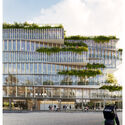
Kengo Kuma's EDA office building revitalizes an abandoned site in Paris, creating a new urban landmark and signalling the renewal of the Issy-les-Moulineaux neighbourhood. Through its horizontality, the large scale project sitting at the confluence of three traffic rouets mediates the urban discontinuities of the surroundings while reflecting the context's dynamic of movement and flows. Defined as "a dense network of tree-lined terraces and hanging gardens", the design features a wood structure and a double-skin façade whose sunscreen elements create the architectural image.
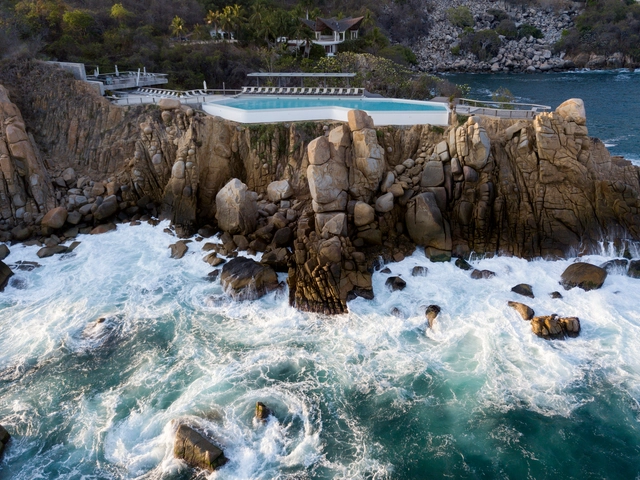
Guerrero is a state in the southwest corner of Mexico that shares land borders with the State of Mexico, Morelos, Puebla, Oaxaca, and Michoacán and a coastline with the Pacific Ocean. With over 64,281 km² of territory, it is the twelfth most populated state in Mexico. It's capital city is Chilpancingo de Juárez and it's most populated city is Acapulco de Juárez.
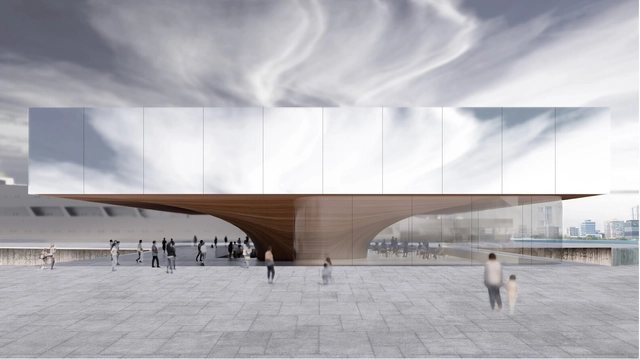
This week’s curated selection of Best Unbuilt Architecture highlights museum projects submitted by the ArchDaily community. Through examples from all around the world, the article explores how these spaces of knowledge and discovery are designed to inspire and inform.
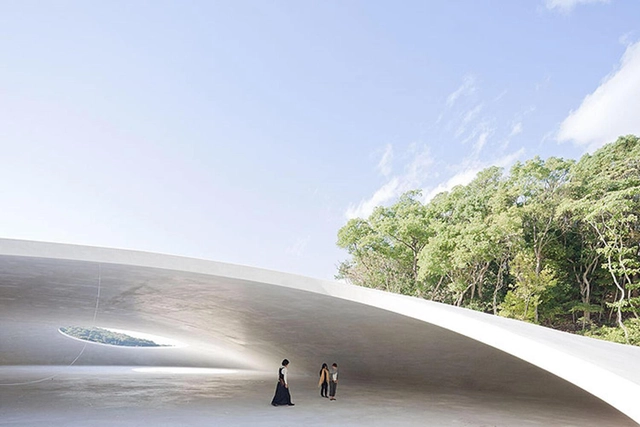
Featuring a vertically developed art museum in Finland, a structure that merges with the landscape in China, or a maritime museum shaped by the conditions of the shoreline in Brazil, the round-up spans various kinds of museums and art spaces, as well as different attitudes towards the built or natural environment. The following projects reveal the ideas that shape museums in different contexts, illustrating diverse approaches towards what constitutes an institution of learning.
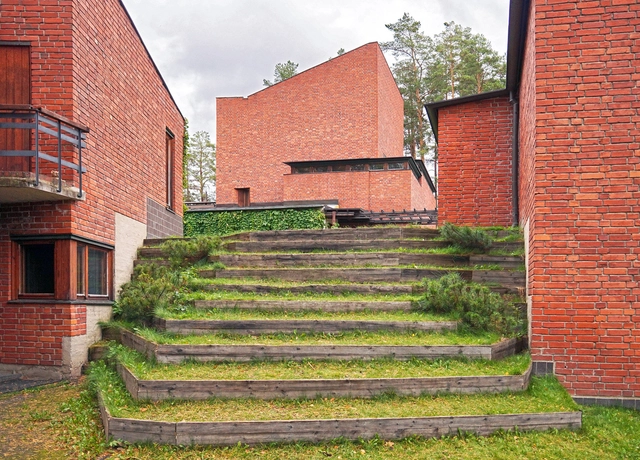
Finnish architect Alvar Aalto was a pioneer of modern architecture and design, especially in his use of organic, naturally derived materials. When he decided to embark on a career as an architect, he traveled to Helsinki, the only place where he could find academic training in the profession. His journey did not end there, however, as his work can be seen around the world. Here, we have mapped out 20 of his most notable works that must be seen up close and in-person to truly be appreciated.
The Second Studio (formerly The Midnight Charette) is an explicit podcast about design, architecture, and the everyday. Hosted by Architects David Lee and Marina Bourderonnet, it features different creative professionals in unscripted conversations that allow for thoughtful takes and personal discussions.
A variety of subjects are covered with honesty and humor: some episodes are interviews, while others are tips for fellow designers, reviews of buildings and other projects, or casual explorations of everyday life and design. The Second Studio is also available on iTunes, Spotify, and YouTube.
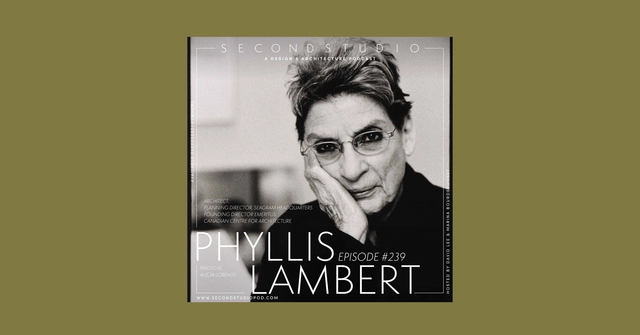
This week David and Marina are joined by Phyllis Lambert, an architect, the Planning Director of the Seagram Headquarters, and the Founding Director Emeritus of the Canadian Centre for Architecture in Montréal.
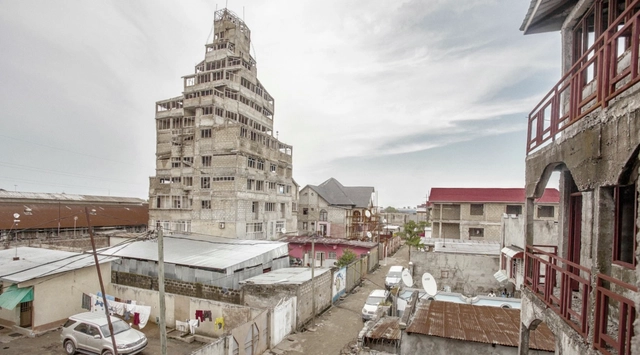
When we look at African architecture, we see the architectural diversity of a continent which has been shaped and moulded into its present form by a combination of internal and external factors. When we look at African architecture, there is also a tendency for certain regions to take precedence over other parts of the continent. The Tropical Modernist works of Maxwell Fry and Jane Drew in Ghana and Nigeria, for example, are extremely well documented. So is the extremely well-preserved colonial-era architecture of the Eritrean capital of Asmara. Yet, there seems to be parts of the continent that “slip under the radar” in African architectural conversations – and the book Architectural Guide: Sub Saharan Africa is a welcome addition to African architectural scholarship.
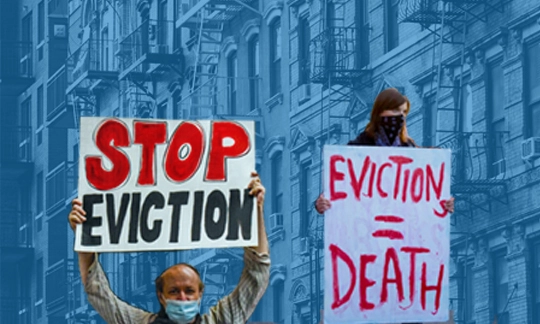
One of the big economic factors of the COVID-19 pandemic has been the issue of tenant evictions and rent moratoriums. As millions of people quickly lost their jobs, it meant that they began to struggle to pay their rents. Now, as the economy slowly begins to recover and some return to work, there’s been pushback on the moratoriums, with landlords and tenants being split on how to move forward with the future payments. Tenants still can’t pay their rent and landlords themselves are burdened by the lack of income. But what this tug of war really sheds light on is how out of reach the costs of living have become in some of the densest cities, and how housing in some ways has been seen as an amenity, not a necessity or a basic right- even in a global pandemic.
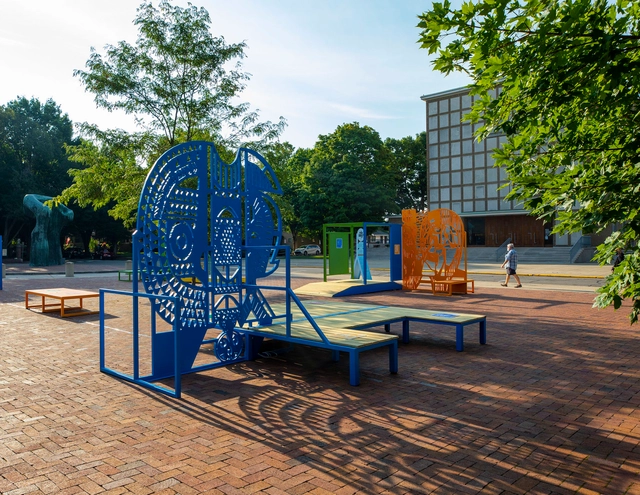
This year’s Exhibit Columbus explores the conditions of middle places as interconnections between ecosystems and the built environment through 13 temporary installations that highlight various aspects that make up the identity of the Mississippi watershed. Now at its third edition, the event builds on the Modernist cultural legacy of the Indiana city through a series of artistic and architectural explorations that activate public spaces and engage the community of Columbus.
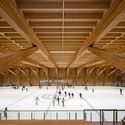
In architecture, ‘span’ is the term given to the length of a structural component that extends between two supports, or the continuous space created between two pillars of a building structure, and when we think of this element, one cannot help recalling classics such as Lina Bo Bardi's MASP, Álvaro Siza's Expo'98 Portuguese National Pavilion, and the Roman Pantheon. However, there are several other buildings with this feature, and recent projects have been using innovative and bold structures to create even more unexpected designs.
https://www.archdaily.com/967697/long-span-buildings-that-defy-gravityEquipe ArchDaily Brasil
Architecture 2030 is calling on all architects, engineers, planners, and individuals involved in the building sector worldwide to design all new projects, renovations, landscapes, cityscapes, and infrastructure to be zero carbon starting now.
Cradle to Cradle is the name of the design concept in which the recycling of a product´s components at the end of its life cycle is already planned for. GROHE is a sanitary-industry pioneer and is launching its first Cradle to Cradle Certified® products. Image Courtesy of Grohe
With the building industry responsible for 50 per cent of material consumption worldwide, GROHE sees huge potential for innovation here and is putting the Cradle to Cradle® design concept at the heart of its product development.
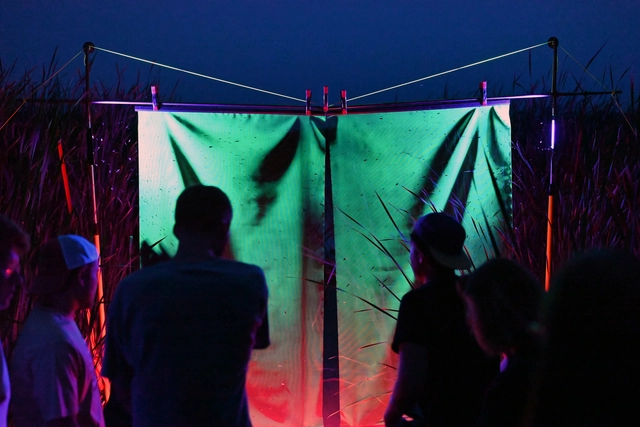
Artist collective Space Saloon recently completed the inaugural Public Art and Ecology Artists-in-Residence in the Okoboji region of Northwest Iowa. Observing local landscapes and diverse ecosystems, the team created a series of temporary installations, site-specific sculptures and multi-species performances. Working in association with Imagine Iowa Great Lakes and the Iowa Lakeside Lab, the process led to a series of public events reimagining how to engage regional ecologies.
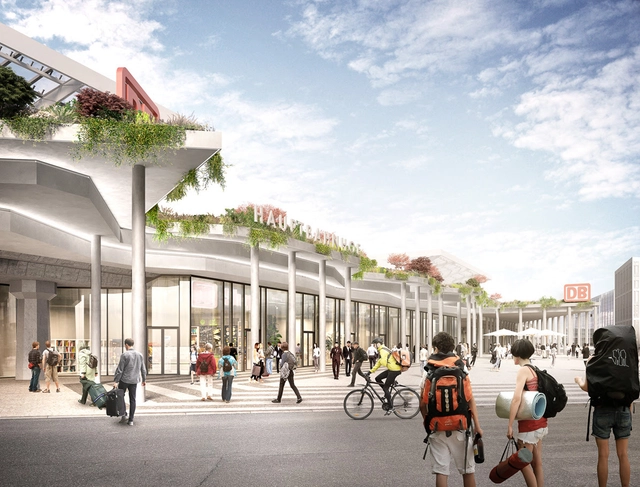
J. Mayer H. has won a competition to design the new façade of Cologne Main Station on Breslauer Platz in Germany. The design proposal frames the sides of the rail station with an all-around façade that offers an innovative use of space by making the best of the site's circulation and natural resources. The intervention will feature rooftop landscaping with local flowers and greenery, rainwater collection, protection from rain, wind, and sunlight, and a visual emphasis on the station's points of access.
Courtesy of OMA New York, Photography by Jason O’Rear
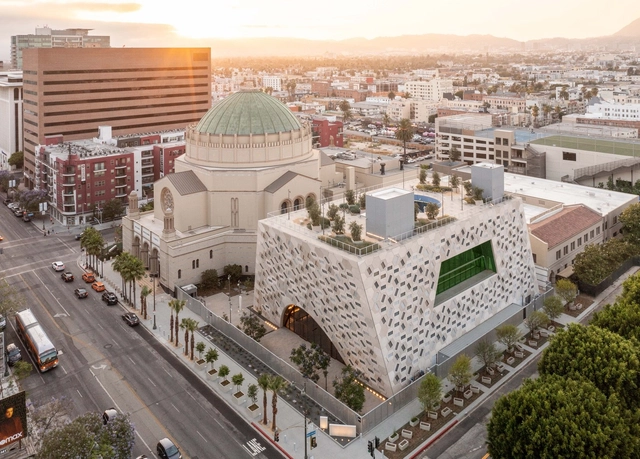
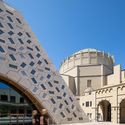
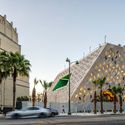
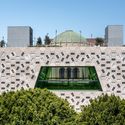
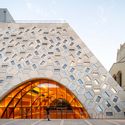
OMA / Shohei Shigematsu has completed its Audrey Irmas Pavilion at Wilshire Boulevard Temple, the firm’s first commission from a religious institution and first cultural building in California. Expected to open in January 2022, “the new 55,000 square foot Pavilion is a response to the Wilshire Boulevard Temple’s vision for its campus to create a much-needed space to convene”.
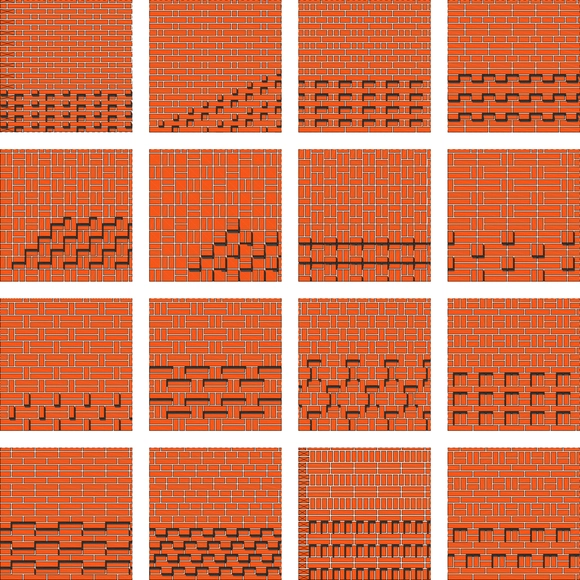
"Welcome to this strange book. With all the drawings, it might appear like a manual, but it isn't. The book is as much about joints as it is about pieces. Above all, it seeks the order that is inherent in things". These words are part of the introduction to Koen Mulder's book, "The lively surface: Masonry associations as a pattern art and tool of composition". Available in German, the 160-page manual, rigorously illustrated, presents a universe of possible pattern variations that can be created when you start designing.
We interviewed Koen to find out what inspired him to talk about this topic and to understand how he managed to gather all this information, while also figuring out the impact that this type of study can have on architecture students and architects.































.jpg?1630568377 "Courtesy of Bloomimages")
.jpg?1630568367 "Courtesy of Bloomimages")