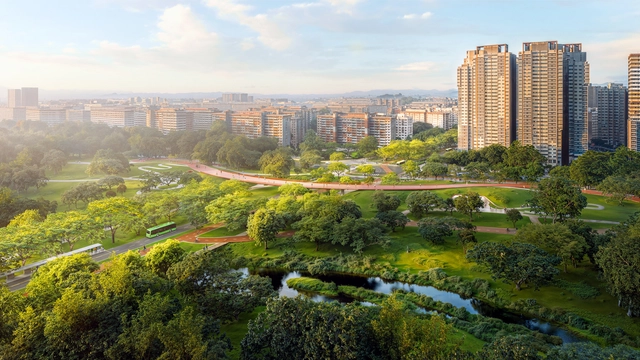
What does the future of cities and transportation look like? It looks like the future will run on two wheels and a handle bar. Many explain the rise of cyclists as a shift towards a healthier and more economical lifestyle. But while that may be true, why would individuals feel inclined to ride bicycles if the roads don't support it, or if there weren't adequate spaces to park?
Architecture plays an important role in promoting the use of bicycles. Cities equipped with safe bicycle lanes, parking lots, and public bike facilities encourage citizens to refrain from using their cars, and opt for a much more sustainable means of transportation. Many have already began reshaping their urban infrastructure in a way that caters to bicycles, whether it is through bicycle bridges, widened cycling lanes, or permanent parking lots.
Toronto’s digital billboard-laden Yonge and Dundas Square is owned by the city but managed through a public-private partnership. While primarily hosting commercial content and activities, the spaces and screens of the square are often used for cultural events and artistic content. As cities, arts organizations, governments, and corporations increasingly seek to engage people in public spaces through combinations of media and architecture, what are some of the possibilities and pitfalls associated with their approaches individually and in concert with one another? How does media architecture modulate civic, creative, and commercial interests and impacts?
ArchDaily and VELUX have joined forces to provide you with an exclusive coverage of the highly anticipated UIA World Congress of Architects 2023. Watch the discussion panel on the future of next-generation homes, moderated by David Basulto, founder and editor-in-chief of ArchDaily. Get to know more of the world of next-generation homes as the panelists delve into innovative approaches, cutting-edge technologies, and sustainable solutions that are reshaping the way we live.
Shifting from an exploitative to a restorative and circular design ideology is fundamental in changing architecture and the built environment to become more sustainable. We look at strategies for a new resourcefulness in architecture and discuss how to bring the built environment back inside the planetary boundaries.
This session is a keynote dialogue moderated by Connie Hedegaard. The UIA World Congress of Architects 2023 keynote dialogues are designed as a series of dialogues between trailblazing architects and experts from science, business and politics. All keynote dialogues are moderated by Connie Hedegaard.
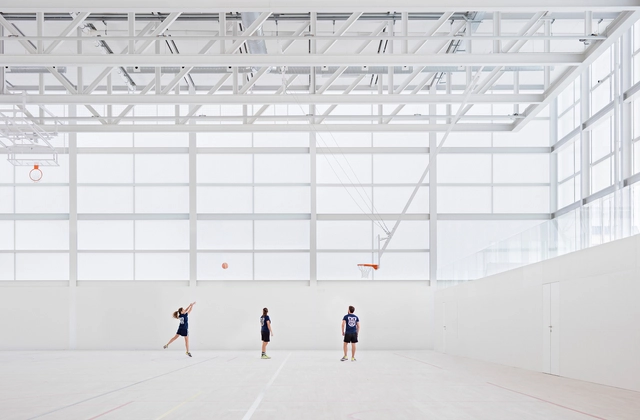
The Implementation Plan for the Construction of National Education System for Green Low-Carbon Development in China clearly states that green low-carbon development should be integrated into campus construction as a goal. New technology products of energy saving and emission reduction are given priority in campus construction to guide teachers and students in the education system to firmly establish the concept of green low-carbon development and lay a solid ideological and operational foundation for achieving the goal of carbon peaking and carbon neutrality.
Saint Laurent Men’s Summer 24 at Mies van der Rohe’s Neue Nationalgalerie. Image Courtesy of Saint Laurent
Architecture and fashion share an interesting interplay in the formation of cultural expressions and identities. Both disciplines can become vehicles for creativity at different levels. Architecture is often described as the “third skin” of humans, while clothes represent the second skin, highlighting somewhat similar functionality of protecting the body while also allowing for self-expression and individuality.
The relationship between architecture and fashion can also be seen in the shared design principles, such as form, proportion, human scale, and materiality. More than a simple background for runway shows, architecture can contribute to setting the atmosphere, becoming a source of inspiration, and orienting the movement through space. Collaborations between architects and fashion houses, such as the renowned partnership between OMA/AMO and Prada, further blur the boundaries between the two disciplines, demonstrating the myriad of interconnections between the two creative fields.
The projects were revealed during the Eumies Awards Day 2023, which took place in Palazzo Michiel in Venice as part of the Collateral Events of the 18th International Architecture Exhibition – La Biennale di Venezia. This year, an additional prize has been added: the Young Talent Open. Created by the Fundació Mies van der Rohe, the award was created for schools from the African continent and Council of Europe nations that are not a part of Creative Europe.
There are three primary settings in which lower-density urbanism can be useful, and where conditions favored by YIMBYs are weak or nonexistent: as a replacement for what is currently slated to be built out as sprawl, as a recovery process for existing sprawl, and in small towns that are growing. Giving up on these settings forces all development intended to combat the housing crisis into urban settings, ideally near transit, where land is much more expensive to acquire and to develop. It also allows the sprawl machine to roll on unimpeded.The best vehicle for implementing principles illustrated here at the scale of a neighborhood, hamlet, or village is not a major production builder, as these principles violate almost all of their conventional industrial practices. Instead, look to the record of stronger New Urbanist developers who are no strangers to doing things considered unconventional by the Industrial Development Complex in the interest of better places with stronger lifetime returns.
ArchDaily and VELUX have joined forces to provide you with an exclusive coverage of the highly anticipated UIA World Congress of Architects 2023. Watch Ambra Gugletti from KOMPAS VC and Lucas Carstens from Modulize explain how data-driven offsite construction can help reduce construction waste up to 90%
C40 and VELUX presents the panel discussion "Healthy Buildings at the Time of the Energy Crisis" at the UIA World Congress of Architects 2023.
The panel discussion will focus on the role of healthy building principles in addressing the ongoing energy crisis through accelerated retrofits while simultaneously promoting environmental sustainability, job creation, and social equity.
There is a general agreement that our built world should become climate neutral. But, how construction will have to change to make this future a reality is still uncertain. At the same time, the economic and social framework for construction and especially for housing construction are changing. Components, building products, and building systems are being reused, and this is accompanied by a new ethic of design and construction and a new aesthetic of architecture.
Heating and cooling buildings have always been two of the most important challenges in ensuring indoor user comfort. At a biological level, our bodies generate heat through metabolism, a physicochemical process. And although the human body has temperature regulation mechanisms, such as sweating and vasodilation, sometimes we need additional help to achieve thermal comfort. Therefore, since ancient times, traditional strategies have been sought to help achieve this, and many have been adapted to their historical and material contexts.
https://www.archdaily.com/1001837/empowering-thermal-comfort-through-smartphone-technology-in-hvac-systemsEnrique Tovar
Jingru (Cyan) Cheng . Image Courtesy of Wheelwright Prize
Harvard University Graduate School of Design (GSD) has announced Jingru (Cyan) Cheng as the recipient of the 2023 Wheelwright Prize, a study grant created to support globally-minded research and investigative approaches to contemporary architecture. The winning research project, titled “Tracing Sand: Phantom Territories, Bodies Adrift,” delves into the multifaceted impacts of sand mining and reclamation, understood from cultural, economic, and ecological perspectives. The unassuming material has become an indispensable element for our built environment and human communities, serving as a vital component in the production of glass, concrete, asphalt roads, and artificial land. Yet the process of dredging underwater systems and sand mining leads to the disruption of habitats in a process that simultaneously shapes one habitat while devastating another.
Polish History Museum . Image Courtesy of WXCA Architects
In the capital city of Poland, WXCA won a competition to design one of the largest museums completed in Europe today. The museum is now under construction at the Warsaw Citadel. The development is a combination of the Polish History Museum and the Polish Army Museum. Located on the site of a former fortification, the complex will become a culture hub rooted in remembrance.
There are many ways to define architecture, from the most technical to the most poetic. It uses many aspects within its context: space, program, tectonics, and gesture, which refers to the stroke, the drawing, and the design. Perhaps the quick sketch that comes to mind when talking about gesture is that of shelter: a cut or elevation, with human scale, of vertical enclosures and coverings.
The immersive medium of film appeals to our imagination through a powerful combination of virtual and real worlds. In 2023, Minotti is launching its new film, titled The Grand Tour, which promises a timeless journey through the Minotti lifestyle – drawing out narratives that thread together the social spaces that humans inhabit.
ArchDaily and VELUX have joined forces to provide you with an exclusive coverage of the highly anticipated UIA World Congress of Architects 2023. Watch Sebastian Peck from KOMPAS VC and Liz Gilligan from Material Evolution explain a revolutionary low-carbon cement produced from industrial waste, and how can it help to decarbonize architecture by reducing a building's carbon footprint by 85%.
ArchDaily and VELUX have joined forces to provide you with an exclusive coverage of the highly anticipated UIA World Congress of Architects 2023. Watch the unveiling of the next International VELUX Award and a captivating presentation showcasing the past winners.
Although the use of arches in architecture dates back to the 2nd millennium B.C., it was the Romans who solidified them as both an engineering element and a symbol of military victories, which we now see excessively as memorial arches. Shortly after, different civilizations and cultures adopted the arch for their own purposes, bridging together structural necessity and aesthetics. In this article, we look at how arches evolved from significant structural elements to captivating decorative details.
1st Prize: South Korea – "Green Wave" / Students: Se kwang Kim, Hyemin Na, Iana Kim. Image Courtesy of 2023 Architecture Student Contest, Saint-Gobain
In the face of increasingly intensive planet-wide challenges, it is now clear that the construction sector must shift rapidly and comprehensively toward sustainable construction. The aim of this mobilization must be to drastically and permanently reduce construction-related greenhouse gas emissions, to preserve non-renewable natural resources, to reduce energy consumption, and to provide decent, comfortable housing for all.
In the 2023 Sustainable Construction Barometer, architects are identified as best placed to drive forward sustainable construction (40%, just after public institutions, 44%). And in order to do this, they must be equipped with the knowledge and tools to carry this forward.
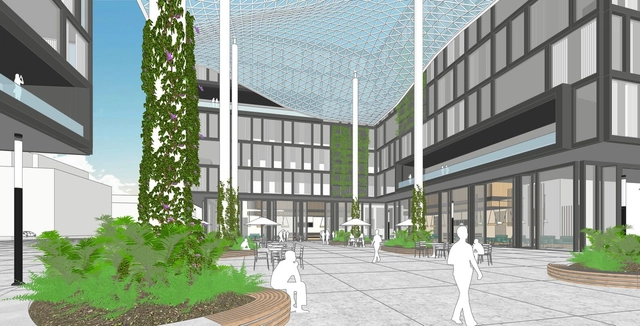
Mario Cucinella Architects has unveiled the design for the new Piazza dei Navigatori in Rome, Italy. Planned as a mixed-use development, the design is predominantly for residential spaces, with a retail and office component, parking, and "plant rooms". The development is located in an area rich in natural elements, which heavily inspires this urban agglomeration.
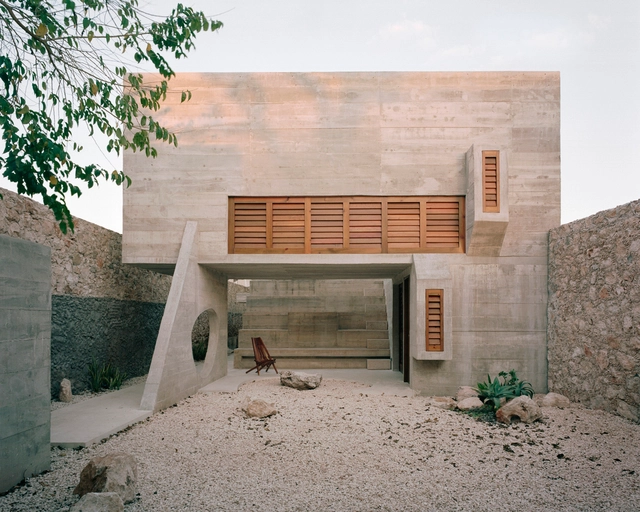
The city of Mérida, the capital of the state of Yucatán in Mexico, has experienced a significant architectural boom in recent years due to emerging talent that has gained recognition through awards and biennials across the country. With its tropical climate, the architecture in this region responds to specific geographical conditions, making it one of the most visited destinations. Mérida is a city that was built upon the remnants of the Mayan city called T'Ho and is composed of a rich culture that combines different moments in history. As a result, the contemporary architecture of this region incorporates traditional elements such as vaults, lattices, and sustainable traditional finishes that are reinterpreted to create a new language that reflects the present moment in which they were constructed.
Foodscapes: Spain's Pavilion for the Venice Architecture Biennale 2023, curated by Manuel Ocaña and Eduardo Castillo-Vinuesa, explores the Spanish agro-architectural context to address global issues. It analyzes the past and present of food systems and the architectures that construct them, in order to look towards the future and question other possible models that are capable of feeding the world without devouring the planet.
https://www.archdaily.com/1003304/foodscapes-a-journey-into-the-architectures-that-feed-the-worldArchDaily Team
Designed by architect Anthony Rio and his firm Agence Unité, the Château des Pères hotel project showcases the integration of innovative design and materials in the realm of hotel architecture. Taking inspiration from nature, it reimagines the traditional hotel room as a protective nest. This expansion of a historic hotel, nestled in a 12th-century mansion, features reception, restaurant, and event spaces. The new structure, reminiscent of a tree, gracefully extends with branches radiating from a central trunk. Within each bubble-like structure, guests can experience a sanctuary-like ambiance, offering both privacy and panoramic views of the surroundings, made possible by the generous ovoid windows that adorn each facade.