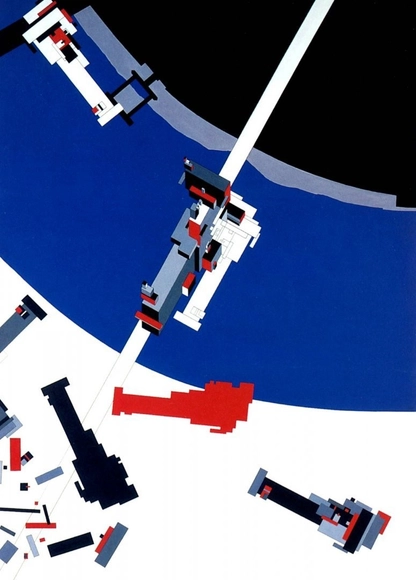
Malevich’s Tektonik. Image Courtesy of Zaha Hadid Architects
Zaha Hadid has been featured in a 30-minute BBC Secret Knowledge film based on Kazimir Malevich: The Russian Revolutionary: Zaha Hadid on Kazimir Malevich. One of Hadid’s greatest influencers, the Russian painter and theoretician inspired the Dame’s AA graduation thesis which transformed Malevich’s 1923 Arkitekton model into a 14-story hotel that stretched across London’s Hungerford Bridge. You can watch the film online (here) through September 16.
The Architectural League hosts the design party of the year at its annual Beaux Arts Ball on September 20. Held in the recently restored, exquisite interiors of Williamsburg’s Weylin B. Seymour’s, the Ball will feature a projection installation by Nuit Blanche New York that reflects on the theme of “Craft.” In addition to the installation, a series of digital presentations and photographic essays will reveal more information about the building and the team of artisans and consultants behind its restoration.
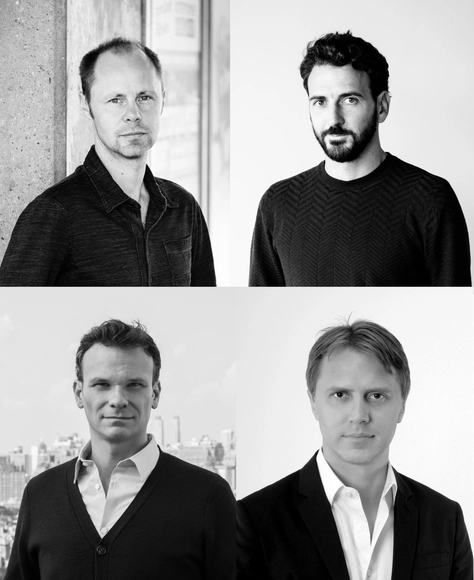
OMA has announced the addition of four new equity partners, all promoted from Associate level, to take its total number of partners to ten. The move is a reflection of OMA's increasing workload in both architectural projects, and also the increasing involvement of AMO, the company's research offshoot. With two of the new partners based in their overseas offices, it also represents a move to strengthen their work in markets outside of their European base. Read on after the break for details of all four new partners.
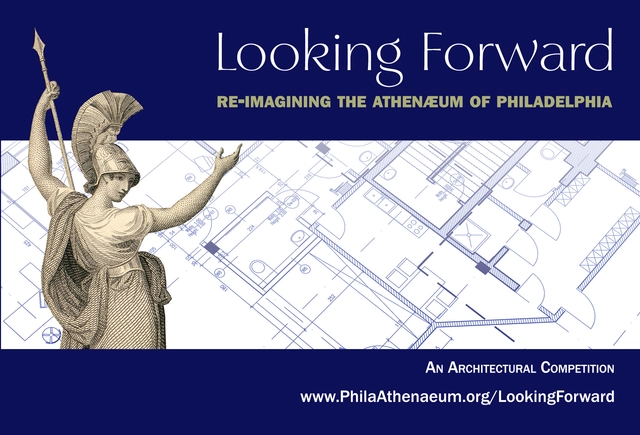
Imagine: After three years of careful dismantling, moving, painstakingly re-assembling and most importantly, restoring, John Notman’s historic Athenæum building has finally arrived at its new location in Fairmount Park, where it will serve as the headquarters of the newly formed Philadelphia chapter of the Friends of Brownstone (PhilaFOB). Flush with government funding from lottery and fracking revenue, PhilaFOB made the Athenæum Board of Directors an offer it couldn’t refuse. So now, for the first time since 1845, the lot at 6th & St. James Streets is vacant, and the Athenæum, still a vital independent lending and research library, with growing architectural and design collections, must re-imagine itself without its historic building. Given its location and its corporate purposes, what might a mid-21st century Athenæum look like?
https://www.archdaily.com/545975/competition-re-imagining-the-athenaeum-of-philadelphiaAD Editorial Team
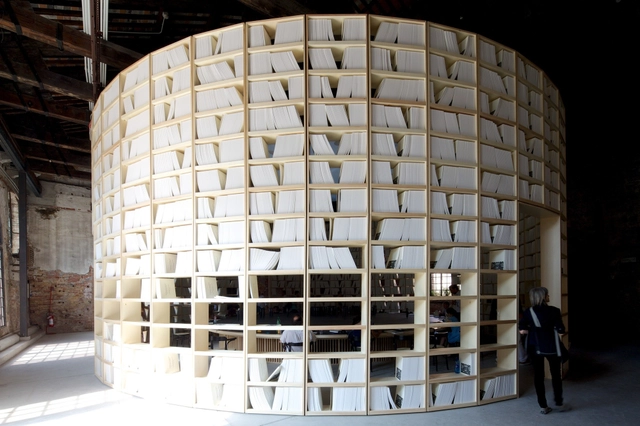
"The Biennale reveals that modernism was never a style. It was a cultural, political, and social practice," says Sarah Williams Goldhagen in her recent article for New Republic, The Great Architect Rebellion of 2014. This year, the Venice Biennale dissects the notion of modernism by providing a hefty cross-section of architectural history in the central pavilion. However contrary to Koolhaas' prescriptive brief, the 65 national pavilions show modernism was not just a movement, but a socially-driven, culturally attuned reaction to the "exigencies of life in a rapidly changing and developing world." Unexpected moments define the 2014 Venice Biennale: from Niemeyer's desire to launch Brazil into the first world through architectural creation, to South Korea's unveiling of a deep modernist tradition with influence across the nation. This Biennale proved to be truly rebellious - read Goldhagen's article from New Republic here to find out why.
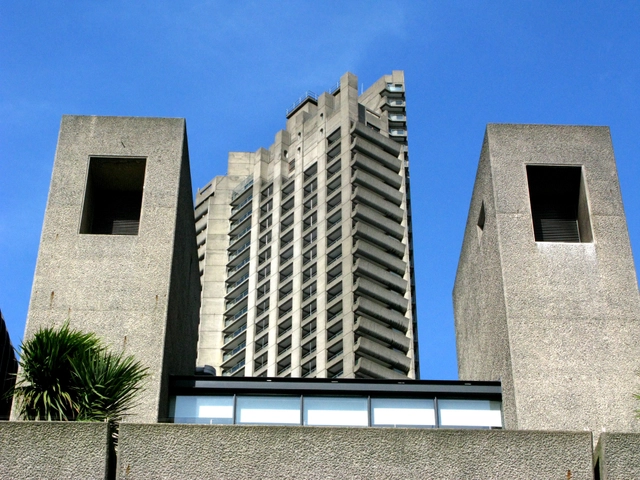
Are Brutalist buildings, once deemed cruel and ugly, making a comeback? Reyner Banham's witty play on the French term for raw concrete, beton brut, was popularized by a movement of hip, young architects counteracting what they perceived as the bourgeois and fanciful Modernism of the 1930s. Though the use of raw concrete in the hands of such artist-architects as Le Corbusier seems beautiful beneath the lush Mediterranean sun, under the overcast skies of northern Europe Brutalist architecture earned a much less flattering reputation. Since the 1990s, however, architects, designers, and artists have celebrated formerly denounced buildings, developing a fashionably artistic following around buildings like Erno Goldfinger's Trellick Tower, "even if long-term residents held far more ambivalent views of this forceful high-rise housing block." To learn more about this controversial history and to read Jonathan Glancey's speculation for its future, read the full article on BBC, here.
”Mouthful of meetings” is a moderated conversation taking place at the 2014 Venice Biennale with a focus on socioeconomic sustainability and current projects in developing countries around the world. The event is organized by South of North, a collaboration between Nordic architects working in the non-profit sector in developing environments. Contributors will include contemporary Nordic and African practices with an emphasis on recent works of socially committed architecture. Read on after the break for more details of the event.
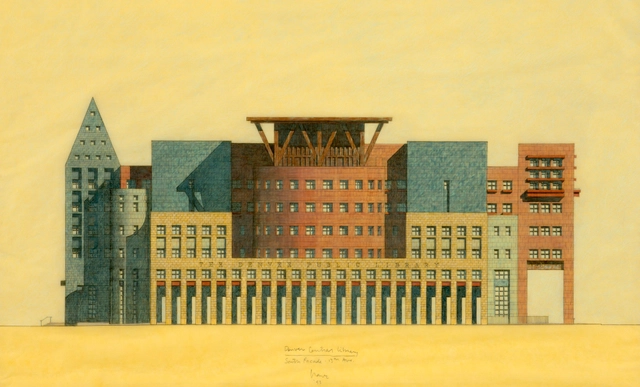
Denver Library, South Elevation, 1994, pencil and colored pencil on yellow tracing paper, 14 x 26 inches. Image Courtesy of Michael Graves & Associates, photo: Ken Ek
An exhibition celebrating one of North America's foremost postmodern architects will open this October, marking 50 years of Michael Graves' practice. Past as Prologue maps the evolution of Graves' work in architecture and product design through an array of media including sculpture, painting, furniture, drawings and models. The comprehensive exhibition will begin with Graves' work from 1964 and conclude with works currently in progress. The exhibition will be hosted by Grounds for Sculpture with a mission to provide insight into the five-decade progression of Graves' unique design process. More on the exhibition after the break.
Videos
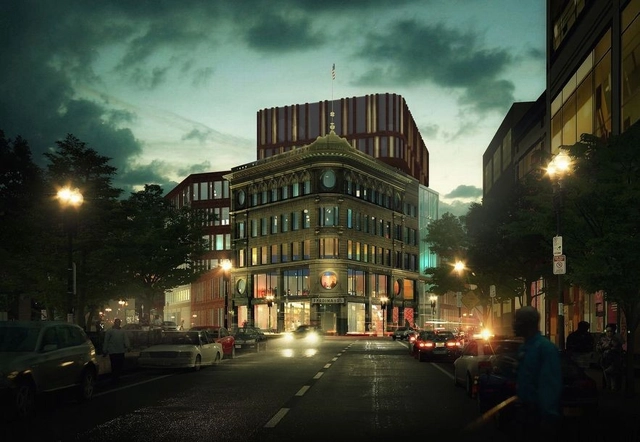
Bolling Municipal Center - Roxbury, Boston (MA). Image Courtesy of Mecanoo / Sasaki Associates
In an article for the New York Times, Alexandra Lange discusses a number of US projects which are "transforming, but not disrupting," their respective communities. In this vein, she cites Mecanoo and Sasaki Associates' new Bruce C. Bolling Municipal Building in Roxbury, Boston, as a prime example of a new kind of architecture which "comes from understanding of past civic hopes, redesigning them to meet the future." Examining some of the key concepts that make for successfully integrated community buildings, such as the creation of spaces that actively forge personal connections, Lange concludes that perhaps it is now "time for strategic architecture."
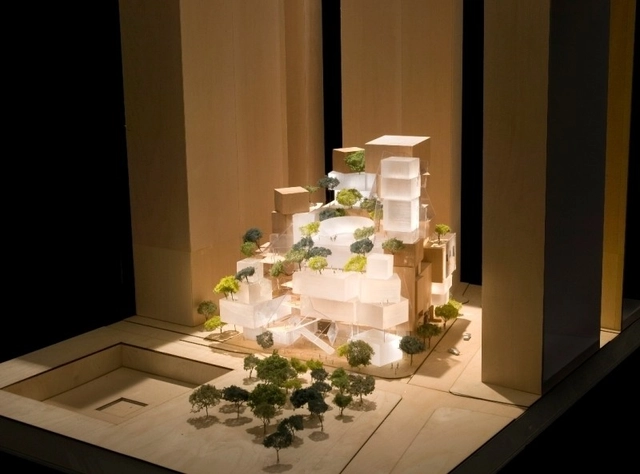
Frank Gehry’s design for the performing arts center at ground zero in New York has been shelved and the planning board will instead select a design from three other finalist architects, the New York Times has reported. This follows on reports from February that Frank Gehry’s original design was being revised and his plans for an initial 1,000 seat center were being abandoned. “We’re in the process of selecting a new architect,” said John E. Zuccotti, the real estate developer who is the chairman of the arts center’s board. “Three architectural firms are being considered.” Gehry, however, has said that he’s heard “zero at ground zero” and hasn’t been informed of the board’s decision. To learn more about the plans for the performing arts center see the full article from the New York Times.
The results of the Royal Institute of British Architects (RIBA) Future Trends Survey for July 2014 show that the Workload Index among UK practices fell back to +28 (from +34 in June) with confidence levels among RIBA practices about the level of future workloads remaining "very strong in practices of all sizes across the whole of the UK." Whereas last month’s survey saw Scotland top the index with a balance figure of +50, London showed the greatest strength in July with a balance figure of +38. Practices located in Wales and the West were the most cautious about prospects for future workloads, returning a balance figure of just +12. The survey shows that actual workloads have been growing for four consecutive quarters and the overall value of work in progress last month was 10% higher than this time last year.
The International Architecture Biennale Rotterdam (IABR) has announced Maarte Hajer as the Chief Curator of IABR-2016-. Hajer, a professor of Public Policy at the University of Amsterdam and Director General of the PBL Netherlands Environmental Assessment Agency, was selected for his proposed theme, "The Next Economy." More on Hajer's appointment after the break.
In an article for the London Evening Standard, Robert Bevan examines one of the many often overlooked consequences of conflict: the destruction of monuments, culture, and heritage. With heightened conflict in the Middle East over the past decade an enormous amount of "cultural genocide" has occurred - something which Bevan notes is "inextricably linked to human genocide and ethnic cleansing." Arguing that "saving historic treasures and saving lives are not mutually exclusive activities," case studies from across the world are employed to make the point that with the loss of cultural heritage, most commonly architectural, the long term ramifications will resonate throughout this century.
With the International Union of Architects (UIA)'s World Congress taking place last month, the eyes of the architecture world were on South Africa where - according to Phineas Harper of the Architectural Review - the conference was full of architects of all backgrounds with "irrepressible energy," sharing ideas on how architecture can be used for social good with an urgency that is somewhat unfamiliar in the Western world. "Whoever said architecture was stale, male and pale should have been in Durban," says Harper. You can read the full review of the event here.
On Thursday, the Aedes Network Campus Berlin (ANCB) Metropolitan Laboratory hosted a symposium to mark the opening of the exhibition "Seoul: Towards a New City," in collaboration with the City of Seoul. The city has identified three key objectives to help them strike a balance between restoration and change when moving forward with future development: revival of history, restoration of nature, and renewal of people's lives. Seven projects that reflect these goals are on display at the exhibition. For more details, continue reading after the break.
The US Patent and Trademark Office have awarded a patent to Apple for the design of their flagship store on Fifth Avenue in New York, reports MacRumors. The patent, applied for by Apple in 2012, applies to the above-ground glass cube, which was originally designed by Bohlin Cywinski Jackson and - after a renovation in 2011 - is made of just 15 glass panels with minimal steel fixings. More on the patent after the break.
New models are emerging, redefining how we work, shop and learn in different environments that impact our everyday lives. IE SPACES FOR INNOVATION Prize is a challenge for young architects and designers worldwide that are able to foresee how work, retail and learning environments will evolve in the next decade.
If you're interested in being a part of the challenge, there's still time. The registration period is open until October 27, and proposals are to be presented in a digital story board (A1 horizontal format- PDF or JPG; < 10megas). Registrations should be made individually.
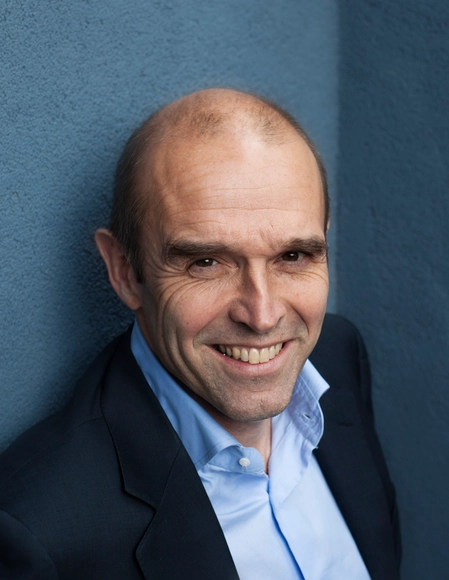
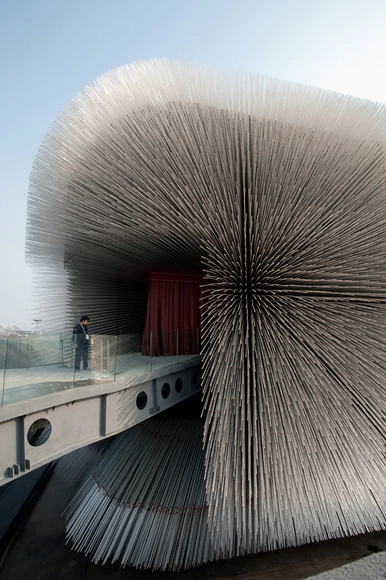
Thomas Heatherwick is set to expand his international reputation in the coming year, thanks to two exhibitions that will tour the United States and East Asia, reports the Architects' Journal. The US exhibition, titled "Provocations: The Architecture and Design of Heatherwick Studio" will tour Dallas, LA and New York from September 2014 to October 2015. The Asia exhibit is yet to be formally announced, although it is believed it will begin in Singapore in Spring 2015. Read on after the break for more details of the exhibitions.