Peace Corps commemorative site, Washington, D.C. Source: Bing Maps. Image via PCCF
The Peace Corps Commemorative Foundation (PCCF) is sponsoring a two-stage, national design competition to select an artistically exceptional design concept for a permanent commemorative work in the heart of Washington DC. This competition will provide designers from all across the United States an opportunity to create a compelling work of public art that will be bold and inspirational. The design should focus on and express American ideals and values that are the essence of the Peace Corps and Peace Corps service. It should be about America and our aspirations as a people, and about the Peace Corps as a manifestation of those aspirations. Submissions are due June 12, 2015. More information can be found here.
"Google now has to convince its hometown that its intentions are non-evil," commented Bloomberg Businessweek's Brad Stone on "Building Planet Google." Referring to the City of Mountain View's decision to award land to LinkedIn over Bjarke Ingels and Thomas Heatherwick's proposed Googleplex in fear of becoming a "one-corporation town," Stone details the backstory of the futuristic plans and how the architects haven't given up yet. "Neither us or Heatherwick are in the business of producing a pretty painting,” Ingels said to Stone. Read the complete story here.
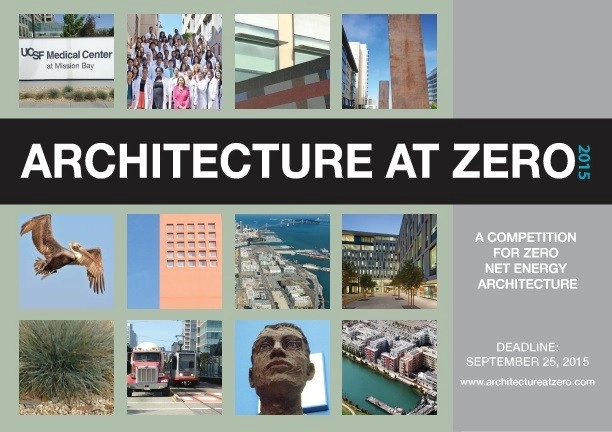
The 2015 Architecture at ZeroCompetition has launched, challenging students and designers to develop 'family-style residential units' for the Mission Bay Campus of the University of CaliforniaSan Francisco. Now in its fifth year, the competition calls for designs that produce "at least as much energy as [they] use over a year," excluding the embodied energy of building materials and transportation of people and materials to and from the site. Entrants must be able to demonstrate that their designs can be reasonably expected to meet a zero net energy goal over a prolonged period of time. The competition is open to student and professional individuals and teams, with up to $25,000 in prize money to be won. Interested parties have until August 28 to register and submissions are due September 25 at 1PM PST. Read more about the competition at Architecture at Zero's website and check out the winners from last year here.
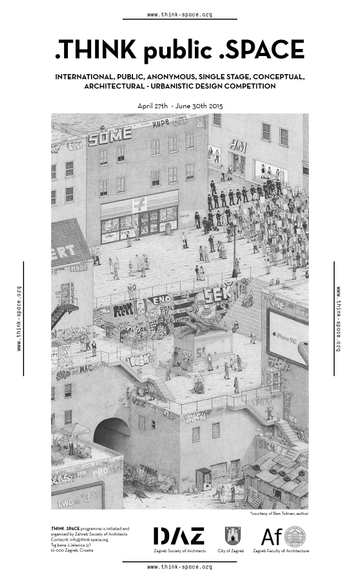
The Think Space program serves as a platform for spatial experimentation and conceptual thinking. In 2015, THINK SPACE is conducting an international, public, anonymous, single stage, conceptual architectural – urbanistic idea design Competition under the topic THINK public SPACE. The focus of this Special Edition of Think Space will be directed on urban public space. Within the project Zagreb for Me, the Think Space Competition will strive to seek out solutions for present-day public spaces on conceptual and theoretical levels with the potential of realization of the selected competition projects in the public spaces of Zagreb, Croatia. Read on to learn more.
The Knight Foundation has announced the launch of the nonprofit Gehl Institute, led by Gehl Architects' Jeff Risom. With the Foundation's financial support, the Institute strives to boost urban livability by increasing public engagement and economic opportunity through the reformation of public space. A series of studies will investigate the behavioral effects of streets, parks, and plazas on their occupants. The results, coupled with community involvement in the planning process, will be applied toward developing “people-first” public spaces that respond to their unique contexts. Through this approach, the Gehl Institute hopes to foster a new design field that addresses the widening social and economic concerns that accompany urbanization. For more information, visit gehlinstitute.org.
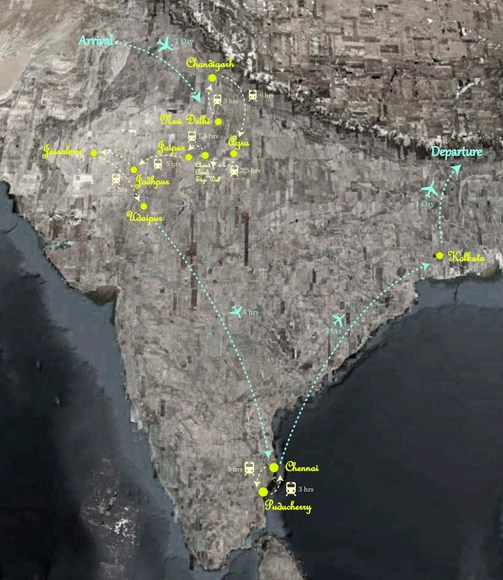
Michelle Tianhui Chen, a Master's candidate at the Yale School of Architecture, has won Robert A.M. Stern Architects' $10,000 RAMSA Travel Fellowship. With the award, Chen will travel to India where she will study the architectural shift from a diverse fabric of expressive design languages to a politically and ethnically neutral vocabulary.
A week from today the 2015 AIA National Convention will kickstart in Atlanta, Georgia. With a plethora of options to consider, we encourage those attending to sign up for the hour-long discussion "Going Viral: Blurred Borders and Globalization." Presented by ArchDaily co-founders David Basulto and David Assael, and organized by the AIANY Global Dialogues Committee, "Going Viral" will discuss how you can take your practice (and profits) to a global level. The discussion will occur at 5PM on Friday, May 15th. Sign up for the course here, using the code "FR418."
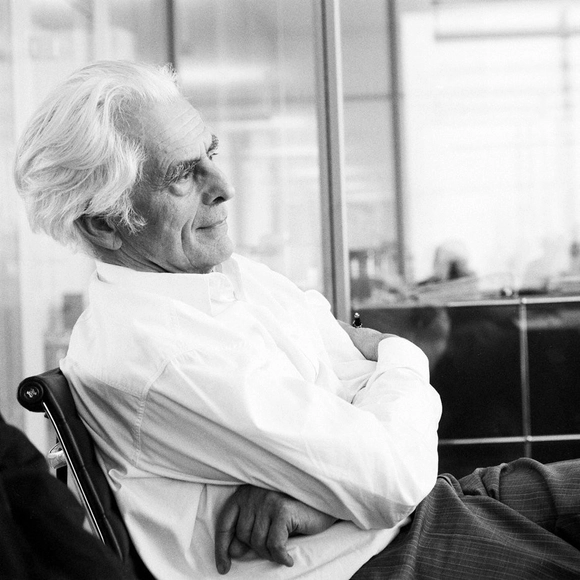
uncube has published an entire issue dedicated to the late Frei Otto. The architect and inventor, known best for his tensile structures, was the first ever to be awarded the Pritzker Prize posthumously. Honoring Otto with more than a "simple retrospective homage," uncube has compiled an extensive online issue of "thoughts, anecdotes and observations" that reflect Otto's legacy and the ideas that lead him to be a significant part of architectural history. View the entire uncube issue on Frei Otto, here.
Charles Renfro. Image Courtesy of Van Alen Institute
Want to "smoke up" with Bjarke Ingels or fly over London in Norman Foster's private helicopter? The Van Alen Institute has launched an online auction to help raise money for its public architecture and design programs. Bid now for a chance to win "priceless" experiences with famous architects and designers that could potentially have you hot tubbing with Charles Renfro, birdwatching with Jeanne Gang, or touring Los Angeles by bike with Michael Maltzan. See all the experience being auctioned, here on Paddle8.
Courtesy of Urban Planning Bureau "Heart of the City"
The Kaliningrad Region Government, in collaboration with the Kaliningrad City Administration and the Non-Profit Partnership ”Urban Planning Bureau 'Heart of the City'” has launched an open international design competition for an architectural design of the Governmental historic and cultural complex on the grounds of the former order castle Königsberg in Kaliningrad (“Post-castle,” 4,5 ha). The competition aims to find a contemporary architectural image of Kaliningrad's historic center, while accommodate for new functions, such as a concert hall, museum of archaeology, and history museum of the King's castle.
St. Peter's Square through the lens of a camera. ImagePapal Conclave 2013, Vatican City
In an article for the Washington Post, Philip Kennicott argues that "technology has scrambled the lines between public and private." He questions whether, in an age of "radical individualism" spurred on by our fascination with solitary communication, our collective understanding and appreciation for the public, civic space has been diminished. Kennitott foreshadows that "one thing is certain: We will live in more crowded spaces, and we will increasingly live indoors, cocooned in climate-controlled zones with a few billion of our closest friends" as rapid urbanisation merges with the changing climate.
Car Talk has written a scathing review on Buckminster Fuller's three-wheeled Dymaxion Car, 81 years after its unveiling. The famed architect and inventor, known best for his geodesic dome, hoped to revolutionize the car industry with a three-wheeled, 20 foot-long, "highly aerodynamic" reinvention of the car.
In order to effectively guide and improve the development and construction of the low-carbon pilot zone and to strength its international influence, Shenzhen Public Art Center, under the request from the Planning and Construction Management Office of Shenzhen International Low-carbon City and Shenzhen SEZ Construction and Development Co., Ltd., has organized an international competition for the PINGDI Pilot Zone – the urban design for the zone’s one square kilometer and the architectural design for its 0.1 square kilometer. The number in PINGDI 1.1 is the numerical sum of one and 0.1 square kilometers, and also represents the improvement and exploration of the low-carbon development method.
On display until July 19th, MoMA's exhibition "Latin America in Construction: Architecture 1955-1980" is an attempt to bring the architecture of this global region, and this time period, to a greater audience after decades of neglect by the architectural establishment. Curated by Barry Bergdoll, the exhibition effectively follows on from MoMA's last engagement with the topic of Latin American architecture, way back in 1955 with Henry-Russell Hitchcock's exhibition "Latin American Architecture Since 1945." In an intriguing interview, Bergdoll sits down with Metropolis Magazine to talk about why he is revisiting the topic after so many years (or, indeed, why MoMA took so long to do so), and explains his ambitions to elevate the featured works and to frame Latin America itself as "not simply as a place where the pupils of Le Corbusier went to build, but a place of origins of ideas." Read the full interview here.
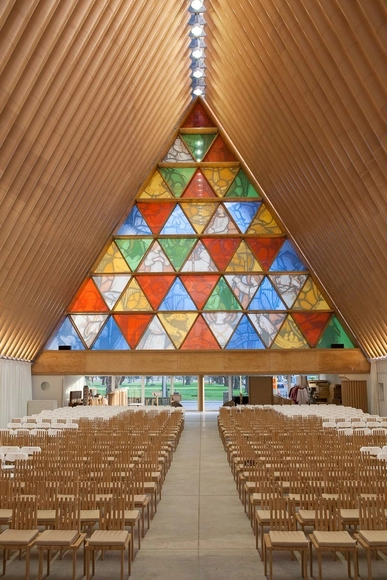
He may have risen to prominence for his disaster relief architecture and deft use of recyclable materials, but Shigeru Ban describes his idiosyncratic use of material as an "accident." Speaking to The Wall Street Journal, the 2014 Pritzker Prize Laureate recalls turning to cardboard tubes as a matter of necessity. "I had to create a design for an exhibition," Ban told the newspaper, "But I couldn't afford wood. Instead, I used the many paper tubes from rolls of drafting paper that were lying around. The tubes turned out to be quite strong." The most prominent of Ban's cardboard tube structures is Christchurch'sCardboard Cathedral, built in the aftermath of an earthquake that devastated the city in early 2011. Read WSJ's full interview with Ban here.
The Singapore Building and Construction Authority (BCA), together with Singapore Institute of Architects (SIA) and Singapore Green Building Council (SGBC) are jointly organizing the International Tropical Architecture Design Competition 2015 for Institutes of Higher Learning (ITAD Competition) for the fifth run this year. Themed “Urban Smart Green Office,” this year’s competition seeks for innovative and sustainable design entries that demonstrates the essentials and key constituents of a Smart Green Office Building in an urban city of participant's choice. The competition is open to tertiary students worldwide. Read on to learn more.
Following the devastating earthquake in Nepal this week, the Royal Institute of British Architects (RIBA) have teamed up with the International Federation of the Red Cross and Red Crescent Societies (IFRC) to "help to identify Nepalese nationals or others with local or regional experience to provide technical expertise." According to the RIBA, the IFRC "has already deployed approximately 100 people to support the Nepal Red Cross in search and rescue efforts, emergency health, water and sanitation, relief, shelter and inter-agency coordination as well as support services such as telecoms and logistics." They state that "given the operational constraints in the country, most agencies are wary of overloading country teams at this stage. However, the IFRC anticipates there will be a need for additional technical expertise in due course."
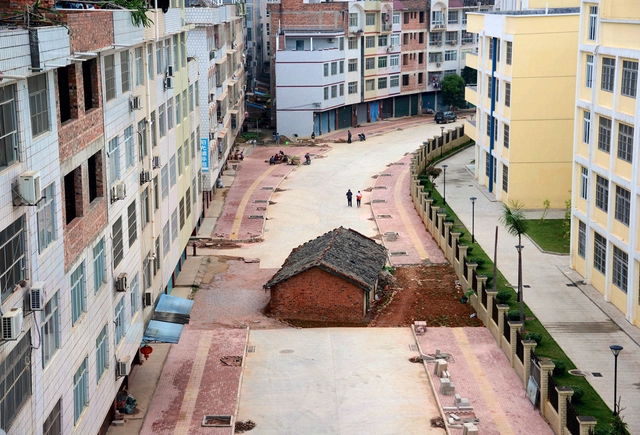
China's rapid growth has led to some unusual situations; shocking images of so-called "nail houses" continue to circle the internet, depicting defiant homeowners refusing to give up their homes for low compensation in the name of "progress." Standalone homes, and even some graves, are being surrounded by high-rise development and roadways, as land disputes play out in court. The Atlantic has just published a fascinating round-up of these peculiar situations. You can view them all, here.